
The flag of Florida is a vibrant emblem that encapsulates the state’s rich history, diverse geography, and enduring spirit. More than just a symbol, it tells a story of conquest, statehood, and the unique identity of the Sunshine State. Understanding its design elements offers a deeper appreciation for Florida as a destination, connecting its past to the present-day attractions and experiences that draw millions of visitors each year.
The Genesis of a State Symbol
The current design of the Florida flag has a lineage that stretches back to the mid-19th century, a period of significant change for the state. While Florida officially became a U.S. state in 1845, its flag design evolved over time.

Early Flags and Influences
Before its official adoption, various flags flew over Florida, reflecting its complex colonial past under Spanish, British, and French rule. These early flags, while not directly represented in the current design, laid the groundwork for a distinct regional identity.
The pivotal moment in the flag’s creation came with the Confederate Battle Flag during the Civil War. Florida, as a Confederate state, adopted a flag that featured a white saltire (an X-shaped cross) on a red field, with the state seal in the center. This battle flag, often referred to as the “Bonnie Blue Flag” in popular culture though distinct from the actual Bonnie Blue, was used by Confederate forces and represented Florida during this turbulent era.
The Adoption of the Modern Design
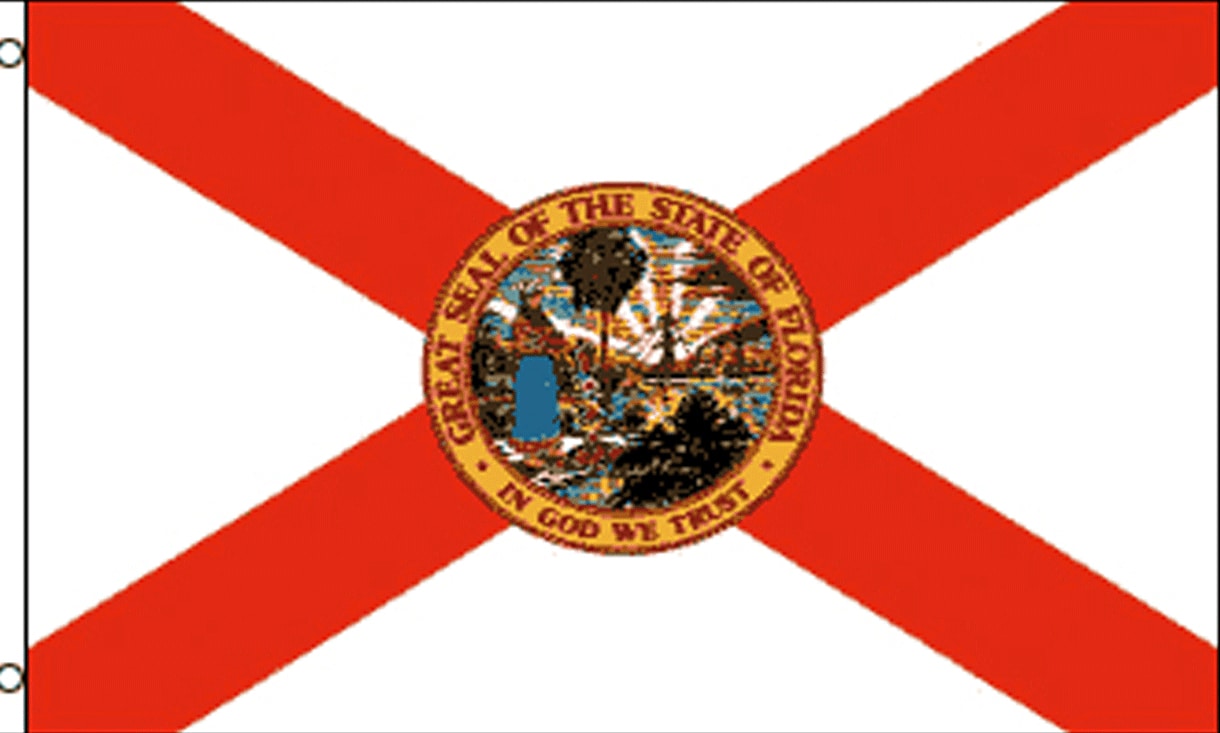
Following the Civil War and the end of Reconstruction, Florida sought to establish its own unique state identity, separate from the direct symbolism of the Confederacy. In 1900, the state legislature passed a bill that officially established the current design. This legislation mandated that the flag should be a white banner bearing the state seal in the center, superimposed upon a red saltire. This act was a deliberate move to create a distinct visual representation for Florida.
The legislative act specified the precise details of the seal to be used, ensuring consistency across the state. This act also subtly distanced Florida from the more overtly Confederate symbols while retaining a historical link through the red saltire, which was a common heraldic element and also reminiscent of the Confederate battle flag’s design.
Deconstructing the Florida Flag’s Elements
The simplicity of the Florida flag belies the depth of meaning within its constituent parts: the red saltire and the state seal. Each element tells a story about the state’s heritage and its unique character.
The Red Saltire
The prominent red saltire, or St. Andrew’s Cross, is a defining feature of the Florida flag. This bold red ‘X’ crossing the white field has several layers of interpretation.
Historical Resonance
As mentioned, the red saltire bears a strong resemblance to the battle flag of the Confederacy, a period in Florida’s history that continues to be a subject of discussion and historical analysis. While the current flag’s adoption in 1900 aimed to create a distinct state symbol, the visual echo of the Confederate battle flag remains an undeniable part of its visual heritage. This element connects the flag to the state’s past struggles and its eventual reintegration into the Union, representing a period of profound transformation.
Heraldic Tradition
Beyond its Civil War association, the saltire is a traditional heraldic symbol found in many European coats of arms. Its use in Florida’s flag can also be seen as an homage to its colonial past, particularly under Spanish influence, where such crosses were common in maritime flags and insignia. The vibrant red symbolizes courage, sacrifice, and the rich history of exploration and settlement that shaped the state.
The State Seal
At the heart of the flag lies the intricate and symbolic state seal of Florida. This seal is a microcosm of the state’s natural bounty, its people, and its aspirations. The seal has undergone revisions, but its core elements have remained consistent, reflecting the enduring spirit of Florida.
Central Imagery: The Seminole Woman and Sun
The seal features a majestic scene dominated by a large sabal palm tree, representing the state’s abundant natural resources and its iconic flora. Beneath the palm stands a Native American woman, often depicted as a Seminole, scattering blossoms from her hand. This imagery symbolizes the indigenous heritage of Florida and the state’s reputation as a land of natural beauty and abundance. The sun rising in the background signifies the dawn of a new era and the state’s bright future. The motto “In God We Trust” encircles the upper portion of the seal, reflecting a foundational principle of the state and nation.
The Coastline and Steamboat
To the left of the palm tree and Seminole woman, the seal depicts a coastline with a steamboat sailing on the water. This element represents Florida’s extensive coastline, its importance as a maritime state, and its historical connection to trade and transportation. The steamboat, a symbol of innovation and commerce during the 19th century, alludes to the state’s development and its role in connecting with the wider world. This aspect of the seal is particularly relevant to understanding Florida as a gateway to the Americas and a hub for tourism and trade.
The Flag’s Significance in Tourism and Culture
The flag of Florida is more than a civic symbol; it is intrinsically linked to the state’s identity as a premier tourist destination. Its presence is ubiquitous, adorning government buildings, businesses, and public spaces across the state, and it serves as a welcoming beacon to visitors.
A Symbol of Welcome and Identity
For tourists visiting Florida, the flag is an immediate identifier. Whether arriving at Orlando International Airport, driving down Interstate 95, or visiting iconic attractions like Walt Disney World Resort or the Everglades National Park, the sight of the Florida flag reinforces the sense of arrival and the unique experience awaiting them. It represents the warmth, hospitality, and vibrant spirit that define the Sunshine State.
The flag also symbolizes the diverse tapestry of Florida’s culture. From the historic charm of St. Augustine to the bustling metropolis of Miami and the laid-back vibe of the Florida Keys, the flag unites these distinct regions under a common banner. It speaks to a shared history, from the earliest indigenous peoples to the Spanish conquistadors, the pioneers, and the modern influx of diverse populations that have shaped Florida into the dynamic state it is today.
Connecting to Attractions and Experiences
The imagery within the flag directly connects to many of Florida’s most beloved attractions. The abundant natural beauty depicted in the seal is mirrored in the state’s stunning beaches along the Atlantic Ocean and the Gulf of Mexico, the lush landscapes of the Wekiwa Springs State Park, and the unique ecosystems like the Big Cypress National Preserve. The Seminole representation acknowledges the deep cultural roots of the state’s indigenous peoples, whose history and traditions are preserved and shared at various cultural centers and museums. The steamboat and coastline element are a nod to the maritime heritage and the numerous ports and waterfront destinations that define much of Florida, from Tampa to Fort Lauderdale.

The Flag in Local Life and Events
Beyond tourism, the flag plays a vital role in local life. It is flown during state holidays, civic celebrations, and community events, fostering a sense of pride and shared identity among Floridians. It is a constant presence during sporting events, from Miami Dolphins games to Tampa Bay Rays matches, and during cultural festivals that showcase the state’s diverse heritage. Understanding the flag’s design and history enriches the experience of anyone visiting or living in Florida, offering a glimpse into the soul of this captivating state. It serves as a constant reminder of the unique journey that has shaped Florida into the remarkable destination it is today.
LifeOutOfTheBox is a participant in the Amazon Services LLC Associates Program, an affiliate advertising program designed to provide a means for sites to earn advertising fees by advertising and linking to Amazon.com. Amazon, the Amazon logo, AmazonSupply, and the AmazonSupply logo are trademarks of Amazon.com, Inc. or its affiliates. As an Amazon Associate we earn affiliate commissions from qualifying purchases.