
Florida, a state celebrated for its sun-drenched beaches and vibrant ecosystems, holds a secret spectacle that transforms its waters into a celestial canvas: bioluminescence. This breathtaking natural phenomenon, caused by microscopic organisms emitting light, offers an unforgettable experience for travelers seeking the extraordinary. From the gentle glow of dinoflagellates in coastal waters to the dazzling displays of fireflies in the state’s interior, Florida provides numerous opportunities to witness this magical light show.
The Enchanting Glow of Florida’s Waters
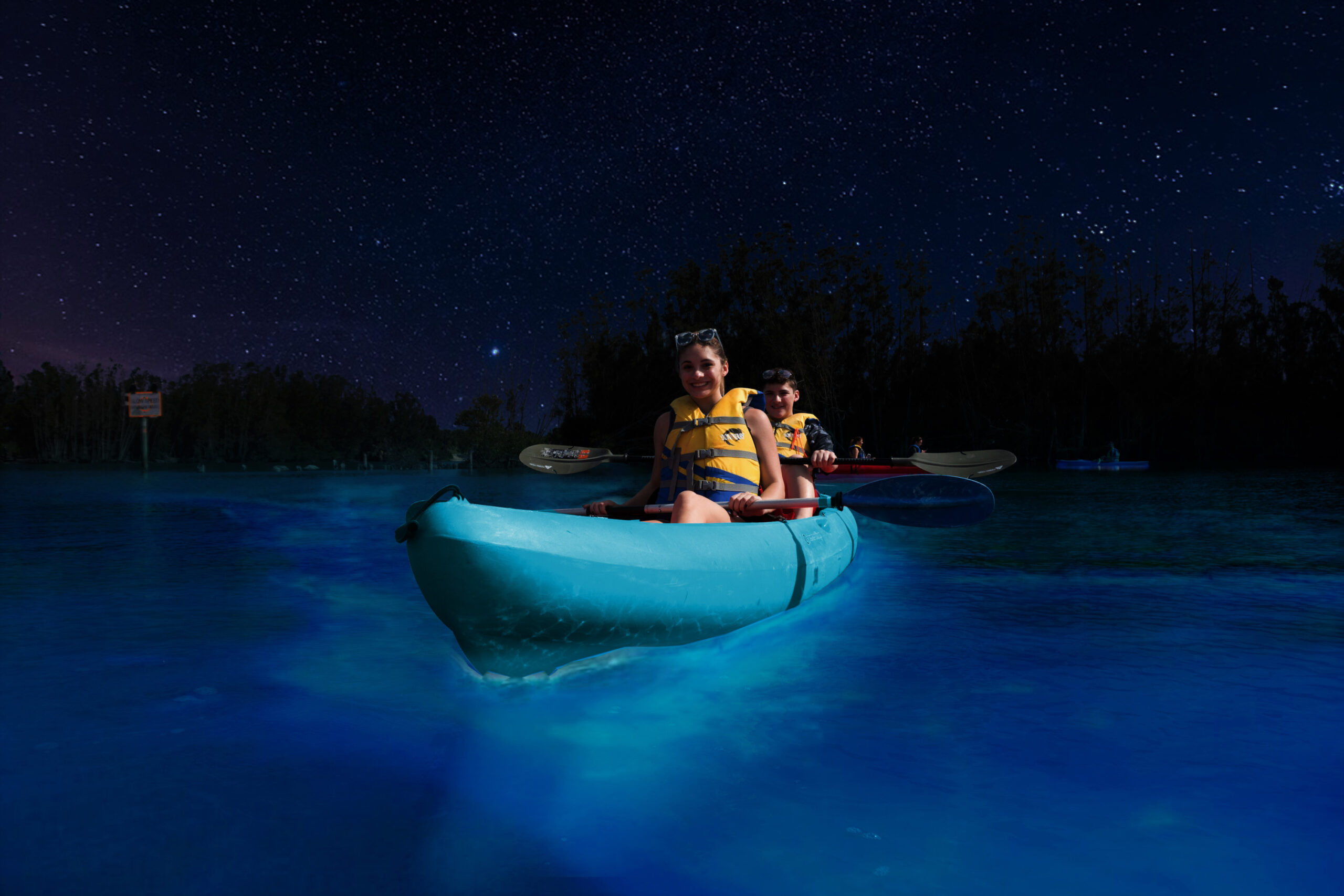
The most common and accessible forms of bioluminescence in Florida occur in its marine environments. These living lights are primarily produced by phytoplankton, specifically dinoflagellates, which illuminate when disturbed. Paddling through these glowing waters under a moonless sky is an ethereal journey, turning every ripple into a streak of light.

Mosquito Lagoon: A Kayaker’s Dream
Mosquito Lagoon, located near New Smyrna Beach, is consistently ranked among the top bioluminescent hotspots in the United States. This shallow estuary, part of the Indian River Lagoon system, is teeming with dinoflagellates. Guided kayak tours are highly recommended, as they provide the best vantage point and expertise to navigate the waters. As your paddle dips into the dark water, it ignites a cascade of blue-green light. Fish darting beneath the surface create glowing trails, and even the wake of your kayak transforms into a luminous ribbon. The experience is surreal, as if paddling through a galaxy of stars. Many tour operators in the New Smyrna Beach area offer evening tours, often capitalizing on the darkest nights around the new moon for optimal viewing. The ecosystem here is delicate, so tours often emphasize responsible wildlife viewing and minimal environmental impact.
Titusville and the Indian River Lagoon
Titusville, situated on the western shore of the Indian River Lagoon, is another prime location for experiencing bioluminescence. The lagoon’s extensive network of shallow bays and channels provides ideal conditions for the microscopic organisms responsible for the glow. Similar to Mosquito Lagoon, kayak and paddleboard tours are the most popular way to witness this phenomenon. The waters here are rich in marine life, and seeing dolphins or manatees swim through the glowing water adds another layer of wonder to the experience. The lights appear as the animals move, creating luminous outlines around their bodies. Boat tours are also available, offering a more stable platform for viewing, though paddling provides a more immersive and interactive experience with the bioluminescence. The best time to visit is typically from late spring through the fall, though it can be observed year-round with varying intensity.
Florida’s Emerald Coast: A Hidden Gem
While the Atlantic coast is more renowned for its bioluminescent bays, the Emerald Coast along the Florida Panhandle also offers occasional sightings. Destin and surrounding areas, particularly around Choctawhatchee Bay, can experience bioluminescent events. These are often less predictable and less intense than those on the Atlantic coast but can still be spectacular. Factors like water salinity, temperature, and nutrient levels play a crucial role in the prevalence of bioluminescent organisms. For those vacationing in the Panhandle, it’s worth checking local reports and inquiring with charter services or tour operators about potential viewing opportunities. The darker, less populated beaches along the Gulf Coast can offer a more serene setting for a potential sighting.
Biscayne Bay: Urban Luminescence
Even near the bustling metropolis of Miami, bioluminescence can be found. Biscayne Bay and its surrounding waters, including areas near Key Biscayne, can exhibit bioluminescent displays, especially during the warmer months. Kayak and paddleboard tours are available that venture into quieter areas of the bay, away from city lights. The glow here is often a testament to the resilience of nature, even in an urban environment. While the intensity may vary, the sight of the water sparkling with light under the urban glow of Miami can be a unique and captivating experience. It’s a reminder that natural wonders can be found even in the most unexpected places.
Beyond the Water: Terrestrial Bioluminescence
While marine bioluminescence often steals the spotlight, Florida also plays host to terrestrial forms of this luminous phenomenon, most notably fireflies.
The Magical Realm of Fireflies
Florida’s diverse habitats, from dense forests to open meadows, are home to various species of fireflies, also known as lightning bugs. These fascinating insects use bioluminescence for communication, primarily for attracting mates. Witnessing a synchronized display of fireflies is a truly magical experience, transforming a dark landscape into a twinkling wonderland.
O’Leno State Park and River Rise Preserve
O’Leno State Park, located north of Gainesville, is renowned for its spectacular synchronized firefly displays. During certain times of the year, particularly in the spring and early summer, thousands of fireflies synchronize their flashing patterns, creating a mesmerizing, pulsating light show across the park’s woodlands. This phenomenon is so sought after that the park often implements special viewing procedures and advisories to manage visitor numbers and protect the delicate environment. Guided walks are sometimes offered, allowing visitors to safely immerse themselves in this natural spectacle. Nearby, River Rise Preserve State Park also provides excellent opportunities for firefly viewing. The combination of dark skies and abundant natural habitat makes these locations ideal.
Paynes Prairie Preserve State Park
Paynes Prairie Preserve State Park, south of Gainesville, is another significant location for observing fireflies. This vast savanna and marshland ecosystem offers ample space for fireflies to thrive and exhibit their synchronized flashing. The open landscape allows for expansive views of the twinkling lights, creating an almost otherworldly atmosphere. Exploring the park’s trails during a peak firefly season is a rewarding experience for nature enthusiasts and photographers alike. The park’s natural beauty, coupled with the ephemeral glow of the fireflies, makes for an unforgettable encounter.
Apalachicola National Forest
Venture into the vastness of the Apalachicola National Forest in the Panhandle, and you might be rewarded with sightings of fireflies in its less disturbed, wilder areas. The forest’s extensive woodlands and wetlands provide a rich habitat for numerous insect species, including various firefly populations. While synchronized displays might be less common or intense than in parks specifically known for them, the sheer abundance of individual fireflies blinking in the deep woods can still create a beautiful and serene experience. It’s a chance to witness nature’s light show in a more remote and untouched setting.
Planning Your Bioluminescence Adventure
To maximize your chances of witnessing Florida’s bioluminescence, careful planning is essential. Understanding the best times and conditions will significantly enhance your experience.
Timing is Everything: When to Go
The peak season for marine bioluminescence in Florida generally runs from late spring through the fall (May to October). During these warmer months, water temperatures are optimal for dinoflagellate blooms. However, sightings can occur year-round, especially in areas like the Indian River Lagoon.
For fireflies, the prime viewing season is typically from April to July, with peak synchronized displays often occurring in late May and June. This is when firefly populations are most active and their mating rituals are in full swing.
The Importance of Darkness
The brighter the night sky, the less visible bioluminescence will be. Therefore, the best times to see glowing waters or fireflies are during the darkest nights, ideally around the new moon. This means planning your visit during the week leading up to or following the new moon. Avoid nights with a full moon, as its bright light can wash out the faint glow of the bioluminescent organisms.
Choosing the Right Tour
For marine bioluminescence, guided tours are highly recommended. Local operators possess the knowledge of the best spots and times, and often provide equipment like kayaks or paddleboards. Research tour companies that prioritize responsible eco-tourism, ensuring they adhere to practices that protect the fragile ecosystems they operate in. Look for tours that avoid excessive noise and light pollution.

Preparing for Your Experience
- Attire: For kayaking or boating tours, wear comfortable clothing that can get wet. A light jacket is advisable, as evenings can cool down, especially on the water.
- Insect Repellent: Especially for firefly viewing in parks, bring insect repellent to ward off mosquitoes and other biting insects.
- Camera Gear: While capturing bioluminescence on camera can be challenging, it’s not impossible. Use a tripod for stability and experiment with long exposure settings. However, it’s also important to be present in the moment and enjoy the natural spectacle without the lens.
- Footwear: Water shoes or sandals that can get wet are ideal for kayaking. For land-based firefly viewing, comfortable walking shoes are recommended.
- Respect the Environment: Remember that you are a visitor in a natural habitat. Avoid touching or disturbing the bioluminescent organisms, and practice Leave No Trace principles.
Florida’s bioluminescent wonders, both in its shimmering waters and its twinkling forests, offer a profound connection with nature. These ephemeral displays are a testament to the hidden magic that lies within the Sunshine State, waiting to be discovered by those willing to venture out after dark.
LifeOutOfTheBox is a participant in the Amazon Services LLC Associates Program, an affiliate advertising program designed to provide a means for sites to earn advertising fees by advertising and linking to Amazon.com. Amazon, the Amazon logo, AmazonSupply, and the AmazonSupply logo are trademarks of Amazon.com, Inc. or its affiliates. As an Amazon Associate we earn affiliate commissions from qualifying purchases.