
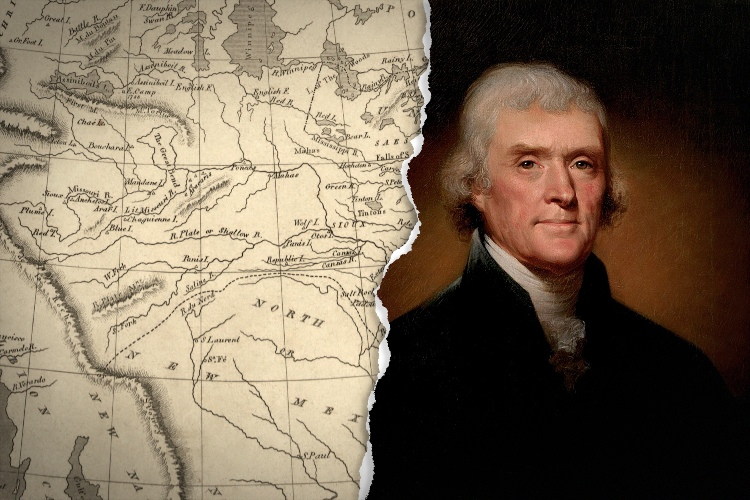
The territorial expansion of the United States stands as one of the most transformative periods in North American history, fundamentally altering the global landscape of politics, culture, and architecture. At the center of this expansion was Thomas Jefferson, the third president, whose vision for an “empire of liberty” drove the young nation to look westward and southward. While the acquisition of Louisiana is famously credited to his administration, the story of Florida involves a more complex timeline of diplomacy, military skirmishes, and eventual treaty-making that spanned multiple presidencies. To understand the landmarks and historical sites that define these regions today, one must first unravel the truth behind these two massive land acquisitions and how they shaped the North American continent.

The Louisiana Purchase: A Landmark Real Estate Deal
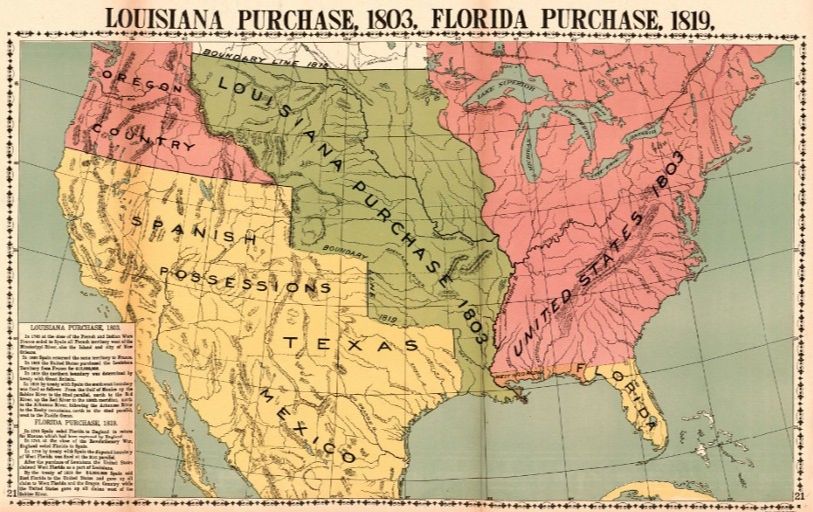
In 1803, the United States completed what is often cited as the greatest real estate deal in history. For the sum of $15 million, Thomas Jefferson doubled the size of the country, adding approximately 828,000 square miles of territory. This vast expanse stretched from the Mississippi River to the Rocky Mountains, encompassing land that would eventually form all or part of fifteen modern states.
The purchase was not originally intended to be so large. Jefferson had sent Robert Livingston and James Monroe to Paris with a specific, much narrower goal: to secure the city of New Orleans. Access to the Mississippi River was vital for American farmers to transport their goods to international markets. At the time, the territory was under the control of France, led by Napoleon Bonaparte. Facing a slave revolt in Haiti and the impending threat of war with Great Britain, Napoleon Bonaparte decided to sell the entire Louisiana territory rather than risk losing it to the British.
The Architectural Heritage of New Orleans
Today, the most prominent landmark of the Louisiana Purchase remains the city of New Orleans. The French Quarter, also known as the Vieux Carre, serves as a living museum of the era. Despite its name, much of the architecture in the French Quarter actually reflects Spanish colonial styles due to devastating fires during the period of Spanish rule in the late 18th century. Notable structures like the St Louis Cathedral and the Cabildo—the very building where the transfer of the territory took place—stand as iconic landmarks that tourists visit to touch the fabric of this history.
Exploring the Wild Frontier: St Louis and Beyond
Further north, the city of St Louis became the “Gateway to the West.” It was from here that the Lewis and Clark Expedition departed in 1804 to explore the newly acquired lands. The Gateway Arch, though a 20th-century construction, serves as a monumental landmark commemorating Jefferson’s vision of westward expansion. The purchase also paved the way for the eventual creation of natural landmarks like Yellowstone National Park in Wyoming and the preservation of the Great Plains, which were once the home of vast buffalo herds and diverse Indigenous Peoples.
The Quest for Florida: Diplomacy and Tension
While Thomas Jefferson was successful in acquiring Louisiana, he did not officially purchase Florida. However, his administration laid the groundwork for its eventual acquisition. During his presidency, Jefferson insisted that the Louisiana Purchase included portions of West Florida, a claim that Spain vehemently denied. This dispute created decades of tension along the southern border of the United States.
The actual acquisition of Florida occurred in 1819 through the Adams-Onis Treaty, signed during the presidency of James Monroe. The treaty was negotiated by Secretary of State John Quincy Adams and the Spanish minister Luis de Onis. Under the agreement, Spain ceded all of East Florida and West Florida to the United States in exchange for the U.S. government assuming $5 million in claims by American citizens against Spain.
St Augustine: The Spanish Soul of Florida
The landmarks of Florida are deeply rooted in its Spanish history, which predates American ownership by centuries. St Augustine, the oldest continuously inhabited European-established settlement in the contiguous United States, is home to the Castillo de San Marcos. This masonry star fort is a premiere historical landmark, constructed from coquina, a rare form of limestone composed of shell fragments. It represents the strength of Spain’s presence in the New World and remains one of the most visited historical sites in the American South.
Military Influence and the Gulf Coast
The transition of Florida from Spanish to American control is also evident in landmarks like Fort Barrancas in Pensacola. This site showcases layers of history, with British, Spanish, and American fortifications overlapping one another. The city of Tallahassee was later chosen as the territorial capital because of its midpoint location between the two major Spanish centers of St Augustine and Pensacola. The Florida State Capitol complex now stands as a landmark of the political evolution that followed Jefferson’s initial efforts to secure the Gulf Coast.
Landmarks of the Jeffersonian Era
Beyond the lands he acquired or sought, Thomas Jefferson left a physical mark on the United States through his architectural contributions. His belief that architecture should reflect the democratic ideals of the new republic led to the creation of several iconic landmarks that are now UNESCO World Heritage sites.
Monticello: The Neoclassical Masterpiece
Located in Charlottesville, Virginia, Monticello was Jefferson’s primary residence and a lifelong project. The house is a landmark of Neoclassical architecture, heavily influenced by the works of the Italian architect Andrea Palladio. From its iconic dome to the intricate gardens, Monticello provides insight into the mind of the man who facilitated the Louisiana Purchase. Visitors to the site can explore the house, the plantation grounds, and the Jefferson family cemetery, making it a cornerstone of American historical tourism.
The University of Virginia and the Academical Village
Just a few miles from Monticello lies the University of Virginia, another landmark designed by Jefferson. The heart of the campus is the Rotunda, modeled after the Pantheon in Rome. The surrounding “Academical Village” was designed to foster a community of scholars and students living and learning together. The red brick buildings and white columns have become a standard for American collegiate architecture, influencing university designs across the country.
Washington DC: Shaping the Nation’s Capital
Jefferson also played a crucial role in the development of Washington DC. He worked closely with Pierre Charles L’Enfant to plan the city’s layout and contributed his own sketches for the White House and the United States Capitol. Today, the Jefferson Memorial, located on the Tidal Basin, stands as a tribute to his legacy. Its circular design and classical columns echo the architectural themes found at Monticello and the University of Virginia, serving as a permanent landmark for the author of the Declaration of Independence.
The Enduring Impact on Modern American Landscapes
The expansion into Louisiana and Florida did more than just increase the map size; it created a mosaic of cultural and natural landmarks that define the American experience. The integration of French, Spanish, and Indigenous influences into the fabric of the United States is visible in the street layouts, the religious monuments, and the culinary traditions of the Gulf South and the Great Plains.
Natural Wonders and the National Park System
Many of the natural landmarks acquired during the Louisiana Purchase are now protected under the National Park Service. Badlands National Park in South Dakota, Glacier National Park in Montana, and Hot Springs National Park in Arkansas all exist within the territory Jefferson bought from France. These sites preserve the geological history and raw beauty of the continent, offering a glimpse into the wilderness that the Lewis and Clark Expedition first documented.
In Florida, the acquisition eventually led to the preservation of the Everglades, a unique subtropical wilderness that is unlike any other place on Earth. Landmarks such as the Dry Tortugas National Park, home to the massive Fort Jefferson, highlight the strategic military importance of the Florida Keys and the Gulf of Mexico that Jefferson and his successors sought to control.
Connecting History and Modern Landmarks
To visit the landmarks associated with Jefferson, Louisiana, and Florida is to walk through the chapters of American evolution. From the cobblestone streets of St Augustine to the vibrant jazz clubs of New Orleans and the stately columns of Monticello, these sites offer a tangible connection to the past. They remind us that the borders of the United States were not just drawn on a map, but were built, stone by stone, through the vision of leaders like Thomas Jefferson and the enduring legacy of the cultures that occupied these lands long before they became American.
The story of the Louisiana Purchase and the acquisition of Florida is a testament to the power of diplomacy and the enduring nature of physical landmarks. Whether it is a fort in Pensacola or a cathedral in Louisiana, these structures serve as anchors of identity in an ever-changing world, inviting travelers to explore the rich history of the American landscape.
LifeOutOfTheBox is a participant in the Amazon Services LLC Associates Program, an affiliate advertising program designed to provide a means for sites to earn advertising fees by advertising and linking to Amazon.com. Amazon, the Amazon logo, AmazonSupply, and the AmazonSupply logo are trademarks of Amazon.com, Inc. or its affiliates. As an Amazon Associate we earn affiliate commissions from qualifying purchases.