
The dream of a tropical wedding often leads couples to the sun-drenched shores of Hawaii. As a premier destination within the United States, these islands offer a blend of exotic beauty and domestic convenience. However, transitioning from a dream to a reality requires navigating specific legal protocols, geographical choices, and logistical planning. Whether you envision a barefoot ceremony on the sands of Waikiki or a lush, private garden affair in Kauai, understanding the travel and administrative framework is the first step toward saying “I do” in paradise.
Navigating the Legal Landscape of a Hawaiian Union
Unlike many international destinations that require lengthy residency periods or blood tests, the process for getting married in the Alaskan-Hawaiian region—specifically the state of Hawaii—is remarkably streamlined for travelers. This accessibility is one reason why the islands remain a global hub for destination weddings.
Obtaining the Marriage License
The most critical step in your journey is securing a marriage license from the Hawaii State Department of Health. Both partners must appear together in person before a marriage license agent prior to the ceremony. While many couples head straight to the main office in Honolulu on the island of Oahu, there are licensed agents available on all the major islands, including Maui and the Island of Hawaii.
It is highly recommended to complete the online application via the official state portal before you arrive in the islands. There is a non-refundable application fee (currently around $65), which can be paid electronically. Once you meet with the agent, the license is issued immediately. This document is valid throughout the state for 30 days, meaning you can pick up your license in Lihue and legally wed on the North Shore of Oahu without issue.
Documentation and Civil Requirements
To ensure your appointment goes smoothly, both individuals must provide proof of age and identity. A valid driver’s license or passport is standard. If either party has been previously married, you must provide the date the previous marriage ended (divorce, annulment, or death). While you generally do not need to bring the physical divorce decree unless the dissolution occurred within the last 30 days, it is wise to have a digital copy accessible just in case.
One unique aspect of the Hawaii system is that there is no waiting period. You can theoretically receive your license and get married on the same afternoon. However, the ceremony must be performed by a performer registered with the state. Most professional wedding officiants in the islands are well-versed in these requirements and will help you file the closing paperwork to ensure your marriage is legally recognized back home.
Choosing Your Island: A Guide to Hawaii’s Diverse Destinations
Each island in the Hawaiian Archipelago offers a distinct personality and aesthetic. Choosing the right island is more than just a travel preference; it sets the entire tone for your wedding experience and the subsequent honeymoon.
Oahu: The Vibrant Pulse of the Islands
Known as “The Gathering Place,” Oahu is the most popular choice for couples who want a mix of urban luxury and natural beauty. Honolulu serves as the primary gateway, offering world-class shopping, dining, and high-rise resorts.
For a classic experience, many couples look toward Waikiki Beach, where the iconic silhouette of Diamond Head provides a dramatic backdrop. If you prefer something more secluded, the North Shore offers rugged coastlines and a slower pace of life, famous for its massive winter swells and bohemian charm. Oahu is also home to historical landmarks like Pearl Harbor, making it an excellent choice for guests who want to combine wedding attendance with historical sightseeing.
Maui: The Valley Isle of Romance
Maui is frequently voted the most romantic island, striking a balance between the developed luxury of Wailea and the wild, untamed landscapes of Hana. The island is famous for its breathtaking sunsets and the massive dormant volcano, Haleakala National Park.
Couples often choose the western shores near Kaanapali or Kapalua for their consistent weather and pristine beaches. For those seeking a unique travel experience, a sunrise ceremony atop Haleakala offers a literal “cloud nine” experience, though the temperatures at 10,000 feet are significantly cooler than the tropical coastline.
Kauai: The Serene Garden Isle
If your vision involves emerald cliffs, hidden waterfalls, and lush rainforests, Kauai is the destination. It is the oldest of the main islands and significantly less developed than Oahu or Maui. Wedding venues here often include botanical gardens or private estates overlooking the Na Pali Coast.
Travelers to Kauai often split their time between the sunny south shore near Poipu and the majestic Hanalei Bay in the north. The island’s dramatic geography, including the “Grand Canyon of the Pacific,” also known as Waimea Canyon, provides unparalleled opportunities for adventure-focused couples and spectacular wedding photography.
The Island of Hawaii: Rugged Majesty and Adventure

The Island of Hawaii, often called the Big Island, is a land of extremes. From the black sand beaches of Punaluu to the volcanic deserts of Hawaii Volcanoes National Park, it is an island for the bold.
Couples typically congregate on the Kona side of the island, specifically in Kailua-Kona, where the weather is perpetually sunny and the waters are crystal clear. Conversely, the Hilo side offers a more tropical, rainy environment with stunning waterfalls and a historic, old-Hawaii feel. For an unforgettable experience, some couples opt for helicopter weddings that fly over active lava flows before landing at a remote waterfall for the exchange of vows.
Logistical Essentials for the Ultimate Destination Wedding
Planning a wedding from thousands of miles away involves more than just picking a dress and a venue. You must consider the travel logistics for yourselves and your guests, as well as the unique regulations governing the Pacific Ocean territories.
Understanding Weather Patterns and Microclimates
Hawaii has two primary seasons: summer (kau) from May to October and winter (hooilo) from November to April. While it is warm year-round, the winter months see more rainfall, particularly on the “windward” (northeast) sides of the islands.
When choosing a venue, consider the microclimates. For example, Oahu might be pouring rain in the lush Manoa Valley, while it remains perfectly dry and sunny just a few miles away in Waikiki. If you are planning an outdoor ceremony, always have a “Plan B” or choose a location on the “leeward” (west/southwest) side of the island to minimize the risk of rain.
Securing the Wiki Permit for Public Beaches
One of the most common misconceptions is that you can simply walk onto any beach in Hawaii and get married. In reality, all commercial activity on state beaches—including weddings—requires a “Wiki Permit” issued by the Department of Land and Natural Resources.
This permit is relatively inexpensive but mandatory. It ensures that the beach remains accessible to the public and that the environment is protected. There are strict rules regarding what can be brought onto the sand; for example, chairs, arches, and amplified music are often prohibited on public beaches to preserve the natural state and public enjoyment of the shoreline. If these elements are essential to your vision, you should look into private venues or beachfront estates.
Managing Travel and Guest Accommodations
A destination wedding is as much a vacation for your guests as it is a ceremony for you. Providing clear travel guidance is essential. Most international flights will land at Daniel K. Inouye International Airport in Honolulu. From there, guests can take short inter-island flights via Hawaiian Airlines or Southwest Airlines to reach the other islands.
Encourage guests to book their accommodations well in advance, especially if you are marrying during peak travel seasons like late December or mid-summer. Group blocks at resorts like the Royal Hawaiian Hotel or the Grand Hyatt Kauai Resort and Spa can provide a central hub for your party, but also suggest alternative options like vacation rentals in Kailua or Kihei for those on a different budget.
Infusing Local Culture into Your Tropical Ceremony
To truly respect and honor the land (the “aina”), many couples choose to incorporate elements of Hawaiian Culture into their ceremony. This not only enriches the experience but also connects the union to the spirit of the islands.
The Significance of the Lei Exchange
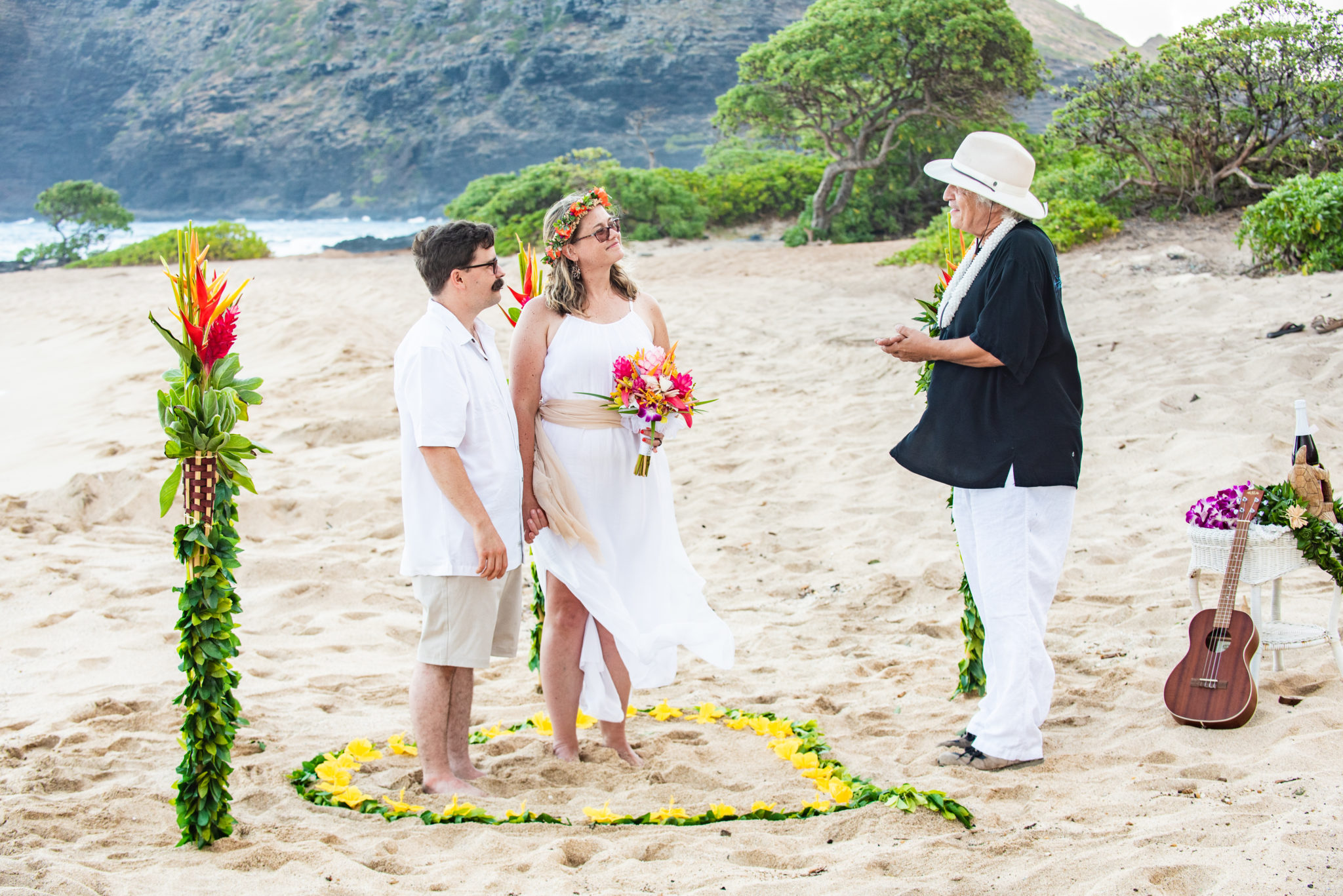
Perhaps the most recognizable Hawaiian wedding tradition is the exchange of leis. In ancient times, the lei represented a bond between people and a connection to the land. During a wedding, the couple often exchanges leis as a symbol of their love and respect for one another.
A common practice is for the groom to wear a Maile lei—a fragrant green vine—while the bride wears a delicate white pikake or ginger lei. Furthermore, giving leis to the parents during the ceremony is a beautiful way to acknowledge the joining of two families.
Incorporating Traditional Music and Blessings
The sound of a solo ukulele or a slack-key guitar playing “Hawaii Pono’i” or a local rendition of “Somewhere Over the Rainbow” creates an atmosphere that no recorded track can replicate. Many local officiants, known as Kahu, will perform a traditional blessing in the Hawaiian Language, often involving the blowing of the Pu (conch shell) to signal the start of the sacred ceremony.
The Pu is blown in the four cardinal directions to call upon the elements and the ancestors to witness the union. Following this with a “Pande” or “Salt Ceremony,” where the couple mixes Hawaiian sea salt to symbolize their inseparable lives, adds a layer of depth and meaning to the travel experience.
Getting married in Hawaii is a journey that begins long before you step onto the plane. By handling the legal requirements early, choosing the island that resonates with your spirit, and respecting the local regulations and culture, you ensure that your wedding is not just a day, but a transformative travel experience. From the volcanic peaks of Mauna Kea to the hidden coves of Lanai, the islands offer a canvas for a beginning that is as enduring as the Pacific Ocean itself.
LifeOutOfTheBox is a participant in the Amazon Services LLC Associates Program, an affiliate advertising program designed to provide a means for sites to earn advertising fees by advertising and linking to Amazon.com. Amazon, the Amazon logo, AmazonSupply, and the AmazonSupply logo are trademarks of Amazon.com, Inc. or its affiliates. As an Amazon Associate we earn affiliate commissions from qualifying purchases.