
Embarking on a journey from the historic streets of Washington DC to the tropical paradises of Hawaii is one of the most significant domestic travel undertakings in the United States. Spanning nearly the entire width of North America and a substantial portion of the Pacific Ocean, this trek involves crossing multiple time zones and thousands of miles of varied geography. Understanding the duration, logistics, and flight options is essential for any traveler looking to swap the Mid-Atlantic humidity for the cooling trade winds of the islands.
Understanding the Transcontinental Journey to the Pacific
The flight from the District of Columbia to the Hawaiian Islands is often compared to a transatlantic flight in terms of endurance and distance. Travelers departing from the East Coast must prepare for a day-long transition that takes them from the seat of American power to the serene landscapes of the Central Pacific.

The Distance Between the Capital and the Islands
The Great Circle distance—the shortest distance between two points on a sphere—from Dulles International Airport in Virginia to Daniel K. Inouye International Airport in Honolulu is approximately 4,817 miles. To put this into perspective, this is further than flying from New York City to London or Paris.
Because of the sheer distance, the flight duration is heavily influenced by the jet stream. When traveling westbound from Washington DC, aircraft often face significant headwinds, which can add time to the journey. Conversely, the return trip eastbound usually benefits from tailwinds, making the flight back slightly shorter.
Direct Flight Options and Flight Times
For travelers seeking the most efficient route, direct flights are the gold standard. Currently, United Airlines is the primary carrier offering non-stop service from Washington DC to Honolulu. These flights typically depart from Dulles International Airport.
A non-stop flight from Dulles International Airport to Honolulu typically takes between 10 hours and 15 minutes to 11 hours. The exact timing depends on the specific aircraft used, such as the Boeing 767 or Boeing 787 Dreamliner, and the prevailing weather conditions over the United States mainland. While a 10-hour flight is a test of patience, it eliminates the stress of navigating connecting hubs and the risk of lost luggage during a transfer.
Connecting Flights: Layovers and Routing
While direct flights are convenient, many travelers find better pricing or more flexible schedules by opting for connecting flights. This route typically involves a stop at a major hub, which can extend the total travel time anywhere from 13 to 18 hours or more.
West Coast Stopovers
The most common way to reach Hawaii from Washington DC is via a connection on the West Coast. Major transit points include:
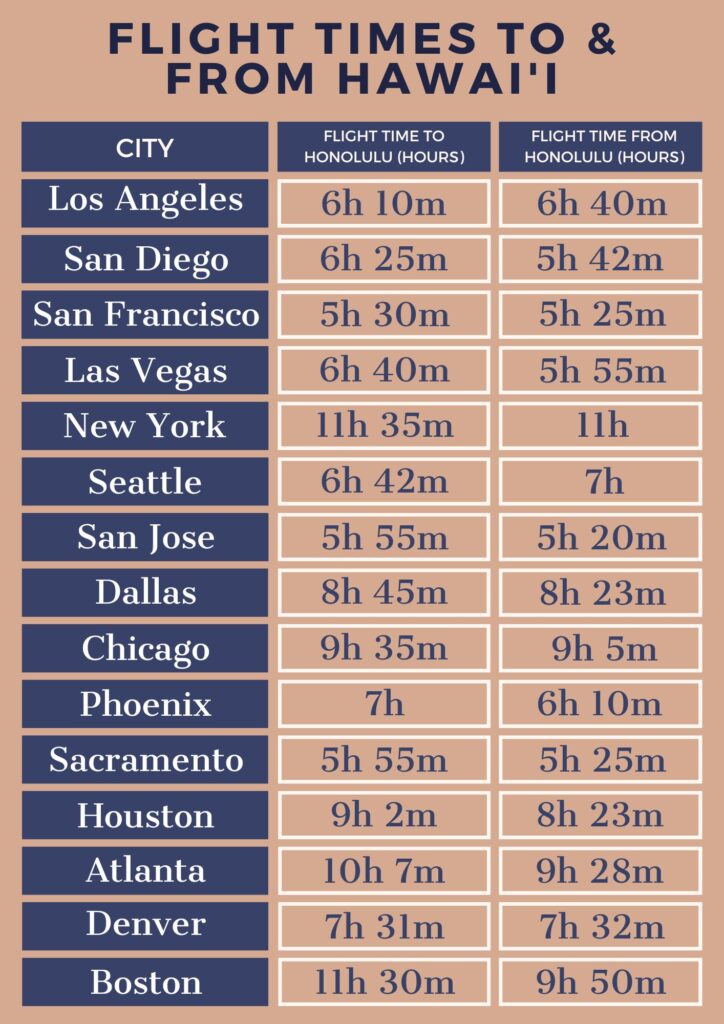
- Los Angeles International Airport (LAX): A flight from Ronald Reagan Washington National Airport or Dulles International Airport to Los Angeles takes about 5.5 to 6 hours. After a layover, the final leg to Oahu, Maui, or Kauai takes another 5.5 to 6 hours.
- San Francisco International Airport (SFO): Similar to Los Angeles, this route splits the journey into two roughly equal segments, which many travelers find more manageable than one long haul.
- Seattle-Tacoma International Airport (SEA): This is a popular northern route, especially for those flying with Alaska Airlines or Delta Air Lines.
Other popular West Coast gateways include San Diego International Airport, Portland International Airport, and Oakland International Airport.
Central and Mountain Time Zone Layovers
Some airlines route passengers through their central hubs. While this doesn’t necessarily shorten the flight time, it can offer different airline options such as American Airlines or Southwest Airlines.
- Dallas/Fort Worth International Airport (DFW): Connecting through Texas involves a roughly 3-hour flight from Maryland or Virginia, followed by an 8-hour flight to the islands.
- Denver International Airport (DEN): This Colorado hub is a major United Airlines center. The flight from Denver to Hawaii is approximately 7 hours.
- O’Hare International Airport (ORD): Traveling through Chicago remains a frequent option, though it adds significant northerly travel before heading west.
- Phoenix Sky Harbor International Airport (PHX): Arizona serves as a warm-weather alternative for connections, particularly for those using American Airlines.
Factors Influencing Your Travel Time
The time spent in the air is rarely exactly as the itinerary predicts. Several variables can alter the duration of a flight from Washington DC to Hawaii, making the trip either a breeze or a test of endurance.
Wind Patterns and Jet Streams

The most significant factor in flight duration is the wind. At high altitudes, the jet stream—a fast-flowing river of air—moves from west to east. When flying from Washington DC to Hawaii, the plane is flying against this current. Strong winter jet streams can increase flight times by 30 to 60 minutes.
On the return journey from Hawaii to the East Coast, pilots hitch a ride on these winds. It is not uncommon for a return flight to Baltimore/Washington International Thurgood Marshall Airport to be up to two hours shorter than the outbound flight to Hawaii.
Seasonal Variations and Scheduling
Airlines adjust their schedules based on seasonal demand and weather patterns. During the peak winter season, when travelers from the Mid-Atlantic are desperate to escape the cold, there may be more frequent non-stop options. However, winter storms in the Northeast or at hubs like Chicago can lead to delays that significantly impact total travel time for those with connections.
Additionally, the type of aircraft can play a role. Modern planes like the Airbus A350 or the Boeing 787 are designed for long-range efficiency and can sometimes maintain higher cruising speeds than older models, shaving precious minutes off the trans-Pacific leg.
Maximizing Comfort on the Long Haul
A flight exceeding 10 hours requires preparation. Since the trip from Washington DC to Hawaii is a domestic flight, the level of service can vary significantly compared to international long-haul journeys.
Choosing the Right Aircraft and Seat
Not all planes are created equal. When booking a flight from Dulles International Airport, look for wide-body aircraft. These planes have two aisles and generally offer more overhead bin space and a more stable ride.
If flying via a connection, the second leg from the West Coast might be on a narrow-body aircraft, such as a Boeing 737 or Airbus A321. These are perfectly safe and efficient but may feel more cramped for a 6-hour flight over the ocean. Upgrading to “Economy Plus” or “Main Cabin Select” is often worth the investment for the extra legroom on these lengthy segments.
Surviving the Time Zone Shift
Hawaii follows Hawaii-Aleutian Standard Time (HST), which does not observe Daylight Saving Time. This means that for much of the year, Hawaii is 6 hours behind Washington DC. During the winter months, the difference is 5 hours.
To combat jet lag, travelers are encouraged to stay hydrated and align their eating and sleeping schedules with the islands as soon as they board the plane. Because most flights from the East Coast arrive in Hawaii in the late afternoon or early evening, the best strategy is to stay awake until a normal bedtime in Honolulu. This helps the body clock reset more quickly, allowing more time to enjoy attractions like Diamond Head or Pearl Harbor.
Arrival at Major Hawaiian Gateways
While Honolulu is the most common destination for those flying from the Capital Region, it is by no means the only one. Depending on your final destination, your flight time and routing may change.
Daniel K. Inouye International Airport (Honolulu)
As the main gateway to the state, Daniel K. Inouye International Airport receives the bulk of trans-Pacific traffic. If your goal is to visit Waikiki Beach or explore the North Shore of Oahu, this is where your journey will likely end. The airport is a bustling hub, and its open-air corridors offer the first fragrant taste of tropical air.
Kahului Airport (Maui)
Travelers heading to the Valley Isle will land at Kahului Airport. While there are rarely direct flights from Washington DC to Maui, many connecting flights from Los Angeles or San Francisco fly directly into Kahului. This saves the time and hassle of taking an inter-island flight from Honolulu.
Lihue Airport (Kauai) and Ellison Onizuka Kona International Airport (Big Island)
For those seeking the lush landscapes of Kauai or the volcanic wonders of The Big Island, connections are almost always required. Lihue Airport and Kona International Airport offer a more relaxed arrival experience. Landing in Kona is particularly unique, as the tarmac is surrounded by fields of black lava, providing an immediate visual reminder that you are a long way from the Potomac River.
Regardless of the island, the trip from Washington DC to Hawaii is a journey of epic proportions. By choosing the right flight path, preparing for the time in the air, and understanding the logistics of the Pacific crossing, travelers can ensure that their vacation starts the moment they leave the ground at Dulles or Reagan National. The 10-plus hours of travel are a small price to pay for the unparalleled beauty of the Aloha State.
LifeOutOfTheBox is a participant in the Amazon Services LLC Associates Program, an affiliate advertising program designed to provide a means for sites to earn advertising fees by advertising and linking to Amazon.com. Amazon, the Amazon logo, AmazonSupply, and the AmazonSupply logo are trademarks of Amazon.com, Inc. or its affiliates. As an Amazon Associate we earn affiliate commissions from qualifying purchases.