
The annexation of Hawaii stands as one of the most pivotal and complex chapters in the history of the United States. To understand the transformation of these islands from an independent sovereign nation to an American territory—and eventually the 50th state—one must look beyond simple dates and examine the intricate tapestry of political ambition, economic interests, and cultural shifts that defined the late 19th century. The formal annexation did not occur in a vacuum; it was the culmination of decades of encroaching influence and internal turmoil.
The Path to Political Transformation
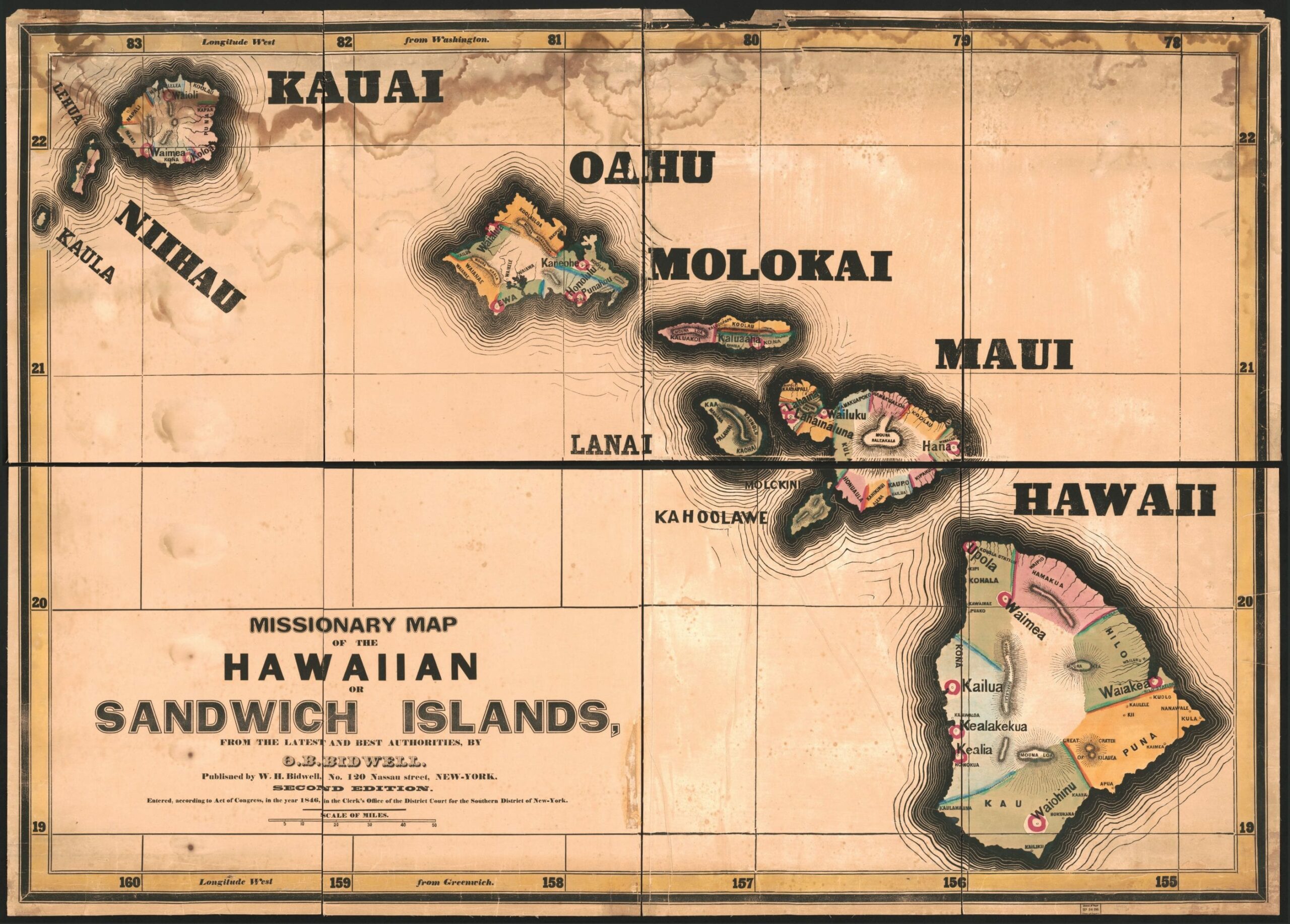
The relationship between the United States and the Hawaiian Kingdom began long before the formal transfer of power. Throughout the 1800s, American missionaries and businessmen established deep roots in the archipelago, particularly in the sugar industry. As these economic ties deepened, so did the desire for political stability that favored American interests.
The Overthrow of the Monarchy
The defining precursor to annexation was the 1893 overthrow of Queen Liliuokalani. When the Queen sought to promulgate a new constitution that would restore power to the monarchy and disenfranchise non-citizen residents, a group of business leaders—primarily of American and European descent—orchestrated a coup. With the support of United States Minister John L. Stevens and the presence of United States Marines, the monarchy was effectively deposed.
Following the coup, a “Provisional Government” was established with the ultimate goal of annexation. However, the process was far from immediate or universally supported. President Grover Cleveland, upon taking office, commissioned an investigation into the matter, ultimately concluding that the overthrow had been illegal and an act of war against a friendly nation. Cleveland attempted to restore Queen Liliuokalani to the throne, but the provisional government refused to relinquish power, declaring themselves the Republic of Hawaii in 1894.
The Formal Act of Annexation
The dream of annexation remained dormant on the federal level until the political landscape shifted with the election of President William McKinley. The outbreak of the Spanish-American War in 1898 provided the strategic justification that had previously been lacking.
The Newlands Resolution
The United States military realized that Hawaii served as an essential mid-Pacific coaling station and naval base. Proponents of annexation argued that the islands were vital for the projection of American power in the Pacific theater. Consequently, the annexation was pushed through via the Newlands Resolution.

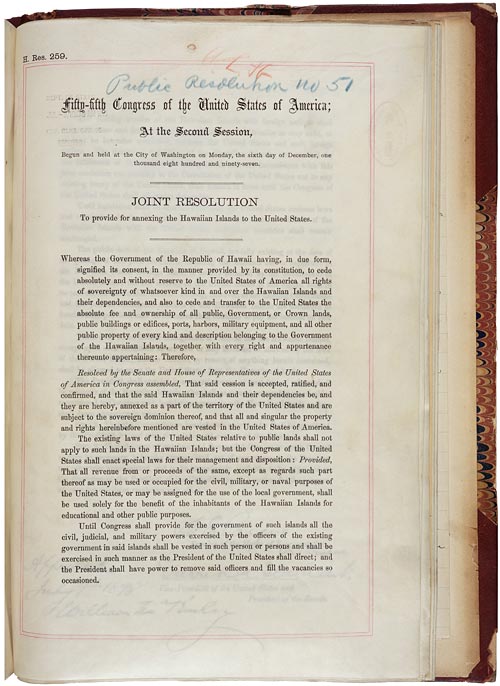
Unlike a traditional treaty, which would have required a two-thirds majority in the United States Senate, the Newlands Resolution was a joint resolution that required only a simple majority in both houses of Congress. This legislative maneuver was successful, and President William McKinley signed the resolution into law on July 7, 1898. The formal transfer of sovereignty occurred on August 12, 1898, when the Hawaiian flag was lowered and the American flag was raised over Iolani Palace in Honolulu.
Historical Significance and Legacy
The annexation of Hawaii was a controversial act that continues to be a subject of academic debate and historical reflection. It represented a fundamental shift in American foreign policy, marking the nation’s emergence as an expansionist, global power.
Impact on Indigenous Sovereignty
For the Native Hawaiian people, the loss of sovereignty was profound. The annexation ignored the widespread petitioning by the native population, who had voiced their strong opposition to the loss of their independence. Today, Iolani Palace serves as a potent landmark where these historical complexities are preserved and interpreted. It stands as a testament to the resilience of the Hawaiian culture and the history of the Pacific Ocean region.
The Move Toward Statehood
Following annexation, Hawaii operated as an organized territory of the United States for over sixty years. During this period, the islands underwent massive economic and social changes, including the growth of tourism and the expansion of military infrastructure, such as the naval base at Pearl Harbor. It was not until 1959 that Hawaii officially attained statehood, becoming the 50th state of the United States.
Exploring the Historical Landmarks
For visitors to Honolulu and the broader island of Oahu, understanding the history of the United States annexation is an essential part of the travel experience. Engaging with the past allows travelers to appreciate the depth of Hawaiian history beyond the pristine beaches and luxury resorts.
- Iolani Palace: As the only royal palace in the United States, it offers an intimate look into the lives of the monarchy and the political shifts of the late 19th century.
- Bishop Museum: This institution preserves the history, culture, and natural environment of the Pacific region, providing crucial context regarding the kingdom before and after annexation.
- Pearl Harbor National Memorial: While primarily focused on the World War II era, this location highlights why the United States placed such high value on Hawaii as a strategic military asset.
By visiting these sites, one gains a clearer understanding of the Hawaiian struggle, the strategic calculations of the United States, and the lasting legacy of the late 1890s. The story of Hawaii is not just one of annexation; it is a story of a resilient culture and a unique historical identity that remains vibrant today. Whether you are exploring the streets of Honolulu or the rugged beauty of the North Shore, the echoes of this history are omnipresent, inviting travelers to look deeper into the foundations of the islands they visit. The annexation may be a fixed point in time—July 7, 1898—but the conversation regarding its impact and meaning continues to evolve, much like the islands themselves, which remain a crossroads of history, culture, and natural splendor in the middle of the vast Pacific Ocean.
LifeOutOfTheBox is a participant in the Amazon Services LLC Associates Program, an affiliate advertising program designed to provide a means for sites to earn advertising fees by advertising and linking to Amazon.com. Amazon, the Amazon logo, AmazonSupply, and the AmazonSupply logo are trademarks of Amazon.com, Inc. or its affiliates. As an Amazon Associate we earn affiliate commissions from qualifying purchases.