
The Geological Genesis of the Hawaiian Islands
To understand when Hawaii was made, one must look deep beneath the surface of the Pacific Ocean. Unlike continents that were formed through complex tectonic collisions, the Hawaiian Islands are the product of a persistent “hotspot” located deep within the Earth’s mantle. This stationary plume of magma has been pushing through the Pacific Plate for millions of years, acting like a blowtorch creating a volcanic conveyor belt.
A Timeline of Volcanic Emergence
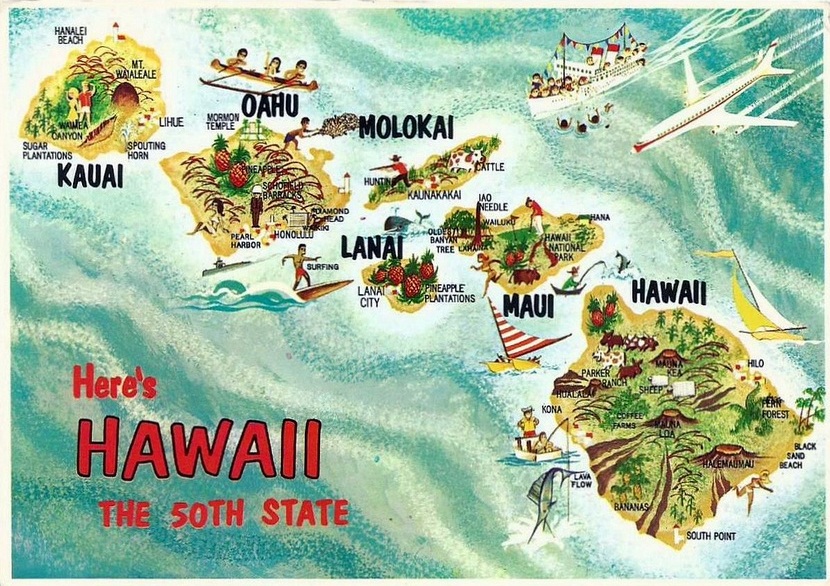
The formation of Hawaii is an ongoing process rather than a single historical event. The oldest islands in the chain, such as Kauai and Niihau, were formed approximately 5 to 6 million years ago. As the Pacific Plate moved steadily toward the northwest, the volcanic supply to these islands was cut off, allowing them to cool and begin the slow process of erosion.
The younger islands, including Maui and the Big Island, are much more recent. In geological terms, the Big Island is a toddler, with parts of it being less than 500,000 years old. This explains why the landscape here remains so rugged, dramatic, and seismically active, defined by the towering peaks of Mauna Kea and the active craters of Kilauea.

The Submerged Predecessors
The archipelago we see today is merely the tip of a much larger, mostly submerged mountain range. Stretching thousands of miles toward the Aleutian Islands, the Emperor Seamounts represent the older “ghosts” of Hawaii. These volcanic peaks were once islands similar to Oahu, but as they moved away from the hotspot and the sea floor subsided, they were reclaimed by the Pacific Ocean.
The Arrival of Human History and Settlement
While the geological creation of Hawaii spans millions of years, the human “making” of the islands—as a cultural and social entity—began much more recently. Archaeological evidence and oral traditions suggest that the first Polynesian voyagers arrived from the Marquesas Islands around 400 to 800 AD.
The Great Voyaging Canoes
Navigating by the stars, ocean currents, and flight patterns of birds, these early settlers crossed thousands of miles of open water in double-hulled canoes. They brought with them the foundation of what would become a unique society: taro, breadfruit, pigs, chickens, and the foundational elements of their religious and social structure. Upon landing on the windward shores of islands like Molokai, they found a landmass entirely isolated from the rest of the world, allowing them to cultivate a civilization that was deeply interconnected with the natural environment.
The Rise of the Kingdom
For centuries, each island functioned as an independent chiefdom governed by an Ali’i. It was not until the late 18th century that a singular Hawaiian identity was forged. King Kamehameha I, a visionary leader from the Big Island, utilized Western technology—specifically cannons and muskets—to unify the warring factions. By 1810, the Kingdom of Hawaii was established, effectively “making” Hawaii a unified sovereign nation on the global stage.
Landmarks and the Shaping of Modern Geography
The physical geography of the Hawaiian Islands has been consistently reshaped by natural forces. Tourists visiting landmarks today are standing on layers of history that are still being written by volcanic activity.
The Sculpting of the Coastline
Erosion and lava flows continue to dictate the shape of Hawaii. The dramatic cliffs of the Na Pali Coast on Kauai serve as a testament to millions of years of rainfall and ocean spray carving into volcanic basalt. Conversely, the Kalapana region on the Big Island shows how quickly Hawaii can be “remade.” The lava flows of the late 20th and early 21st centuries have fundamentally altered the map, burying old towns and creating entirely new black sand beaches overnight.
Protected Natural Treasures
The preservation of these landscapes has become a cornerstone of the Hawaiian experience. The Haleakala National Park on Maui offers visitors a look into a high-altitude crater that feels like the surface of the moon, while Waimea Canyon on Kauai highlights the intricate erosional history of the older islands. By establishing these areas as protected landmarks, the state ensures that the natural history—the very “making” of the land—remains accessible for generations to come.
The Future of the Archipelago
The question “When was Hawaii made?” is perhaps best answered by stating that the process is far from finished. The hotspot that birthed the islands is still active, and a new island, Loihi, is currently forming beneath the surface of the Pacific Ocean.
The Birth of Loihi
Located about 22 miles off the coast of the Big Island, Loihi is a submarine volcano that has been building height for roughly 400,000 years. Current projections suggest it will take another 10,000 to 100,000 years before Loihi breaks the surface of the water to join the rest of the chain.

The Interplay of Nature and Culture
Hawaii is a living, breathing testament to the power of nature. From the ancient arrival of the Polynesians to the contemporary expansion of the Big Island, the story of the archipelago is one of transformation. For those who travel to Hawaii, the experience is not just about visiting a tropical destination; it is about witnessing the Earth in its most raw, formative state.
Whether you are standing at the summit of Mauna Kea looking at the stars or walking the pristine sands of Waikiki Beach, you are part of a timeline that spans millions of years. Hawaii was made by fire, shaped by water, settled by explorers, and continues to be remade by the relentless energy of the Earth. It is a destination that demands respect for its age, its beauty, and its ongoing evolution. As the Pacific plate glides over the deep mantle plume, the islands serve as a reminder that the world is never truly “finished,” but is constantly in a state of becoming.
LifeOutOfTheBox is a participant in the Amazon Services LLC Associates Program, an affiliate advertising program designed to provide a means for sites to earn advertising fees by advertising and linking to Amazon.com. Amazon, the Amazon logo, AmazonSupply, and the AmazonSupply logo are trademarks of Amazon.com, Inc. or its affiliates. As an Amazon Associate we earn affiliate commissions from qualifying purchases.