
The annexation of Hawaii by the United States in 1898 stands as one of the most pivotal and controversial events in the history of the Pacific Ocean. While today the archipelago is celebrated globally as a premier tourist destination known for its pristine beaches and lush landscapes, its transition from a sovereign kingdom to a U.S. territory was a complex maneuver driven by economic interests, geopolitical strategy, and the shifting power dynamics of the late 19th century. To understand why this occurred, one must look at the convergence of sugar production, the strategic necessity of Pearl Harbor, and the decline of the Hawaiian monarchy.
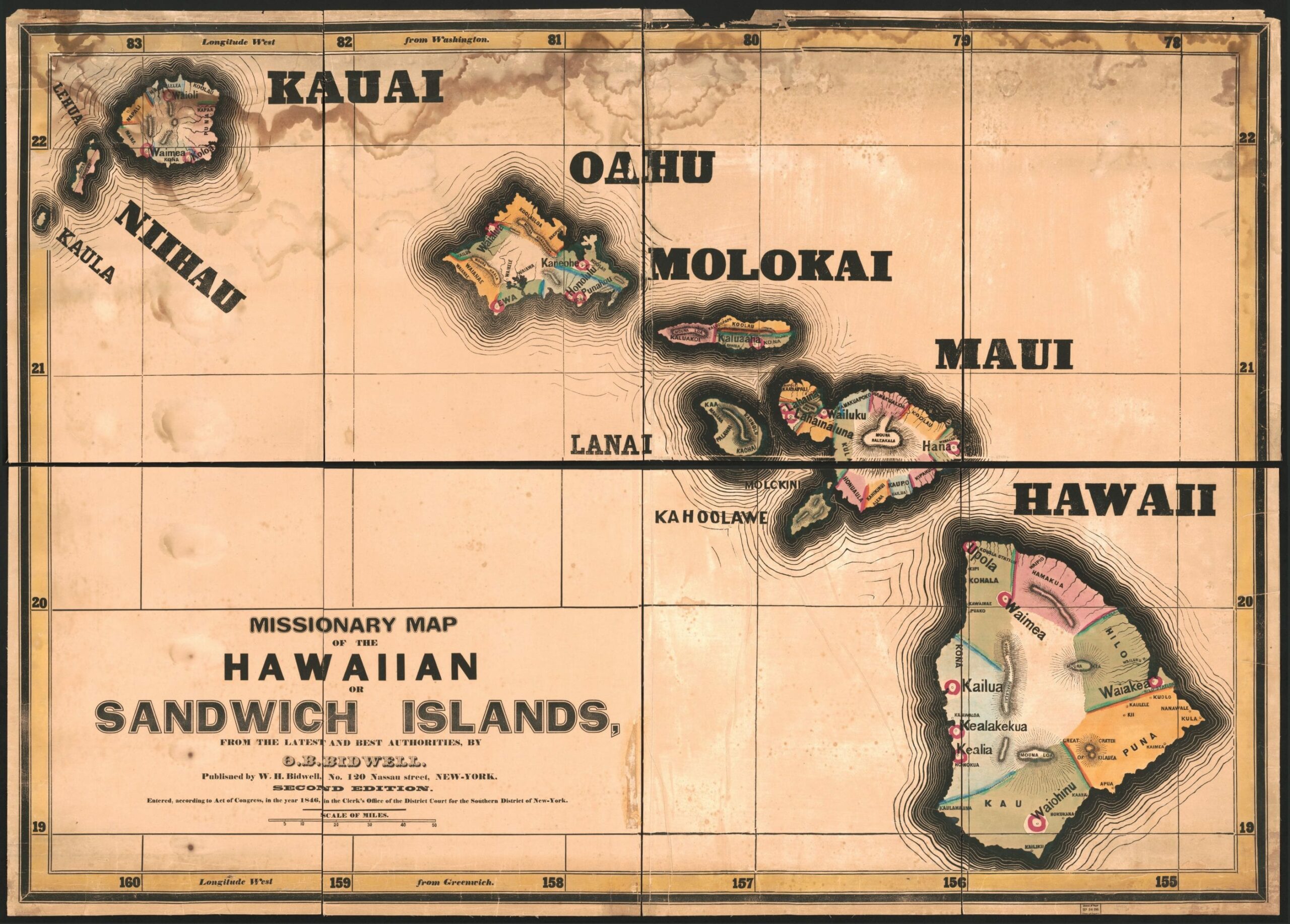
The Economic Engine: The Sugar Industry
For decades leading up to the 1890s, the economy of Hawaii was dominated by American-owned sugar plantations. As the demand for sugar surged across the United States, these plantation owners—many of whom were descendants of early missionaries—gained immense wealth and political influence within the kingdom.
The McKinley Tariff and Economic Instability
In 1890, the United States passed the McKinley Tariff, which eliminated the preferential status of Hawaiian sugar. Previously, Hawaiian sugar entered the American market duty-free, but the new legislation placed it on equal footing with sugar imported from other nations. This caused a massive economic downturn for the plantation owners, who sought a solution to protect their profits. Annexation promised to eliminate tariffs entirely, as the sugar would essentially be produced within domestic borders. This financial incentive was a primary catalyst for the push toward political union with the American mainland.
The Overthrow of Queen Liliʻuokalani
The tension between the foreign business elite and the Hawaiian crown reached a breaking point under Queen Liliʻuokalani. When she ascended the throne, she sought to promulgate a new constitution that would restore power to the monarchy and the native Hawaiian people, thereby disenfranchising the wealthy business class. In 1893, a group of American businessmen and sugar planters, supported by the United States Marine Corps, staged a coup. The Queen, seeking to avoid bloodshed, surrendered her authority under protest, hoping that the U.S. government would investigate and rectify the injustice.
Strategic Geopolitics and the Rise of the Pacific
While sugar provided the economic motivation, the strategic location of the Hawaiian Islands offered the justification for expansion. In an era of burgeoning imperialism, Great Britain, France, and Japan were all expanding their reach across the globe.

The Naval Necessity of Pearl Harbor
Military strategists, most notably Alfred Thayer Mahan, argued that a great nation required a strong navy and, consequently, a series of overseas coaling stations and naval bases. Pearl Harbor was viewed as the “Gibraltar of the Pacific,” an essential defensive and offensive anchor that would allow the United States to project power across the massive Pacific Ocean. Without formal annexation, the American government feared that another power—particularly Japan—might eventually exert control over the islands, severely compromising American security.
The Impact of the Spanish-American War
The final push for annexation was solidified by the Spanish-American War in 1898. As the conflict escalated in the Philippines and Cuba, the strategic value of Hawaii as a mid-ocean refueling station became undeniable. The American military needed a permanent base to support its operations in the Far East. President William McKinley, who had previously been hesitant about the morality of annexation, became convinced that the islands were necessary for national security. The war served as the catalyst that transformed political ambition into official territorial policy.
The Legacy of 1898
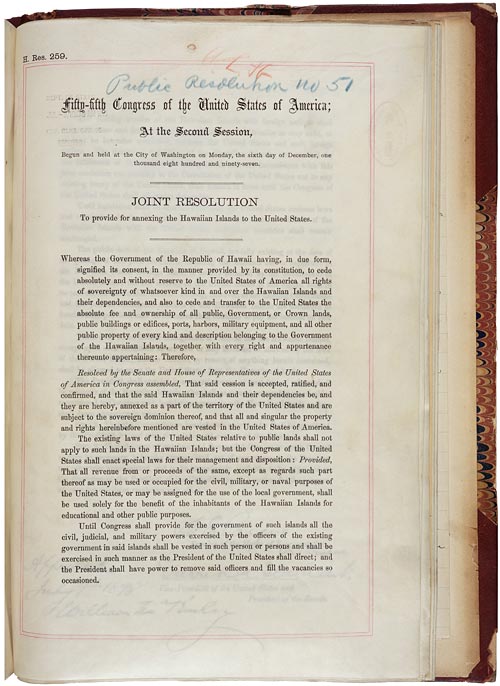
The annexation of Hawaii by the Newlands Resolution in July 1898 was a watershed moment that permanently altered the cultural and political landscape of the islands.
Constitutional Debates and Native Resistance
The move was not without significant opposition. Many Americans, including members of the Anti-Imperialist League, argued that annexing territory without the consent of the local population was fundamentally anti-democratic and against the core values of the United States Constitution. Within Hawaii, the native population organized a massive protest, gathering thousands of signatures on petitions against annexation. Despite these efforts, the strategic and economic momentum of the sugar lobby proved overwhelming.
From Territory to Statehood
Following the annexation, Hawaii remained a U.S. territory for over sixty years. During this time, the islands underwent profound transformations in demographics, architecture, and governance, eventually leading to their admission as the 50th state in 1959.
Today, travelers visiting Honolulu or the historic grounds of Iolani Palace—the former residence of the Hawaiian monarchs—can still feel the weight of this history. The palace stands as a poignant landmark, reminding visitors of a sophisticated kingdom that was integrated into the American fold through a mixture of corporate ambition and military exigency. The events of 1898 are not merely dusty footnotes; they are the foundation upon which modern Hawaii was constructed, reflecting a complex tapestry of indigenous heritage, colonial influence, and geopolitical maneuvering. As tourists traverse the islands, enjoying the unique fusion of Polynesian culture and American administrative history, the story of why Hawaii became an American state remains an essential component of understanding this remarkable place.
LifeOutOfTheBox is a participant in the Amazon Services LLC Associates Program, an affiliate advertising program designed to provide a means for sites to earn advertising fees by advertising and linking to Amazon.com. Amazon, the Amazon logo, AmazonSupply, and the AmazonSupply logo are trademarks of Amazon.com, Inc. or its affiliates. As an Amazon Associate we earn affiliate commissions from qualifying purchases.