
When most people envision Hawaii, their minds immediately drift to golden sands, swaying palm trees, and the refreshing, turquoise waters of the Pacific Ocean. It is a tropical paradise, synonymous with sun-drenched afternoons and balmy evenings. However, the geographic reality of this isolated archipelago often surprises visitors. Because of its extreme vertical elevation, the high-altitude peaks of the state’s tallest volcanoes periodically transform into winter wonderlands. In 2024, the question of whether snow graced these islands became a topic of significant interest for travelers and meteorologists alike.
The Geography of Tropical Snowfall
To understand why snow falls in a state known for its year-round summer climate, one must look toward the summit of Mauna Kea and its neighbor, Mauna Loa. Located on the Big Island, these massive shield volcanoes rise over 13,000 feet above sea level. At these altitudes, the air becomes thin and cold, creating a microclimate that is starkly different from the humid coastline.

Atmospheric Conditions
The appearance of snow in the tropics is a delicate balance of moisture and freezing temperatures. In 2024, several winter storm systems passed near the Hawaiian Islands, bringing the necessary combination of precipitation and a drop in the freezing level. When low-pressure systems, often referred to as “Kona Lows,” shift toward the summits, they deliver significant moisture that encounters the sub-freezing air at the peaks of Hawaii Volcanoes National Park.
Seasonal Variability
While snow is not a daily occurrence, it is a seasonal possibility that typically spans from December through March. The year 2024 saw intermittent dustings on the summits of Mauna Kea and Mauna Loa. These events were brief, often disappearing within days as the tropical sun reclaimed the mountain slopes, yet they offered a breathtaking visual contrast between the white-capped peaks and the lush rainforests below.
The 2024 Meteorological Snapshot
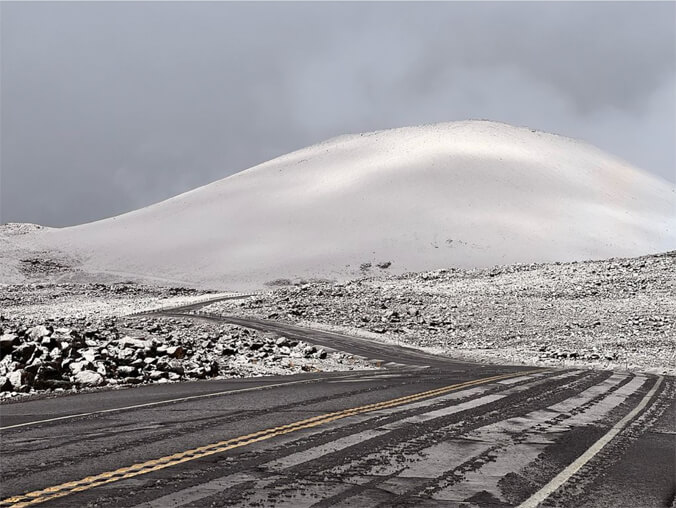
Early in 2024, satellite imagery and local monitoring stations confirmed the presence of snowfall on the high peaks. While the lower elevations of Hilo and Kona remained in their typical state of warmth and humidity, the upper reaches of the mountains experienced cold fronts that resulted in snow accumulation.
A Rare Sight for Residents and Visitors
For residents of the United States, the idea of skiing in Hawaii is a novelty that remains largely conceptual. While there are no resorts or lifts on Mauna Kea, the presence of snow attracts adventurous souls who hike the trails to witness the rare phenomenon. In 2024, the limited snow events underscored the volatility of mountain weather. Observers noted that the dusting was thin, characterizing it more as a “frosting” of the landscape rather than a heavy, multi-foot snowfall.
The Impact of Climate Patterns
Meteorological data from 2024 suggests that broader Pacific climate patterns, such as El Niño, influenced the storm tracks bringing precipitation to the islands. These atmospheric rivers, when aligned with the extreme height of the volcanoes, act as the primary catalyst for tropical snow. The cycle remains natural, yet scientists closely monitor these occurrences as indicators of shifting moisture patterns in the central Pacific.
Exploring the High Altitudes
For travelers planning a trip to the Islands of Aloha, the high-altitude regions offer a landscape vastly different from the coastal tourist hubs. Whether or not snow is present, the journey toward the summits of the Big Island is one of the most rewarding experiences in the region.
The Summit Experience
Traveling from sea level to over 13,000 feet is an exercise in extreme climate transition. As you ascend, the tropical flora gives way to alpine desert landscapes. The air is remarkably clear, making these summits globally significant sites for astronomical observation. If you find yourself in the region during the winter months, checking the status of the Mauna Kea Visitor Information Station is essential. While you may be disappointed if you are hunting for snow, you will certainly be rewarded with some of the most spectacular sunsets and stargazing opportunities on the planet.
Safety and Access Considerations
It is critical to remember that the summits of Mauna Kea and Mauna Loa are protected environments and, at times, hazardous zones. The high altitude can cause acute mountain sickness, and the weather changes with terrifying speed. In 2024, officials frequently cautioned against driving to the summits during storm fronts, even when light snow was forecast. Respecting local guidelines, avoiding sacred sites, and maintaining a safe distance from delicate ecological zones are paramount for any visitor.
Why Hawaii’s Climate Defies Expectations
The intrigue surrounding snow in Hawaii stems from a fundamental misunderstanding of the islands’ geological diversity. Hawaii is not just a collection of beaches; it is a series of towering mountain ranges born from volcanic fire.
Vertical Ecosystems
One could arguably traverse several “continents” of climate in a single drive on the Big Island. Starting at a Waikiki beach, moving through the tropical valleys of Kauai, and ending in the alpine tundra of the Big Island summits demonstrates the sheer scale of the landscape. Snow in 2024 serves as a reminder of the verticality of these landmasses.
The Cultural Significance
In local culture, the summits are not just geographical landmarks; they are sacred spaces. The presence of snow—often referred to as the white mantle of Poliahu, the deity associated with snow—is held in high regard. The occurrence of snow is viewed with reverence, and the community respects the delicate balance required for such an event to manifest. It is a reminder that even in the heart of the tropics, the forces of nature dictate the rhythm of the land.

A Destination of Contrasts
Ultimately, 2024 was a year that showcased the duality of Hawaii. While travelers enjoyed the warmth of the North Shore and the vibrant culture of Honolulu, the high peaks stood as sentinels of ice, reminding everyone that the islands are complex, living, and ever-changing. Whether you visit during a winter snow event or the heat of mid-summer, the majesty of the Hawaiian mountains remains a constant. The snow of 2024 may have melted quickly, but the story it tells—of a land that defies expectations—will persist in the memories of those who caught a glimpse of white on the horizon.
LifeOutOfTheBox is a participant in the Amazon Services LLC Associates Program, an affiliate advertising program designed to provide a means for sites to earn advertising fees by advertising and linking to Amazon.com. Amazon, the Amazon logo, AmazonSupply, and the AmazonSupply logo are trademarks of Amazon.com, Inc. or its affiliates. As an Amazon Associate we earn affiliate commissions from qualifying purchases.