
The practice of tipping at hotels is a subject often shrouded in uncertainty. While most travelers are well-versed in the standard protocols for restaurant servers or bartenders, the etiquette surrounding room attendants—the unsung heroes of the hospitality industry—remains surprisingly ambiguous for many guests. Unlike other service roles where tipping occurs face-to-face, housekeeping usually happens behind the scenes. This distance often leads to confusion: Is it expected? How much is appropriate? Does it actually reach the staff?
Understanding the nuances of tipping housekeeping is essential for any frequent traveler, whether you are staying at a luxury property like the Ritz-Carlton in New York City or a cozy boutique establishment in Paris. Providing a gratuity is not merely a social obligation; it is a tangible way to acknowledge the strenuous, essential work performed by those who ensure your sanctuary remains clean, sanitary, and welcoming.

The Etiquette of Gratuity: Why Your Contribution Matters
Housekeeping staff members are among the hardest-working individuals within the Hilton or Marriott hospitality ecosystem. They are responsible for deep-cleaning rooms, sanitizing high-touch surfaces, changing linens, and replenishing amenities—often within a tight turnaround window.
Recognizing Essential Labor
Many travelers assume that the high nightly rates at an upscale resort, such as the Four Seasons Resort Maui, cover the entire staff’s salary, rendering tips unnecessary. However, the service charge often added to a bill does not always filter down to the housekeeping department. Tipping serves as a direct gesture of appreciation for the personalized care taken to make your room feel like a home away from home. When you leave a tip, you are validating the labor that allows you to enjoy a stress-free environment, whether you are staying in London or Tokyo.
Cultural Variations in Tipping
It is important to note that tipping culture is not monolithic. While housekeeping tips are standard in the United States and Canada, expectations shift when traveling internationally. In some countries, such as Japan, tipping is not part of the culture and can sometimes be misunderstood or declined. Conversely, in regions like Mexico or the Caribbean, service staff often rely heavily on tips as a core part of their compensation. Researching the local customs of your destination—whether it be Rome or Dubai—is a hallmark of a considerate traveler.
Determining the Right Amount
If you have decided to tip—which is generally encouraged in the North America hospitality sector—the next question is how much to leave. There is no rigid legal requirement, but there are widely accepted industry standards that can guide your decision.
Recommended Daily Ranges
The consensus among hospitality experts and hotel associations is that a daily gratuity of $3 to $5 per night is appropriate for a standard hotel room. If you are staying in a higher-end suite or a property like the Waldorf Astoria, where the staff may perform additional services like evening turndown or specialized cleaning, a gratuity of $5 to $10 per day is considered a respectful range.
Variables That Influence the Tip
Your tipping strategy should remain flexible based on the specific circumstances of your stay:
- The Size of the Group: If you are traveling with a large family that leaves the room in a state of disarray, an extra dollar or two per day reflects the additional effort required to reset the space.
- Special Requests: If you requested extra pillows, blankets, or specific amenities, adding a small premium to your tip is a professional way to acknowledge the extra labor.
- Length of Stay: For longer stays, it is often more beneficial to tip daily rather than in a lump sum at the end. Since housekeeping staff at hotels like the InterContinental may rotate shifts, a daily tip ensures that the person who actually cleaned your room that day is the one who benefits.
The Best Practices for Leaving a Tip
The “how” of tipping is just as important as the “how much.” Because the act of tipping housekeeping lacks the immediacy of leaving cash on a restaurant table, guests often worry about whether their gratuity will reach the right person.
Ensuring the Tip is Received
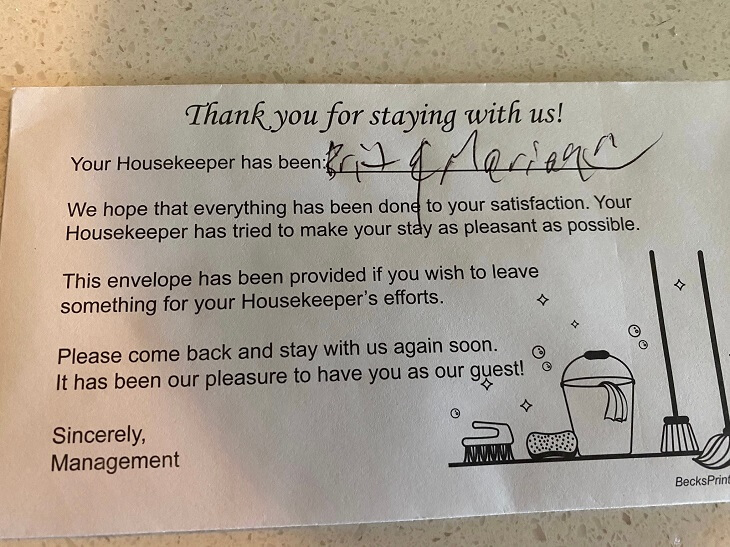
- Use the Provided Envelope: Many hotels now provide a specific envelope in the room for housekeeping tips. If one is present, use it. It signals clearly to the attendant that the money left on the nightstand or desk is intended for them.
- Add a Note: If no envelope is provided, placing the cash in a clear, visible spot—such as on the pillow or the bathroom vanity—accompanied by a brief, written note saying “Thank you” or “For housekeeping,” removes any ambiguity. Without a note, staff members are often instructed to leave money lying in a room untouched to avoid potential theft accusations.
- Timing Your Tip: If you want to ensure the staff knows you appreciate their daily efforts, leave the tip each morning before heading out for the day. This provides a positive start to their workday and ensures that the person servicing your room knows the tip is for their specific efforts.
What if You Don’t Have Cash?
Cash remains king in the hotel industry, as it is the most direct and reliable way to compensate staff. However, as the world becomes increasingly cashless, some guests struggle with having small denominations on hand. If you find yourself at a hotel in San Francisco or Sydney without cash, consider asking the front desk to break larger bills into smaller denominations specifically for this purpose. While some luxury hotels are experimenting with digital tipping platforms via QR codes, these systems are not yet universal. If you cannot tip in cash, a sincere thank-you note left in the room acknowledging the staff’s hard work is better than nothing, though it does not replace the financial benefit of a traditional tip.
The Broader Impact of Your Consideration
Tipping is more than just a transaction; it is a recognition of the human element in hospitality. When you choose to tip the housekeeping staff, you are directly contributing to the well-being of the individuals who facilitate your comfort.
Supporting a Professional Workforce
Hotel housekeeping is physically demanding work that requires precision, speed, and endurance. Whether you are staying at a business-centric property like a Hyatt Regency or a secluded getaway in Bali, the quality of your experience is fundamentally tied to the care taken by the room attendants. By adopting a consistent, thoughtful approach to tipping, you help promote a culture of respect within the travel industry.

Final Thoughts on Responsible Travel
As you navigate your next journey—whether you are exploring the historical grandeur of Prague or the modern skyline of Singapore—remember that the small gestures often have the greatest impact. Tipping housekeeping is a simple, effective way to turn a standard service into a positive exchange of appreciation. By being informed about the expectations, understanding the cultural nuances of your destination, and ensuring your gratitude is clearly communicated, you become a more conscious and respectful traveler. Ultimately, the next time you leave a room in Chicago or Madrid, leave it better than you found it—both in condition and in kindness.
LifeOutOfTheBox is a participant in the Amazon Services LLC Associates Program, an affiliate advertising program designed to provide a means for sites to earn advertising fees by advertising and linking to Amazon.com. Amazon, the Amazon logo, AmazonSupply, and the AmazonSupply logo are trademarks of Amazon.com, Inc. or its affiliates. As an Amazon Associate we earn affiliate commissions from qualifying purchases.