
Introduction to the Entertainment Capital’s Skyline
When travelers envision Las Vegas, the image that invariably comes to mind is the iconic, neon-lit corridor known simply as the Strip. Stretching approximately 4.2 miles through Nevada, this legendary stretch of asphalt is home to some of the most recognizable and sprawling architectural marvels on earth. From replica monuments of European capitals to ultra-modern glass towers, the hospitality landscape here is unmatched anywhere else in the world.
Yet, answering the deceptively simple question of how many hotels are actually on the Las Vegas Strip requires a closer look at geography, definitions, and industry metrics. Officially, the Strip is not a municipality; it is an all-encompassing resort corridor primarily located within unincorporated Paradise, Nevada, extending slightly into Winchester. Because hotel properties blend seamlessly into one another, counting them involves distinguishing between mega-resorts, boutique properties, and nearby auxiliary accommodations.

The Numbers Game: Mega-Resorts vs. Boutique Properties
To understand the true hotel count, one must categorize the properties that line Las Vegas Boulevard. Statistically, the Strip and its immediate surrounding blocks host roughly 30 to 40 major resort complexes. However, if you include every independent hotel, casino property, and extended-stay suite directly touching the corridor, that number expands significantly.
The Giants of the Strip
The most dominant fixtures on the Strip are the massive mega-resorts operated by hospitality giants like MGM Resorts International and Caesars Entertainment. These properties are not merely places to sleep; they are self-contained ecosystems featuring thousands of rooms, massive casino floors, shopping malls, and entertainment arenas.
- The Venetian Resort Las Vegas and its sister property The Palazzo offer an all-suite experience inspired by Venice, Italy.
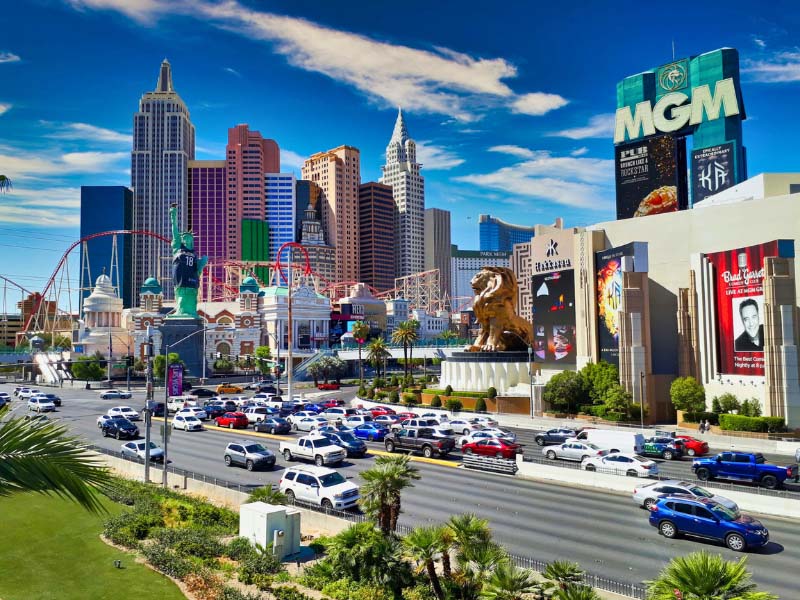
- MGM Grand stands as one of the largest single hotel buildings in the world.
- Caesars Palace transports guests back to the grandeur of the Roman Empire.
- Wynn Las Vegas and Encore Las Vegas represent the pinnacle of luxury, horticulture, and design.
Mid-Sized and Niche Hotels
Beyond the mega-complexes, the Strip features properties that offer a slightly different pace or cater to specific market segments.
- The Cosmopolitan of Las Vegas brings a chic, art-forward, residential-style vibe to the middle of the action.
- Planet Hollywood Resort & Casino appeals to a younger, pop-culture-obsessed demographic.
- Tropicana Las Vegas historically represented the mid-century roots of the boulevard, though landscapes continually shift with new developments like Resorts World Las Vegas and Fontainebleau Las Vegas redefining the northern end.
Room Counts and Capacity Statistics
While the number of individual properties hovers around three to four dozen depending on boundaries, the sheer volume of rooms is staggering. According to the Las Vegas Convention and Visitors Authority, the entire destination boasts well over 150,000 hotel and motel rooms, with a massive percentage concentrated directly on or immediately adjacent to the Strip.
Why Room Counts Matter More Than Hotel Counts
In Las Vegas, a hotel’s size dictates its offerings. A property with 5,000 rooms functions very differently from a boutique stay.
- Scale of Entertainment: Mega-resorts host resident headliners, permanent Cirque du Soleil productions, and massive nightclubs like Omnia Nightclub or XS Nightclub.
- Dining Destinations: Properties like Aria Resort & Casino and Bellagio house dozens of fine-dining establishments helmed by celebrity chefs, transforming the hotel stay into a culinary journey centered around landmarks like the Bellagio Fountains.
The Evolution of Hotel Concepts
The Strip has undergone dramatic transformations over the decades. The era of imploding classic properties—such as the demolition of the Sands Hotel to make room for The Venetian—paved the way for integrated resorts. Today, non-gaming luxury hotels are also carving out a distinct niche. Waldorf Astoria Las Vegas and NoMad Las Vegas offer sophisticated, casino-free environments right in the thick of the electric energy.
Geographical Boundaries: What Is and Isn’t on the Strip
Pinpointing the exact number of hotels requires a clear geographical definition. Geologically and administratively, the Strip begins around Sahara Avenue to the north and stretches southward to Russell Road near McCarran International Airport—now officially renamed Harry Reid International Airport.
The Northern Frontier
The northern terminus of the Strip features historic and modern contrasts. Stratosphere Las Vegas—now branded as The Strat—marks the northern boundary with its soaring tower overlooking the valley. Nearby, newer additions have revitalized this end, proving that hotel development continues to expand outward.
The Heart of the Action
The central and southern portions host the highest concentration of legendary landmarks. Properties like Paris Las Vegas, featuring its own scale-replica of the Eiffel Tower, and New York-New York Hotel and Casino, showcasing a miniature Manhattan skyline, sit within a short walk of each other. Further south, Luxor Hotel and Casino presents a massive glass pyramid, while Mandalay Bay anchors the southern tip alongside Excalibur Hotel and Casino.

Summary of the Strip’s Hospitality Ecosystem
Ultimately, while the exact count fluctuates due to ongoing renovations, rebrandings, and new constructions, travelers can expect to choose from roughly 35 prominent resort destinations directly on the Las Vegas Strip. Together, these properties command a colossal inventory of guest rooms, defining the global standard for hospitality, entertainment, and leisure. Whether you seek the old-school charm of the Flamingo Las Vegas—the oldest operating resort on the boulevard—or the ultra-modern luxury of Mirage Hotel and Casino’s eventual successors, the Strip remains an ever-evolving monument to human imagination and hospitality.
LifeOutOfTheBox is a participant in the Amazon Services LLC Associates Program, an affiliate advertising program designed to provide a means for sites to earn advertising fees by advertising and linking to Amazon.com. Amazon, the Amazon logo, AmazonSupply, and the AmazonSupply logo are trademarks of Amazon.com, Inc. or its affiliates. As an Amazon Associate we earn affiliate commissions from qualifying purchases.