
When planning a getaway to vibrant destinations like New York City or historic hubs such as London, booking the right accommodation is paramount. Among the various features travelers look for, accessibility remains one of the most critical yet frequently misunderstood concepts in the hospitality industry. For travelers with disabilities, seniors, or even parents traveling with strollers, understanding what an accessible hotel truly entails goes far beyond simply finding a room with an elevator. True accessibility is a comprehensive commitment to inclusivity, ensuring that every guest can navigate, enjoy, and experience their stay with dignity, independence, and comfort.
To fully grasp what “accessible” means in the context of hotels, one must look past generic marketing claims and examine the physical infrastructure, digital touchpoints, and staff training that define a genuinely inclusive property. Let us delve into the core dimensions of hotel accessibility, breaking down what guests should expect when booking a stay at prominent establishments like the Fairmont Le Château Frontenac or the Bellagio.
Physical Architecture and Exterior Access
The journey to a seamless hotel experience begins long before a guest steps foot into their guestroom. Physical architecture sets the foundational standard for whether a property can genuinely be classified as accessible.
Arrival, Valet, and Exterior Pathways
An accessible hotel must provide safe, barrier-free entry points from the moment a guest arrives. This includes designated drop-off zones with curb cuts, smooth and level pathways leading to the main entrance, and automatic sliding doors. Properties located in bustling urban centers, such as those near Times Square, often face unique spatial challenges, yet compliance with local and international standards like the Americans with Disabilities Act (ADA) ensures that exterior pathways remain wide enough for wheelchairs and free of abrupt lips or steps.
Lobbies, Elevators, and Public Spaces
Once inside the lobby, the reception area must feature a lowered check-in counter section to accommodate wheelchair users or guests of lower stature. Elevators are another critical lifeline within multi-story properties like the Marina Bay Sands; they must feature Braille tactile buttons, audio floor announcements, and doors that remain open long enough for safe entry and exit. Furthermore, public restrooms, fitness centers, and swimming pool areas must incorporate ramp access, pool lifts, and adequate turning radiuses for mobility devices.
Inside the Guestroom: ADA Compliance and Beyond
While public spaces set the welcoming tone, the guestroom is where accessibility is truly put to the test. A standard room with minor modifications rarely meets the criteria of a dedicated accessible room.
Doorways, Space, and Maneuverability
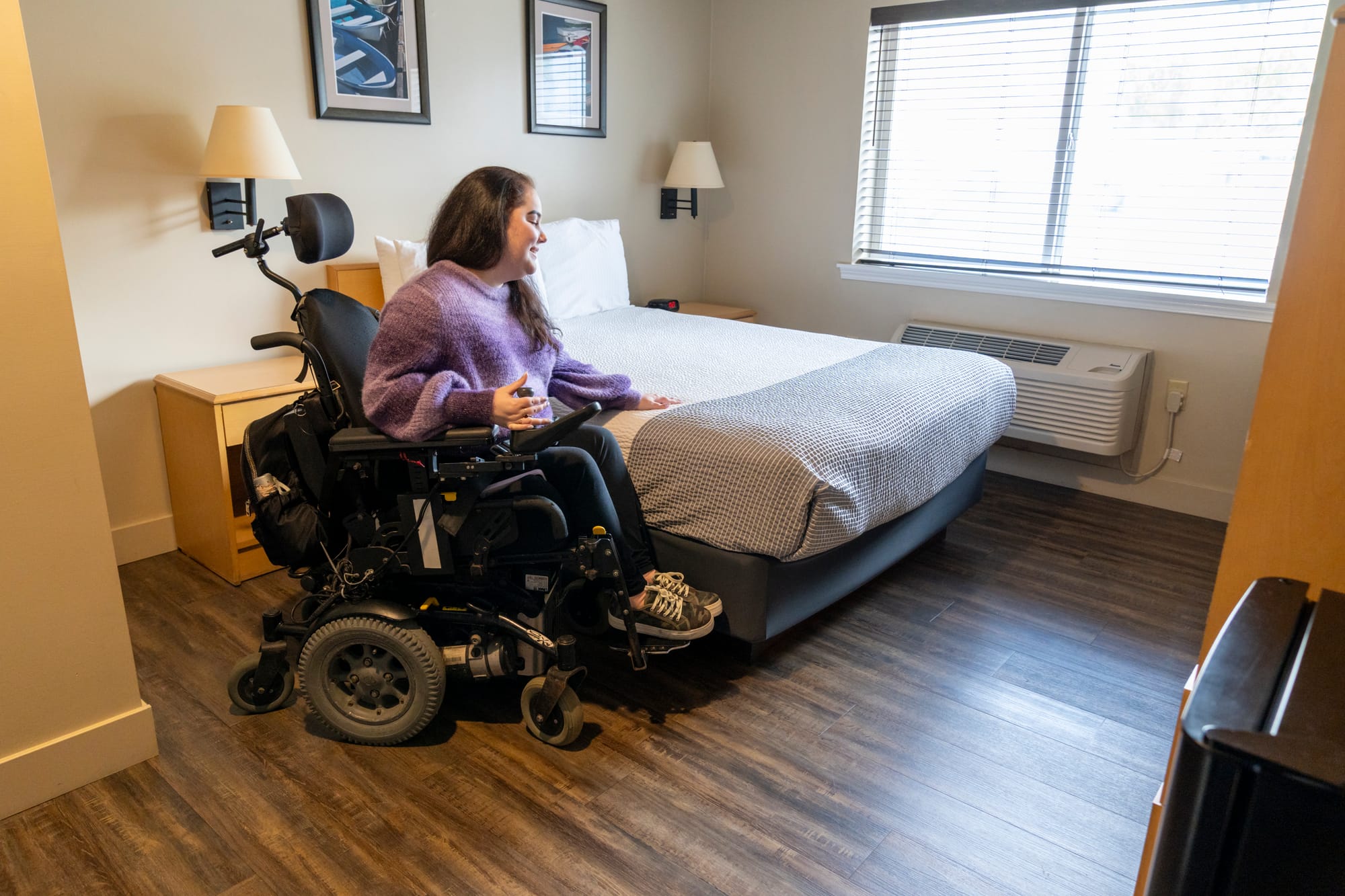
True accessible hotel rooms are strategically designed to provide ample clear floor space. This means wider entry doorways—typically at least 32 to 36 inches wide—allowing easy passage for wheelchairs, walkers, and medical equipment. Inside the room, furniture is arranged to create wide, unobstructed paths. There must be enough space on at least one side of the bed to allow a seamless side-transfer from a wheelchair. Additionally, height adjustments are crucial; beds, light switches, thermostats, and peepholes in doors are positioned lower to ensure effortless reach.
Bathrooms: The Benchmark of Room Accessibility
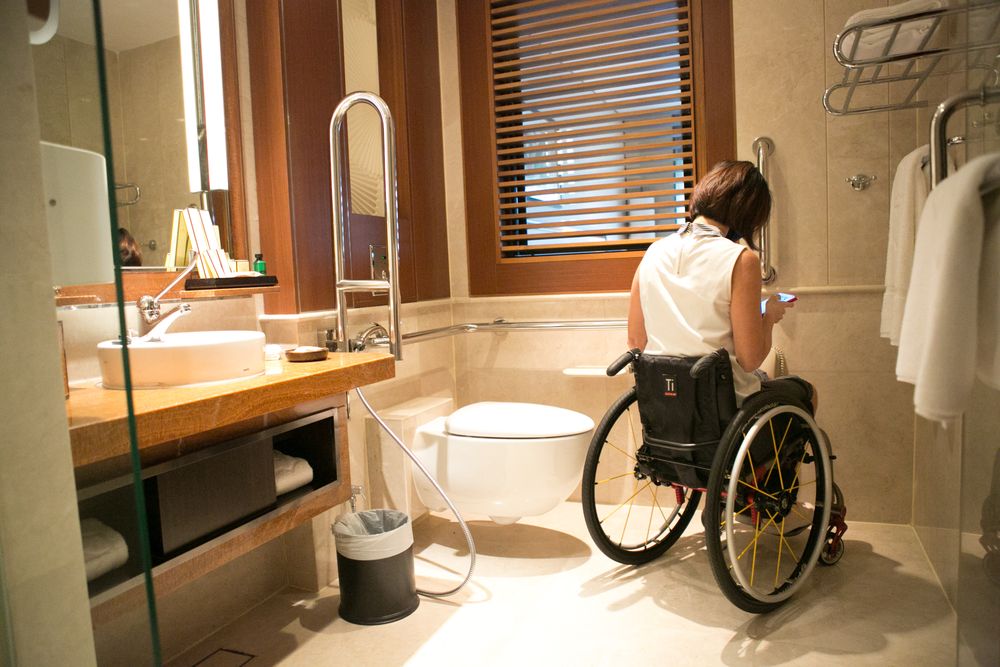
The hotel bathroom is arguably the most complex and vital zone for accessibility. Standard bathtubs often present insurmountable hazards, which is why compliant rooms typically feature roll-in showers equipped with fold-down shower seats, adjustable handheld showerheads, and strategically placed grab bars.
Toilets in accessible bathrooms are set at a specific height—usually between 17 and 19 inches from the floor—and are flanked by sturdy grab bars on the rear and side walls. Sinks must feature insulated pipes to prevent accidental burns to legs, along with knee clearance underneath. Properties renowned for their meticulous attention to detail, such as the Ritz-Carlton, frequently exceed these baseline specifications to offer spa-like luxury without compromising safety or utility.
Technological Accommodations and Sensory Aids
Accessibility is not limited to physical mobility. A comprehensive approach to hotel design must account for guests with visual, auditory, or cognitive impairments. Modern properties leverage technology to bridge sensory gaps and ensure safety for all travelers.
Visual Assistances and Braille Signage
For guests with low vision or complete blindness, navigation aids are indispensable. This includes tactile signage with Braille lettering outside every guestroom, elevator bank, and public facility. Emergency evacuation maps should also feature raised text. Furthermore, some forward-thinking hotels offer contrast-enhanced room decor, making light switches, doorframes, and fixtures easily distinguishable against walls and floors.
Auditory and Communication Kits
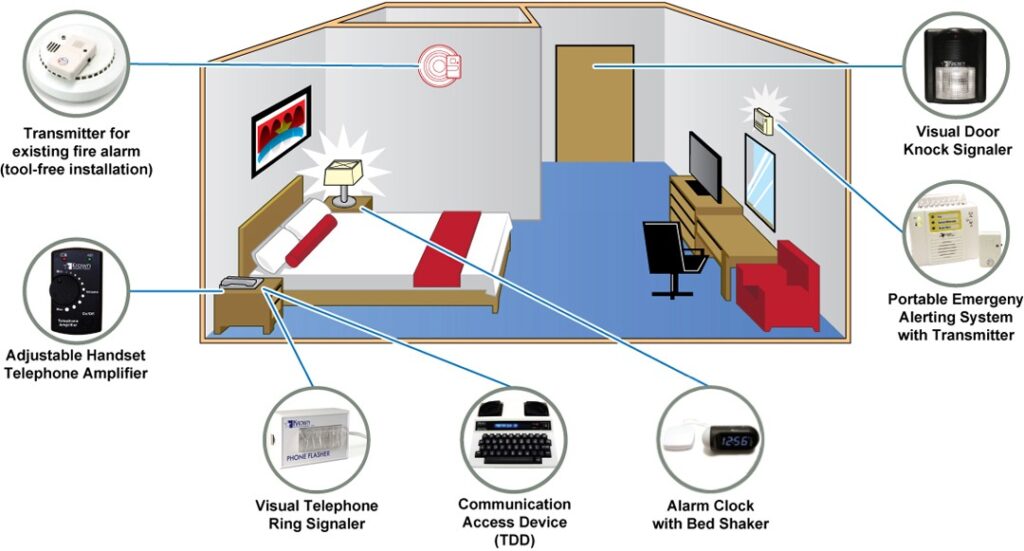
Hearing-impaired guests require alternative signaling systems during their stay. Accessible hotels provide specialized kits upon request. These auxiliary aids typically include:
- Visual strobe fire alarms connected to the hotel’s emergency system.
- Bedshaker alarms that vibrate vigorously beneath the mattress to wake guests in case of an emergency.
- Text telephones (TTY/TDD) and amplified telephone handsets.
- Closed-caption television programming and visual doorbell indicators that flash when someone knocks on the room door.
By integrating these features, management teams at global properties like the Four Seasons Hotel ensure that peace of mind is extended to every single visitor, regardless of their sensory capabilities.
Staff Training, Policies, and Digital Accessibility
Physical infrastructure and technology are only as effective as the people operating them. An accessible hotel culture relies heavily on empathetic, well-trained staff members who understand the nuances of assisting guests with diverse needs.
Empathetic and Educated Hospitality
Front desk agents, concierges, and housekeeping staff must undergo regular training regarding disability etiquette and operational protocols. This involves knowing how to communicate effectively with guests who are deaf or hard of hearing, understanding how to properly store and handle mobility devices, and respecting the independence of service animal handlers. A truly accessible property treats every guest with equal respect, avoiding assumptions about what a traveler can or cannot do.
Digital Accessibility and Transparent Booking
In the modern era of travel planning, accessibility begins online long before the physical journey starts. A hotel’s website and booking engine must adhere to Web Content Accessibility Guidelines (WCAG). This means screen-reader compatibility, high-contrast visual modes, and intuitive keyboard navigation.
Furthermore, transparency is critical during the booking process. Frustration often arises when hotels categorize a room as “accessible” without providing detailed specifications. Top-tier booking platforms and individual hotel websites should offer clear photographs of accessible rooms, precise measurements of doorways and bed heights, and explicit details regarding whether a bathroom features a roll-in shower or a transfer tub. When traveling to bustling cultural capitals like Paris or Tokyo, having precise digital information empowers travelers to make confident reservations tailored to their exact requirements.
Conclusion
Ultimately, asking “What does accessible mean in a hotel?” reveals an answer that goes far beyond ticking boxes on a regulatory checklist. Accessibility is a mindset of radical hospitality. It represents a commitment to removing barriers—both physical and attitudinal—so that the joy of travel and discovery remains open to everyone. Whether you are seeking a grand historic escape or a sleek modern high-rise, choosing an accommodation that prioritizes genuine accessibility ensures a safe, comfortable, and empowering experience for all guests.
LifeOutOfTheBox is a participant in the Amazon Services LLC Associates Program, an affiliate advertising program designed to provide a means for sites to earn advertising fees by advertising and linking to Amazon.com. Amazon, the Amazon logo, AmazonSupply, and the AmazonSupply logo are trademarks of Amazon.com, Inc. or its affiliates. As an Amazon Associate we earn affiliate commissions from qualifying purchases.