
Planning your day in the desert oasis of Las Vegas requires more than just checking your watch; it requires a strategic understanding of the solar cycle. Because the city is nestled in the Mojave Desert, the transition from day to night is not merely a change in lighting—it is a transformation of the entire atmosphere. Understanding exactly when the sun dips below the horizon is essential for capturing the perfect photograph, securing a prime view at a rooftop lounge, or ensuring your excursion into the Valley of Fire State Park concludes before total darkness falls.

The Seasonal Shift of Sunset Times
The timing of sunset in Nevada varies significantly throughout the calendar year due to the Earth’s axial tilt. Visitors expecting a consistent evening glow will find that the window of daylight expands and contracts dramatically between seasons.
Winter Solstice and Early Evenings
During the winter months, specifically in December and January, the sun sets quite early, often between 4:30 PM and 4:45 PM. While this may seem restrictive for outdoor activities, it provides an extended period to enjoy the world-famous neon lights of the Las Vegas Strip. During this time, the crisp desert air creates a unique clarity, making the transition from a cool afternoon to a cold desert night quite sharp. It is the ideal season to visit landmarks like the Fountains of Bellagio just after sunset, as the contrast between the dark sky and the illuminated water display is at its most striking.
Summer Solstice and Late Twilight
Conversely, in the peak of summer—June and July—the sunset pushes well past 8:00 PM, sometimes nearing 8:30 PM. This extended daylight is a double-edged sword for the casual tourist. While it allows for more time at outdoor venues like the High Roller Observation Wheel, it also means that the heat of the day persists long into the evening. Planning a dinner reservation or an outdoor show during these months requires careful coordination with the sunset, as the “Golden Hour” offers a much softer, more bearable ambient temperature for those walking along Las Vegas Boulevard.
Capturing the Golden Hour in the Desert
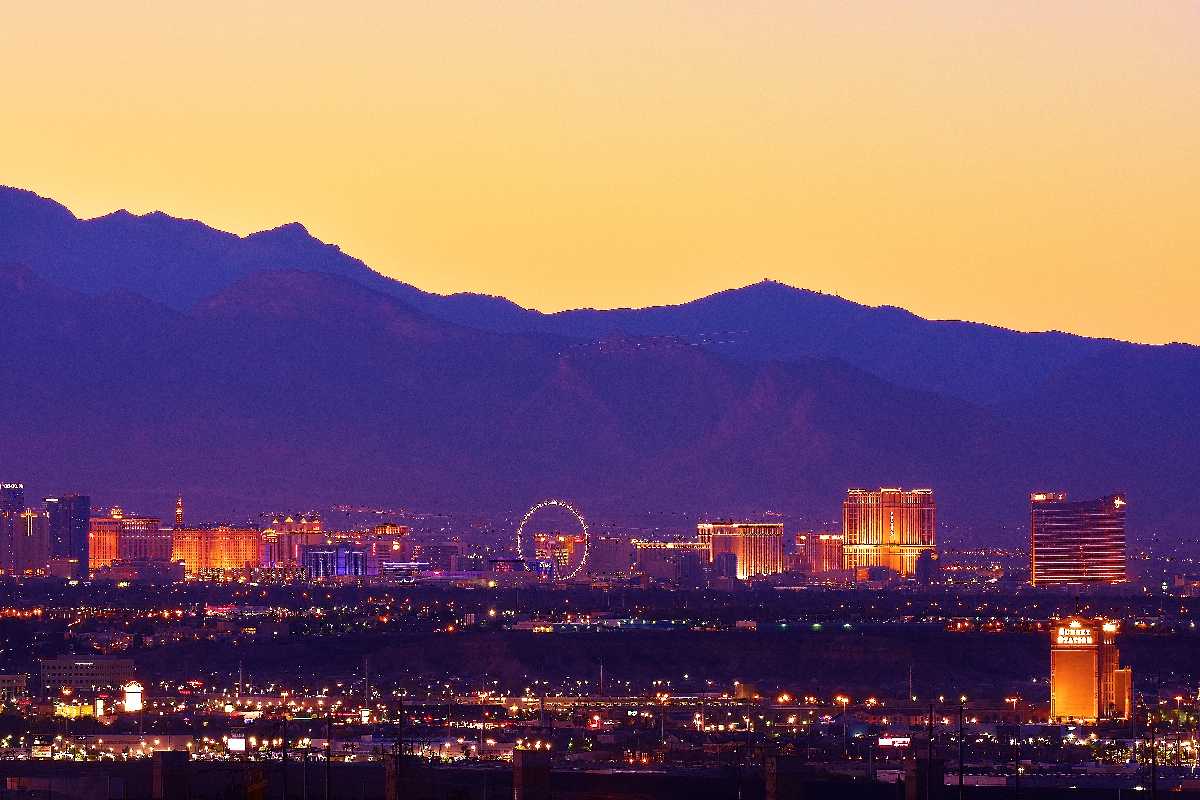
For photographers and travelers alike, the “Golden Hour”—the period shortly after sunrise or before sunset—is the most coveted time of day in the United States. In the desert landscape, the light takes on a warm, honey-like quality that is particularly pronounced against the rugged geography of the surrounding mountains.
Vantage Points for the Perfect Glow
If you are looking to witness the sunset in a way that captures the essence of the region, location is paramount. Watching the sunset from the Stratosphere Tower provides a panoramic view of the entire valley as it begins to sparkle. Alternatively, for a more natural backdrop, the Red Rock Canyon National Conservation Area is perhaps the premier location. As the sun sinks behind the peaks, the sandstone formations seem to catch fire, glowing with vibrant shades of orange, deep purple, and crimson.
The Transition to Neon
Once the sun has fully set, the city undergoes its signature metamorphosis. The transition from the natural desert palette to the artificial luminescence of the Caesars Palace or the Luxor Hotel and Casino is best enjoyed from an elevated position. Sunset marks the beginning of the “night life” that defines the city. Whether you are at a high-end restaurant in the Wynn Las Vegas or wandering the Fremont Street Experience, the timing of the sunset serves as the starting gun for the evening’s festivities.
Planning Tips for Optimal Sunset Viewing
To ensure your sunset experience is seamless, consider these logistical factors. Desert sunsets happen quickly; there is very little “twilight” compared to more humid climates. Once the sun touches the horizon, the drop in temperature and light level occurs rapidly.
Seasonal Preparation
- Check the Local Almanac: Before your trip, verify the exact sunset time for your specific dates. Tools available through local weather services or official city tourism sites provide the most accurate daily predictions.
- Dress in Layers: Regardless of the time of year, desert temperatures drop significantly once the sun vanishes. If you are watching the sunset at an outdoor observation deck or a nearby national park, always carry a light jacket or sweater.
- Bookings and Reservations: If you intend to have a sunset drink at a rooftop bar like those found at The Cosmopolitan of Las Vegas, aim to arrive at least forty-five minutes before the sun sets. This allows you to secure a seat with an unobstructed view of the western horizon.

Respecting the Environment
For those venturing beyond the city limits to places like the Hoover Dam or Lake Mead to watch the sunset, safety must remain a priority. Navigating desert roads in the dark can be treacherous, especially if you are not accustomed to the lack of peripheral lighting. Ensure you have adequate water, a fully charged mobile device, and a clear understanding of your return route before the final rays of light disappear.
The sunset in this vibrant city is more than just a passing of time; it is a fundamental event that dictates the rhythm of the day. By planning your itinerary around the solar cycle, you gain the ability to experience the best of both worlds: the natural, awe-inspiring beauty of the desert landscape and the man-made, electric energy of the MGM Grand and the surrounding resorts. Whether you choose to watch the light fade from the heights of a skyscraper or the depths of a desert canyon, the sunset remains the most consistent and spectacular show that Las Vegas has to offer. Make the effort to align your schedule with this daily occurrence, and you will find that it adds a layer of depth and appreciation to your stay that can only be found in this unique corner of the world.
LifeOutOfTheBox is a participant in the Amazon Services LLC Associates Program, an affiliate advertising program designed to provide a means for sites to earn advertising fees by advertising and linking to Amazon.com. Amazon, the Amazon logo, AmazonSupply, and the AmazonSupply logo are trademarks of Amazon.com, Inc. or its affiliates. As an Amazon Associate we earn affiliate commissions from qualifying purchases.