
Driving through the humid, sun-drenched landscapes of Louisiana requires more than just a reliable vehicle; it necessitates proper preparation for the intense Southern heat. Whether you are navigating the historic streets of New Orleans or embarking on a scenic road trip toward Baton Rouge, window tint is often the first line of defense against the relentless sun. However, before you head to a local shop to darken your windows, it is critical to understand the legal framework governing window film in the Pelican State. Failure to comply can result in hefty fines and the inconvenience of being forced to remove your modifications.
Understanding Louisiana Window Tint Laws
Louisiana has specific statutes under Title 32 of the Louisiana Revised Statutes that regulate the light transmission of automotive window film. These laws are designed with driver and passenger safety in mind, ensuring that law enforcement can clearly identify occupants while still allowing residents to protect their vehicles from UV damage and excessive heat.
The Physics of VLT Percentages
The primary metric used by authorities is Visible Light Transmission (VLT). This percentage represents the amount of light that is permitted to pass through the window film and the glass combined. A lower VLT percentage means the film is darker, while a higher percentage allows more light through. For instance, a 5% tint—often referred to as “limo tint”—blocks 95% of light, whereas a 50% tint allows half of the available light to enter the cabin.
Windshield Regulations
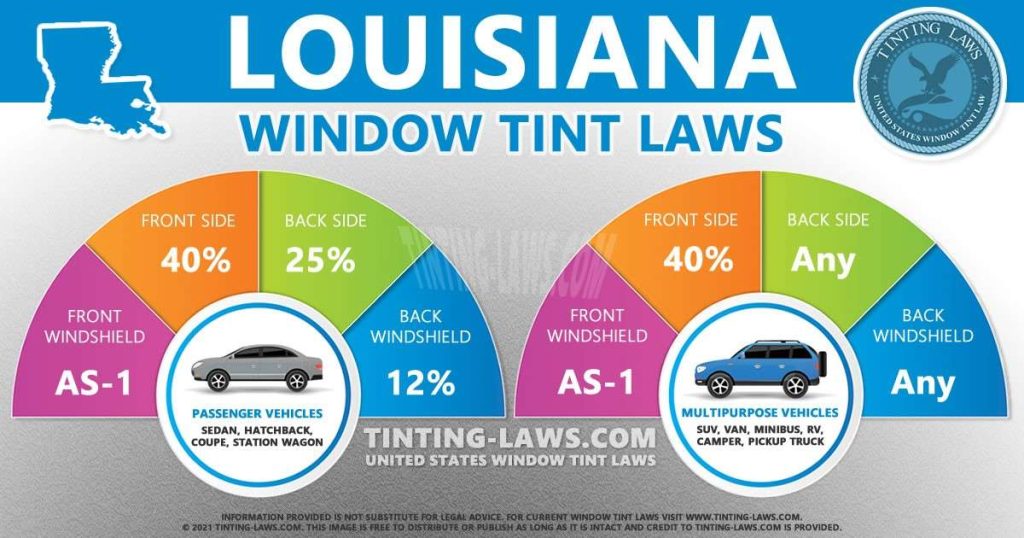
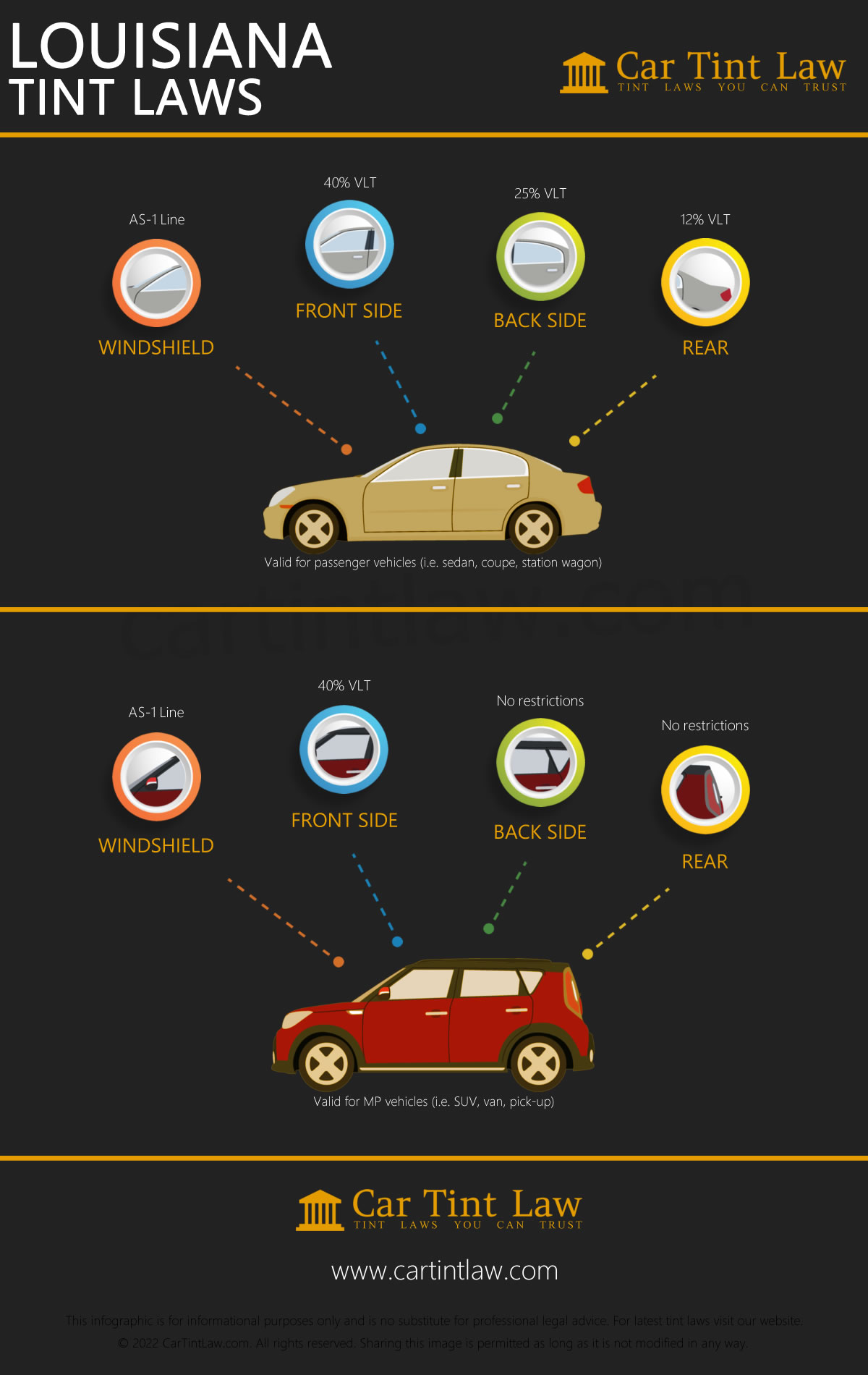
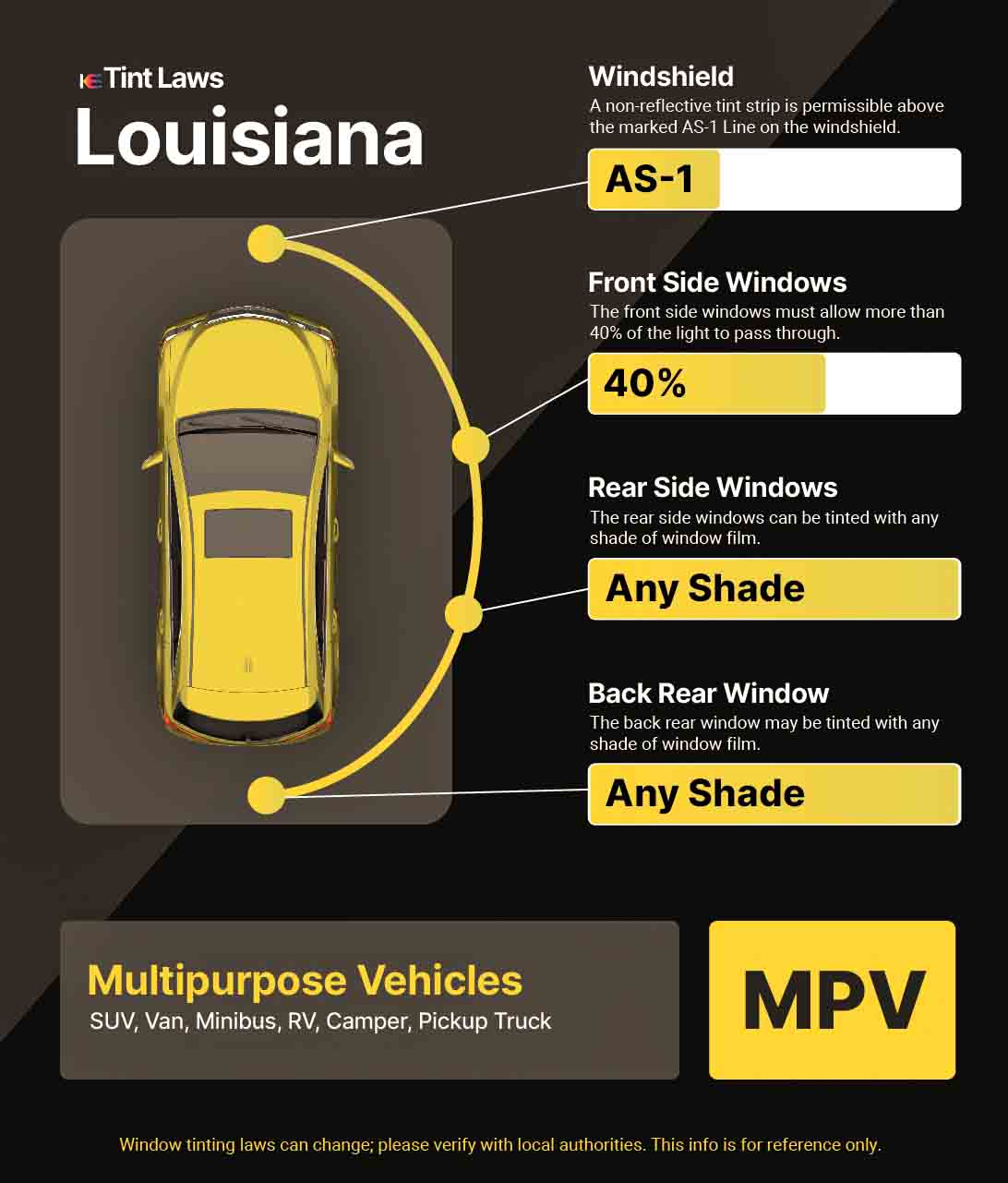
For the windshield, Louisiana law is quite restrictive. You are only permitted to apply a non-reflective tint strip along the very top portion of the windshield, commonly known as the “AS-1 line.” This strip must not extend more than five inches below the top of the windshield. The purpose of this restriction is to maintain clear visibility for the driver, particularly during heavy rainstorms, which are common in coastal regions like Lafayette.
Specific Requirements for Passenger Vehicles
If you are driving a standard sedan, coupe, or crossover, the regulations are distinct from those applied to multipurpose vehicles like SUVs or vans. Ensuring your vehicle complies with these specific numbers is essential for avoiding tickets while visiting sites like Avery Island or touring the industrial corridors near Lake Charles.
Front and Rear Side Windows
On passenger vehicles, the front side windows must have a VLT of at least 40%. The rear side windows, however, allow for significantly darker film, permitting a VLT of 25%. This gradation is standard, as it provides a compromise between cabin privacy and the driver’s ability to see through the mirrors at night.
The Rear Window
The rear window—the glass directly behind the back seats—is also permitted to have a VLT of 25%. If the rear window is tinted to this level, Louisiana law requires that the vehicle be equipped with dual side mirrors, allowing the driver to maintain a proper field of vision regardless of the tint density on the rear glass.
Rules for SUVs, Vans, and Trucks
Multipurpose vehicles and trucks often fall under a different set of guidelines in North America. Many of these vehicles come from the factory with “privacy glass” already installed on the rear portions of the vehicle.
Factory Tint vs. Aftermarket Film
It is vital to distinguish between factory-tinted glass and aftermarket film. Many SUVs and trucks have rear windows that are darkened during the manufacturing process. Louisiana law recognizes these factory specifications. If you choose to add additional aftermarket film to these windows, the final combined VLT must still meet safety standards.
Exemption for Medical Conditions
In rare cases, individuals with specific medical conditions that make them sensitive to sunlight may apply for a medical exemption. This requires documentation from a licensed physician and must be filed through the Louisiana Department of Public Safety and Corrections. If approved, this waiver allows the vehicle owner to install tint that is darker than the standard legal limits. However, this documentation should always be kept within the vehicle, as officers may request proof of the exemption during a traffic stop.
Reflection and Compliance: Avoiding Legal Issues
Beyond the VLT percentage, the state of Louisiana also regulates the reflectivity of the window film. Excessive reflection can create a “mirror” effect, which is considered a safety hazard to other drivers on the road.
Prohibited Reflective Properties
Window tint that is excessively reflective or mirrored is generally prohibited. The law requires that the tint not be more reflective than a standard window. Reflective film can cause glare for other motorists, potentially leading to accidents. When selecting a film at a shop in Shreveport or Monroe, always ask the technician if the product is street-legal according to Louisiana state standards.
The Importance of Certification Labels
When you have your windows professionally tinted, the installer is required to place a small sticker or certificate between the glass and the film on the driver’s side window. This label identifies the name of the installer and the VLT of the film used. This is a crucial piece of documentation. If you are pulled over, this label serves as immediate proof that your windows were professionally installed to meet state requirements, which can save you from a time-consuming inspection by a police officer.
Staying Updated
Laws can occasionally evolve, and local municipalities may have their own minor ordinances. Before taking a cross-state trip from Texas or Mississippi into Louisiana, it is wise to confirm that your tint complies with local standards. While most states have reciprocity agreements, adhering to the strictest interpretation of the law ensures that your focus remains on the beautiful scenery, the incredible local food in New Orleans, and the vibrant culture of the South, rather than on roadside citations.
By maintaining your vehicle within these legal parameters, you can enjoy the comfort of a cooler interior without drawing unnecessary attention from the authorities. Whether you are driving through the bayous or commuting to a business center in Metairie, clarity and compliance are the keys to a stress-free journey through the Bayou State. Always consult with a certified window tinting professional if you are unsure about the VLT of your current glass, as they often have specialized meters that can provide an instant reading of your vehicle’s light transmission levels. Investing in high-quality, legal film not only protects your car’s interior from fading but also ensures you remain a responsible driver while traversing the unique, winding roads of Louisiana.
LifeOutOfTheBox is a participant in the Amazon Services LLC Associates Program, an affiliate advertising program designed to provide a means for sites to earn advertising fees by advertising and linking to Amazon.com. Amazon, the Amazon logo, AmazonSupply, and the AmazonSupply logo are trademarks of Amazon.com, Inc. or its affiliates. As an Amazon Associate we earn affiliate commissions from qualifying purchases.