
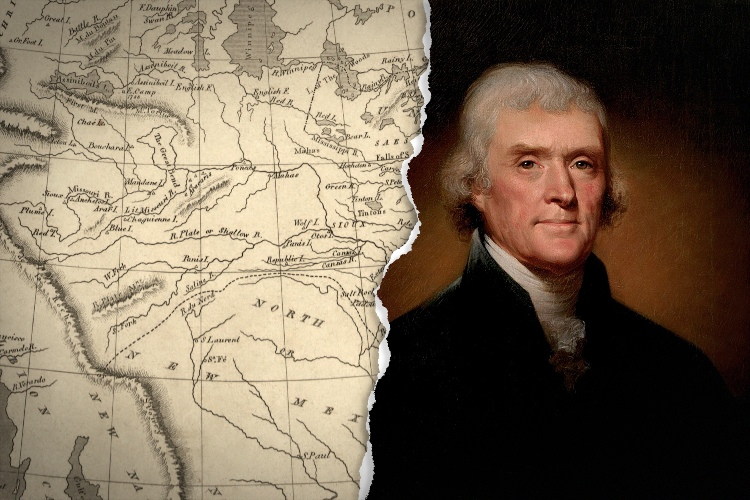
The acquisition of the Louisiana Territory stands as one of the most transformative events in the history of the United States. When Thomas Jefferson authorized the deal in 1803, he effectively doubled the size of the young nation, securing a vast expanse of land that would eventually encompass all or parts of fifteen modern states. Understanding the complex geopolitical landscape of the early 19th century is essential to grasping how this massive transaction came to fruition.
The Geopolitical Context: France and the New World
To understand the transaction, one must look at the shifting tides of power in Europe. By the late 18th century, the Louisiana Territory had passed between Spain and France several times.
The Ambitions of Napoleon Bonaparte
Napoleon Bonaparte held a vision of re-establishing a French colonial empire in the Americas. His strategy relied heavily on the island of Saint-Domingue—modern-day Haiti—as a profitable sugar-producing hub that would serve as the economic anchor for the North American mainland. However, the Haitian Revolution, led by figures like Toussaint Louverture, decimated the French military forces and ruined the economic viability of the Caribbean colony.
The Strategic Shift
With the loss of Saint-Domingue, Napoleon realized that defending a sprawling territory in North America would be nearly impossible, especially with a renewed war against Great Britain looming on the horizon. Napoleon needed funds to finance his military campaigns in Europe, and he feared that if he did not sell the territory, the British might seize it by force. Thus, the decision to sell to the United States was a pragmatic calculation meant to divest from an indefensible asset while securing capital for European dominance.
The Negotiations: Jefferson’s Diplomatic Gamble
When Thomas Jefferson sent Robert R. Livingston and James Monroe to Paris, his initial goal was quite modest. He primarily wanted to secure control of the port of New Orleans and the Mississippi River, which were critical for the economic survival of American farmers living in the Ohio Valley.
A Proposal Beyond Expectations
Upon arriving in Paris, the American envoys were shocked to be offered the entirety of the territory instead of just the city of New Orleans. The French foreign minister, Charles Maurice de Talleyrand, played a central role in the discussions, but the decision ultimately rested with Napoleon. The American diplomats faced a significant dilemma: they lacked the specific authorization from Jefferson to purchase such a vast amount of land, yet they knew that waiting for instructions would likely result in the offer being rescinded.

Finalizing the Treaty
In April 1803, the parties reached an agreement. The United States would pay 60 million francs ($11,250,000) and assume claims of its citizens against France in the amount of 18 million francs ($3,750,000), totaling approximately $15 million. This price—roughly four cents an acre—remains one of the greatest real estate bargains in global history. The treaty was signed, and while Jefferson grappled with the constitutionality of the purchase, the United States Senate ultimately ratified the agreement, forever altering the trajectory of the nation.
Impact on the American Landscape
The acquisition did not merely provide land; it opened up a frontier that invited exploration and westward expansion. The subsequent Lewis and Clark Expedition, commissioned by Jefferson, was the first official effort to map this vast new domain.
Shaping the American Identity
The Louisiana Purchase shifted the focus of American life toward the West. It provided the resources, timber, minerals, and agricultural land necessary to fuel the growth of the nation throughout the 19th century. From the rolling plains of Kansas and Nebraska to the rugged beauty of Montana, the territory became a symbol of potential and opportunity.
Historical Significance of the Landmarks
Today, the region serves as a living museum of American history. Visitors to St. Louis, the gateway to the West, can view the Gateway Arch, which commemorates the spirit of expansion that followed the 1803 purchase. Throughout the Great Plains, historic sites and museums preserve the legacy of the indigenous peoples who occupied the land long before the Louisiana Purchase Treaty was ever conceived.
Legacy and Reflection
The transaction was more than a financial exchange between two governments; it was a watershed moment that defined the United States of America as a continental power. While Napoleon saw only a way to solve his immediate military funding issues, Jefferson saw the future of a republic that would stretch from the Atlantic Ocean to the Pacific Ocean.
The Human Cost
It is vital to acknowledge that this land was already inhabited by diverse Native American nations. The transfer of sovereignty from France to the United States initiated a challenging era of conflict, displacement, and transformation for these indigenous groups. As travelers and historians traverse the modern landscape—from the bustling streets of Denver to the quiet stretches of the Missouri River—it is important to recognize the multifaceted history that underlies the ground they walk upon.

A Modern Perspective
When we look at the map of the United States today, the Louisiana Purchase serves as the foundation for the central core of the country. It was an unprecedented act of diplomacy that allowed a young, fragile nation to secure its economic future and avoid long-term entanglements with European colonial powers. By purchasing the land from France, the United States removed a major obstacle to its growth and set the stage for its emergence as a global leader.
Ultimately, the question of who sold the Louisiana Purchase is simply answered by identifying Napoleon Bonaparte and the French Empire, but the implications of that answer are as complex as the geography of the territory itself. From the perspective of Western Civilization, the deal is a testament to the influence of geopolitical timing, the unpredictable nature of war, and the bold, if often controversial, decisions of leaders who shaped the modern world. Exploring the history of this territory is an invitation to engage with the very foundations of the North American continent, providing a deeper understanding of how the map was drawn and the stories that define the land today.
LifeOutOfTheBox is a participant in the Amazon Services LLC Associates Program, an affiliate advertising program designed to provide a means for sites to earn advertising fees by advertising and linking to Amazon.com. Amazon, the Amazon logo, AmazonSupply, and the AmazonSupply logo are trademarks of Amazon.com, Inc. or its affiliates. As an Amazon Associate we earn affiliate commissions from qualifying purchases.