
The Louisiana Purchase of 1803 stands as one of the most consequential real estate transactions in human history. To understand why Napoleon Bonaparte would willingly relinquish a massive, resource-rich territory—effectively doubling the size of the nascent United States—one must look beyond simple economics. This transfer of land, which fundamentally reshaped the North American continent, was the result of a desperate geopolitical calculation, colonial failure, and the shifting tides of the Napoleonic Wars.
The Shattered Dream of a Caribbean Empire
Long before Thomas Jefferson dispatched envoys to Paris, Napoleon held a grand vision for a restored French colonial empire. Central to this plan was Saint-Domingue, present-day Haiti, which was the crown jewel of the French West Indies. This island was the world’s leading producer of sugar and coffee, providing the immense wealth necessary to fund France’s European military ambitions.

The Catastrophe in Saint-Domingue
The vision of a Caribbean empire crumbled under the weight of the Haitian Revolution. A slave revolt, led by figures like Toussaint Louverture, proved far more resilient than French forces had anticipated. Napoleon dispatched a massive expeditionary force to regain control, but the combination of guerrilla warfare and a devastating yellow fever outbreak decimated the French army.
Without Saint-Domingue, the Louisiana Territory—which was intended primarily as a granary and supply depot for the Caribbean colonies—lost its strategic purpose. With the dream of a Western empire dead, Napoleon realized he could no longer hold or defend the vast, sprawling lands of the Mississippi River basin.
The Looming Conflict with Great Britain
While the failure in the Caribbean served as the primary catalyst, the imminent renewal of hostilities with Great Britain provided the final push for the sale. Napoleon knew that if France went to war with the British Empire, the Royal Navy would quickly blockade New Orleans and cut off the territory from any hope of reinforcement or resupply.
Liquidating Assets for War
War is expensive, and Napoleon needed cold, hard cash to equip his armies for the conquest of Europe. By selling Louisiana to the United States, France achieved two strategic goals:
- It converted a vulnerable, undefendable overseas asset into a liquid treasury of approximately 60 million francs, plus the assumption of debts.
- It bolstered a rising naval and economic power, the United States, effectively creating a long-term rival for Great Britain across the Atlantic Ocean.

Napoleon famously remarked that the sale would “strengthen forever the power of the United States” and give the British a maritime rival that would eventually humble their pride.
The Diplomatic Dance in Paris
The actual transaction was a whirlwind of diplomatic maneuvering. Thomas Jefferson, worried about French control of the Mississippi River and access to the port of New Orleans, had initially sent Robert Livingston and James Monroe to France simply to negotiate the purchase of the city itself.
An Unexpected Offer
When the French Foreign Minister Charles Maurice de Talleyrand suggested the sale of the entire Louisiana Territory, the American envoys were stunned. They had no authorization to purchase such a massive tract of land, but they recognized a once-in-a-lifetime opportunity.
The deal moved with startling speed in the spring of 1803. For a price of roughly $15 million, the United States acquired approximately 828,000 square miles of territory. This bargain price, which averaged about four cents per acre, transformed the United States from a burgeoning coastal nation into a continental power.
A Legacy of Geography and Power
The repercussions of the sale were felt globally. For France, the exit from North America marked the end of an era of colonial expansion in the Americas. For the United States, it opened the floodgates for westward expansion, eventually pushing the frontier toward the Rocky Mountains and the Pacific Ocean.
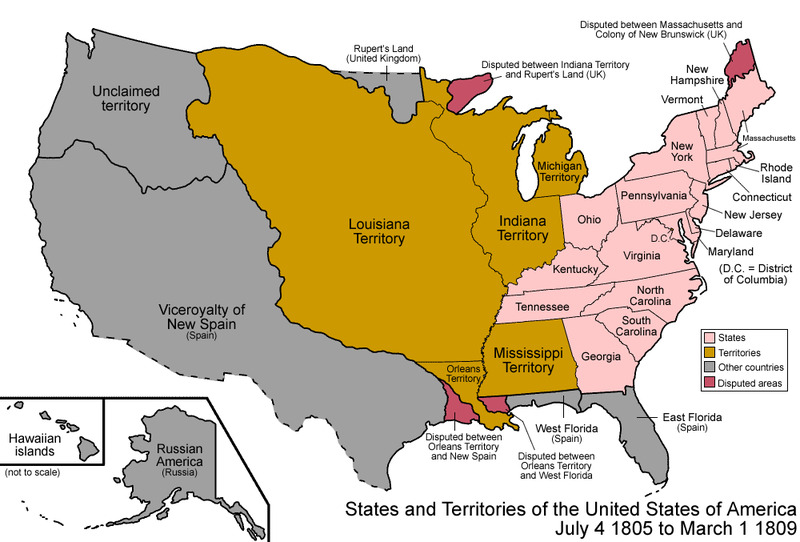
The Changed Landscape of North America
The acquisition included parts of what would become fifteen different states, stretching from the Gulf of Mexico to the Canadian border. It secured the Mississippi River as a commercial artery, allowing farmers in the interior of the United States to export goods through the critical port of New Orleans.
This historic deal was, at its core, a pragmatic, albeit forced, decision by Napoleon. He chose to trade distant, insecure wilderness for the immediate resources required to wage total war in Europe. In doing so, he unintentionally set the stage for the United States to become the global titan of the twentieth century, leaving behind a legacy that still defines the political and geographic boundaries of the modern Western Hemisphere. History serves as a reminder that the world map is often rewritten not by long-term planning, but by the urgent, immediate necessities of empires facing their own survival.
LifeOutOfTheBox is a participant in the Amazon Services LLC Associates Program, an affiliate advertising program designed to provide a means for sites to earn advertising fees by advertising and linking to Amazon.com. Amazon, the Amazon logo, AmazonSupply, and the AmazonSupply logo are trademarks of Amazon.com, Inc. or its affiliates. As an Amazon Associate we earn affiliate commissions from qualifying purchases.