
The Maine Coon is a breed shrouded in mystery, folklore, and an undeniable fascination with the liquid element. Often referred to as the “gentle giants” of the cat world, these felines hail from the harsh, snowy climates of Maine, the northeastern-most state in the United States. Unlike many other domestic cat breeds that treat a bath like a battleground, the Maine Coon frequently displays an inquisitive, and sometimes obsessive, affinity for water. Whether it is dipping a paw into a water bowl, splashing in a shallow tub, or attempting to join their owners in the shower, their behavior remains a unique trait within the feline kingdom.

Historical Origins and Climate Adaptations
To understand the aquatic nature of the Maine Coon, one must look at their ancestral roots. While legends suggest they are a cross between a domestic cat and a raccoon—a biological impossibility—the reality is far more practical. These cats developed in the rugged environment of North America.
The Role of the Harsh New England Environment
The climate in New England is defined by long, icy winters and frequent precipitation. Nature favored the survival of cats that possessed semi-water-resistant fur. The Maine Coon coat is dense, shaggy, and possesses a slightly oily texture that acts as a natural barrier against moisture. Because their ancestors had to navigate wet, snowy forests to hunt and survive, they lacked the fear of dampness that is often hardwired into feline breeds originating from arid desert regions.
Evolutionary Advantage
This evolutionary conditioning means that water is not viewed as a threat to a Maine Coon in the way it is for breeds like the Abyssinian or the Siamese. Instead, water is simply a feature of the environment. If a cat is not biologically programmed to fear the texture of water because their coat protects them from becoming dangerously chilled, they are significantly more likely to approach it with curiosity rather than trepidation.
The Science of Water Play
Beyond survival, there is a strong behavioral component to why these cats enjoy water. It is not merely a byproduct of their coat; it is a manifestation of their high intelligence and playful temperament.
Sensory Stimulation and Curiosity
Maine Coons are highly tactile creatures. They use their large, tufted paws to investigate their surroundings with precision. A bowl of standing water offers constant sensory input—reflections, movement, and the sound of ripples. Many owners notice that their Maine Coon will “fish” in their water bowl, batting at the surface or moving the bowl around to watch the water oscillate. This is a form of environmental enrichment that stimulates their predatory instincts in a controlled, indoor setting.
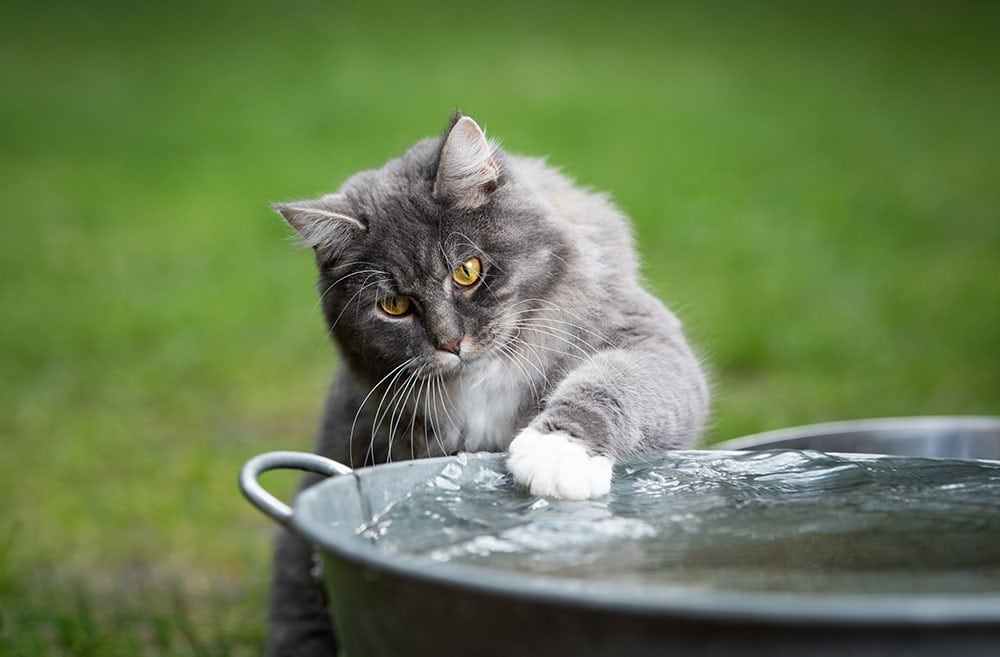
The “Hunting” Instinct
In the wild, water is a source of movement. Maine Coons possess a strong prey drive. When they encounter running water, such as a faucet, it mimics the movement of small wildlife or moving streams. By interacting with the water, they are engaging in a simulation of hunting. Tapping a dripping faucet is, to the cat, an exercise in tracking and pouncing, which provides necessary mental and physical stimulation for a high-energy breed.
Managing the Aquatic Nature in a Home Environment
Owning a breed that enjoys water is a rewarding experience, but it requires homeowners to understand how to channel this energy safely and effectively. Living with a cat that likes to splash can be chaotic if not managed properly.
Providing Enrichment Without the Mess
Many owners of this breed have learned that it is better to provide controlled water play than to deal with the consequences of an inquisitive cat discovering a full bathroom sink. Installing a specialized water fountain can satisfy their desire for running water while keeping the kitchen floor dry. Fountains also encourage better hydration, which is vital for the long-term health of large-framed cats prone to kidney issues.
Safety Considerations
While Maine Coons are resilient, caution is still necessary. Household cleaning agents, essential oils, and aquatic accessories can be hazardous.
- Keep Chemicals Secure: Ensure that buckets of soapy water or cleaning solutions are never left unattended.
- Supervised Access: If your cat enjoys the bathtub, ensure the basin is thoroughly rinsed of any residue before allowing them to play.
- Temperature Control: Always ensure the water is room temperature. Extremely cold water can be a shock to a cat’s system, while hot water can cause thermal burns to their sensitive paw pads.
The Maine Coon Personality: An Extension of Their Environment
The fascination with water is ultimately a window into the Maine Coon’s broader personality. They are gregarious, “dog-like” companions who want to be involved in every aspect of their human’s life. If you are in the bathroom, they want to be there too. If you are washing dishes, they are interested in the activity.
The “Shadow” Behavior
This breed is known as the “shadow” of the household. Their water-seeking behavior is often less about the water itself and more about being near their owners. By following their humans into the bathroom or watching them intently as they use the shower, the Maine Coon is reinforcing social bonds. They are curious about what you are doing, and if that involves water, they want to be part of the exploration.

Training and Boundary Setting
Because they are so intelligent, Maine Coons can be trained. If their aquatic curiosity becomes disruptive—such as turning on taps in the middle of the night—positive reinforcement can be used to set boundaries. Providing them with their own “water station” in a designated area of the home, equipped with puzzle feeders or shallow basins with floating toys, can satisfy their instinctual need to interact with water without sacrificing the tranquility of your living space.
The enduring popularity of the Maine Coon can be attributed to their rugged charm and their remarkably adaptable temperament. Their love for water is simply one facet of their complex, delightful nature. By understanding that this behavior is rooted in both their historical North America heritage and their innate curiosity, owners can better appreciate these magnificent creatures. They are not just pets; they are adventurous companions who see the world—and every puddle they find within it—as an opportunity for exploration and play. Embracing their aquatic quirks allows for a deeper connection with a breed that truly stands out as one of the most interesting animals to share a home with.
LifeOutOfTheBox is a participant in the Amazon Services LLC Associates Program, an affiliate advertising program designed to provide a means for sites to earn advertising fees by advertising and linking to Amazon.com. Amazon, the Amazon logo, AmazonSupply, and the AmazonSupply logo are trademarks of Amazon.com, Inc. or its affiliates. As an Amazon Associate we earn affiliate commissions from qualifying purchases.