
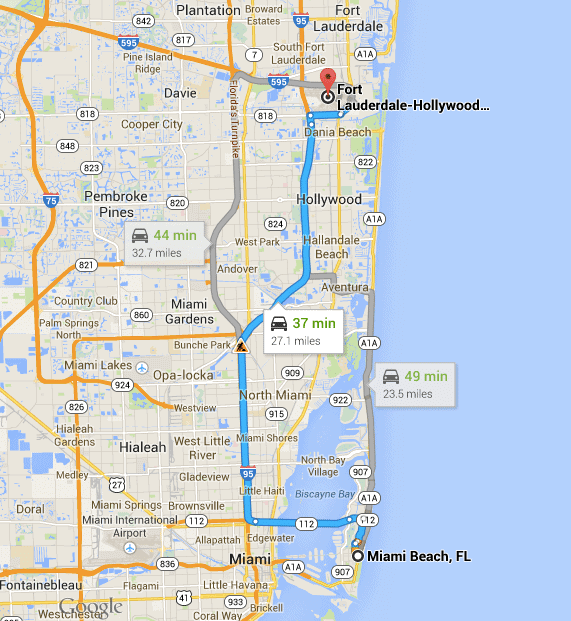
Traveling from Fort Lauderdale-Hollywood International Airport to Miami is a common journey for both leisure travelers and business professionals. Located approximately 30 miles north of downtown Miami, the airport serves as a primary gateway to South Florida. While the proximity between the two cities makes transit relatively straightforward, choosing the right method depends on your budget, schedule, and luggage requirements. Understanding the logistics of this transfer ensures a seamless start to your time in the Sunshine State.
Navigating Public Transportation Options
For travelers looking to minimize costs, public transportation remains the most economical route. While there is no direct “door-to-door” train service from the terminal arrivals hall, a combination of regional transit options connects Broward County to the vibrant heart of Miami-Dade County.
Brightline High-Speed Rail
The most efficient and modern way to travel between the two hubs is the Brightline. Passengers can take a short rideshare or bus from the airport to the Fort Lauderdale Station. Once aboard the train, you will enjoy a comfortable, high-speed ride directly to MiamiCentral in the heart of downtown. This option is ideal for those who prefer to avoid traffic congestion on Interstate 95 and want to work or relax in a premium environment.
Tri-Rail Commuter Service
The Tri-Rail is a reliable commuter train system that offers a budget-friendly way to cross the county line. Travelers can board a free shuttle bus from the airport terminals to the Fort Lauderdale Airport Station. From there, the train travels south to Miami International Airport, where passengers can easily transfer to the Metrorail to reach various neighborhoods like Brickell or Coconut Grove. It is an excellent choice for those who value predictability and want to avoid the variability of roadway travel times.
Utilizing Private Transportation and Rideshare Services
When traveling with family or carrying significant luggage, the convenience of door-to-door service is often worth the extra expenditure. The arrivals area at the airport is well-organized for those opting for private vehicles.
Rideshare Apps
Uber and Lyft are the most popular choices for tourists and locals alike. Dedicated pickup zones are clearly marked outside each terminal. Because the drive to downtown Miami can take anywhere from 40 to 90 minutes depending on the time of day, it is wise to check the fare estimate within the app before finalizing your request. During peak hours, prices can surge, so consider the trade-offs before committing.
Private Car Services and Taxis
For a more personalized experience, Airport Taxis offer flat-rate options for specific zones, which provides transparency in pricing. Additionally, hiring a private car service in advance is a stress-free way to navigate the region. This is particularly beneficial if you are heading to specific districts such as South Beach or Wynwood, as a professional driver will be familiar with the local traffic patterns and can select the most efficient route, whether via the turnpike or the express lanes on the interstate.
Driving Yourself via Rental Car
Many visitors choose to rent a vehicle to enjoy the freedom of exploring the wider Florida region. The Rental Car Center at the Fort Lauderdale airport is conveniently accessible via a pedestrian bridge or shuttle, housing all major rental agencies under one roof.
Route Planning and Traffic Considerations
Driving from the airport to Miami is essentially a straight shot south, but traffic in South Florida can be intense. The primary artery is I-95, which features express lanes that require a SunPass for payment. If you are not familiar with the local electronic toll systems, ensure your rental car is equipped with a transponder.
During rush hour—typically 7:00 AM to 9:30 AM and 4:00 PM to 7:00 PM—the highway can experience significant delays. In such instances, travelers heading to the Miami Design District or Little Havana might find local arterial roads to be a slower but less congested alternative. Always monitor real-time traffic updates to adjust your departure time or route accordingly.
Parking and Destination Logistics
Once you reach your destination, be mindful that parking in major hubs like Downtown Miami or near the Port of Miami can be both scarce and expensive. If your accommodation is in a high-density area, check whether your hotel offers valet service or if there are nearby public parking garages. Planning your parking strategy ahead of time will prevent the frustration of circling crowded city streets after a long day of travel.
Travel Tips for a Smooth Transfer
Regardless of which transport method you choose, a few strategic decisions can drastically improve your travel experience between these two iconic cities.
Timing Your Arrival
Flight timing plays a massive role in the ease of your transfer. Arriving outside of the standard work-week commute windows will always result in a faster and more pleasant trip. If your schedule allows, aim to land in the late morning or early afternoon to bypass the heaviest congestion on the road.
Luggage Management
If you are traveling with large suitcases, prioritize options that minimize physical labor. While the Tri-Rail is inexpensive, it requires navigating station platforms and potentially connecting to other public transit systems, which can be cumbersome with heavy bags. In these cases, a direct rideshare or a pre-arranged shuttle service offers the best balance of convenience and efficiency.
Accessibility Needs
Both the Fort Lauderdale airport and the transit systems servicing the region are compliant with the Americans with Disabilities Act. If you require specialized assistance, such as wheelchair-accessible taxis or elevators at train stations, it is recommended to research specific transit providers in advance. Most services offer dedicated support channels that can be contacted prior to your arrival to ensure all necessary accommodations are ready upon landing.

Summary of Best Practices
- For Speed: Choose Brightline if you want to avoid highway traffic entirely.
- For Economy: Utilize the Tri-Rail if you are traveling light and looking to save money.
- For Convenience: Book a private car or utilize an Uber if you are traveling with a group or have multiple pieces of luggage.
- For Freedom: Rent a vehicle if you plan to explore beyond the city limits of Miami into areas like the Florida Keys or the Everglades.
By evaluating these factors—time, budget, and logistical requirements—you can easily navigate the distance between these two hubs, allowing you to focus on enjoying everything South Florida has to offer. Whether you are arriving for a weekend getaway or an extended business trip, the transition from the airport to the city can be an effortless part of your journey if you plan accordingly.
LifeOutOfTheBox is a participant in the Amazon Services LLC Associates Program, an affiliate advertising program designed to provide a means for sites to earn advertising fees by advertising and linking to Amazon.com. Amazon, the Amazon logo, AmazonSupply, and the AmazonSupply logo are trademarks of Amazon.com, Inc. or its affiliates. As an Amazon Associate we earn affiliate commissions from qualifying purchases.