
New Mexico is often defined by its stark, desert beauty, but beneath the vast horizon lies a dramatic vertical landscape. The state is a rugged tapestry of high-altitude wilderness, characterized by significant mountain ranges that serve as the backbone of the Southern Rocky Mountains and the Basin and Range Province. From the snow-capped peaks of the north to the isolated “sky islands” of the south, the mountains here are not merely geological features; they are the lifeblood of the region’s climate, ecology, and heritage.
The Northern Ranges: The Southern Rockies
The northern portion of the state serves as the terminus of the Rocky Mountains. This region is characterized by lush alpine meadows, dense conifer forests, and peaks that pierce the clouds at over 13,000 feet.

The Sangre de Cristo Mountains
The Sangre de Cristo Mountains represent one of the most prominent features in the state. Extending from Colorado down to the vicinity of Santa Fe, these “Blood of Christ” mountains are named for the brilliant crimson hue they take on during sunrise and sunset. This range is home to Wheeler Peak, which stands as the highest point in the state at 13,161 feet. For outdoor enthusiasts, the Pecos Wilderness offers an expansive network of trails that meander through high-alpine tundra and past hidden glacial lakes.
The Jemez Mountains
West of the Rio Grande, the Jemez Mountains provide a stark geological contrast. Formed by ancient volcanic activity, this range is part of the Valles Caldera, a massive collapsed volcanic crater that now functions as a lush, high-altitude grassland. The area is famous for its geothermal activity, with natural hot springs tucked away in hidden canyons near the town of Jemez Springs. The rugged terrain of the Jemez offers a unique look at the explosive tectonic history of the American Southwest.
The Central Highlands and the Basin and Range
As one moves toward the center of the state, the mountain topography begins to shift. The landscape is marked by long, linear ranges separated by broad, arid basins, creating a unique “basin and range” topography that defines much of the southwestern United States.
The Sandia and Manzano Mountains
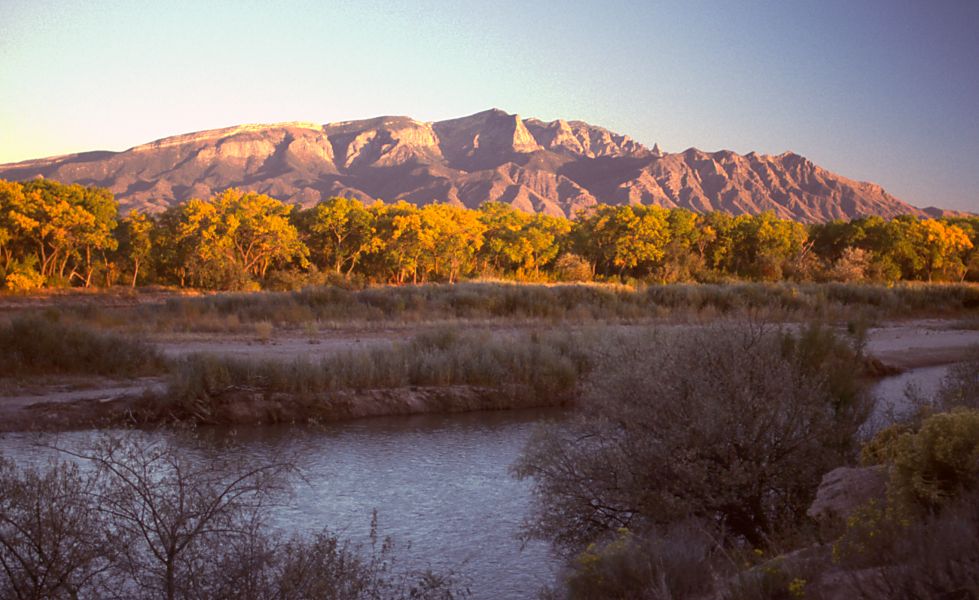
Overlooking the city of Albuquerque, the Sandia Mountains act as a monumental backdrop to the state’s largest metropolitan area. The name “Sandia,” meaning watermelon in Spanish, refers to the pinkish glow of the granite cliffs at dusk. Visitors often utilize the Sandia Peak Tramway to ascend to the crest, where they can experience panoramic views of the Rio Grande Valley. Extending south from these peaks are the Manzano Mountains, a more rugged and less developed range that offers solitude for hikers and wildlife enthusiasts.
The Sacramento Mountains
Further south, the Sacramento Mountains rise abruptly from the Tularosa Basin. This range is home to Cloudcroft, a mountain village that stays cool even in the heat of summer. The unique elevation gain here supports an ecosystem that includes thick forests of spruce and fir, a rare sight in the southern part of the state. These mountains are geologically significant for their limestone formations and deep canyons, providing a sharp contrast to the nearby white sands of White Sands National Park.
Southern “Sky Islands” and Isolated Peaks
Southern New Mexico is characterized by isolated mountain ranges that rise dramatically out of the desert floor like islands in an ocean. These “sky islands” provide crucial refugia for biodiversity, as they capture moisture that the surrounding lowlands lack.
The Gila Wilderness and Mogollon Mountains
The Mogollon Mountains are the centerpiece of the Gila National Forest. This region is famous for containing the world’s first designated wilderness area, the Gila Wilderness. The terrain is notoriously rugged, characterized by deep river gorges, sheer cliffs, and dense, untracked wilderness. It is a haven for those seeking to experience the untamed spirit of the American West. Nearby, the Gila Cliff Dwellings National Monument offers a historical perspective on how ancestral people thrived in these mountainous canyons centuries ago.
The Organ Mountains
Near the city of Las Cruces, the Organ Mountains stand as a jagged, steep-walled range whose name comes from their resemblance to the pipes of a cathedral organ. These mountains are relatively small in footprint but high in visual impact. The Organ Mountains-Desert Peaks National Monument protects these dramatic spires, which offer some of the most challenging and rewarding rock climbing and hiking opportunities in the region.
Ecological and Climatic Significance
The mountain ranges of New Mexico serve as more than just scenic vistas; they are the primary water towers of the state.
Hydrology and Snowpack
In a state where water is the most precious resource, the mountains act as natural reservoirs. Winter snowpack in the Sangre de Cristo and Jemez ranges slowly melts throughout the spring, feeding the Rio Grande and the Pecos River. Without these mountain-fed watersheds, the agricultural traditions and urban centers of the lowlands would struggle to survive. The seasonal cycle of snow, runoff, and groundwater recharge is the heartbeat of New Mexico’s environmental stability.
Biodiversity Transitions
Because of the rapid elevation gains within these mountain ranges, visitors can experience multiple life zones in a single afternoon. One can drive from the high desert shrubland at 4,000 feet, through piñon-juniper woodlands at 6,000 feet, into ponderosa pine forests at 8,000 feet, and reach the subalpine spruce-fir forests above 10,000 feet. This “vertical migration” is one of the most fascinating aspects of exploring New Mexico. Each zone hosts distinct flora and fauna, from bighorn sheep on the rocky slopes to black bears roaming the dense forests of the northern mountains.

A Land of Eternal Discovery
New Mexico’s mountains are defined by their diversity. Whether one is seeking the alpine glory of the northern ranges, the historical depth of the Gila, or the dramatic, sharp relief of the southern desert peaks, the state offers a lifetime of exploration. These mountains command respect, inviting travelers to step away from the modern world and into an environment shaped by millions of years of volcanic, tectonic, and erosional forces. To understand New Mexico is to understand its mountains; they are the silent, towering sentinels that have watched over the cultures of the Southwest for millennia. As you navigate the winding scenic byways, you will find that every turn offers a new perspective on these magnificent geological giants.
LifeOutOfTheBox is a participant in the Amazon Services LLC Associates Program, an affiliate advertising program designed to provide a means for sites to earn advertising fees by advertising and linking to Amazon.com. Amazon, the Amazon logo, AmazonSupply, and the AmazonSupply logo are trademarks of Amazon.com, Inc. or its affiliates. As an Amazon Associate we earn affiliate commissions from qualifying purchases.