
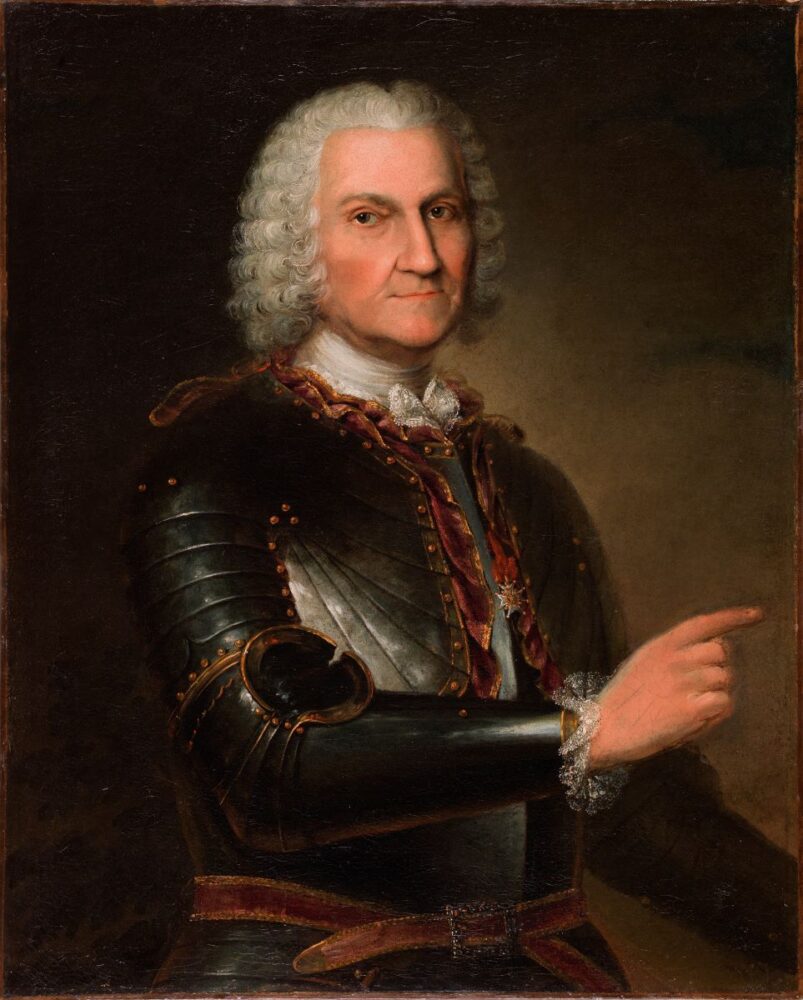
When one wanders through the iron-laced balconies of the French Quarter or catches the haunting notes of a brass band echoing off the cobblestones of Jackson Square, it is easy to feel the weight of centuries. To understand the soul of New Orleans, one must look back to the early 18th century, a time when the Mississippi River was the ultimate prize in a high-stakes game of colonial ambition. The founding of this crescent-shaped metropolis was not the result of a single visionary standing on a riverbank, but rather the strategic culmination of French colonial efforts led by one man: Jean-Baptiste Le Moyne de Bienville.

The Visionary Behind the Crescent City
In 1718, Jean-Baptiste Le Moyne de Bienville, serving as the governor of French Louisiana, oversaw the selection of a site that would become one of the most culturally distinct cities in North America. While others in the French administration argued for sites on higher, drier ground, Bienville insisted on this particular bend in the river. He recognized that the proximity to Lake Pontchartrain and the natural waterway access to the Gulf of Mexico provided a logistical advantage that was simply unmatched.
A Strategic Choice for a New Empire
Bienville’s decision was rooted in necessity. The previous French settlements in the region had struggled with flooding and poor soil, but the site of New Orleans offered a crucial port for the fur trade and military defense. He named the city La Nouvelle-Orléans in honor of Philippe II, Duke of Orléans, who was serving as the Regent for France at the time. By embedding the name of the French nobility into the mud and silt of the American South, Bienville sought to cement the French presence in the New World.
The Engineering Challenges
The land upon which Bienville chose to build was notoriously difficult. It was essentially a swampy basin prone to inundation, requiring the first European settlers to clear dense cane and cypress forests. Under Bienville’s direction, early engineers and enslaved laborers attempted to tame the volatile banks of the Mississippi River. While they faced immense challenges—including devastating hurricanes and fires that would later reshape the city—the blueprint Bienville established remains the core of the historic district we explore today.
The Cultural Melting Pot of Colonial Origins
The architecture and layout of the city today, specifically the grid pattern of the Vieux Carré, trace their lineage directly back to the initial planning phases established in the early 1720s. Bienville’s vision of a colonial hub quickly attracted a diverse population, transforming his small outpost into a global crossroads.
The Influence of the French and Spanish
While Bienville was the primary founder, the city’s identity was quickly complicated by the shifting tides of European power. After the Seven Years’ War, the city fell under Spanish control. This transition is why many visitors today are struck by the architectural ambiguity of the city; the wrought-iron balconies and interior courtyards often associated with the “French” style were, in many instances, actually built during the Spanish Louisiana era. This dual heritage, combined with the later influence of the United States following the Louisiana Purchase, created the unique synthesis that defines the city’s modern character.
The Role of Indigenous Peoples
It is impossible to discuss the founding of New Orleans without acknowledging the Choctaw and Natchez tribes, who had occupied the region for generations before European arrival. Bienville’s success in establishing the colony relied heavily on the diplomatic relationships, trade, and knowledge shared by these Indigenous nations. The paths that later became the city’s main arteries, such as Bayou St. John, were ancient transit routes used by native populations for centuries. The founder’s reliance on these existing geographical markers is perhaps the most significant, yet often overlooked, aspect of the city’s early development.
The Evolution of the City Through Centuries
Following the departure of Bienville, the city continued to evolve, transitioning from a colonial outpost into an economic powerhouse. The legacy of the founder’s choice of location proved to be correct, as the city grew into a critical nexus of trade, culture, and later, the birthplace of Jazz.
Preserving the Legacy
Today, travelers visit New Orleans not only for its world-renowned culinary scene and Mardi Gras celebrations but also to stand where history was forged. The Cabildo, located on Jackson Square, serves as a poignant reminder of the governance that followed the initial settlement. Maintaining these landmarks is a commitment to the city’s foundational story—a narrative that begins with a map, a surveyor, and the stubborn resolve of Jean-Baptiste Le Moyne de Bienville.

Why the Location Still Matters
The modern traveler who walks through the French Market or wanders along the Riverfront is witnessing the enduring vitality of Bienville’s decision. Despite the environmental risks and the constant struggle against the water, the city has maintained its prominence precisely because of that specific geography. The city acts as a gateway, a filter through which the cultures of the Caribbean, Africa, and Europe have blended into something entirely new.
The question of who founded the city is settled in the history books, but the experience of living and visiting the city is an ongoing dialogue with those who came before. From the swampy, mosquito-ridden clearing of 1718 to the glittering, vibrant destination it is today, the spirit of New Orleans remains defined by the same indomitable, creative, and resilient energy that characterized its earliest days. As you walk the streets of this historic town, remember that every brick and every bend in the Mississippi River carries the mark of that original, ambitious vision, turning a risky colonial bet into one of the most culturally significant locations on the planet.
LifeOutOfTheBox is a participant in the Amazon Services LLC Associates Program, an affiliate advertising program designed to provide a means for sites to earn advertising fees by advertising and linking to Amazon.com. Amazon, the Amazon logo, AmazonSupply, and the AmazonSupply logo are trademarks of Amazon.com, Inc. or its affiliates. As an Amazon Associate we earn affiliate commissions from qualifying purchases.