
The High Line is one of the most remarkable examples of urban renewal in the modern era. Stretching through the heart of Manhattan in New York City, this elevated linear park has transformed a defunct industrial relic into a vibrant green artery. For visitors and locals alike, walking its length is a quintessential New York experience, offering a unique vantage point of the city’s architecture and the bustling streets below.
Understanding the Physical Scope and Length
When planning a stroll along this iconic landmark, many travelers ask, “How long is it exactly?” The High Line spans approximately 1.45 miles (2.33 kilometers) in total length. While this may seem modest compared to expansive city parks, the density of the experience—coupled with its elevated position and intentional design—makes it feel like an immersive journey through the West Side of Manhattan.

From Gansevoort Street to 34th Street
The park begins in the south at Gansevoort Street in the Meatpacking District. From there, it winds northward, cutting through Chelsea and eventually terminating at 34th Street near the Hudson Yards development. This linear path allows visitors to witness the transition of the city’s character, shifting from the historic, cobblestoned charm of the south to the sleek, modern glass towers of the north.
Pace and Exploration
While an athletic walker could traverse the entire 1.45 miles in about 30 to 45 minutes, most visitors find themselves spending several hours on the structure. Because the park is filled with art installations, distinct garden designs, and hidden viewing platforms, the actual time spent depends heavily on how much of the environment you wish to soak in. It is less of a destination to “get through” and more of a space to inhabit.
Architectural Significance and Industrial History
To appreciate the length of this park, one must look at the history of the steel structure that supports it. Originally built in the 1930s as a freight rail line, the High Line was intended to keep dangerous trains off the street level. By elevating the tracks, New York City significantly reduced traffic accidents, though the line eventually fell into disuse by the 1980s.
The Transformation of an Industrial Relic
The effort to save the High Line from demolition is a masterclass in civic activism. Today, the park honors its industrial roots by incorporating the original steel tracks into the landscaping. As you walk the 1.45-mile stretch, you are literally treading upon the history of American commerce. The juxtaposition of wildflowers and perennial gardens growing between rusted iron rails serves as a powerful reminder of nature’s resilience in the face of urban concrete.
Design Elements and Vantage Points
The path is carefully curated with different design zones. As you move along the route, you will notice areas designed for social gathering, such as the famous Sunken Overlook at 10th Avenue, where the glass wall allows you to watch the yellow taxis and pedestrians moving along the street below. This perspective is a defining feature of the park, turning the chaotic urban activity of New York into a silent, moving tapestry.
Navigating the Neighborhoods Along the Route
The beauty of the High Line is not just in its length, but in the variety of neighborhoods it connects. Accessing or exiting the park at various points allows you to build a personalized itinerary for your day in Manhattan.
The Meatpacking District and Chelsea
Starting at the southern end, you are immersed in the Meatpacking District, an area once dominated by butchers and now home to high-end fashion, the Whitney Museum of American Art, and some of the most celebrated dining spots in New York City. As the path transitions into Chelsea, you pass by iconic architectural works, including Chelsea Market, a must-visit destination for food lovers looking to grab a bite before or after their walk.
The Evolution of Hudson Yards
Reaching the northern terminus at 34th Street brings you face-to-face with Hudson Yards. This massive urban development is anchored by The Vessel, a honeycomb-like structure that serves as a modern counterpoint to the historic rail tracks of the High Line. Walking the full length of the park effectively serves as a timeline of New York development, from the old-world industrialism of the south to the futuristic architecture of the north.
Tips for a Successful Visit
Given that the park is 1.45 miles long, preparation is key to ensuring you enjoy your visit to the fullest. Whether you are a first-time visitor or a returning regular, keeping these tips in mind will enhance your experience.
Timing Your Walk
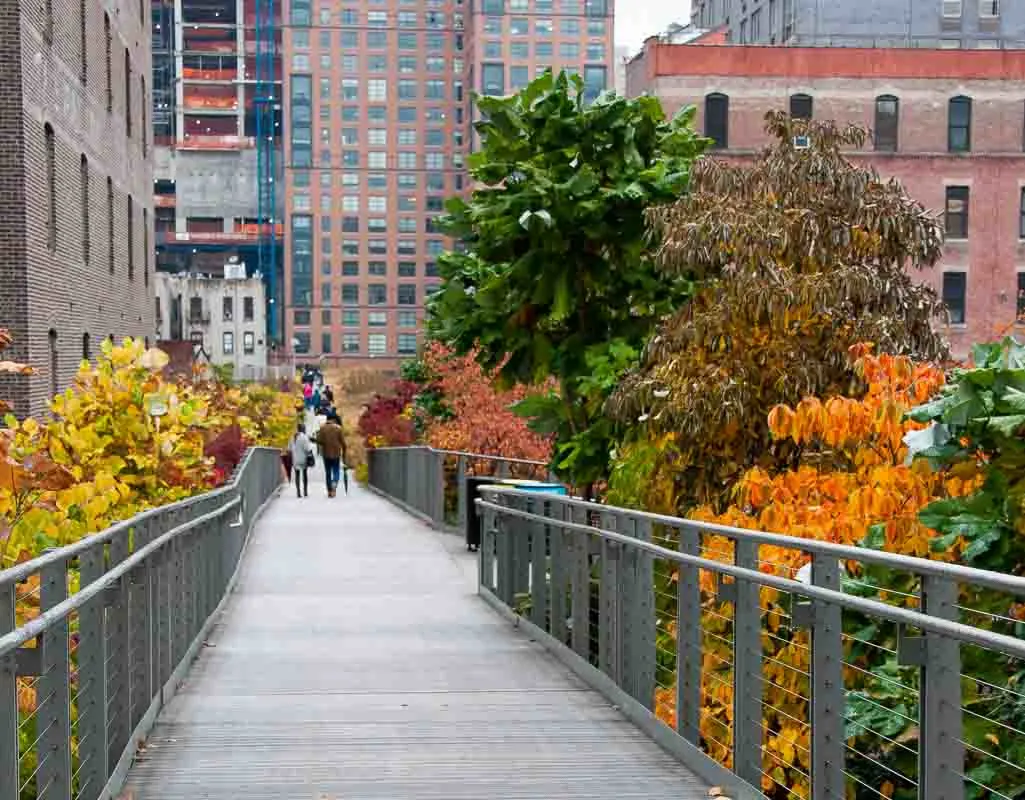
The High Line is exposed to the elements, making weather a significant factor. During the summer months, the lack of shade can make the walk feel longer than it is, so early morning or late evening visits are recommended. Conversely, autumn brings a stunning transformation as the native plants turn vibrant colors, making the 1.45-mile journey a spectacle of seasonal foliage.

Accessibility and Entry Points
Because the park is elevated, access is provided via stairs and elevators located at various intervals along the route. It is essential to familiarize yourself with these entry points to avoid unnecessary backtracking. Major access points are located at:
- Gansevoort Street
- 14th Street
- 23rd Street
- 30th Street
- 34th Street
Knowing these locations helps you plan your day, perhaps ending your walk in Chelsea for lunch or heading toward the Hudson River for a sunset view. The park is a linear connector, and viewing it as a bridge between diverse experiences will help you get the most out of your time in New York City.
By understanding the scale and the history of this unique urban park, you can transform a simple walk into a deep dive into the culture and architecture of Manhattan. The 1.45 miles of the High Line are not just a path; they are a living, breathing testament to the city’s ability to innovate, adapt, and preserve its character for generations to come.
LifeOutOfTheBox is a participant in the Amazon Services LLC Associates Program, an affiliate advertising program designed to provide a means for sites to earn advertising fees by advertising and linking to Amazon.com. Amazon, the Amazon logo, AmazonSupply, and the AmazonSupply logo are trademarks of Amazon.com, Inc. or its affiliates. As an Amazon Associate we earn affiliate commissions from qualifying purchases.