
The story of New York is not merely a chronicle of urban expansion; it is a tapestry woven from global ambition, commercial fervor, and a collision of cultures that redefined the modern world. Long before it became the gleaming metropolis of skyscrapers and yellow taxis, the area now known as Manhattan was a lush, temperate landscape inhabited by the Lenape people. Their relationship with the land, the waterways of the Hudson River, and the surrounding islands was defined by stewardship and seasonal migration. The metamorphosis of this region into a global powerhouse began with the shifting tides of European mercantile interests.

The Dutch Arrival and the Birth of New Amsterdam
In the early 17th century, the geopolitical race to control the Americas was dominated by competing empires. While the English had established a foothold in Virginia, the Dutch Republic turned their gaze toward the riches of the fur trade.
The Exploration of Henry Hudson
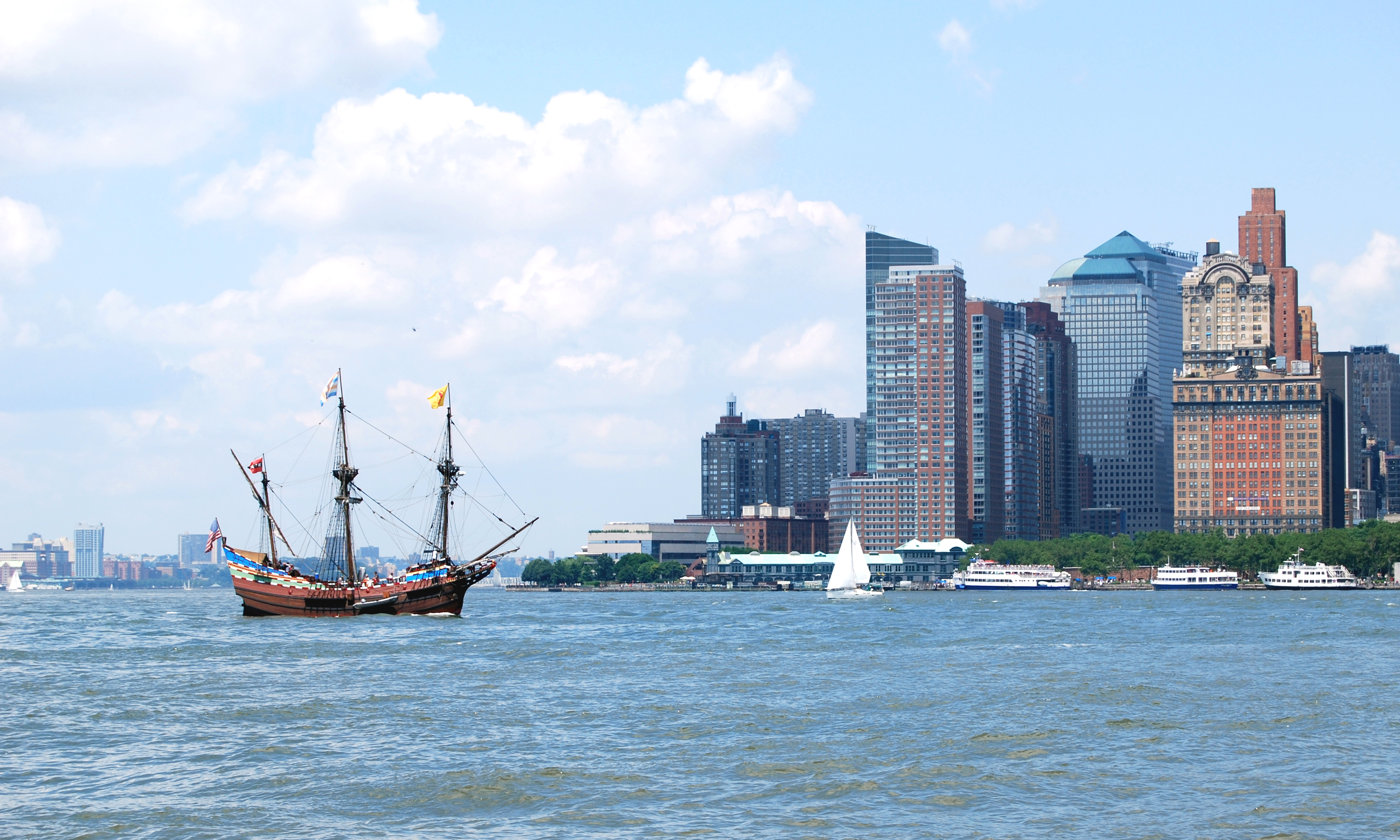
In 1609, Henry Hudson, an English navigator commissioned by the Dutch East India Company, sailed his ship, the Halve Maen (Half Moon), into the harbor that would one day host the Statue of Liberty. Hudson was looking for the fabled Northwest Passage to Asia. While he did not find a route to the Orient, he discovered an estuary teeming with beaver—an animal whose pelts were highly prized in Europe for the creation of luxury hats.
Establishing the Colony
The Dutch were not interested in territorial conquest in the traditional sense; they were interested in commerce. In 1624, the Dutch West India Company officially settled the region, naming it New Netherland. By 1625, they began construction of a fort at the southern tip of Manhattan to protect their mercantile interests. This settlement was christened New Amsterdam. In 1626, Peter Minuit, the Director of the colony, famously “purchased” the island of Manhattan from the Lenape in exchange for trade goods worth 60 guilders. While this transaction is now viewed as deeply flawed—as the Lenape did not possess the European concept of land ownership—it solidified the Dutch foothold in the region.
The Transition to British Rule
The strategic location of New Amsterdam made it a constant point of contention. The British viewed the Dutch presence as a wedge separating their colonies in New England from those in the south. By the mid-1600s, the tension between the two powers was reaching a boiling point.
The Bloodless Surrender
In 1664, an English fleet commanded by Richard Nicolls sailed into the harbor and demanded the surrender of the colony. The Dutch Director-General, Peter Stuyvesant, had spent years fortifying New Amsterdam, but he found little support from the colonists, who were tired of his autocratic rule and the high taxes levied by the Dutch West India Company. Consequently, the colony surrendered without a single shot being fired.

From New Amsterdam to New York
The colony was promptly renamed New York in honor of the Duke of York, who later became King James II. Under British governance, the city began to evolve from a Dutch trading post into a bustling colonial seaport. While the Dutch influence remained embedded in the city’s architecture, language, and culture, the English administrative and legal systems took hold, setting the stage for the city’s role in the American Revolution.
Foundations of Global Significance
The growth of New York throughout the 18th century was fueled by trade, but it was the city’s unique geography that guaranteed its future success. As the United States began to take shape as an independent nation, New York City emerged as a primary engine of economic development.
A Hub of Commerce and Diversity
From its inception, New York was never a homogenous settlement. The Dutch were pragmatic in their colonial policy, allowing settlers of various religious and ethnic backgrounds—including French Huguenots, Scandinavians, and German immigrants—to establish roots. This early pluralism created a culture of tolerance that would define the city’s identity for centuries. The arrival of merchants, sailors, and enslaved people (who played a critical, albeit tragic, role in building the early city) ensured that New York remained a vibrant, if volatile, crossroads.
The Port and the Path Forward
By the late 1700s, the Port of New York became the gateway to the North American interior. The connection to the Erie Canal later in the 19th century would transform the city into the primary outlet for the nation’s goods. However, the foundational period—the Dutch pursuit of beaver pelts and the British struggle for naval supremacy—laid the essential groundwork.
Architectural and Historical Legacy
Walking through the streets of modern-day Lower Manhattan, one can still find remnants of the colonial past. While the wooden structures of the 17th century have long since vanished, replaced by the steel and glass of the Financial District, the city’s grid patterns and street names often echo their original Dutch origins.
Preserving the Past
Sites like Wall Street, named for the defensive wooden palisade built by the Dutch to protect their settlement from the British and local tribes, serve as a testament to the city’s defensive and commercial beginnings. Other landmarks, such as Bowling Green, represent some of the oldest public spaces in the city, tracing their history directly back to the colonial era.
The Enduring Spirit of the City
The story of how New York was founded is ultimately the story of a place that was always intended to be a global hub. Whether through the lens of a Dutch trading company or an English colonial project, the city was built on the premise of connecting different worlds. From the banks of the East River to the bustling squares of Times Square, the spirit of New York remains rooted in its history: an insatiable desire to grow, trade, and reinvent itself. Today, New York stands not only as the largest city in the USA but as an enduring symbol of the complexities of human ambition and the historical shifts that shape our collective civilization. Every corner of the city, from Central Park to the depths of the subway, carries the DNA of those first settlers, forever defining the “City That Never Sleeps.”
LifeOutOfTheBox is a participant in the Amazon Services LLC Associates Program, an affiliate advertising program designed to provide a means for sites to earn advertising fees by advertising and linking to Amazon.com. Amazon, the Amazon logo, AmazonSupply, and the AmazonSupply logo are trademarks of Amazon.com, Inc. or its affiliates. As an Amazon Associate we earn affiliate commissions from qualifying purchases.