
The global culinary landscape is often defined by the fierce loyalty locals hold toward their signature dishes. Nowhere is this more apparent than in New York City, a metropolis where the pizza slice is not merely a quick meal, but a cultural institution. When a global giant like Domino’s decides to introduce a “New York Style” pizza to its menu, it invites an immediate comparison to the legendary pizzerias that dot the streets of Manhattan and Brooklyn. Evaluating whether this mass-market interpretation holds up requires a look at the history of the craft, the technical execution of the product, and the expectations of a modern consumer.

The Anatomy of an Authentic Slice
To understand if the Domino’s offering succeeds, one must first define the benchmarks set by the iconic institutions of New York. A traditional New York-style pizza is characterized by its large, hand-tossed thin crust that is pliable enough to be folded in half—a necessity for the bustling crowds navigating Times Square.
The Essential Elements
The foundation of a true New York slice lies in the dough. Historically, local pizzerias utilized high-gluten flour and a long fermentation process, resulting in a crust that is crisp on the outside while maintaining a chewy, airy interior. The sauce is typically a simple, seasoned tomato base, and the cheese is almost exclusively low-moisture, shredded mozzarella, which provides that signature melt and oily, savory sheen that defines the local aesthetic.
The Challenge of Scale
Replicating this in a franchised environment presents a significant hurdle. Whereas a pizzeria in Little Italy might rely on the unique mineral profile of the local water supply and deck ovens that have been seasoned for decades, a national chain must rely on consistency across thousands of locations. This necessity for uniformity often dictates a move toward “engineered” dough and automated cooking processes, which inherently changes the character of the finished product.
Analyzing the Domino’s Interpretation
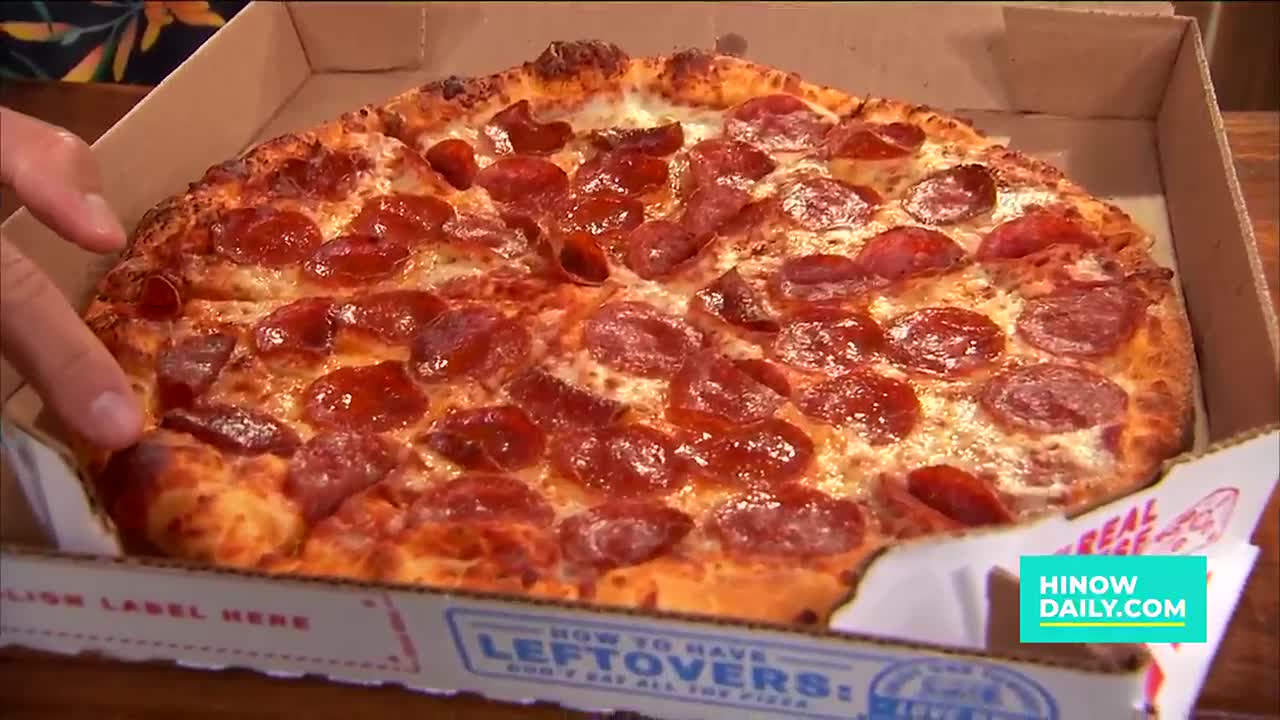
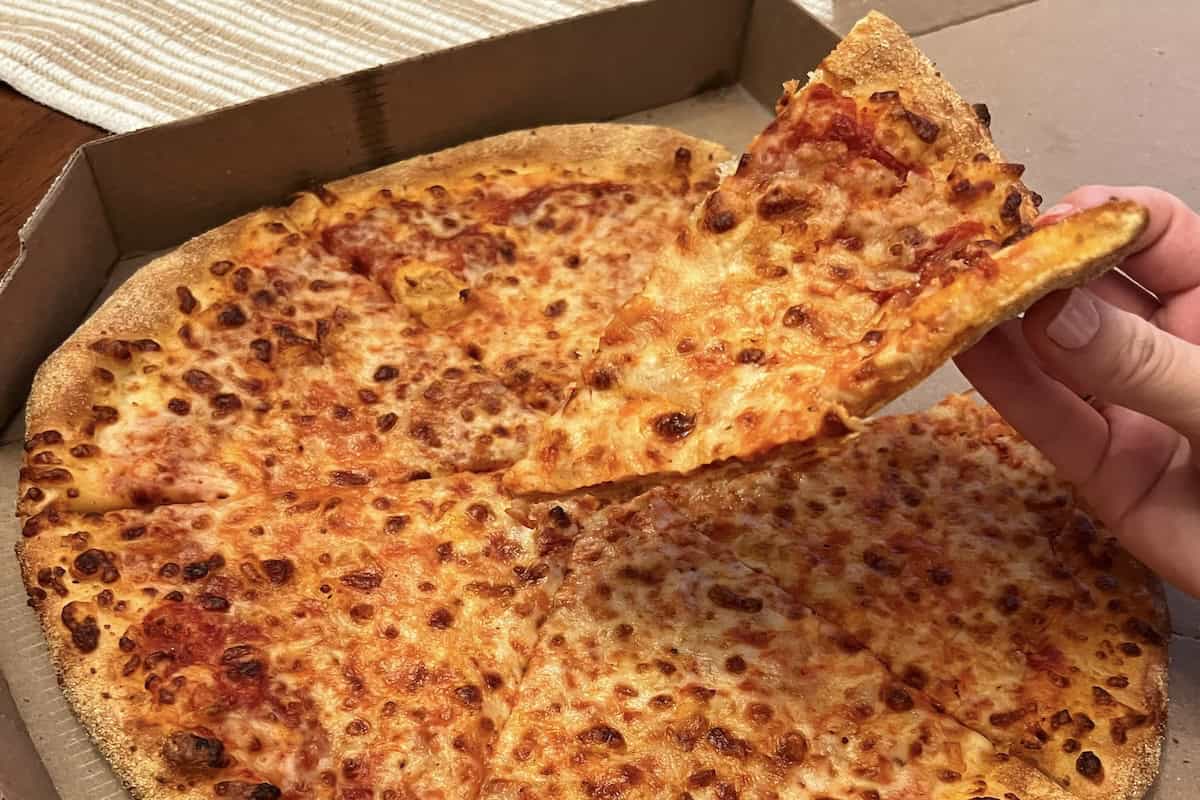
When you order the New York Style pizza from Domino’s, you are greeted with a pizza that leans heavily into the “foldable” requirement. The crust is noticeably thinner than their standard “Hand Tossed” option, and the distribution of cheese and sauce is scaled back to mimic the lighter, less dough-heavy profile found in the five boroughs.
Flavor and Texture Profile
The crust succeeds in being thinner, but it lacks the distinct char that one would find in a coal-fired oven at a landmark like John’s of Bleecker Street. It lacks the “bready” depth of a fermented crust, tasting instead like a lighter version of their standard dough. However, for a consumer seeking a quick, familiar meal, it delivers a pleasant texture. It manages to avoid the “bready” density of traditional chain pizzas, which is a commendable achievement for a high-volume assembly line.
The Topping Distribution
By limiting the cheese and sauce, Domino’s allows for a more balanced ratio. In many of their standard offerings, the density of toppings can make the slice heavy and greasy. The New York Style iteration is arguably more balanced, making it feel less like a heavy comfort food and more like a casual snack. It is clear that the culinary team prioritized the mechanics of the slice—its ability to be folded and eaten quickly—over the artisanal nuances that define the heritage of New York City cuisine.
Cultural Context and Consumer Expectations
Food is rarely just about ingredients; it is about context. When a tourist visits New York City and wanders into a shop in Greenwich Village, they are paying for an experience. They are paying for the history of the ovens, the character of the neighborhood, and the specific vibe of the city. To expect a delivered pizza from a national chain to replicate that environment is to misunderstand the role that Domino’s plays in the global food ecosystem.
Convenience vs. Tradition
The primary value proposition of Domino’s is not authenticity—it is reliability and accessibility. In a world where one can order a meal from their phone while visiting a hotel in London or Tokyo, the chain provides a “safe” palate. The New York Style pizza is a brilliant marketing move because it capitalizes on the global fame of New York food culture while delivering a product that conforms to the palate of a general audience.
The Verdict on Quality
Is it “good”? The answer depends entirely on the frame of reference. If judged against a master-level slice from Joe’s Pizza in the heart of Manhattan, Domino’s will always fall short on flavor complexity and textural integrity. The crust will never reach that specific level of blistered, yeasty perfection, and the cheese will never offer that distinctively fresh, molten quality.
However, if judged on its own terms—as a fast-casual, mass-produced product—it is arguably one of the better items on the Domino’s menu. It fixes many of the common complaints regarding their thicker, heavier crusts. For someone living in a region where genuine, artisan, coal-fired pizza is unavailable, this product serves as a functional, enjoyable approximation.
How to Elevate the Experience
If you find yourself ordering this specific pizza, there are ways to bridge the gap between the chain experience and the authentic feel of a New York pizzeria.
Customization Tips
- Request Extra Well-Done: One of the biggest detractors for chain pizzas is a pale, soft crust. By asking for the pizza to be baked “well-done,” you give the ovens more time to crisp the dough and brown the cheese, which brings the final product much closer to the crispy-chewy profile of an authentic slice.
- Add Fresh Ingredients: New York City pizzerias are often defined by the quality of their ingredients. While Domino’s uses standardized toppings, adding fresh garlic, herbs, or even finishing it with a drizzle of high-quality olive oil can significantly elevate the flavor profile.
- The Reheat Strategy: Authentic pizza is often sold by the slice and reheated in a deck oven. If you have leftovers, do not use the microwave. Using a skillet on the stovetop to crisp the bottom of the crust before finishing it in a toaster oven is the closest you will come to the sensation of grabbing a hot slice on a Manhattan street corner.
Final Thoughts
The debate over Domino’s “New York Style” pizza is ultimately a collision between two different worlds: the hyper-local, artisan-driven culture of New York City and the global, standardized efficiency of a multi-national corporation. It is an impressive engineering feat that manages to distill the idea of a New York slice into a format that can be replicated in virtually any corner of the globe.
While it is not a replacement for the real thing—and no serious aficionado would ever claim it is—it stands as a competent, enjoyable interpretation that serves a specific purpose in the fast-food market. It captures the convenience and the foldability of the original while conceding that the soul of the New York slice is, for now, safely guarded by the small, independent pizzerias that continue to define the culinary identity of America. By maintaining realistic expectations, one can appreciate the product for what it is: a clever, accessible, and surprisingly decent attempt at capturing the spirit of a culinary icon.
LifeOutOfTheBox is a participant in the Amazon Services LLC Associates Program, an affiliate advertising program designed to provide a means for sites to earn advertising fees by advertising and linking to Amazon.com. Amazon, the Amazon logo, AmazonSupply, and the AmazonSupply logo are trademarks of Amazon.com, Inc. or its affiliates. As an Amazon Associate we earn affiliate commissions from qualifying purchases.