
When travelers weigh the merits of the world’s most iconic metropolises, the comparison between New York and London is inevitable. Both serve as global anchors for finance, culture, and history, yet they offer vastly different experiences for the intrepid visitor. Determining which city is “bigger” depends entirely on whether you are measuring by square footage, population density, or the sheer, sprawling weight of their cultural impact on the world stage.
Defining the Scope: Geography and Population
To understand the scale of these two giants, one must first look at the hard data. New York City consists of five distinct boroughs, covering a land area of approximately 300 square miles. In contrast, Greater London occupies a significantly larger footprint, spanning over 600 square miles. If you define “bigger” by physical landmass, the capital of the United Kingdom easily dwarfs its American counterpart.
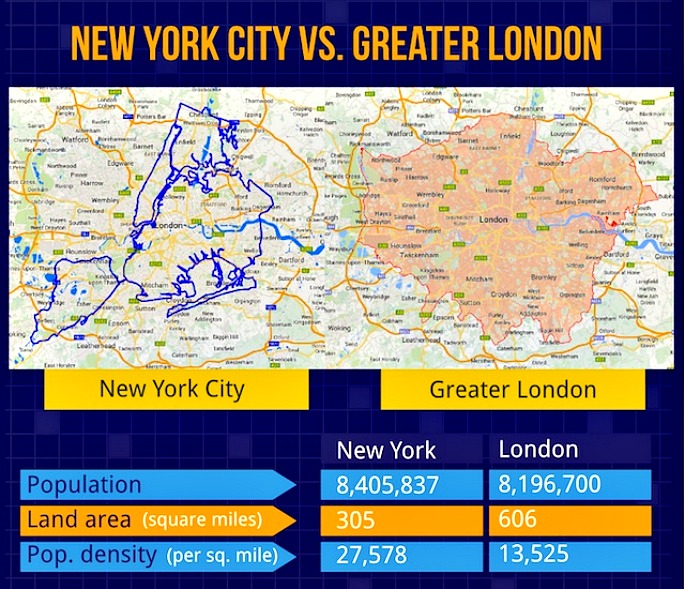
However, geography does not always tell the full story of a city’s intensity. While London is more spread out—a collection of interconnected villages that grew together over centuries—New York is a masterclass in verticality. The population density of Manhattan is among the highest in the world, creating an energy that feels far more compressed and frenetic than the sprawling residential districts of South London or North London.
The Urban Density Factor
In New York, the “bigness” is measured in height and speed. The skyline of Midtown Manhattan dictates the pace of life. Every sidewalk feels like a thoroughfare, and the constant verticality makes the city feel smaller in terms of perimeter but massive in terms of human concentration. London, conversely, maintains a more horizontal sprawl. Even in the heart of the City of London, one encounters low-rise historic districts, medieval alleys, and vast green spaces like Hyde Park, which soften the urban edges in a way that Central Park cannot quite replicate due to the towering walls of skyscrapers surrounding it.
Cultural Footprint and Global Reach
If size is defined by influence, the debate becomes even more complex. Both cities act as the primary gateways to their respective nations. A visitor to England almost invariably lands in London, just as a gateway to the United States is often found at JFK International Airport.
The Historical Depth of London
London holds a “bigness” rooted in deep, tangible history. Walking through Westminster or visiting the Tower of London, one feels the weight of centuries. The city is a palimpsest of the Roman, Medieval, and Victorian eras. This historical scale provides a sense of gravity that New York intentionally leaves behind. For the traveler, London feels larger because the past is physically integrated into the present at every street corner.

The Modern Vitality of New York
New York, on the other hand, is defined by its future-forward trajectory. Its “bigness” is found in the constant churn of reinvention. From the art galleries of Chelsea to the financial pulse of Wall Street, the city functions as a laboratory for the next wave of global trends. If you measure size by the intensity of the “now,” New York is undoubtedly the larger entity. It feels like the center of the world because it operates at a velocity that few other places can match.
Navigating the Urban Experience
For the tourist, the size of a city is often determined by how exhausting it is to traverse. London is a sprawling beast served by the extensive London Underground. To get from Kensington to Shoreditch takes significant time, reinforcing the perception that the city is expansive. The neighborhoods are distinct, each holding its own character, from the luxury boutiques of Mayfair to the markets of Camden Town.
The Grid System vs. The Organic Maze
New York benefits from its famous grid system, which makes navigation theoretically easier but physically daunting. Because the city is built on a series of islands, the geography is constricted. The “bigness” of New York is felt in the bridges and tunnels. Crossing the Brooklyn Bridge to enter Brooklyn feels like traveling to an entirely different world, despite the physical proximity.
Travelers often find that London rewards those who wander into its nooks and crannies—a city of hidden mews and secret gardens. New York rewards those who can handle the sensory overload of its main avenues. One is a sprawling tapestry to be unraveled, the other is a high-octane stage to be performed upon.
The Verdict: Subjective Scale
Is New York bigger than London? If you carry a measuring tape, London is larger in territory. If you carry a stopwatch, New York occupies more “time” per square foot due to its density and pace.

Why Choose One?
Ultimately, the traveler does not need to choose based on size alone. London offers a broader range of traditional landscapes, from the royal parks to the Thames River corridor, which provides a sense of breathing room. New York provides a singular experience of urban concentration that is unmatched anywhere else on the planet.
Whether you find yourself marveling at the dome of St. Pauls Cathedral in London or standing at the base of the Empire State Building in New York, the scale is secondary to the feeling of being in a place that defines the human experience. Both cities are “big” in ways that transcend geography; they are the two primary lighthouses of the Western world, each casting a long shadow that shapes the global imagination. To visit them is to realize that neither is truly bigger than the other—they are simply two different versions of what a global capital can be. Each offers a vast, bottomless reservoir of culture, history, and life that a single lifetime could never fully exhaust.
LifeOutOfTheBox is a participant in the Amazon Services LLC Associates Program, an affiliate advertising program designed to provide a means for sites to earn advertising fees by advertising and linking to Amazon.com. Amazon, the Amazon logo, AmazonSupply, and the AmazonSupply logo are trademarks of Amazon.com, Inc. or its affiliates. As an Amazon Associate we earn affiliate commissions from qualifying purchases.