
Navigating the transition into adulthood in New York often involves hitting several significant milestones, and none is perhaps as celebrated—or as regulated—as obtaining a driver’s license. For teenagers and their families across the state, the process of securing driving privileges is a structured journey designed to prioritize road safety through the Graduated Driver Licensing (GDL) program.
Understanding the timeline is essential, whether you are planning to drive through the bustling streets of New York City or navigating the scenic rural routes of Upstate New York. The state’s strict, tiered approach ensures that new drivers gain experience behind the wheel under controlled conditions before earning the full freedom of an unrestricted license.

The Learner Permit: The First Step at Age 16
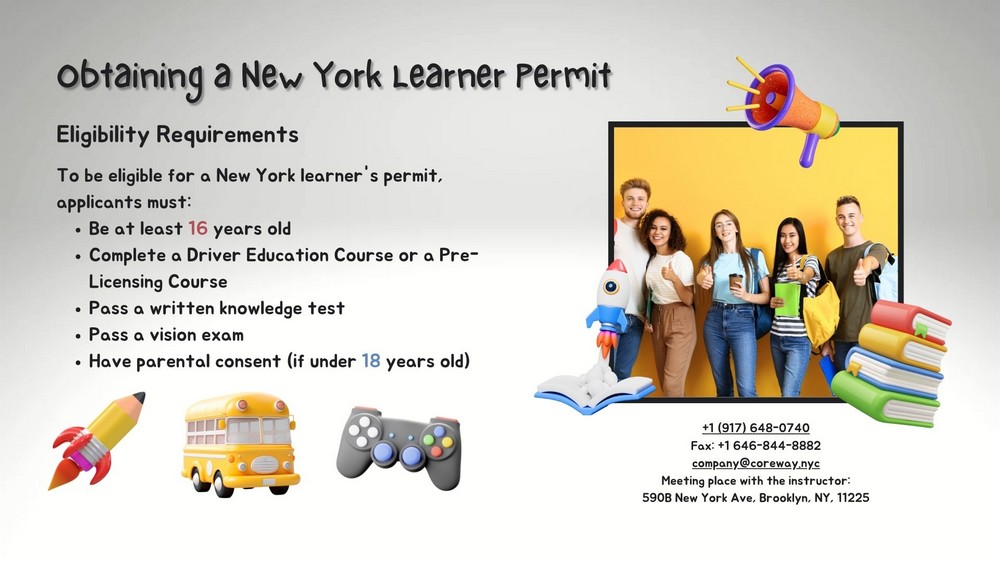
The foundational age to begin the driving process in the Empire State is 16. Once an individual turns 16, they are eligible to apply for a learner permit. This is not a license to drive independently, but rather the beginning of a supervised apprenticeship behind the wheel.
The Application Process
To secure a learner permit, the applicant must visit a New York State Department of Motor Vehicles office. The process involves more than just showing up; it requires a deep understanding of the rules of the road. Applicants must pass a written knowledge test based on the official New York State Driver’s Manual. This exam covers traffic signs, motor vehicle laws, and safe driving practices.
Restrictions for Permit Holders
Possession of a learner permit comes with significant limitations that must be strictly observed. A permit holder can only drive if they are accompanied by a supervising driver who is at least 21 years old and holds a valid license for the vehicle being operated. Furthermore, there are geographic restrictions; for example, permit holders are strictly prohibited from driving in a DMV road test area, and they face specific limitations when operating vehicles within New York City. These rules are enforced to keep novice drivers in environments where they are less likely to encounter complex traffic scenarios until they have mastered the basics.
The Junior License: Gaining Independence at 16 or 17
The transition from a learner permit to a junior license—officially known as a Class DJ license—is a major achievement. Eligibility for this phase is contingent on completing a mandatory pre-licensing course and, for those under 18, holding the learner permit for at least six months.
The Road Test
After holding a permit and practicing, the candidate must schedule and pass a road test. This examination evaluates the driver’s ability to maneuver a vehicle safely, perform maneuvers like parallel parking and three-point turns, and demonstrate general road awareness. Once the test is passed, the individual is issued a junior license.
Operating Under Junior License Laws
A junior license grants more freedom, but it is still subject to “Junior Operator” restrictions. In many parts of New York State, junior license holders cannot drive between the hours of 9:00 PM and 5:00 AM unless they are traveling to or from work, school, or a supervised activity. Additionally, there are strict rules regarding passengers; generally, only one passenger under the age of 21 is permitted in the vehicle, unless they are immediate family members. These regulations are designed to reduce distractions for young drivers during the period when they are statistically most at risk for accidents.
Achieving Full Licensure: The Path to Age 18
The final stage of the journey is graduating to a full, unrestricted Class D driver’s license. While many young drivers look forward to this as their “freedom day,” the process relies on age and educational requirements that bridge the gap between novice and experienced driver.
The Impact of Driver Education
The path to obtaining an unrestricted license at 17 is possible if the applicant completes a state-approved Driver Education course. These courses, often offered through high schools or private driving schools, provide a comprehensive curriculum that exceeds the standard pre-licensing requirements. Students learn not only vehicle control but also the psychology of driving, defensive techniques, and the serious consequences of distracted or impaired driving.
If a 17-year-old provides a certificate of completion (MV-285) from such a course to the DMV, they may be eligible to exchange their junior license for a full Class D license. Without the completion of this specialized education, the junior license remains in effect until the driver turns 18.
Responsibilities of the Full License
Upon reaching the age of 18, or 17 with the aforementioned certificate, the driver is no longer bound by the Junior Operator restrictions. This means the limitations on nighttime driving and passenger count are lifted. However, the responsibility of the driver increases significantly. A full license implies that the operator is now considered an adult driver, subject to all traffic laws without the protective oversight of the GDL system. This transition is a vital moment in a young person’s life, signaling a new level of personal accountability in the eyes of the law.
Tips for New Drivers and Their Families
Navigating the licensing process is often as much about the family as it is about the student. Whether you are living in Buffalo or Albany, the challenges of teaching a new driver are universal.
The Value of Practice
Passing the road test is a technical requirement, but it does not equate to mastery. The GDL system encourages many hours of supervised driving, and families should aim to provide as much variety as possible. Practicing in different weather conditions—such as the infamous New York snow—during different times of day, and on various road types (highways, city streets, and rural lanes) will build the confidence required for safe solo driving.
Maintaining Safety Standards
Safety should remain the primary focus throughout the permit and junior licensing phases. New drivers should be encouraged to utilize telematics or simply keep a log of their hours. Parents and guardians play an instrumental role by setting expectations for vehicle use, such as firm rules against phone usage, seatbelt compliance, and the number of friends allowed in the car.

Understanding the Law
The New York State Vehicle and Traffic Law is frequently updated. It is important for both the applicant and the supervising adult to periodically check the official DMV resources for any changes to requirements or local ordinances. By staying informed and adhering to the tiered licensing structure, young drivers in New York can safely transition from learners to independent, responsible operators of motor vehicles. While the journey involves bureaucracy and testing, the result is a safer, more capable generation of drivers on the road.
LifeOutOfTheBox is a participant in the Amazon Services LLC Associates Program, an affiliate advertising program designed to provide a means for sites to earn advertising fees by advertising and linking to Amazon.com. Amazon, the Amazon logo, AmazonSupply, and the AmazonSupply logo are trademarks of Amazon.com, Inc. or its affiliates. As an Amazon Associate we earn affiliate commissions from qualifying purchases.