
The concept of “New York Style” pizza is a cornerstone of American culinary identity, deeply rooted in the history of New York City. When a global powerhouse like Dominos introduces a “New York Style” variation to its menu, it ignites a conversation about the intersection of artisanal tradition and mass-market convenience. Understanding what differentiates this specific offering from the standard thin-crust or hand-tossed options requires a look at both the authentic roots of the dish and the industrial evolution of fast-food gastronomy.
The Anatomy of an Authentic Slice
To evaluate a commercial attempt at a regional classic, one must first define the standard. Authentic New York pizza, famously pioneered by immigrant bakers in neighborhoods like Little Italy, is defined by several non-negotiable characteristics.

The Crust: Thin, Flexible, and Foldable
The hallmark of a true New York slice is its crust. It must be thin enough to be pliable—the “fold” is a cultural requirement for the commuter walking through Manhattan—yet sturdy enough to hold the weight of the cheese and sauce without drooping excessively. This is achieved through a high-gluten flour mix, which provides the necessary protein to create a chewy interior and a crisp, blistered exterior, often baked in a deck oven at high temperatures.
The Sauce and Cheese Equilibrium
Traditional New York pies rely on a relatively simple tomato sauce, often seasoned with little more than salt, oregano, and garlic. The cheese of choice is almost exclusively low-moisture, part-skim mozzarella. This provides the iconic “cheese pull” and the slightly oily, savory finish that residents of the United States have come to associate with the quintessential pizza experience.
Dominos and the Commercial Adaptation
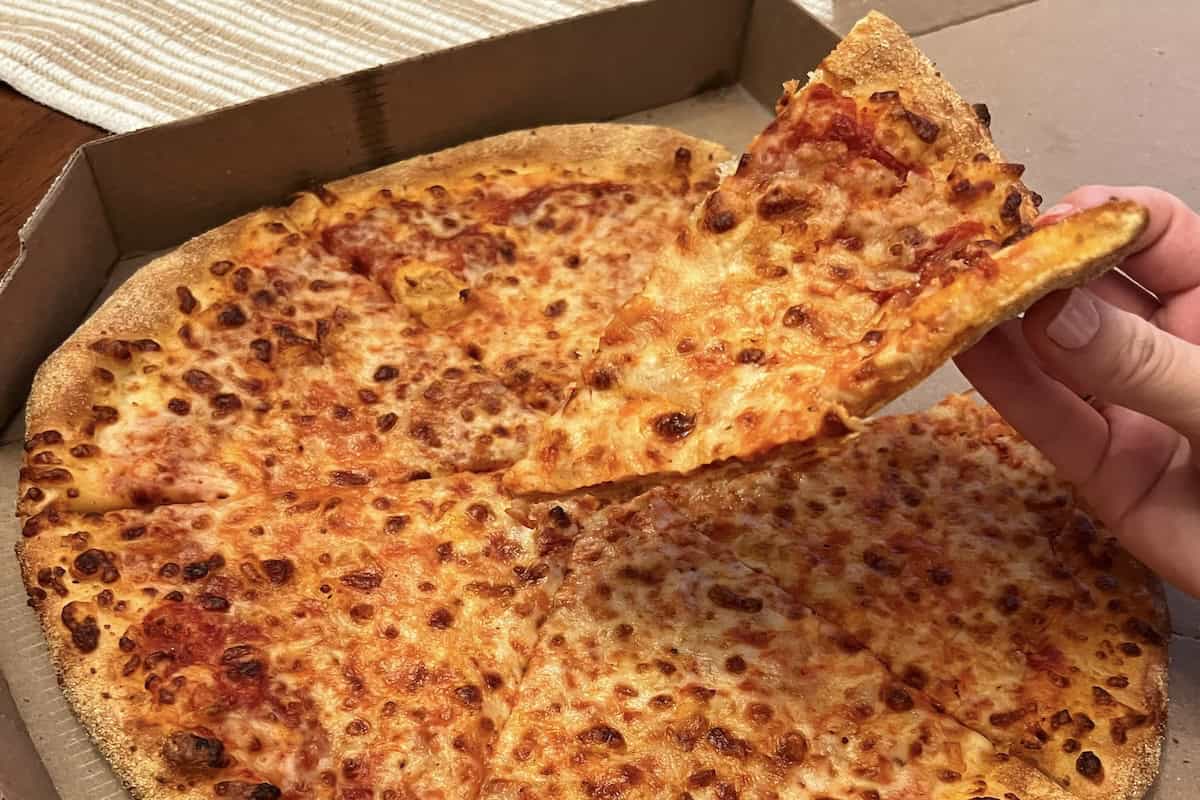
When Dominos launched its New York Style pizza, it was a calculated effort to bridge the gap between their standard delivery model and the craving for a more elevated, “authentic” pizza profile. While the operational requirements of a massive chain prevent the use of traditional wood-fired deck ovens, they have adjusted their formula to emulate the characteristics that define the regional style.
Scaling the Style for National Distribution
The primary challenge for a national chain is consistency. Whether you are ordering a pizza in Chicago or Los Angeles, the expectation is that the product will taste the same. To mimic the New York crust, the chain utilizes a stretched dough process that results in a thinner profile than their classic “Hand Tossed” base. By utilizing a specific blend of cheeses that includes provolone and mozzarella, they manage to replicate the savory flavor profile that fans of East Coast pizza expect.
The Inclusion of “Provolone”
One of the distinct differences in the Dominos version is the inclusion of provolone cheese in their cheese blend. While purists in Brooklyn might scoff at the addition, it serves a functional purpose in a commercial kitchen: it provides a more robust, slightly sharper flavor profile that holds up better during the delivery process. In the context of tourism and local food culture, this is often viewed as a “domesticated” version of a city-specific dish, optimized for accessibility rather than historical accuracy.
The Cultural Significance of Regional Pizza Trends
Pizza is more than just food; it is a cultural ambassador. When regional styles are adapted and popularized by large corporations, it often serves as an entry point for those who may never have the chance to visit the Northeast to experience the real thing.
Why Geographic Labeling Matters
In Tourism, the labeling of food by geographic origin carries weight. When a consumer sees “New York Style,” they are promised a specific texture, flavor, and eating experience. Even when a chain restaurant adopts the name, it reinforces the culinary prestige of the city of origin. It encourages travelers to eventually seek out the original landmarks, such as Johns of Bleecker Street or Joes Pizza, to taste the genuine article.
Fast Food vs. Destination Dining
There is a clear distinction between the “New York Style” found at a chain and the pizza served at an iconic destination in New York State. The former is a product of logistics—designed to be kept under heat lamps or inside insulated bags for 30 minutes without losing its structural integrity. The latter is a product of craft—meant to be eaten immediately upon exiting the oven, often on a paper plate while standing on a sidewalk.
Understanding this difference is crucial for anyone exploring the food culture of North America. While a chain might be a convenient meal during a long road trip, it acts as a secondary representation of a primary cultural landmark.
Choosing Your Pizza Experience
For the culinary traveler or the casual diner, the “New York Style” offered by large chains represents a simplified interpretation of a complex regional tradition. It succeeds in providing a specific thin-crust experience at a price point and level of convenience that small, independent pizzerias in Queens or The Bronx cannot always match for a nationwide audience.
Expectations for the Modern Diner
If you are expecting the rustic, charred, artisanal crust of a legendary institution, you will likely be disappointed by a mass-produced version. However, if you are looking for a reliable, familiar, and consistent slice that captures the general “vibe” of a foldable, thin-crust pie, these offerings serve that purpose effectively.

Final Thoughts on Culinary Evolution
The trend of major chains adopting regional names highlights a growing interest in food-based tourism. It suggests that consumers are increasingly aware of regional nuances and are willing to seek them out, even if they start with a commercial imitation. Whether you are sitting in a luxury hotel in London or a business suite in Tokyo, the reach of this particular style of pizza proves that New York remains one of the most influential gastronomic capitals of the world.
While the “New York Style” at a global chain is merely a shadow of the authentic city experience, it plays a vital role in keeping the legend of the American slice alive in the global consciousness. The next time you find yourself craving a slice, consider the journey the dough has taken—from the historic ovens of Lower Manhattan to the high-tech kitchens of a global franchise. It is a testament to the enduring power of regional food culture to adapt, travel, and define a nation’s palate.
LifeOutOfTheBox is a participant in the Amazon Services LLC Associates Program, an affiliate advertising program designed to provide a means for sites to earn advertising fees by advertising and linking to Amazon.com. Amazon, the Amazon logo, AmazonSupply, and the AmazonSupply logo are trademarks of Amazon.com, Inc. or its affiliates. As an Amazon Associate we earn affiliate commissions from qualifying purchases.