
Defining the arrival of winter in New York depends entirely on who you ask—the meteorologist, the calendar, or the local New Yorker bracing for the first commute through a slushy crosswalk. While the city’s identity is inextricably linked to the magic of its festive season, the transition from autumn’s final golden hour to the stark, biting chill of winter is a process, not a singular date. Understanding this shift is essential for anyone planning a visit, as the “start” of winter dictates everything from the opening of iconic ice rinks to the atmospheric transition of the Central Park landscape.

The Meteorological vs. Astronomical Perspective
In the world of professional meteorology, winter is a reliable, static concept. For data collection and predictability, meteorologists define winter as beginning on December 1st and ending on the last day of February. This period represents the coldest three months of the year, providing a consistent baseline for tracking temperature fluctuations across North America.
However, if you check your calendar, you will find a different date entirely. The astronomical winter begins with the Winter Solstice, which typically falls on December 21st or 22nd. This is the moment when the Northern Hemisphere reaches its maximum tilt away from the sun, resulting in the shortest day and the longest night of the year. While these two definitions are distinct, they often collide with the subjective experience of the city’s climate. For the average visitor, the “feeling” of winter usually arrives well before the solstice, often spurred by the rapid loss of daylight that begins in late November.
The Cultural Onset of Winter
For the tourism industry and the millions of people who flock to the city, winter in New York City is defined by cultural touchstones rather than thermometers. The psychological threshold of winter is crossed the moment the Rockefeller Center tree is illuminated. This event, which usually occurs in early December, acts as the unofficial gatekeeper of the season.
The Transition of the Landscape
By the time the holiday lights flicker to life, the vibrant orange and red foliage of Prospect Park has long since surrendered to the skeletal beauty of bare branches. The air grows sharp, and the hustle of the streets takes on a different cadence. Tourists start layering up, and the scent of roasted nuts begins to waft from street-side vendors near Bryant Park. This is when the city truly transitions; when the functional need for heavy coats meets the festive spirit of the holiday season, the winter identity of the metropolis is fully solidified.
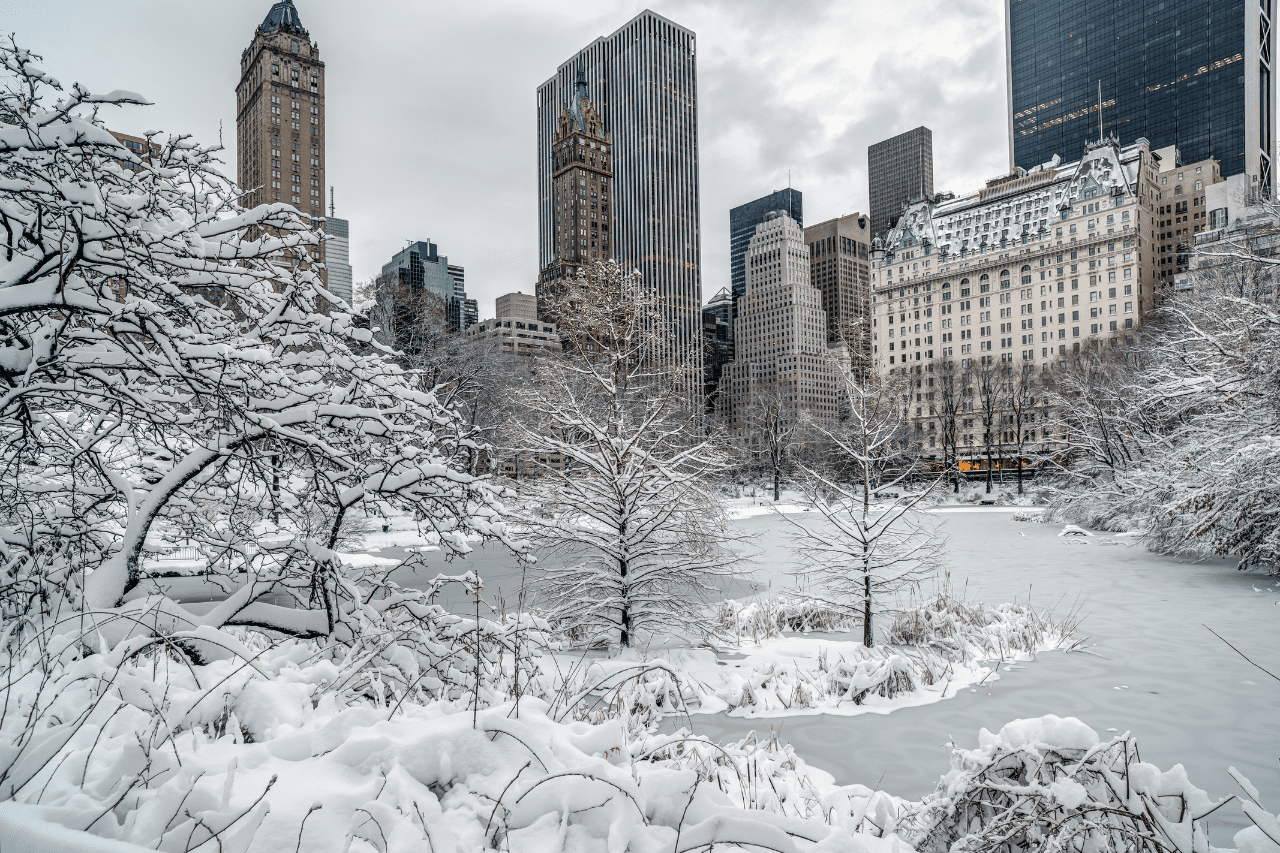
The Ice Rink Culture
The arrival of winter is also marked by the freezing of the water in Wollman Rink. When visitors can glide beneath the Manhattan skyline, the season has undeniably begun. These skating experiences are perhaps the most popular indicators of the season, serving as the heartbeat of winter activities. Whether it is the sheer scale of the The Rink at Rockefeller Center or the community feel of the rinks in Brooklyn, these spaces turn the biting cold into a social commodity.
Navigating the Volatile New York Winter Climate
While the holiday season is often painted as a scene from a storybook, the true winter weather—the kind that defines the local lifestyle—often arrives in earnest during the months of January and February. New York is located in a temperate zone, yet it remains subject to the whims of the Atlantic Ocean.
The Reality of January and February
Visitors often arrive in December expecting constant snow, only to find crisp, dry air or cold rain. The most significant snowfall in New York State frequently occurs after the new year. January is typically the coldest month, characterized by “wintry mixes” that turn the streets of Times Square into a slushy obstacle course. This is the period where the city feels most raw and authentic. The crowds thin out compared to the holiday peaks, and the architectural brilliance of the Empire State Building becomes even more striking against a backdrop of leaden, winter skies.
Packing for the Shift
Understanding when winter starts is vital for packing. If you are visiting in early December, you are dressing for a festive, brisk autumn-to-winter transition. If you are visiting in February, you are dressing for survival. A windproof coat is no longer a luxury; it is a necessity as the wind tunnels created by the towering skyscrapers of Midtown amplify the chill factor. Preparing for this specific window of the year requires a respect for the city’s geographical position.

Winter Beyond the Holidays
The mistake many travelers make is equating “winter” solely with the holiday window. In reality, the season lasts well into March. For those interested in the cultural side of the city, this is a golden period. Museum attendance at the Metropolitan Museum of Art or the American Museum of Natural History is much more manageable once the New Year’s rush dissipates.
Furthermore, the winter dining scene in New York offers a unique warmth that cannot be replicated in the humid summer months. The intimacy of underground bars and the comfort food found in the kitchens of the East Village become the focal point of the local experience. The “start” of winter is merely the opening chapter of a long, gritty, and beautiful story that spans the first three months of the year.
Ultimately, whether you consider winter to have started on the first frost of November, the official calendar date of December 21st, or the first blizzard of January, the experience remains the same: it is a time of transformation. It turns the city into a place where life retreats indoors, light takes on a soft, filtered quality, and the architecture of the Five Boroughs stands out in stark relief. For the traveler, knowing when this season starts is less about looking at a calendar and more about preparing to witness a global icon shed its autumn skin to embrace the quiet, icy grandeur of a New York winter.
LifeOutOfTheBox is a participant in the Amazon Services LLC Associates Program, an affiliate advertising program designed to provide a means for sites to earn advertising fees by advertising and linking to Amazon.com. Amazon, the Amazon logo, AmazonSupply, and the AmazonSupply logo are trademarks of Amazon.com, Inc. or its affiliates. As an Amazon Associate we earn affiliate commissions from qualifying purchases.