
The promise of a winter wonderland in New York is a dream for travelers and residents alike. There is a specific, cinematic magic that descends upon the city when the first heavy flakes begin to swirl around the Empire State Building or dust the iron gates of Central Park. However, predicting exactly when the city will succumb to its first blanket of white requires an understanding of regional meteorology and the unique microclimates of the northeastern United States.
The Seasonal Transition: When Does Winter Truly Begin?
New York City’s weather patterns are notoriously fickle. While meteorological winter officially begins in December, the city often plays a game of cat-and-mouse with freezing temperatures throughout late autumn.

The November Threshold
In some years, the city experiences a brief “teaser” snow in late November, often coinciding with the Macy’s Thanksgiving Day Parade. These events are rare and usually result in a light dusting that melts upon contact with the pavement. The Atlantic Ocean plays a pivotal role here; its residual warmth keeps the urban heat island effect strong, often delaying significant accumulation until the deeper winter months.
December Expectations
By mid-December, the likelihood of snow increases significantly. Travelers visiting Rockefeller Center to see the iconic Christmas tree often hope for a snowfall to heighten the festive atmosphere. Statistically, the period between December 15th and January 5th is when the city enters its prime window for the “postcard moment.” If you are planning a trip to experience the lights and storefronts of Fifth Avenue, this is your best opportunity to catch the city in its wintry glory.
Understanding the Urban Snow Pattern
Snow in a metropolis like this behaves differently than it does in the rural Catskill Mountains or the northern reaches of New York State. The dense infrastructure and high volume of traffic create a unique set of variables that influence accumulation and duration.
The Urban Heat Island Effect
The sheer amount of concrete, glass, and steel in Manhattan absorbs heat throughout the day. This warmth is radiated back into the air, which can turn a light snowstorm into freezing rain or slush. For travelers hoping to capture photos of pristine, white streets, it is essential to monitor local forecasts, as the “fresh” snow is often cleared from major thoroughfares like Broadway within hours of a storm’s conclusion.

Microclimates and Elevation
While the flat, coastal areas of Brooklyn and Queens might see a mix of rain and snow, the slightly higher elevations in the Bronx or the rolling hills of Staten Island can occasionally report heavier accumulations. If you are a snow enthusiast, venturing slightly outside the immediate city center to areas like Prospect Park often provides a more serene and sustained snowy landscape than the high-traffic districts of Midtown.
Planning Your Winter Escape
If your goal is to time your visit to coincide with the winter weather, flexibility is your greatest asset. New York City in winter is not just about the snow; it is about the resilience and vibrant energy that carries on despite the cold.
Monitoring the Patterns
Most significant snow events—those that truly transform the skyline—tend to occur between mid-January and late February. This is when the cold fronts from Canada consistently push south, overcoming the tempering effect of the harbor. During these months, ice skating at Bryant Park becomes an essential activity, as the combination of cold, crisp air and seasonal decorations creates an unparalleled travel experience.
Packing for the Elements
When visiting during the high-probability snow months, preparation is key.
- Footwear: Waterproof boots with good traction are non-negotiable. The melting snow quickly turns into “slush,” a grey, icy mixture that can ruin standard leather shoes.
- Layering: The subway systems can be incredibly warm, while the winds whipping between the skyscrapers of the Financial District can be bone-chilling. A high-quality, wind-resistant coat is essential.
- Access: During major snow events, public transportation, including the New York City Subway, generally remains operational, though delays are expected. Having a flexible itinerary allows you to enjoy the city at its most quiet and majestic state.
Embracing the City in White
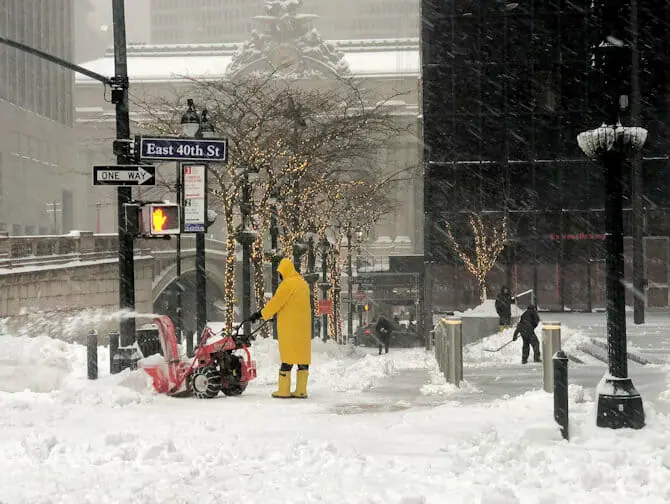
There is a distinct shift in the city’s mood when the forecast calls for snow. The rush of Wall Street slows down, and the crowds at the Top of the Rock thin out, offering a rare sense of intimacy with the city’s architecture.
Why Winter is the Best Time to Visit
Beyond the aesthetic appeal, winter is often a more budget-friendly time to explore. Many luxury hotels offer lower rates during the “shoulder” periods of late January and February. With fewer tourists crowding Times Square, you have more room to explore the galleries and museums, such as the Metropolitan Museum of Art, in relative peace.
The Cultural Impact
Snow in New York is more than a weather event; it is a cultural moment. Locals have a deep-seated connection to the seasonal changes. When the first flakes fall, you will notice a change in the pace of the city—a collective pause that brings a sense of wonder even to the most seasoned New Yorker. Whether you are drinking hot cocoa in a small café in Greenwich Village or watching the snow settle on the high-rises of Hudson Yards, the experience is transformative.
Ultimately, while you cannot force the clouds to deliver snow on a specific date, you can increase your odds by targeting the coldest weeks of the year. By embracing the unpredictability and preparing for the winter conditions, you open yourself up to one of the most beautiful transformations a global city can undergo. New York City, draped in white, is an experience that lingers in the memory long after the last of the snow has melted away into the drains of East River. Always check the local long-range forecasts, keep your travel plans flexible, and prepare to be surprised by the sheer beauty of a city that never stops, even when it is buried in winter’s embrace.
LifeOutOfTheBox is a participant in the Amazon Services LLC Associates Program, an affiliate advertising program designed to provide a means for sites to earn advertising fees by advertising and linking to Amazon.com. Amazon, the Amazon logo, AmazonSupply, and the AmazonSupply logo are trademarks of Amazon.com, Inc. or its affiliates. As an Amazon Associate we earn affiliate commissions from qualifying purchases.