
The dense, velvety, and impossibly creamy dessert known as New York-style cheesecake is more than just a sweet treat; it is a cultural icon of New York City. To bite into a slice is to experience a culinary milestone that has defined the dessert menus of the United States for nearly a century. But where and when did this specific iteration of the cheesecake reach its definitive form? To understand the history of this legendary dish, one must peel back the layers of European immigrant traditions, the ingenuity of early twentieth-century deli owners, and the competitive spirit of Manhattan.

The Immigrant Roots of the New York Classic
While cheesecake as a concept dates back to ancient Greece, the New York style we recognize today is a direct descendant of the Jewish immigrant experience in the early 1900s. Early variations of cheesecake brought to the Americas typically relied on farmer’s cheese, which resulted in a grainier texture and a slightly tangy profile.
The Shift to Cream Cheese
The pivotal moment in the evolution of the New York cheesecake occurred when bakers began substituting traditional curd cheeses with commercial cream cheese. Cream cheese, which had been commercially developed in New York state in the late 1800s, provided a smoothness and richness that the older, European-style cheeses simply could not replicate. This substitution was the birth of the modern, silky-smooth standard.
The Influence of Dairy Availability
The rise of the New York style was also fueled by the local dairy industry. As New York became a hub for food distribution, the accessibility of high-fat heavy cream and fresh eggs—two other essential components of the New York recipe—allowed bakers to refine their craft, moving away from simple cakes toward a dense, custard-like masterpiece.
Arnold Reuben and the Legend of the Deli
If there is one name synonymous with the invention of New York-style cheesecake, it is Arnold Reuben. A German-Jewish immigrant who opened a legendary deli in New York City, Reuben is often credited with tweaking the recipe that would eventually define the city’s culinary reputation.
The 1929 Breakthrough
Most food historians point to the late 1920s, specifically around 1929, as the turning point for the iconic recipe. While the exact provenance is debated, legend suggests that Reuben was served a cheese pie at a dinner party and became obsessed with recreating it using cream cheese. By the time he introduced his version at Reubens Restaurant, the dessert had become an overnight sensation.

Defining the Characteristics
The recipe that gained fame at his establishment was distinct for several reasons:
- Base: Unlike Italian cheesecakes, which use ricotta, the New York style strictly uses cream cheese.
- The Crust: A crumbly graham cracker or shortbread base provides a textural contrast to the dense filling.
- The Filling: A high ratio of eggs and cream creates a thick, heavy texture that does not require toppings, though some purists argue for a plain top.
- No Flour or Minimal Flour: True New York cheesecake relies on the coagulation of the eggs and the density of the cream cheese to set, rather than starches or flour.
The Rise of Junior’s and the Mid-Century Boom
By the mid-twentieth century, the New York-style cheesecake had moved from local delis into the mainstream consciousness of diners across the nation. No establishment did more to cement the dessert’s status as a global icon than Juniors.
The Brooklyn Standard
Founded in Brooklyn in 1950, Junior’s spent years perfecting their specific recipe. They were among the first to aggressively market their cheesecake as a shipping-friendly, high-end dessert. Their success ensured that the “New York Style” became a brand in its own right, moving the dessert from the deli counter to the white-tablecloth restaurants of Midtown Manhattan.
Cultural Ubiquity
As international tourism to the Big Apple exploded during the post-war era, the cheesecake became a mandatory culinary experience for visitors. It appeared in cinema, literature, and the menus of high-end hotels, serving as a sweet, edible postcard of the city’s relentless pursuit of perfection and luxury.
Preservation and Modern Variations
Today, the New York-style cheesecake is protected by a standard of expectation. If a restaurant claims to serve a “New York” cheesecake, patrons expect a specific weight, a specific creaminess, and an absence of fillers.
The Purist Movement
Despite the introduction of “New York-style” cheesecakes in chains across the Globe, the most authentic experiences remain tethered to the original bakeries of New York. Food critics and enthusiasts often embark on “cheesecake tours,” visiting legendary spots to evaluate the density of the cream cheese and the snap of the crust, maintaining the tradition established by the masters in the early 20th century.
Evolution vs. Tradition
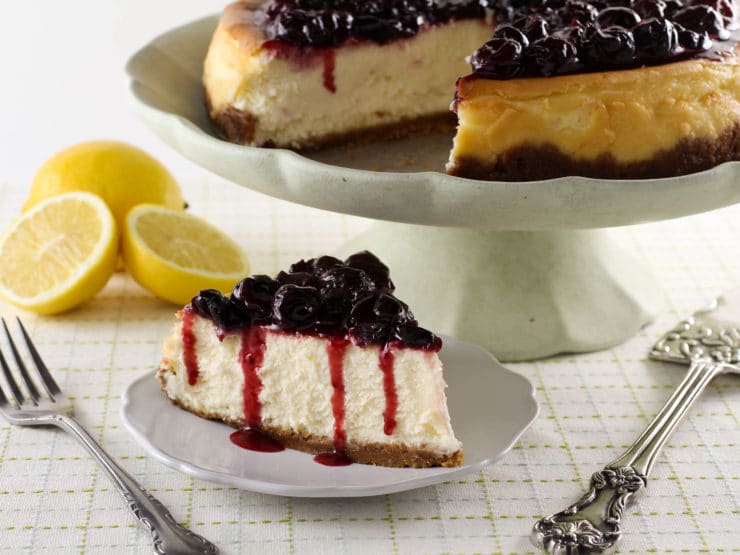
While modern pastry chefs have experimented with various toppings—from strawberry coulis to salted caramel and espresso glazes—the fundamental recipe for the batter has remained remarkably consistent. It is this commitment to the original 1929 formula that ensures the legacy of the dessert remains intact. Whether ordered as a slice in a bustling deli or shipped as a whole cake to food lovers across the United States, the New York-style cheesecake remains the gold standard of baking. It stands as a testament to how an immigrant tradition, combined with the abundance of the local dairy industry and the tireless innovation of 20th-century chefs, created something that is not just food, but a piece of history.
LifeOutOfTheBox is a participant in the Amazon Services LLC Associates Program, an affiliate advertising program designed to provide a means for sites to earn advertising fees by advertising and linking to Amazon.com. Amazon, the Amazon logo, AmazonSupply, and the AmazonSupply logo are trademarks of Amazon.com, Inc. or its affiliates. As an Amazon Associate we earn affiliate commissions from qualifying purchases.