
The New York City landscape is defined by its iconic skyline, sprawling parks, and a history of hosting events that have reshaped the global imagination. Among these, the World’s Fair stands as a monumental pillar of 20th-century progress. Far from being a singular event, New York City famously hosted two distinct iterations of this international exposition, both of which left an indelible mark on the urban fabric of the city.
The 1939-1940 World’s Fair: Building the World of Tomorrow
The first World’s Fair held in New York City took place at Flushing Meadows-Corona Park in Queens. Opening in the spring of 1939, this event was designed to be a beacon of optimism during the tail end of the Great Depression. The central theme, “The World of Tomorrow,” sought to inspire a nation by showcasing the potential of technology, suburban living, and industrial efficiency.

Architectural Innovations and Landmarks
The fairgrounds were dominated by the iconic Trylon and Perisphere, a geometric duo of a towering triangular spire and a massive white sphere. These structures became the symbols of the fair, representing the future-facing ambition of the era. Visitors flocked to the General Motors “Futurama” exhibit, a revolutionary ride that transported guests through a visionary representation of the United States in the 1960s, complete with massive highway systems and automated cities.
Global Participation and Political Tensions
While the fair was intended as a celebration of global cooperation, the late 1930s were a period of escalating international instability. Pavilions representing nations like Poland, Czechoslovakia, and the Soviet Union stood as testaments to the complex political climate. Despite the looming threat of conflict in Europe, the fair remained a major cultural draw, attracting millions of visitors before its conclusion in October 1940.
The 1964-1965 World’s Fair: Peace Through Understanding
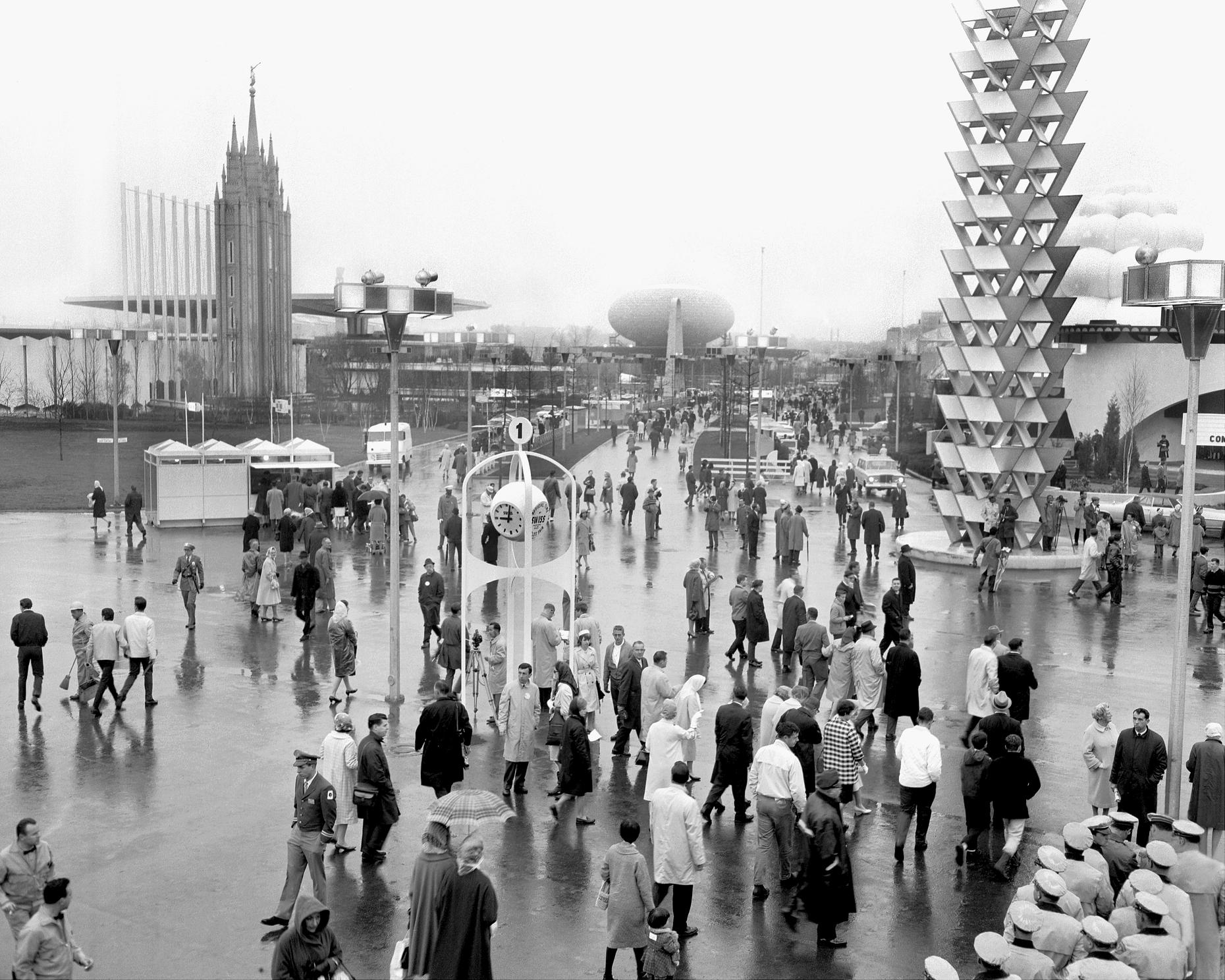
A quarter-century later, Flushing Meadows-Corona Park once again became the epicenter of global innovation. Under the leadership of Robert Moses, the 1964-1965 New York World’s Fair was organized around the theme “Peace Through Understanding.” It was a decade of profound change, and the fair mirrored the rapid advancements in aerospace, computing, and social consciousness.
Technological Marvels and Cultural Icons
The 1964 fair is perhaps best remembered for the Unisphere, a massive stainless-steel model of the Earth that remains a permanent fixture of Queens today. During this exhibition, visitors were introduced to the burgeoning age of space exploration and digital technology. Companies like IBM and Ford showcased exhibits that predicted the hyper-connected lifestyle we live today.
The Influence of Pop Culture
The fair also served as a stage for significant pop culture moments. Walt Disney played a major role, developing several attractions for the fair, including the beloved “It’s a Small World” ride. Furthermore, the Beatles and other musical icons of the era cemented the fair’s status as a must-visit destination for the youth of the 1960s. It was a place where the counterculture met corporate optimism, creating a unique atmosphere that captured the spirit of the United States mid-century.
The Lasting Legacy of the World’s Fair in New York City
Today, the remnants of these grand exhibitions continue to shape how we experience New York City. The site in Queens was transformed into Flushing Meadows-Corona Park, a vibrant public space that serves as a testament to the city’s ability to reclaim history and convert it into a lasting communal asset.
Preservation and Historic Sites
The New York State Pavilion, with its distinct circular observation towers, stands as a haunting yet beautiful monument to the 1964 fair. Efforts to restore these architectural gems highlight a renewed public interest in mid-century design and the importance of preserving the history of international expositions. For the modern traveler, walking through this park is akin to stepping through a timeline of 20th-century ambition.
The Evolution of Urban Spaces
The impact of these fairs extended beyond the park boundaries. The infrastructure improvements initiated to accommodate the millions of fairgoers—ranging from major highway expansions to subway extensions—helped facilitate the growth of the outer boroughs. New York City utilized the World’s Fair as a catalyst for urban development, permanently shifting the city’s focus from a Manhattan-centric model to one that embraced the breadth and scale of all five boroughs.
Why the World’s Fair Matters Today
Though international expositions have evolved in the modern era, the legacy of the World’s Fair remains a vital part of the city’s identity. The events provided a platform for global exchange, technological forecasting, and architectural audacity that defined the American experience during the 20th century.
Educational Value for Modern Travelers
For those visiting New York City, a trip to the site of these fairs is an essential educational experience. It offers a unique window into the past, allowing visitors to visualize how previous generations perceived the future. Whether it is admiring the Unisphere or exploring the nearby Queens Museum, which houses a massive panorama of the city, there are endless ways to connect with this rich history.

A Beacon of Global Inspiration
The World’s Fair in New York City wasn’t just about the structures; it was about the collective desire to improve the human condition. While the pavilions have long since vanished, the spirit of curiosity and the pursuit of progress persist. Exploring these landmarks invites us to reflect on our own era, the challenges we face, and the future we are actively building. It serves as a reminder that New York City is a place where, historically, the world gathered to dream, and where the echoes of those dreams still resonate today across the sprawling greenery of Queens.
LifeOutOfTheBox is a participant in the Amazon Services LLC Associates Program, an affiliate advertising program designed to provide a means for sites to earn advertising fees by advertising and linking to Amazon.com. Amazon, the Amazon logo, AmazonSupply, and the AmazonSupply logo are trademarks of Amazon.com, Inc. or its affiliates. As an Amazon Associate we earn affiliate commissions from qualifying purchases.