
To the millions of residents and visitors who traverse the bustling streets of New York City, the simple act of turning on a tap and receiving a cool, crisp glass of water is often taken for granted. While the urban landscape is dominated by steel, glass, and concrete, the lifeblood of this metropolis originates hundreds of miles away in the serene, protected highlands of New York State. Understanding the source of this water reveals a remarkable feat of engineering and a commitment to environmental stewardship that has sustained North America’s most populous city for generations.

The Watersheds: Nature’s Massive Filtration System
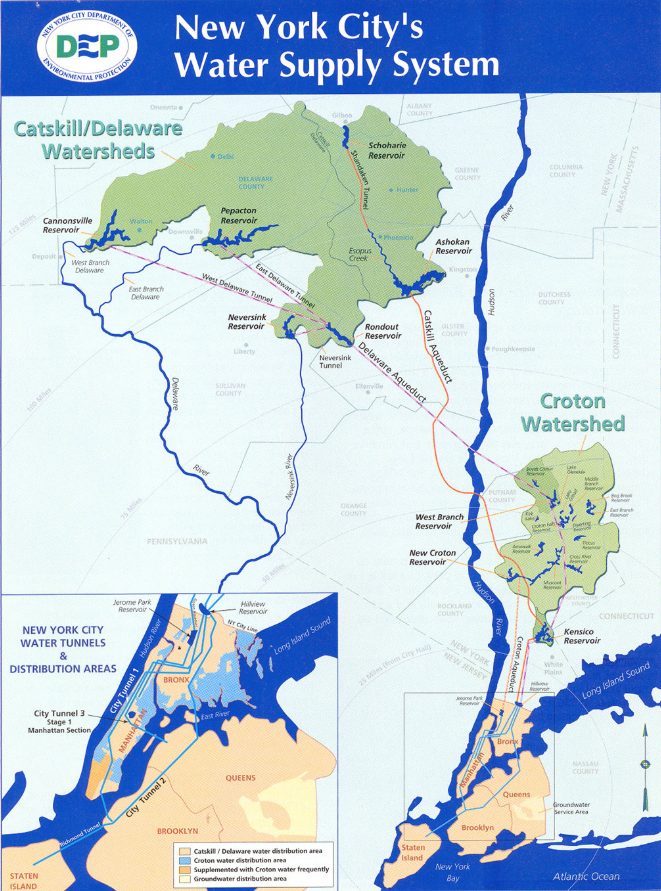
The supply of water to New York City is not drawn from a single source; rather, it is harvested from a vast network of nineteen reservoirs and three controlled lakes spread across an area of nearly 2,000 square miles. These sources are divided into three distinct systems: the Catskill, Delaware, and Croton watersheds.
The Catskill and Delaware Systems
The Catskill and Delaware systems provide the vast majority of the city’s daily supply. Located west of the Hudson River, these mountain regions are characterized by pristine forests and rocky terrain. Because the water in these areas is exceptionally clean, it requires minimal treatment before it reaches the consumer. The city’s management of these lands, including strict regulations on development, ensures that natural filtration occurs as water moves through the soil and over the forest floor.
The Historic Croton System
The Croton system is the oldest of the three, with some of its infrastructure dating back to the 19th century. Located in Westchester County and Putnam County, this system serves as a vital backup and supplemental supply. While the water here requires more intensive filtration due to the suburban development surrounding the reservoirs, the completion of the Croton Water Filtration Plant has ensured that it meets the same high-quality standards as the mountain-fed systems.
Engineering a Gravity-Fed Marvel
What makes the New York City water system truly remarkable is that, for the most part, it is powered entirely by gravity. The reservoirs are situated at elevations significantly higher than the city, allowing water to flow south through a massive subterranean network of tunnels and aqueducts.
The Aqueduct Infrastructure
The water travels through some of the most impressive civil engineering projects in United States history. The Delaware Aqueduct, for instance, is the longest tunnel in the world, stretching over 85 miles from the reservoirs to the city’s distribution points. Because the system relies on gravity, the city saves millions of dollars in energy costs that would otherwise be spent on pumping stations. This sustainable approach has been a cornerstone of the city’s infrastructure strategy since the early Old Croton Aqueduct was completed in 1842.
Underground Distribution
Once the water reaches the city’s borders, it enters a series of deep-rock tunnels known as City Water Tunnel No. 1, City Water Tunnel No. 2, and the recently expanded City Water Tunnel No. 3. These tunnels are buried hundreds of feet below the street level, snaking beneath Manhattan, Brooklyn, and The Bronx. From these main arteries, smaller water mains branch out, finally delivering the water into the complex plumbing systems of iconic landmarks like the Empire State Building and the Statue of Liberty.
Stewardship and Quality Control
Maintaining a clean water supply for eight million people requires constant vigilance and sophisticated science. The New York City Department of Environmental Protection is tasked with monitoring thousands of water samples annually to ensure safety and clarity.
Protecting the Source
The city’s primary defense against water contamination is protecting the watersheds themselves. By investing in land acquisition and partnering with local communities in the Catskill Mountains and Upstate New York, the government prevents pollution at the source. This proactive “source water protection” strategy is so effective that New York City is one of only a few major cities in the United States that is allowed to distribute unfiltered surface water, as the quality is naturally superior.
Disinfection and Monitoring
While the water is not filtered in the traditional sense for the Catskill and Delaware systems, it is treated with chlorine for disinfection, fluoride for dental health, and a small amount of phosphoric acid to prevent lead from leaching out of aging plumbing in older buildings. The Ultraviolet Disinfection Facility stands as a modern testament to this process, using advanced UV technology to neutralize any potential microorganisms before the water enters the distribution network.
A Legacy of Hydration
The story of the water in New York City is a story of resilience and long-term planning. In the mid-19th century, leaders recognized that the rapid growth of the city would eventually outpace local wells. They looked to the mountains, launching ambitious infrastructure projects that would shape the region for the next 200 years.
Connecting the City to the Country
This massive network acts as a bridge between the wild, serene landscapes of New York State and the urban intensity of Times Square or Central Park. Every time a resident or visitor enjoys a glass of water, they are connected to a legacy of environmental conservation. The protection of the Catskill Park and the various State Forests within the watershed boundaries is not just for the benefit of nature, but for the fundamental survival and health of the city’s inhabitants.
Looking Toward the Future
As the effects of climate change impact precipitation patterns across North America, the New York City water system remains a model of sustainability. By prioritizing the health of the watershed forests and continuing to modernize deep-rock tunneling technology, the city ensures that its most vital resource remains reliable. Whether you are dining at a world-class restaurant in Greenwich Village or visiting the Brooklyn Bridge, the water you drink is a product of this intricate, gravity-driven journey from the high mountain peaks to your glass. It is a testament to how urban planning, if guided by a respect for nature, can provide for a city’s needs without compromising the environment.
LifeOutOfTheBox is a participant in the Amazon Services LLC Associates Program, an affiliate advertising program designed to provide a means for sites to earn advertising fees by advertising and linking to Amazon.com. Amazon, the Amazon logo, AmazonSupply, and the AmazonSupply logo are trademarks of Amazon.com, Inc. or its affiliates. As an Amazon Associate we earn affiliate commissions from qualifying purchases.