
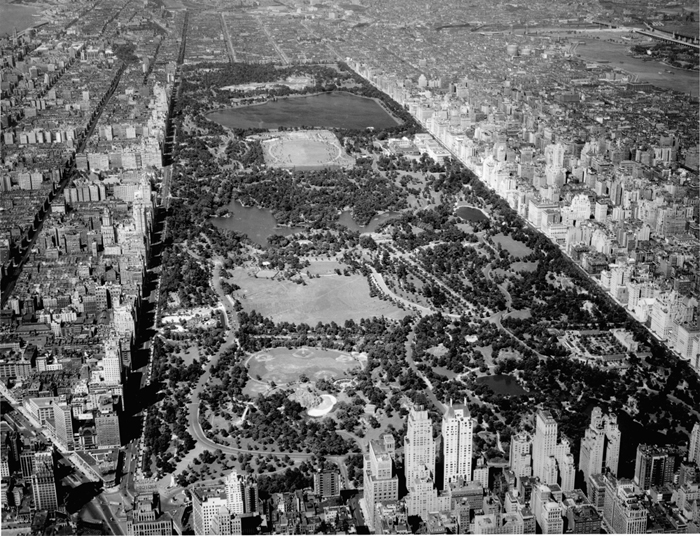
In the heart of Manhattan, sprawling across 843 acres of meticulously curated landscape, lies one of the most iconic urban spaces in the world: Central Park. To walk its winding paths, admire the Bethesda Terrace, or gaze across the Jacqueline Kennedy Onassis Reservoir is to experience a masterpiece of landscape architecture. Yet, the creation of this “green lung” was not a spontaneous act of nature, but the result of a rigorous design competition and the visionary genius of two men: Frederick Law Olmsted and Calvert Vaux.
The Greensward Plan: A Vision for the Public
The narrative of Central Park began in the mid-19th century as New York City grappled with rapid industrialization and population growth. City officials recognized the need for a public space that could provide respite from the densely packed streets of New York. In 1857, the city launched a design competition to transform the rugged, swampy terrain between 59th and 106th Streets into a world-class park.

The Competition
The competition attracted thirty-three entries, but none captured the imagination of the selection committee quite like the “Greensward Plan,” submitted by an unlikely duo. Frederick Law Olmsted, a journalist and farmer who had recently been appointed the superintendent of the park construction, teamed up with Calvert Vaux, an English-born architect. Their design was revolutionary, focusing on a “pastoral” aesthetic that felt miles removed from the rigid grid of the city.
The Design Philosophy
The Greensward Plan was built upon the idea of the “picturesque.” Unlike the formal, symmetrical parks of Europe, which were often designed to showcase imperial power, Olmsted and Vaux wanted their design to evoke the sensation of walking through the countryside. They envisioned winding paths, expansive meadows, and hidden valleys that would offer visitors a sense of mystery and discovery. This approach was highly democratic, intended to provide an egalitarian space where Americans of all social classes could mingle in nature.
The Engineering Behind the Beauty
The sheer scale of the labor involved in creating the park cannot be overstated. When the project began, the land was a chaotic landscape of rocky outcroppings, shantytowns, and swamps. To realize their dream, Olmsted and Vaux oversaw a massive construction effort that required the removal of millions of cubic yards of rock and earth, much of which was moved by horse and cart.

The Transverse Roads
One of the most brilliant features of the Central Park design was the integration of transverse roads. Recognizing that the city would eventually need to move traffic across the island, the designers sunken four major east-west roads below the surface of the park. By masking these thoroughfares with trees and stone bridges, they successfully separated the park-goers from the noise and bustle of Manhattan traffic, preserving the illusion of an untouched wilderness.
Water and Topography
The park’s water features, including The Lake and The Pond, were not mere decorative additions; they were carefully engineered to manage the drainage of the New York terrain. Vaux, in particular, was an architectural master, designing over 30 bridges—each unique in style and material—that allow pedestrians to traverse the park while adding architectural character to the pastoral scenery.
Enduring Legacy: Beyond the Greenery
While Olmsted is often remembered as the father of American landscape architecture, the contribution of Calvert Vaux is equally profound. Vaux was instrumental in bringing international sensibilities to the project, influenced by the English Romantic movement. Together, they created a blueprint for urban planning that influenced cities across North America.
The Cultural Impact
Throughout the 20th century and into the 21st, Central Park has remained the epicenter of New York City cultural life. It has served as a sanctuary during times of crisis and a stage for global events. From the Great Lawn to the Delacorte Theater, every corner of the park reflects the intention of its creators: to provide a place for physical activity, artistic expression, and mental rejuvenation.
Preservation and Evolution
Today, the responsibility of maintaining this masterpiece falls to the Central Park Conservancy. Since the 1980s, this organization has worked to restore the park’s original design elements while ensuring it meets the needs of modern visitors. They have been instrumental in repairing the Bow Bridge and restoring the Sheep Meadow, honoring the original intent of the Greensward Plan while managing the wear and tear caused by millions of annual visitors.
Conclusion: A Living Masterpiece
The beauty of Central Park lies in the fact that it never feels fully “designed” in the traditional, rigid sense. By artfully obscuring the hand of the designer, Olmsted and Vaux succeeded in creating something that feels timeless. They understood that the city needed contrast—the softness of grass against the hardness of stone, the silence of a woodland path against the roar of the city streets.
Visitors traveling to New York today find themselves standing in a space that is as much a work of art as any collection housed in the nearby Metropolitan Museum of Art. The collaboration between these two men defined the identity of Manhattan and established a precedent for public parks around the globe. Whether one is wandering through the Ramble or sitting near the Alice in Wonderland Statue, one is witnessing the enduring power of a design that puts human well-being at the center of the urban landscape. Through their shared vision, Olmsted and Vaux transformed a rocky, neglected patch of Manhattan into the world’s most famous garden, a sanctuary that continues to evolve and serve the people of New York City and beyond.
LifeOutOfTheBox is a participant in the Amazon Services LLC Associates Program, an affiliate advertising program designed to provide a means for sites to earn advertising fees by advertising and linking to Amazon.com. Amazon, the Amazon logo, AmazonSupply, and the AmazonSupply logo are trademarks of Amazon.com, Inc. or its affiliates. As an Amazon Associate we earn affiliate commissions from qualifying purchases.