
Navigating the expansive highways of the United States requires more than just a full tank of gas and a reliable GPS; it requires an understanding of regional infrastructure costs. For travelers traversing the heartland, the Oklahoma turnpike system is an essential component of any road trip itinerary. Understanding the financial commitment of these routes is vital for effective budget planning, whether you are driving a compact sedan or hauling a heavy-duty trailer.
The Oklahoma Turnpike Authority manages a complex network of toll roads that facilitate faster travel across the state. Unlike some states that have moved toward a singular, universal tolling platform, Oklahoma’s system is multifaceted, reflecting the state’s diverse geography—from the rolling hills of the Ozark Mountains to the urban corridors of Oklahoma City and Tulsa.

Understanding the Oklahoma Turnpike System
The tolling infrastructure in this state is not a one-size-fits-all model. It is composed of several distinct turnpikes, each with its own history, maintenance schedule, and fare structure. To navigate these roads efficiently, it is necessary to recognize that the cost of your journey depends heavily on your vehicle type, your entry and exit points, and your payment method.
The Evolution of Payment: PlatePay vs. Pikepass
Gone are the days of keeping rolls of quarters in your cup holder. The Oklahoma turnpike system has transitioned into a largely cashless environment. The primary method for frequent travelers is the Pikepass, a small electronic transponder mounted to your windshield that automatically deducts funds from your pre-paid account.
For occasional visitors, the state has implemented PlatePay, an innovative billing system that photographs your license plate as you pass under overhead gantries. An invoice is subsequently mailed to the registered owner of the vehicle. While this offers unparalleled convenience, it is important to note that PlatePay transactions often come at a higher price point compared to Pikepass users. Therefore, if your travel plans involve multiple trips across the state, the cost-benefit analysis favors acquiring the electronic transponder before your journey begins.
Vehicle Classifications and Their Impact
Your toll cost is fundamentally tied to the number of axles on your vehicle. A standard passenger car or a light-duty truck with two axles will always pay the baseline rate. However, once you introduce a trailer, a camper, or a recreational vehicle into the mix, your axle count increases, and your toll rate scales upward accordingly. Drivers traveling with heavy cargo or oversized vehicles should consult the official Oklahoma Turnpike Authority rate calculator, as the difference between a two-axle and a four-axle trip can be significant when traversing longer turnpikes like the Will Rogers Turnpike.
Major Toll Routes and Expected Costs
While costs fluctuate periodically, knowing which roads carry a premium can help you decide between a high-speed turnpike and alternative state highways.

The Turner Turnpike: Connecting Two Major Hubs
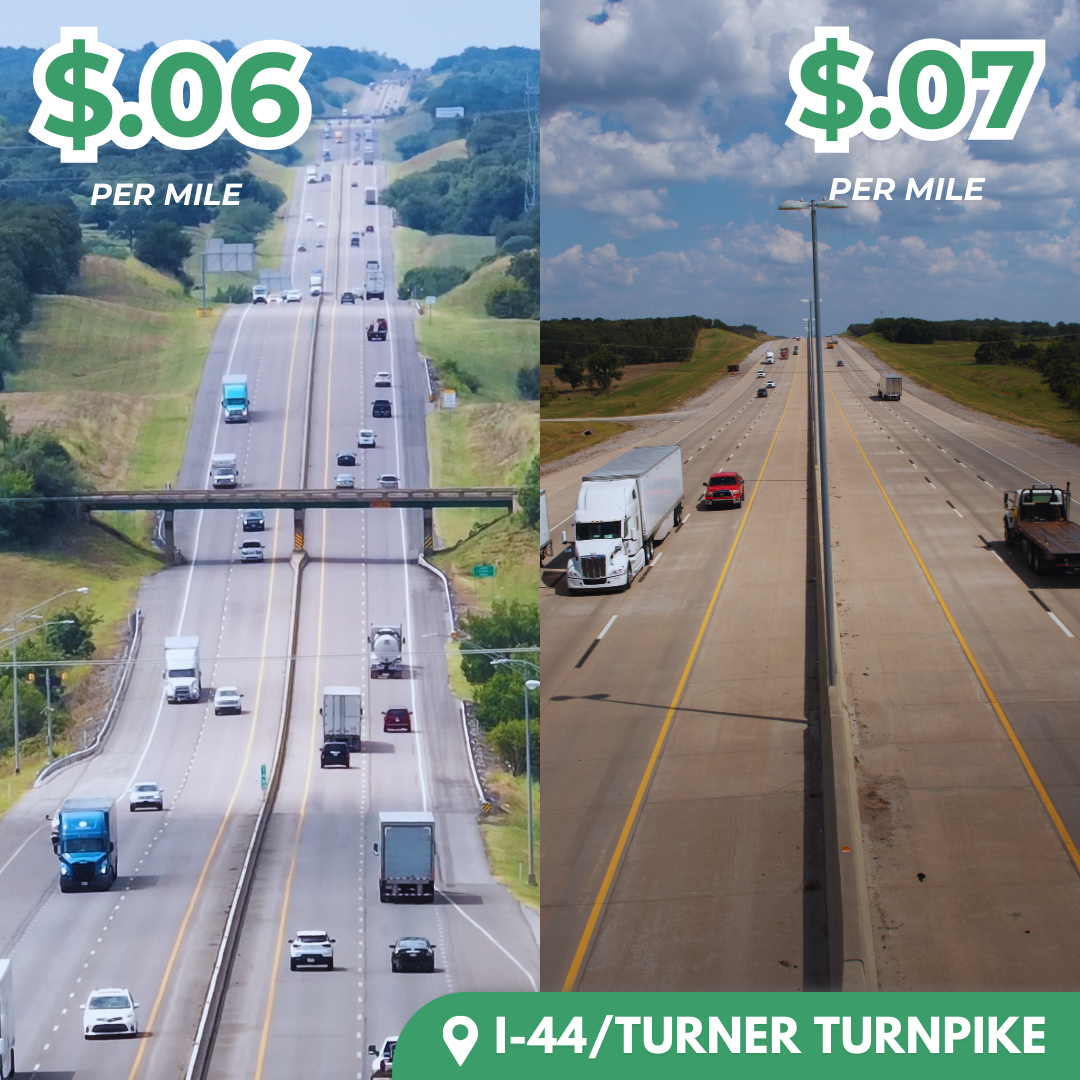
The Turner Turnpike is perhaps the most heavily traveled route in the state, linking Oklahoma City to Tulsa. Given the density of traffic and the commercial importance of this corridor, the tolls here are a standard part of the commute for thousands of residents. Because the distance is significant, the total cost for a one-way trip is higher than the smaller, localized turnpikes that loop around major city centers.
Peripheral and Urban Turnpikes
In cities like Oklahoma City, loop roads such as the Kilpatrick Turnpike offer a bypass for commuters looking to avoid the stop-and-go congestion of downtown traffic. These urban turnpikes generally operate on a “gantry-by-gantry” model, where you are charged a smaller fee for each segment of the road you travel. While these individual charges may seem trivial, a full loop around the city can add up over the course of a week. Travelers should keep in mind that these costs are categorized as Lifestyle expenses for daily commuters, but as essential Travel costs for visitors.
Tips for Budgeting Your Road Trip
Planning a cross-country journey requires precision, and unexpected toll costs can derail a carefully balanced budget. By following a few strategic steps, you can minimize the financial impact of your Oklahoma transit.
Use Official Calculators
The most reliable way to determine your toll cost is to use the official Oklahoma Turnpike Authority website. Before departing, map out your route. Enter your starting point, your destination, and your vehicle type. The site will provide an itemized list of every toll gantry you will cross, along with the expected Pikepass and PlatePay prices.
Consider the Alternative
For those traveling on a shoestring budget, Oklahoma offers a vast network of free, well-maintained state highways and U.S. routes. These roads often offer a more scenic, albeit slower, journey. If your primary goal is to reach Tulsa or Oklahoma City as quickly as possible, the turnpikes are well worth the price for the time saved. However, if your trip is about the experience of the American landscape, consider taking a secondary road. You may discover hidden gems, small towns, and regional diners that are bypassed entirely by the high-speed turnpikes.
Factor in Convenience and Maintenance
Beyond the raw cost, consider the value of road quality. The Oklahoma turnpike system is renowned for its smooth pavement, clear signage, and high-speed limits. The revenue generated from these tolls goes directly back into the maintenance and improvement of these corridors. By choosing to pay the toll, you are essentially investing in a safer, faster, and more predictable travel experience.
Navigating the Future of Oklahoma Infrastructure
The landscape of tolling is changing. As technology improves, the focus of the Oklahoma Turnpike Authority has shifted toward seamless, non-stop transit. The implementation of modern gantries allows for highway-speed tolling, which reduces fuel consumption caused by unnecessary braking and accelerating.
If you are a frequent traveler to this part of the United States, the investment in a Pikepass is almost certainly worthwhile. Even if you only visit Oklahoma once or twice a year, the ease of access and the potential to save on PlatePay surcharges provide significant long-term value. Always ensure your account information is up to date, especially if you have recently changed vehicles or license plates. An outdated account can lead to missed invoices and unnecessary administrative fees, which can turn a smooth journey into an avoidable bureaucratic headache.
In summary, the cost of driving in Oklahoma is both transparent and manageable if you take the time to prepare. Whether you are driving across the state to visit the beautiful Wichita Mountains or simply passing through on your way to Dallas, a little bit of research will go a long way in ensuring that your trip remains within your planned financial boundaries. By utilizing the available digital tools and understanding your specific route, you can focus on the journey itself, confident that your road trip expenses are handled with the same efficiency as the roads you are traveling.
LifeOutOfTheBox is a participant in the Amazon Services LLC Associates Program, an affiliate advertising program designed to provide a means for sites to earn advertising fees by advertising and linking to Amazon.com. Amazon, the Amazon logo, AmazonSupply, and the AmazonSupply logo are trademarks of Amazon.com, Inc. or its affiliates. As an Amazon Associate we earn affiliate commissions from qualifying purchases.