
The “Dust Bowl” remains one of the most defining and harrowing chapters in the history of the United States. Often referred to as the “Dirty Thirties,” this environmental and human catastrophe fundamentally reshaped the landscape of the Southern Plains. While the term is frequently used as a blanket description for the entire decade, the Dust Bowl was a specific, geographically concentrated series of ecological disasters that reached its peak intensity between 1930 and 1936, with lingering effects felt well into the early 1940s.
The Defining Timeline of an Environmental Disaster
The Dust Bowl was not a singular event but a convergence of severe drought, poor land management, and high winds that stripped the topsoil from millions of acres. While the Great Depression provided the economic backdrop, the environmental reality was dictated by a lack of rainfall across the Oklahoma Panhandle, as well as parts of Texas, Kansas, Colorado, and New Mexico.
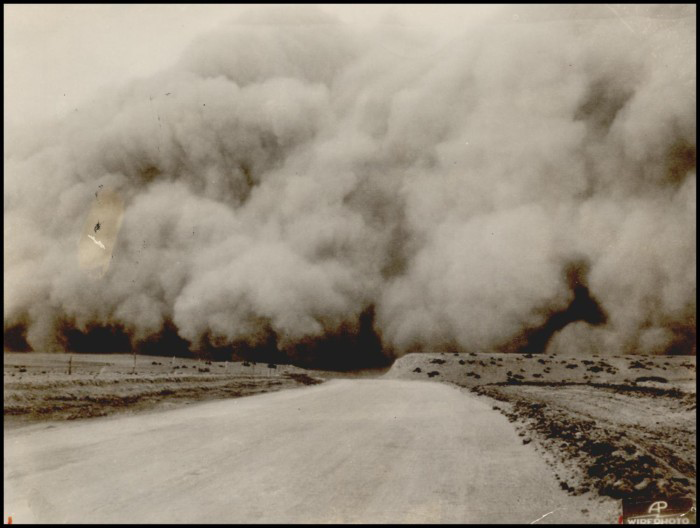
The Onset: 1930–1932
The conditions began to deteriorate significantly around 1930. A series of exceptionally dry years followed a period of intensive agricultural expansion, where native grasses had been plowed under to make way for wheat production. When the rain stopped, the soil, no longer anchored by deep-rooted prairie grasses, began to turn into fine powder. By 1932, the federal government had already begun to report an increasing number of “dust storms” occurring across the region.
The Peak Years: 1933–1936
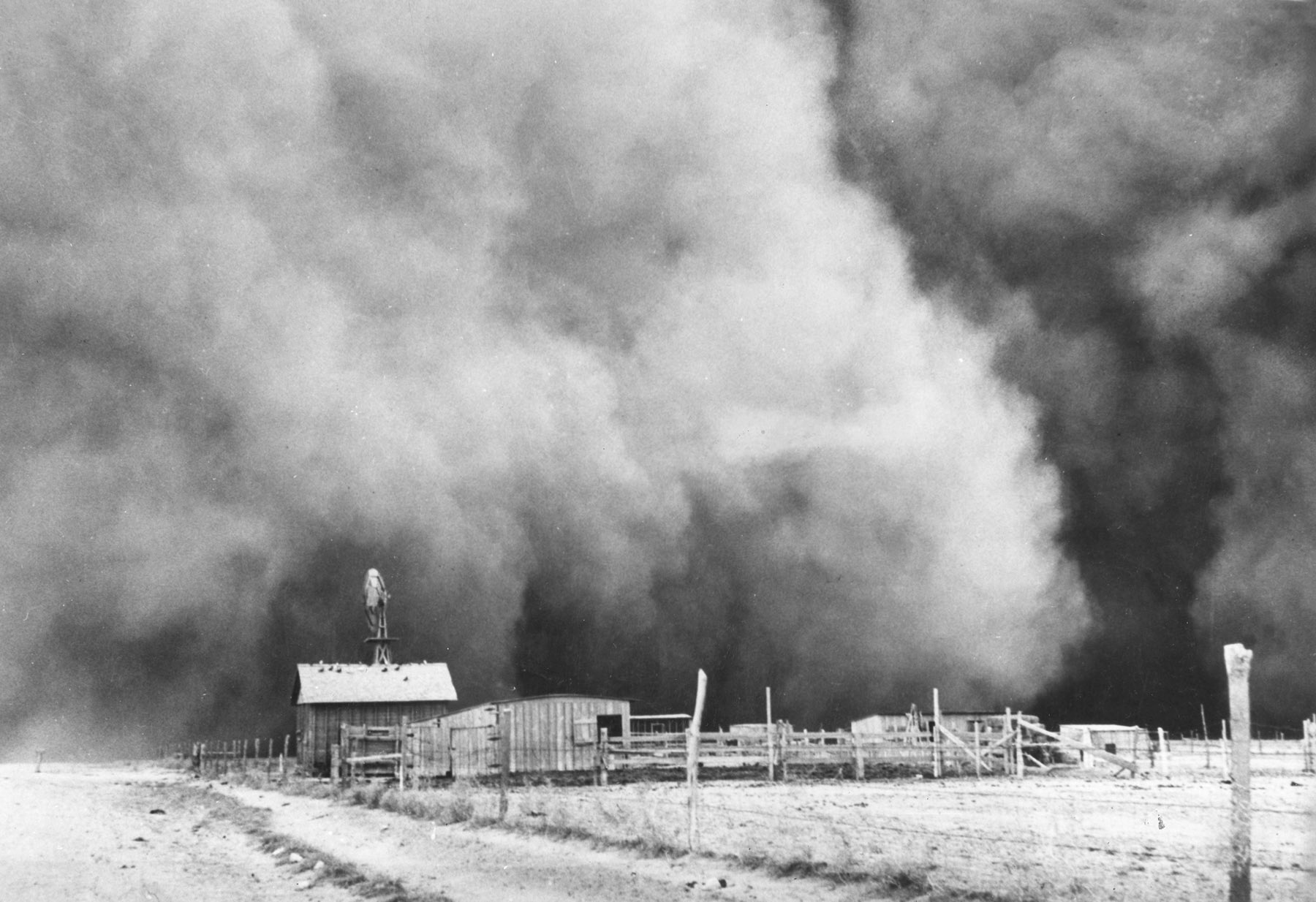
The most severe and iconic imagery of the Dust Bowl belongs to the period between 1933 and 1936. During this time, the “Black Blizzards”—massive, rolling clouds of dust that could block out the sun—became frequent occurrences. One of the most infamous, “Black Sunday,” occurred on April 14, 1935. A massive storm hit Boise City and other parts of Oklahoma with such intensity that it turned mid-day into total darkness. Residents in cities like Denver and Chicago reported dust settling on their windowsills, proving that the catastrophe had transcended state lines.
The Human and Cultural Impact
The environmental devastation led to a mass exodus, a migration pattern that has been heavily immortalized in American literature and film. As the land became uninhabitable, thousands of families—derogatorily referred to as “Okies”—loaded their meager belongings into rusted automobiles and headed west.

The Migration to California
The primary destination for the displaced was California. Many sought work in the fertile San Joaquin Valley, hoping to find seasonal labor in the orchards and fields. This massive shift in population permanently altered the cultural fabric of the American West. The Route 66 corridor became the literal and metaphorical pathway for those fleeing the dust. Despite the hardships, these migrants brought their resilience and culture to cities like Bakersfield and Fresno, effectively merging the traditions of the Midwest with the coastal culture of the West.
Reshaping Local Identity
For those who stayed, the identity of the Great Plains was forever changed. The federal government, under the Franklin D. Roosevelt administration, stepped in with the Soil Conservation Service. This led to a complete overhaul of farming practices. Techniques such as contour plowing, crop rotation, and the planting of massive shelterbelts of trees were implemented to ensure that the earth would never again be so vulnerable to the winds. Today, landmarks and museums throughout the region, such as those found in Goodwell, serve as solemn reminders of the necessity of stewardship.
The End of the Dust Bowl Era
By the late 1930s, the drought conditions began to wane, and the introduction of new agricultural technologies helped stabilize the region. However, the true “end” of the Dust Bowl is usually marked by the return of rain in 1939 and the outbreak of World War II, which shifted the nation’s focus toward wartime production and pulled the country out of the Economic Great Depression.
Lessons Learned and Legacy
The legacy of the Dust Bowl is still visible today. It stands as a cautionary tale about the limits of natural resources and the consequences of unsustainable industrial practices.
- Environmental Awareness: It forced the nation to confront the fragility of the prairie ecosystem.
- Scientific Advancement: It accelerated the development of soil science and modern meteorology in the United States.
- Cultural Preservation: The era produced profound art and literature, most notably represented by John Steinbeck and his depiction of the struggle for survival in The Grapes of Wrath.
Today, visitors traveling through Cimarron County can still see the vast open spaces that define this historical region. While the sky is clear and the grass is lush, the historical markers remind us that for a few years in the 1930s, this land was the epicenter of a crisis that the world would never forget. The Oklahoma Panhandle State University and various historical societies continue to curate records, ensuring that the generations born long after the storms understand why the soil beneath their feet is so precious.
The Dust Bowl was not merely a weather event; it was a defining moment in the development of American land use policy. It transformed the Plains States from a frontier of unbridled exploitation into a region defined by caution, conservation, and a deep, communal respect for the environment. Even nearly a century later, the question of “when” it happened is less important than “why” it happened, serving as a permanent guidepost for sustainable living in a changing climate.
LifeOutOfTheBox is a participant in the Amazon Services LLC Associates Program, an affiliate advertising program designed to provide a means for sites to earn advertising fees by advertising and linking to Amazon.com. Amazon, the Amazon logo, AmazonSupply, and the AmazonSupply logo are trademarks of Amazon.com, Inc. or its affiliates. As an Amazon Associate we earn affiliate commissions from qualifying purchases.