
When planning a trip to Los Angeles, California, one of the first questions that comes to mind for any savvy traveler is, “What’s the temperature like?” This isn’t just about packing the right clothes; it’s about understanding the pulse of this vibrant metropolis, how the climate shapes its lifestyle, influences tourist activities, and even dictates the best time to book your accommodation. Los Angeles is renowned for its enviable weather, often painted as a land of perpetual sunshine and mild temperatures. While largely true, the reality is a little more nuanced, with distinct seasonal shifts and fascinating microclimates that offer a diverse experience depending on where and when you visit.

Understanding the temperature in Los Angeles is key to unlocking the full potential of your California adventure. From sun-drenched beaches to cool mountain escapes, the weather plays a pivotal role in every aspect of travel, from choosing your ideal hotel or resort to planning your daily itinerary of attractions and cultural immersion. This guide will delve into the typical temperature patterns, seasonal variations, and how these conditions influence the city’s unique charm, ensuring your visit is as comfortable and enjoyable as possible, whether you’re seeking luxury travel, a family trip, or a business stay.
Unpacking Los Angeles’ Unique Climate
Los Angeles boasts a subtropical- Mediterranean Sea climate, characterized by warm to hot, dry summers and mild, wet winters. This distinctive weather pattern is influenced primarily by its proximity to the vast Pacific Ocean and the protective embrace of mountain ranges like the San Gabriel Mountains to the north and east. This combination creates an environment where sunshine is abundant, and extreme temperatures are rare, making it a desirable destination year-round. However, labeling Los Angeles with a single temperature is an oversimplification due to its fascinating microclimates.
The Influence of Microclimates
The sprawling geography of Los Angeles County means that temperatures can vary significantly within just a few miles. Coastal areas like Santa Monica and Malibu benefit from cooling ocean breezes, resulting in milder temperatures year-round, often cooler in summer and slightly warmer in winter compared to inland regions. Here, the temperature rarely soars above the mid-80s Fahrenheit (around 29-30°C) even in the peak of summer, and winter lows seldom drop below 50°F (10°C).
As you move inland towards areas like Hollywood, Beverly Hills, or the San Fernando Valley, the marine layer’s influence diminishes. Summers become noticeably hotter, often reaching into the 90s Fahrenheit (32-37°C) and occasionally exceeding 100°F (38°C) during heatwaves. Conversely, winter nights can be cooler in these areas, with occasional dips into the 40s Fahrenheit (4-9°C). This dynamic requires travelers to consider their specific destination within Los Angeles when checking the forecast and packing. A day trip from a cool beach in Santa Monica to the warmer climes of Universal Studios Hollywood can mean a significant temperature swing, emphasizing the need for versatile clothing.
Seasonal Temperatures and Travel Experiences
The beauty of Los Angeles’ climate lies in its ability to offer distinct, yet pleasant, experiences throughout the year. Each season presents unique opportunities for tourism, from beach outings to cultural explorations, all shaped by the prevailing temperatures.
Summer: Sun-Drenched Days and Warm Evenings (June to August)
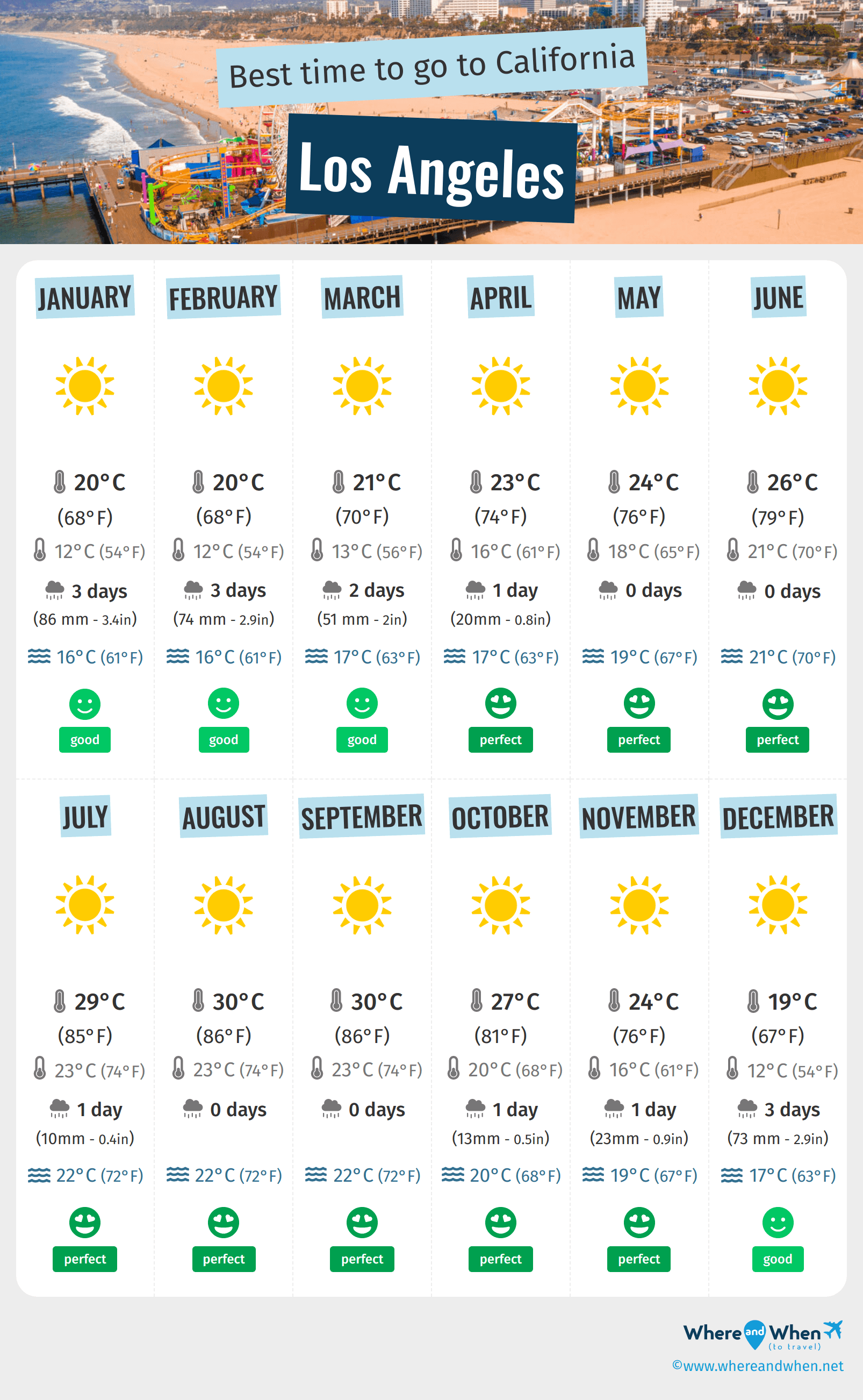
Summer in Los Angeles is synonymous with sunshine. Temperatures typically range from the mid-70s to high 80s Fahrenheit (24-31°C) along the coast, while inland areas can easily climb into the 90s (32-37°C). Evenings remain warm, often staying in the 60s Fahrenheit (15-20°C), perfect for al fresco dining or evening strolls. This is peak season for beach lovers, with Venice Beach, Santa Monica Pier, and Malibu drawing large crowds. Attractions like Disneyland Park and Universal Studios Hollywood are bustling, making water rides and air-conditioned indoor experiences particularly popular.
- Activities: Beach days, surfing, outdoor concerts at the Hollywood Bowl, theme parks, hiking in the early mornings or late evenings at places like Runyon Canyon Park.
- Accommodation Tips: Hotels with pools or close to the coast are highly sought after. Booking well in advance is essential due to high demand. Resorts offering extensive amenities like water parks or spa services provide a cool respite from the heat.
Autumn: The Golden Season (September to November)
Often considered by locals to be the best time to visit, autumn brings continued warmth with less intense heat than summer, particularly in September and October. Coastal temperatures typically stay in the high 60s to high 70s Fahrenheit (20-26°C), while inland still sees pleasant days in the 80s (27-31°C). The famous ” Santa Monica heatwave” can occasionally push temperatures higher in September. Evenings become noticeably cooler, often dropping into the 50s Fahrenheit (10-15°C). The crowds thin out, but the weather remains ideal for most outdoor activities, making it perfect for exploring landmarks like the Hollywood Sign or Griffith Observatory without the intense summer sun.
- Activities: Scenic drives, winery tours in nearby regions, outdoor festivals, cultural events, exploring Downtown Los Angeles’s architecture.
- Accommodation Tips: More availability opens up, and you might find better deals on suites and hotels. This is a great time for a luxury travel experience without the peak-season price tag.
Winter: Mild and Occasionally Rainy (December to February)

Los Angeles’s winter is a stark contrast to much of the northern hemisphere. Temperatures are mild, typically ranging from the low 50s to high 60s Fahrenheit (10-20°C). While sunny days are still common, this is the rainy season, bringing much-needed precipitation. Rain showers are usually brief, followed by clear skies. Snow is extremely rare in the city itself but can be found in the nearby San Gabriel Mountains, offering a unique opportunity to ski and surf in the same day.
- Activities: Museum hopping (e.g., Getty Center), indoor attractions, holiday events, exploring diverse neighborhoods like Koreatown, Chinatown, or Little Tokyo for culinary delights, watching sports at Crypto.com Arena or Dodger Stadium.
- Accommodation Tips: Generally lower prices and greater availability, except during major holiday periods. Consider hotels with cozy indoor amenities or those close to cultural centers for easy access to indoor entertainment. Apartments for long-term stays are also a viable option.
Spring: Blooming Beauty (March to May)
Spring is another delightful time to visit Los Angeles, characterized by comfortable temperatures and blossoming landscapes. Days are warm and pleasant, typically in the high 60s to mid-70s Fahrenheit (18-24°C), with cooler evenings in the 50s (10-15°C). Rain becomes less frequent as the season progresses, and the city’s gardens and natural spaces are at their most vibrant. The famous “May Gray” and “June Gloom” phenomena, where morning clouds give way to afternoon sun, are common along the coast but usually burn off quickly.
- Activities: Botanical garden visits, outdoor dining, exploring art installations at Grand Park, enjoying vibrant street life in West Hollywood, and pre-summer beach relaxation.
- Accommodation Tips: Moderate prices and good availability, making it an excellent time to book a comfortable hotel or resort. Consider boutique hotels with charming outdoor spaces.
Planning Your Los Angeles Trip: Weather-Wise Travel and Accommodation
Understanding Los Angeles’s temperature profile is not just about daily comfort; it’s a strategic element in orchestrating the perfect travel experience. From packing smart to selecting the ideal base, the climate plays a crucial role.
Packing Essentials for LA’s Varied Temperatures
Given the microclimates and seasonal shifts, layering is universally recommended for any trip to Los Angeles.
- Summer: Lightweight clothing, shorts, t-shirts, swimwear, sunscreen, a hat, and sunglasses are a must. Crucially, pack a light jacket or cardigan for cooler evenings, especially near the coast.
- Autumn & Spring: Versatility is key. Jeans, long-sleeved shirts, sweaters, and a medium-weight jacket are ideal. You might still want swimwear for warm days.
- Winter: Layers are still essential. Think jeans, sweaters, a warm jacket, and an umbrella. Even on “cold” days, the sun can be quite warm, so be prepared to shed layers.
Comfortable walking shoes are non-negotiable regardless of the season, as exploring Los Angeles’s sprawling attractions, from the Hollywood Walk of Fame to the trails around the Griffith Observatory, often involves a fair bit of walking.
Choosing Your Accommodation Based on Climate and Lifestyle
The temperature and your preferred activities should heavily influence your choice of accommodation.
- Coastal Retreats (e.g., Santa Monica, Malibu): If your vision of Los Angeles is centered around beaches, ocean breezes, and a more relaxed pace, consider hotels and resorts along the coast. These areas offer generally cooler temperatures, especially in summer, and immediate access to the Pacific Ocean. Many luxury resorts here feature amenities like ocean-view suites, beach access, and heated pools, perfect for any season.
- Urban Explorations (Downtown Los Angeles, West Hollywood): For those focused on culture, nightlife, business, or iconic landmarks, hotels in urban centers provide convenience. While these areas can be warmer, especially in summer, they offer proximity to museums, theaters like the Walt Disney Concert Hall, diverse culinary scenes, and vibrant entertainment. Many hotels in these districts provide excellent air conditioning, rooftop pools, and concierge services to help navigate the city’s offerings.
- Theme Park Adventures (Anaheim, Orange County): If your primary goal is theme parks like Disneyland Park, staying closer to these attractions, typically in Orange County, is practical. While these areas can get quite warm in summer, hotels often cater to families with pools and shuttle services.
- Budget Travel & Long-term Stays: For budget-conscious travelers or those planning a long-term stay, considering apartments or extended-stay hotels in less tourist-heavy but well-connected neighborhoods can be a smart move. Researching the local climate in these specific areas is still recommended.
Remember to leverage online booking platforms for reviews and comparisons, paying attention to amenities like air conditioning, heating, and pool access, which become more relevant depending on the season and your specific location within Los Angeles.
Beyond the Thermometer: Experiencing LA’s Lifestyle and Landmarks
The temperate climate of Los Angeles is more than just a number; it’s a fundamental component of the city’s identity and the lifestyle it offers. It fosters an outdoor-centric culture, influencing everything from the architecture to the local cuisine.
The pleasant weather encourages active living, with year-round opportunities for hiking, cycling, and water sports. The open-air malls of Rodeo Drive and the expansive restaurant patios thrive under the frequent sunshine. Local culture often revolves around outdoor events, farmers’ markets, and beach gatherings, all made possible by the consistent good weather. Even the city’s architectural styles, from Art Deco to Craftsman and Mid-Century Modern, often incorporate elements that blur the lines between indoor and outdoor living, such as large windows, courtyards, and open floor plans, all designed to take advantage of the sunny climate.
From the iconic Hollywood Sign gleaming under a clear sky to the breathtaking views from the Getty Center on a mild day, Los Angeles’s landmarks are intrinsically linked to its weather. A visit to Griffith Observatory offers unparalleled city views, best enjoyed on a crisp, clear evening, while a drive down Sunset Boulevard is always more enchanting under a vibrant California sunset. Even destinations further afield, like a day trip to the desert oasis of Palm Springs, are planned with Los Angeles’s temperate starting point in mind, allowing for comfortable transitions between different microclimates.
In conclusion, while the question “What’s the temperature in Los Angeles, California?” might seem simple, the answer reveals the dynamic and diverse nature of this incredible destination. It’s a city where a light jacket is a year-round essential, and sunscreen is always within reach. By understanding the nuances of its climate, travelers can make informed decisions about when to visit, what to pack, and where to stay, ensuring a truly unforgettable Los Angeles experience that perfectly aligns with their travel aspirations. Whether you’re chasing the sun on the beach, exploring historic landmarks, or indulging in the city’s rich cultural tapestry, Los Angeles’s benevolent temperatures set the stage for an ideal getaway.
LifeOutOfTheBox is a participant in the Amazon Services LLC Associates Program, an affiliate advertising program designed to provide a means for sites to earn advertising fees by advertising and linking to Amazon.com. Amazon, the Amazon logo, AmazonSupply, and the AmazonSupply logo are trademarks of Amazon.com, Inc. or its affiliates. As an Amazon Associate we earn affiliate commissions from qualifying purchases.