
The Bay Area in California is more than just a geographical location; it’s a vibrant tapestry of innovation, culture, stunning natural beauty, and world-renowned landmarks. This sprawling region, nestled around the picturesque San Francisco Bay, is a dynamic hub that draws millions of visitors each year, whether for business, leisure, or simply to experience its unique allure. Understanding its geographical boundaries and the distinct character of its various sub-regions is key to unlocking the full potential of any visit.
Defining The Bay Area: Geography and Core Components
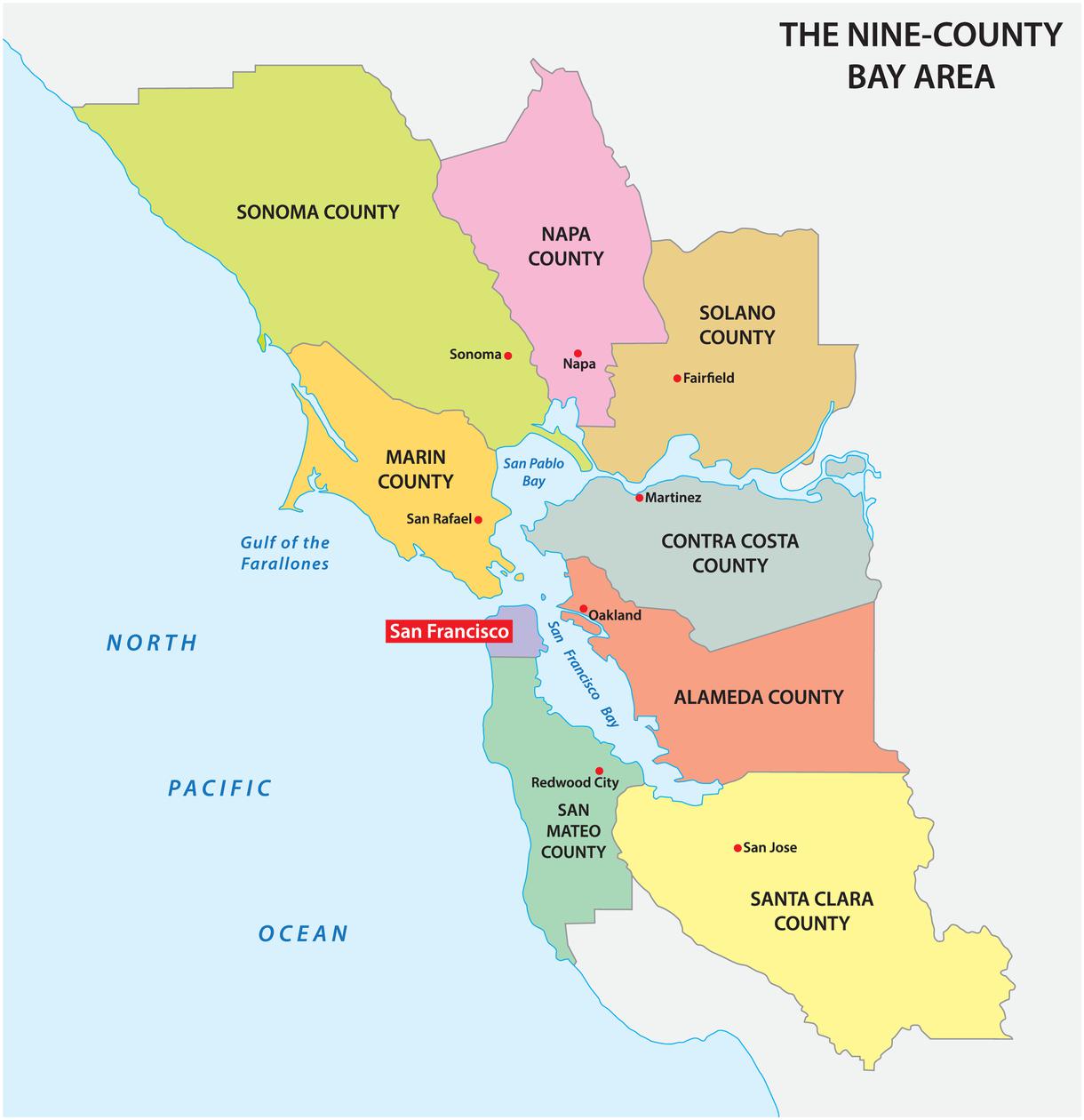
At its most fundamental, the Bay Area is defined by the interconnected waterways of the San Francisco Bay, San Pablo Bay, and Suisun Bay. This large estuarine system is the heart of the region, shaping its climate, its history, and its economic development. The land surrounding these bays is a diverse landscape, featuring rolling hills, rugged coastlines, and fertile valleys. Politically and culturally, the Bay Area is comprised of nine counties, each with its own distinct identity and contributions to the region’s overall character.

The Nine Counties: A Mosaic of Communities
The nine counties that constitute the Bay Area are:
- Alameda County: Home to vibrant cities like Oakland and Berkeley, known for its cultural diversity, thriving arts scene, and the prestigious University of California, Berkeley.
- Contra Costa County: Situated to the east of the San Francisco Bay, this county offers a mix of suburban communities and scenic natural areas, including Mount Diablo State Park.
- Marin County: Located north of the Golden Gate Bridge, Marin is famed for its natural beauty, affluent communities, and the picturesque town of Sausalito.
- Napa County: Renowned globally for its world-class wineries and vineyards, Napa Valley is a premier destination for wine enthusiasts and foodies.
- San Francisco County: The iconic city of San Francisco itself, a global center for finance, technology, and culture, famous for its landmarks like Alcatraz Island and the Golden Gate Bridge.
- San Mateo County: Stretching south of San Francisco, this county includes coastal towns, technology hubs, and is the location of San Francisco International Airport.
- Santa Clara County: The heart of “Silicon Valley,” this county is the epicenter of the global technology industry, home to giants like Apple Park and Googleplex, with its major city being San Jose.
- Sonoma County: North of Marin County, Sonoma is another significant wine-producing region, offering beautiful coastline, redwood forests, and charming towns.
- Solano County: Located northeast of the San Francisco Bay, this county features a mix of agricultural land, suburban areas, and military installations.
Climate and Natural Environment
The Bay Area experiences a Mediterranean climate characterized by mild, wet winters and dry, warm summers. However, microclimates abound due to the varied topography and the influence of the Pacific Ocean and the bay. Coastal areas often experience fog, particularly during the summer months, which helps to moderate temperatures. Inland areas tend to be warmer and drier. The region’s natural environment is incredibly diverse, ranging from the dramatic cliffs and beaches of the Pacific coast to the rolling hills, redwood forests, and expansive vineyards inland. This natural beauty offers ample opportunities for outdoor recreation, from hiking and biking to exploring state and national parks.
Key Regions Within the Bay Area
While the nine counties form the administrative backbone, the Bay Area is often discussed in terms of its distinct sub-regions, each possessing unique characteristics and attracting different types of visitors and residents. These divisions are not always strictly defined by county lines but rather by shared culture, economy, and geography.
The Peninsula
Stretching south from San Francisco, the Peninsula is characterized by a blend of affluent residential communities, bustling commercial centers, and the high-tech industry. Cities like Palo Alto, Menlo Park, and Redwood City are synonymous with innovation and venture capital. The Stanford University campus, a world-leading research institution, is a significant landmark and intellectual hub in this area. The coastal side of the Peninsula offers stunning ocean views and opportunities for beachcombing and hiking in areas like Half Moon Bay.
Silicon Valley
Constituting much of Santa Clara County and extending into parts of San Mateo County, Silicon Valley is the global powerhouse of technology and innovation. Cities like San Jose, Mountain View, and Cupertino are the operational headquarters for many of the world’s most influential tech companies. While its primary draw is its economic significance, Silicon Valley also offers a growing culinary scene and several museums, including the Computer History Museum.
The East Bay
This diverse region encompasses cities like Oakland, Berkeley, and communities further east. The East Bay is known for its rich cultural tapestry, vibrant music and arts scenes, and a strong sense of community. Oakland boasts a significant port, diverse neighborhoods, and a burgeoning food scene. Berkeley is celebrated for its progressive politics, the academic excellence of UC Berkeley, and its independent spirit. Beyond the urban centers, the East Bay offers extensive parklands, including Redwood Regional Park.
San Francisco

The city and county of San Francisco is the most iconic and densely populated part of the Bay Area. Perched on a peninsula surrounded by the Pacific Ocean and the San Francisco Bay, it is a city of rolling hills, Victorian architecture, and world-famous landmarks. Key attractions include the Golden Gate Bridge, Alcatraz Island, Fisherman’s Wharf, Chinatown, and numerous museums and cultural institutions. Its distinct neighborhoods, from the colorful Mission District to the upscale Pacific Heights, offer a diverse range of experiences.
North Bay
North of the Golden Gate Bridge, the North Bay is characterized by its breathtaking natural landscapes and world-renowned wine regions. Marin County is famous for its dramatic coastal scenery, charming towns like Sausalito, and protected natural areas like Muir Woods National Monument. Further north, Sonoma County and Napa County form the heart of the Napa Valley and Sonoma Valley wine country, attracting wine lovers from across the globe. This region also offers beautiful beaches, vineyards, and a more relaxed pace of life compared to the bustling tech hubs.
Navigating the Bay Area: Transportation and Accessibility
Understanding the geography of the Bay Area is crucial for efficient travel. While it’s a cohesive region, the distances between its various parts can be significant, and traffic can be a major factor.
Public Transportation Networks
The region boasts a comprehensive public transportation system that connects its major cities and counties. The BART (Bay Area Rapid Transit) system is an essential component, providing subway and commuter rail service across San Francisco, the East Bay, and down into the Peninsula and Santa Clara County. For travel within San Francisco, the Muni system offers buses, streetcars, and cable cars. Ferries provide scenic and often efficient connections across the bay, particularly between San Francisco, Marin, and the East Bay. Regional bus services like AC Transit and SamTrans further supplement these networks.
Roadways and Bridges
Major freeways crisscross the Bay Area, linking its various sub-regions. Key routes include Interstate 80 (I-80), Interstate 101 (US-101), Interstate 280 (I-280), and Interstate 880 (I-880). Navigating these can be challenging, especially during peak hours. The iconic bridges that span the San Francisco Bay are crucial connectors: the Golden Gate Bridge linking San Francisco to Marin, and the San Francisco-Oakland Bay Bridge connecting San Francisco to the East Bay. Other significant bridges include the San Mateo-Hayward Bridge and the Dumbarton Bridge.
Airports
The Bay Area is served by three major airports:
- San Francisco International Airport (SFO): A major international hub, offering extensive domestic and international flights.
- Oakland International Airport (OAK): A growing airport with a focus on domestic and some international routes, often offering competitive fares.
- San Jose International Airport (SJC): Primarily serving Silicon Valley and Santa Clara County, with a strong emphasis on domestic travel.
Experiencing the Bay Area: Attractions and Activities
The Bay Area offers an unparalleled array of attractions catering to every interest, from world-class museums and historic landmarks to natural wonders and culinary delights.
Iconic Landmarks and Cultural Hubs
- San Francisco: Beyond the Golden Gate Bridge and Alcatraz Island, visitors flock to Fisherman’s Wharf to see the sea lions and enjoy fresh seafood, explore the vibrant neighborhoods, and visit institutions like the California Academy of Sciences and the de Young Museum.
- Silicon Valley: While primarily a business hub, visitors can explore the Computer History Museum in Mountain View or visit the Apple Park Visitor Center in Cupertino. The region also offers a vibrant dining scene and numerous parks.
- Wine Country: The picturesque vineyards of Napa Valley and Sonoma are a major draw, offering wine tastings, gourmet dining, and scenic drives. Towns like Napa, Sonoma, and Healdsburg are charming destinations in themselves.
- Natural Wonders: Muir Woods National Monument in Marin County offers a breathtaking experience among ancient redwood trees. The Point Reyes National Seashore provides dramatic coastal scenery, hiking trails, and opportunities for wildlife viewing.
Culinary Delights and Local Culture
The Bay Area is a global culinary hotspot, celebrated for its innovation, diverse influences, and commitment to fresh, local ingredients. From Michelin-starred restaurants to bustling farmers’ markets and ethnic enclaves, the food scene is a major attraction. San Francisco’s Mission District is renowned for its authentic Mexican cuisine, while the East Bay offers a rich tapestry of global flavors. The region also has a strong craft beer and artisanal coffee culture. Beyond food, the Bay Area is a hub for arts and culture, with numerous theaters, music venues, and galleries showcasing a vibrant and diverse creative community.
In conclusion, the Bay Area is a multifaceted region that defies simple definition. Its geographical heart is the stunning San Francisco Bay, and its soul is a dynamic blend of innovation, culture, and natural beauty spread across nine distinct counties and vibrant sub-regions. Whether you are drawn by its technological prowess, its world-class vineyards, its iconic landmarks, or its diverse culinary landscape, the Bay Area offers an unforgettable experience for every visitor.
LifeOutOfTheBox is a participant in the Amazon Services LLC Associates Program, an affiliate advertising program designed to provide a means for sites to earn advertising fees by advertising and linking to Amazon.com. Amazon, the Amazon logo, AmazonSupply, and the AmazonSupply logo are trademarks of Amazon.com, Inc. or its affiliates. As an Amazon Associate we earn affiliate commissions from qualifying purchases.