
Florida, with its sun-drenched beaches, world-renowned theme parks, and bustling cities, is a magnet for tourists, businesses, and professionals alike. From the vibrant nightlife of Miami to the magical allure of Orlando and the pristine sands of Clearwater Beach, the state’s travel and tourism sector is a cornerstone of its economy. This dynamic environment, however, also brings complex legal considerations, especially concerning employee agreements. One such agreement, often encountered across various industries, including hospitality, tourism, and real estate, is the non-compete clause. These clauses aim to restrict employees from working for a competitor or starting a similar business within a certain geographical area and time frame after leaving their current employer. The question for many professionals and business owners in the Sunshine State is: are non-competes enforceable in Florida?
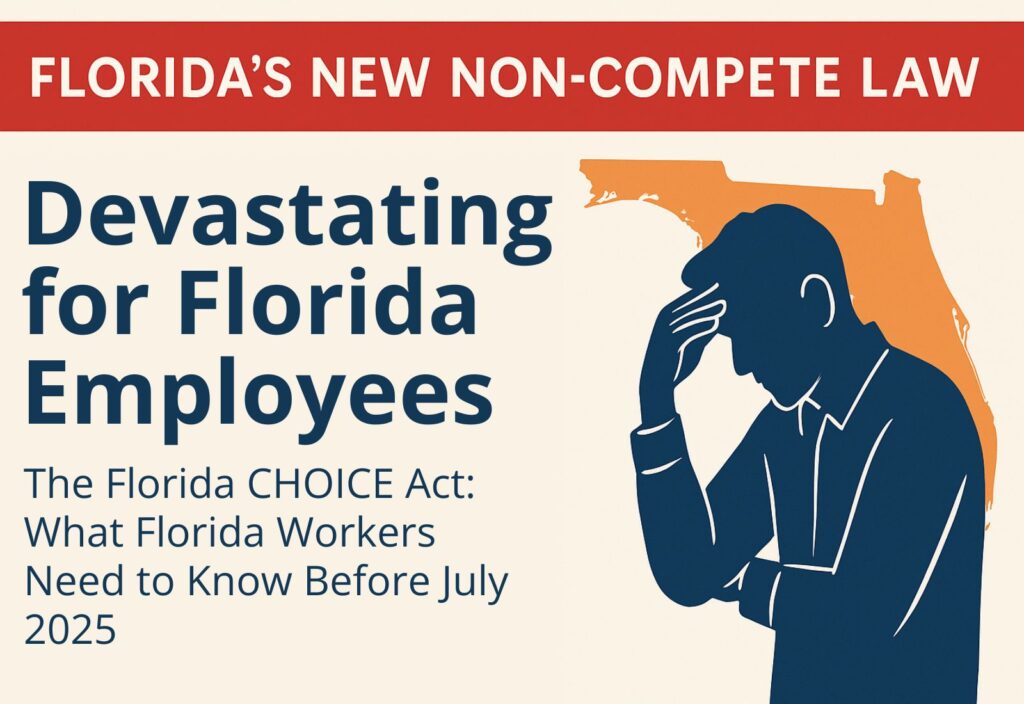
The short answer is yes, non-compete agreements can be enforceable in Florida, but their validity is not absolute. Florida law has specific requirements and limitations that courts rigorously apply when evaluating such contracts. Understanding these nuances is crucial for anyone involved in the state’s thriving tourism and hospitality ecosystem, whether you’re a hotel executive, a tour operator, a resort manager, or an entrepreneur looking to launch your next venture.
The Legal Landscape of Non-Compete Agreements in Florida
Florida’s approach to non-compete agreements is governed primarily by Florida Statute 542.335, a comprehensive law that outlines the criteria for enforceability. Unlike some states that are highly skeptical of non-competes, Florida generally favors the protection of legitimate business interests, provided the restrictions are reasonable. This means that while businesses have a clear path to protect their assets, employees also have recourse if the terms imposed upon them are overly burdensome or lack a proper justification.
Understanding Florida Statute 542.335
For a non-compete agreement to be enforceable in Florida, it must satisfy several fundamental conditions. Firstly, the agreement must be in writing and signed by the person against whom enforcement is sought. This ensures that both parties are aware of and agree to the terms. Secondly, and perhaps most critically, the employer must demonstrate a “legitimate business interest” that the non-compete agreement seeks to protect. Without such an interest, the agreement is unlikely to withstand judicial scrutiny.
Legitimate business interests, as defined by the statute, include, but are not limited to:
- Trade secrets: Proprietary information that gives a business an advantage.
- Confidential business information: Data that is not a trade secret but still provides a competitive edge (e.g., customer lists, marketing strategies, pricing models).
- Customer goodwill: The positive relationship a business has with its clients, often built through significant investment in marketing and service. This is especially relevant for businesses in the travel sector, where repeat customers are vital.
- Specialized training: Significant investments in training employees that enhance their skills and knowledge, making them more valuable to competitors.
- Extraordinary or specialized services: Employees whose unique skills or position warrant protection.
Beyond demonstrating a legitimate business interest, the restrictions themselves must be reasonable in time, geographical scope, and line of business. Florida courts will scrutinize these elements to ensure they are no broader than necessary to protect the identified legitimate business interest. For instance, a restriction preventing a former general manager of a boutique hotel in Sarasota from managing any hotel in the entire state for five years would likely be deemed unreasonable. However, a restriction preventing them from managing a competing boutique hotel within a 20-mile radius of their former establishment for one year might be upheld.
Legitimate Business Interests in the Hospitality Industry
The hospitality, travel, and tourism industries in Florida are particularly fertile ground for non-compete agreements due to the nature of their operations. Customer goodwill is paramount. A general manager at a luxury property like the Ritz-Carlton, Naples develops deep relationships with high-value guests and possesses intimate knowledge of their preferences. Similarly, a sales director at a major resort like the Walt Disney World Resort or Universal Studios Florida builds extensive networks with event planners and corporate clients. Allowing these individuals to immediately transition to a direct competitor and leverage those exact relationships could cause significant harm to their former employer.
Confidential information also plays a huge role. This might include proprietary booking systems, preferred vendor lists for wedding venues in Palm Beach, negotiated rates with airlines or tour operators, or highly specific marketing strategies for attracting international tourists to Key West. The strategic plans for expanding a hotel chain in Fort Lauderdale or the unique culinary offerings developed by a top chef at a Hyatt Regency property could all fall under this umbrella.
Furthermore, specialized training is a significant investment for hotels and resorts, particularly those aiming for a high standard of service, such as the Four Seasons or Waldorf Astoria brands. Training staff in bespoke guest experiences, advanced revenue management techniques, or specific safety protocols for adventure tourism in Everglades National Park represents a substantial outlay of resources. Protecting this investment from being immediately transferred to a direct competitor is a recognized legitimate interest.
Enforceability and Challenges for Employers
While Florida law provides a framework for enforcing non-competes, employers must be meticulous in their approach. A poorly drafted agreement is an invitation for litigation and an almost certain path to unenforceability.
Drafting Enforceable Agreements for Florida Businesses
The key to an enforceable non-compete lies in tailoring it precisely to the legitimate business interest it seeks to protect, the specific role of the employee, and the geographical realities of Florida’s diverse regions. For example, the scope of a non-compete for a front desk agent at a small motel in Daytona Beach would be vastly different from that of a regional vice president overseeing multiple Marriott properties across the state.
Employers should:
- Clearly define legitimate business interests: Specify what is being protected (e.g., “customer lists for Amelia Island luxury tour packages,” “confidential marketing strategies for St. Petersburg resort expansion”).
- Ensure reasonable time restrictions: While there’s no hard-and-fast rule, a typical reasonable duration is 6 months to 2 years. Longer periods are generally harder to defend unless exceptional circumstances involving trade secrets or extraordinary services are present.
- Specify reasonable geographical scope: This should be tied directly to where the employee operated and where the legitimate business interest exists. For a sales manager whose territory was Tampa and Orlando, a restriction covering only those two metropolitan areas might be reasonable, whereas one covering the entire U.S. would not.
- Define the restricted “line of business”: This should prevent the employee from engaging in activities that directly compete with the former employer’s protected interests, not from pursuing any work whatsoever. For example, a former executive at a cruise line should be restricted from working for a competing cruise line, not from working in any aspect of the travel industry (e.g., operating a local bed and breakfast in Anna Maria Island).
- Provide adequate “consideration”: The employee must receive something of value in exchange for signing the non-compete. Often, the offer of employment itself is sufficient. For existing employees, a promotion, raise, or bonus might serve as consideration.
Common Pitfalls and Litigation Risks

Despite the legal framework, many non-competes fail when challenged in court. Common reasons include:
- Overly broad restrictions: The most frequent reason for failure. If the non-compete is designed to stifle competition rather than genuinely protect a business interest, courts will invalidate it.
- Lack of a legitimate business interest: Simply wanting to prevent an employee from leaving is not enough. The employer must prove a tangible, protectable interest.
- Ambiguity: Vague language regarding the scope, duration, or prohibited activities can lead to unenforceability.
- Failure to enforce consistently: If an employer selectively enforces non-competes, it can weaken their position.
Florida courts have the power to “blue pencil” (modify) unreasonable terms in a non-compete agreement to make them reasonable, rather than striking down the entire agreement. However, relying on a court to salvage a poorly drafted agreement is a risky and expensive strategy. Businesses operating hotels, resorts, tour companies, or attraction venues in popular destinations like Destin or Panama City Beach should proactively ensure their agreements are meticulously crafted.
What Non-Competes Mean for Professionals in Florida’s Travel and Tourism Sector
For employees, signing a non-compete agreement can have significant implications for their career trajectory, especially in an industry known for its high turnover and opportunities for advancement.
Navigating Career Moves and Entrepreneurship
Professionals in Florida’s travel and tourism sector frequently move between hotels, resorts, and tour companies, often seeking new challenges or better opportunities. A non-compete agreement can complicate these career transitions. Before accepting a new role or embarking on an entrepreneurial journey, it is imperative for employees to:
- Review existing agreements: Understand the terms of any non-compete they have signed. What are the restrictions on time, geography, and prohibited activities?
- Seek legal counsel: An attorney specializing in employment law can provide a realistic assessment of the enforceability of the agreement and help navigate potential conflicts. This is particularly important for individuals moving into executive roles, or those with significant client contacts, such as a director of sales for a Loews Hotels property or a marketing manager for a luxury villa rental company in Marco Island.
- Negotiate terms: In some cases, it may be possible to negotiate the terms of a non-compete, especially prior to employment. This could involve reducing the time frame, narrowing the geographical scope, or refining the definition of competing activities.
For those dreaming of starting their own travel agency, boutique hotel, or specialized tour company in vibrant locales like South Beach or Boca Raton, a non-compete can be a formidable barrier. Understanding the agreement’s precise limitations is crucial for avoiding costly legal disputes and ensuring a smooth launch for a new business.
Impact on Florida’s Dynamic Tourism Economy
The enforceability of non-competes in Florida represents a delicate balance. On one hand, they protect businesses that invest heavily in their brand, customer relationships, and employee training from unfair competition. This fosters a stable environment for growth and innovation within established entities, from major players like Hilton and Hard Rock Hotel to smaller, independent operations.
On the other hand, overly restrictive non-competes can hinder talent mobility, stifle entrepreneurship, and limit healthy competition. If skilled professionals are too constrained from moving to new opportunities or starting their own ventures, it could potentially slow the pace of innovation and create talent shortages in niche areas. For a state as reliant on its tourism and hospitality sectors as Florida, finding this balance is vital for long-term economic health. The movement of experienced staff between different cruise lines at Port Canaveral or skilled guides for eco-tours around Biscayne National Park is a natural part of a thriving industry.
Case Studies and Real-World Scenarios
To illustrate the practical implications, let’s consider a couple of hypothetical situations within Florida’s bustling travel economy.
A Luxury Hotel Manager’s Dilemma
Imagine Sarah, a highly respected General Manager at a prominent St. Regis Resort in Palm Beach. She has a non-compete agreement stating she cannot work for a competing luxury hotel within 50 miles for 18 months after leaving. Sarah receives an incredible offer to become Regional Director of Operations for a rival luxury hotel chain, overseeing properties in Naples and Sarasota.
While the new role is within the luxury hotel sector, the geographical scope (Naples and [Sarasota]) is outside the 50-mile radius of her previous Palm Beach location. The time restriction of 18 months is also generally considered reasonable for a senior executive. In this scenario, Sarah’s move would likely be permissible under the terms of her non-compete because the new position falls outside the defined geographical restriction and the timeline is reasonable. However, if the new role was for a hotel just 10 miles down the road from her old property, the non-compete would likely be enforceable, potentially leading to a legal challenge from her former employer. Her knowledge of guest preferences, confidential marketing strategies, and operational secrets would be a direct threat.

Protecting a Niche Tour Operator’s Clientele
Consider David, a specialist in unique, eco-friendly boat tours around the Florida Keys for a small company based in Key West. He has personally cultivated relationships with hundreds of clients, many of whom are repeat visitors seeking authentic experiences near Dry Tortugas National Park. His non-compete prevents him from operating a similar tour business in the Florida Keys for one year after leaving. David decides he wants to start his own eco-tour company, offering similar excursions, and plans to reach out to his existing network of clients.
In this case, David’s former employer has a strong legitimate business interest in protecting its customer goodwill and potentially confidential client lists. The geographical scope (the Florida Keys) is reasonable given the niche nature of the business, and the one-year time frame is also likely to be upheld. If David proceeds with his plans to directly compete and solicit his former clients within that year and geographical area, his former employer would likely have grounds to seek an injunction to stop him. The court would weigh the employer’s interest in protecting its business against David’s right to earn a living, but the specific nature of the business and the direct competition for established clientele would lean towards enforceability for the employer.
In conclusion, non-compete agreements are indeed enforceable in Florida, but their strength lies in their careful drafting and adherence to specific legal requirements. For businesses in Florida’s booming travel, tourism, and hospitality sectors, these agreements are powerful tools for protecting valuable assets like customer goodwill, confidential information, and investment in specialized training. For professionals, understanding these agreements is not just a legal formality but a critical part of strategic career planning in the Sunshine State’s vibrant economy. Whether you’re planning a luxurious stay at a St. Regis Resort or embarking on an adventure to Kennedy Space Center, the intricate web of business relationships in Florida is often underpinned by these crucial legal documents.
LifeOutOfTheBox is a participant in the Amazon Services LLC Associates Program, an affiliate advertising program designed to provide a means for sites to earn advertising fees by advertising and linking to Amazon.com. Amazon, the Amazon logo, AmazonSupply, and the AmazonSupply logo are trademarks of Amazon.com, Inc. or its affiliates. As an Amazon Associate we earn affiliate commissions from qualifying purchases.