
Florida, often celebrated for its vibrant culture, pristine beaches, and world-class attractions, draws millions of visitors and new residents each year. From the magical theme parks of Orlando to the Art Deco splendor of Miami Beach and the laid-back charm of the Florida Keys, the Sunshine State offers an unparalleled lifestyle and endless travel opportunities. Couples frequently choose Florida for romantic getaways, honeymoons, or even as a permanent home to start a new chapter. Amidst this allure, a fundamental legal question often arises, particularly for those who have lived together for years without a formal ceremony: “Does Florida recognize common law marriage?”
Understanding the legal landscape of marriage in Florida is crucial, not just for residents, but also for travelers, snowbirds, and anyone considering a long-term stay. The implications extend beyond sentimental value, touching upon critical aspects of property ownership, inheritance, healthcare decisions, and even eligibility for certain benefits. While many states in the United States once upheld common law marriage, where couples could be legally wed without a license or formal ceremony by merely presenting themselves to the public as married, the trend has largely shifted. This article will delve into Florida’s specific stance on common law marriage, examining its historical context, current legal requirements, and practical considerations for couples enjoying all that this popular destination has to offer.
A Historical Look: The Shifting Sands of Florida’s Marriage Laws
To fully grasp Florida’s current position on common law marriage, it’s essential to journey back in time and understand how its laws have evolved. Like many other states, Florida once embraced the concept, offering a less formal pathway to marital recognition.
When Common Law Marriage Was Valid in Florida
Before a significant legislative change, Florida indeed recognized common law marriage. This meant that a couple could be considered legally married without a marriage license or a formal ceremony conducted by an officiant. For a common law marriage to be legally established in Florida during this period, specific criteria generally had to be met:
- Present Agreement: Both parties must have explicitly agreed to be married in the present, not merely at some future date. This agreement could be verbal but was often inferred from their actions.
- Cohabitation: The couple had to live together as husband and wife.
- Holding Out: They had to present themselves to the public and their community as a married couple. This could involve using the same last name, referring to each other as “my husband” or “my wife,” and filing joint tax returns.
These criteria allowed many couples to establish legitimate marriages, and the legal system afforded them the same rights and responsibilities as ceremonially married couples. This was particularly relevant for individuals in remote areas or those who faced practical or financial barriers to formal weddings. The recognition provided a safety net for couples who had built lives together, ensuring their rights to property, inheritance, and spousal support were protected.
The End of an Era: The 1968 Legislative Change
The landscape of marriage law in Florida underwent a pivotal transformation with the enactment of a new statute. Effective January 1, 1968, Florida statutorily abolished the creation of common law marriages. This legislative change was part of a broader national trend towards standardizing marriage requirements and minimizing the ambiguities that often surrounded common law unions, particularly when it came to dissolution or the distribution of assets.
The critical aspect of this change is its prospective nature. This means that while no new common law marriages could be formed in Florida after January 1, 1968, any common law marriage that was validly established before that date remains legally recognized in Florida today. For couples who met the criteria and formed a common law marriage before the cutoff, their union is still considered legitimate with all the associated legal rights and obligations. However, for any couple beginning their relationship after that date, regardless of how long they live together or how they present themselves, they cannot enter into a common law marriage in Florida. This clear demarcation eliminated the future possibility of unintended marriages and pushed couples towards formalizing their unions through traditional means.
The Modern Reality: What It Means for Couples in Florida Today
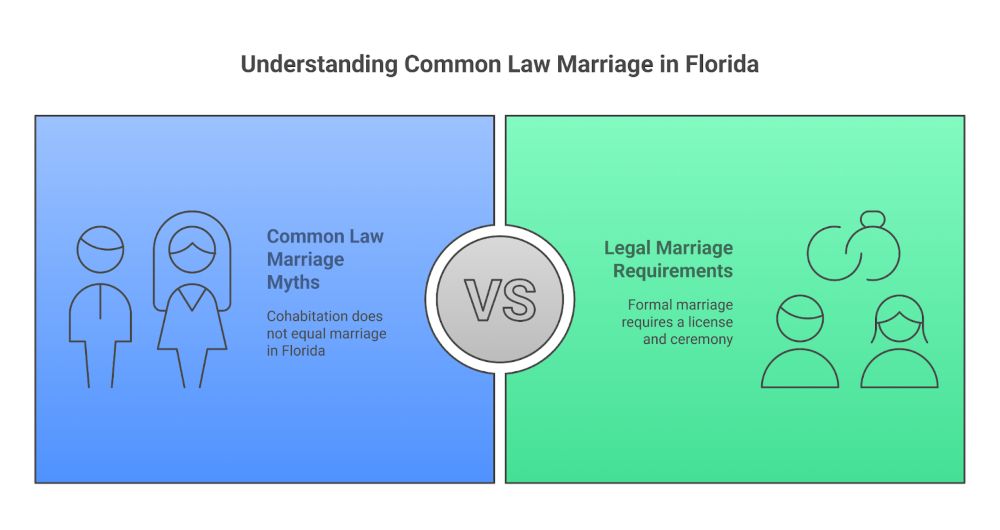
Understanding the historical context clarifies that common law marriage is largely a relic of the past in Florida. For any couple seeking to establish a legally recognized marital union in the Sunshine State today, the path is clear and conventional.
Formal Marriage Requirements in the Sunshine State
For those envisioning a life together, whether as permanent residents or even as a destination wedding location, Florida offers a straightforward process for formal marriage. The requirements are standard and easily navigable, especially for couples planning to visit or relocate.
To legally marry in Florida, couples must:
- Obtain a Marriage License: This is typically secured from any county clerk’s office in Florida. Both parties must be present to apply. There is a waiting period of three days between obtaining the license and the ceremony for Florida residents, though this is often waived for non-residents. The license is valid for 60 days.
- Be of Legal Age: Both individuals must generally be 18 years old or older. There are specific provisions for minors, but these typically involve parental consent or judicial approval.
- No Prohibited Relationships: The parties cannot be closely related by blood (e.g., siblings, parents, children).
- Not Currently Married: Both individuals must be legally single; if previously married, proof of divorce or death of a spouse may be required.
- Undergo a Ceremony: A formal ceremony must be performed by an authorized officiant. This can include an ordained minister, priest, rabbi, or other clergy; a judicial officer (such as a judge or clerk of the circuit court); or a notary public.
- Return the License: After the ceremony, the officiant must complete the marriage license and return it to the clerk of the circuit court within 10 days to be officially recorded.
Florida is a popular spot for weddings, from intimate beachside ceremonies in Key West to grand affairs at luxurious resorts in Palm Beach or Miami. The ease of obtaining a license and the variety of beautiful venues make it an attractive option for couples worldwide. This clear, regulated process stands in stark contrast to the historical ambiguities of common law marriage, ensuring legal certainty for all parties involved.

Recognizing Out-of-State Common Law Marriages
While Florida no longer permits the formation of new common law marriages within its borders, it adheres to the principle of “full faith and credit,” a constitutional mandate requiring states to respect the “public acts, records, and judicial proceedings of every other state.” This means that if a couple enters into a valid common law marriage in a state or jurisdiction where it is recognized, Florida will generally acknowledge that marriage as legitimate.
As of recent times, several states and the District of Columbia still recognize common law marriage. These include Colorado, Iowa, Kansas, Montana, New Hampshire (for inheritance purposes only), Oklahoma, Rhode Island, South Carolina, Texas, and Utah.
For couples who established a common law marriage in one of these jurisdictions and subsequently move to or spend significant time in Florida, their marital status should remain valid. However, proving the existence of such a marriage can sometimes be complex, especially if the couple later separates or one partner passes away. The burden of proof typically falls on the party asserting the common law marriage, and they would need to demonstrate that they met all the legal requirements of the state where the marriage was allegedly formed. This often involves presenting evidence of intent, cohabitation, and public representation as a married couple from their previous state of residence.
Issues regarding property division, spousal support, inheritance rights, and even healthcare decision-making can become contentious without clear documentation. Therefore, couples in this situation are strongly advised to consult with a Florida family law attorney. Such legal counsel can help ensure their marital status and associated rights are properly recognized and protected under Florida law, particularly when purchasing real estate or making significant financial decisions in the Sunshine State.
Lifestyle and Travel Implications: Why Understanding Florida’s Stance Matters
The legal intricacies of common law marriage in Florida are not merely academic; they have tangible implications for couples navigating their lives in this popular state, whether for a short vacation, a seasonal retreat, or permanent residency. From booking accommodations to long-term financial planning, understanding Florida’s marriage laws is essential for peace of mind and protection.
Navigating Accommodation and Joint Ventures
For couples traveling to Florida or considering a longer stay, the absence of common law marriage recognition can subtly impact practical aspects of their life together. When booking hotels, resorts, or vacation rentals, generally there are no issues for unmarried couples sharing rooms; however, the lack of legal marital status can become relevant in more serious scenarios. For instance, in an emergency, an unmarried partner might face challenges in making medical decisions or accessing medical information if proper legal documents (like a healthcare proxy) are not in place.
For those contemplating a longer stay or even relocating, the implications deepen. Renting an apartment or purchasing a home together in popular Florida cities like Sarasota, Naples, or Fort Lauderdale requires careful consideration. Unmarried couples typically enter into lease agreements or property deeds as joint tenants or tenants in common. While this allows for shared ownership, the absence of marital protections means that if the relationship ends or one partner passes away, the distribution of assets and liabilities is governed strictly by the terms of the contract and general property law, not by spousal rights. There’s no automatic right to spousal support or equitable distribution of marital assets as there would be in a divorce.
This is particularly pertinent for snowbirds who spend several months a year in Florida, often investing in seasonal condos or villas. Without formal marriage or specific legal agreements, they might find their financial and property interests vulnerable should circumstances change. Thoughtful planning for accommodation and joint financial undertakings is key to ensuring a smooth and enjoyable Florida lifestyle.
Planning for the Future: Protections for Unmarried Couples
Given that Florida does not permit the creation of common law marriages (except for those validly formed before 1968 or in other states), unmarried couples in the Sunshine State must take proactive steps to safeguard their interests and ensure their wishes are honored. This proactive approach aligns with responsible lifestyle planning and can prevent significant heartache and legal battles down the line.
Key legal documents and strategies unmarried partners should consider include:
- Domestic Partnership Agreements (or Cohabitation Agreements): These legally binding contracts outline the rights and responsibilities of each partner regarding finances, property, and debts during the relationship and in the event of separation. They can specify how assets acquired together will be divided, who is responsible for joint expenses, and even arrangements for shared pets.
- Wills and Trusts: Without a will, state intestacy laws will determine how a deceased partner’s assets are distributed. Florida intestacy laws typically prioritize blood relatives over an unmarried partner. A well-drafted will ensures that an unmarried partner can inherit specific assets or even the entirety of the estate. Trusts can provide even greater control over asset distribution and avoid probate.
- Durable Powers of Attorney: These documents allow one partner to make financial or medical decisions on behalf of the other if they become incapacitated. Without them, even long-term partners may have no legal authority to act on each other’s behalf, leading to severe complications in emergencies. A designation of health care surrogate is particularly vital for making medical choices.
- Joint Ownership: For major assets like homes or vehicles, holding title as “joint tenants with right of survivorship” ensures that the asset automatically passes to the surviving partner upon death, bypassing probate and intestacy laws.
- Beneficiary Designations: Review and update beneficiary designations on life insurance policies, retirement accounts, and other financial instruments to ensure the unmarried partner receives intended benefits.
These proactive legal measures are not just for the wealthy; they are essential for any unmarried couple seeking to enjoy a stable and secure life, whether they are exploring Florida’s diverse offerings or settling down for good. Investing in these preparations ensures that their commitment and shared life are recognized and protected under Florida law, mitigating risks that could otherwise arise from the state’s non-recognition of new common law marriages.
Conclusion
In summary, the answer to “Does Florida recognize common law marriage?” is a nuanced “no” for relationships formed after January 1, 1968. While Florida did acknowledge such unions in the past, a legislative change on that specific date abolished the ability for new common law marriages to be created within the state. However, it’s crucial to remember two key exceptions: common law marriages validly established in Florida before 1968 remain recognized, and Florida will generally uphold common law marriages that were legally formed in other states or jurisdictions that still recognize them.
For the vast majority of couples living in or traveling to the Sunshine State today, establishing a legal marriage requires a formal license and a ceremony. This clear distinction offers certainty but also places a greater responsibility on unmarried partners to proactively protect their interests. Whether you’re planning a romantic escape to South Beach, a family vacation to Disney World, or considering a move to a Florida retirement community, understanding these legal parameters is vital.
For unmarried couples, particularly those with shared assets, children, or complex financial situations, seeking professional legal guidance is highly recommended. A Florida attorney can help draft crucial documents like domestic partnership agreements, wills, and powers of attorney, ensuring that your wishes are honored and your shared lifestyle is secure. Armed with this knowledge and proper planning, you can fully embrace all the incredible travel, leisure, and accommodation options that Florida has to offer, confident in your legal standing.
LifeOutOfTheBox is a participant in the Amazon Services LLC Associates Program, an affiliate advertising program designed to provide a means for sites to earn advertising fees by advertising and linking to Amazon.com. Amazon, the Amazon logo, AmazonSupply, and the AmazonSupply logo are trademarks of Amazon.com, Inc. or its affiliates. As an Amazon Associate we earn affiliate commissions from qualifying purchases.