
Fifty-three years young and still enchanting millions, Walt Disney World Florida stands as a monumental testament to imagination, innovation, and the enduring power of dreams. Opened on October 1, 1971, this sprawling entertainment complex, nestled near Orlando in the heart of Florida, has evolved from a single theme park and a handful of resorts into a global hospitality titan. It represents not just a destination but a transformative experience, shaping the landscape of travel, tourism, and accommodation for over half a century.
The question “How old is Walt Disney World Florida?” prompts more than a simple date. It invites a journey through its remarkable history, exploring its visionary origins, its astonishing growth, and its continuous reinvention to remain at the forefront of global entertainment. From its humble beginnings as the “Florida Project” to its current status as a multi-faceted mega-resort, Walt Disney World has not merely aged; it has matured, expanded, and diversified, offering an ever-increasing array of attractions, hotels, and experiences that cater to every kind of traveler. This article delves into the captivating timeline of this iconic landmark, examining how its age reflects not just time passed, but an unparalleled legacy of magic and wonder.
The Genesis of a Dream: Walt Disney’s Vision for Florida
The story of Walt Disney World begins not in 1971, but years earlier, in the fertile imagination of Walt Disney himself. After the resounding success of Disneyland in Anaheim, California, which opened in 1955, Walt began to envision a more ambitious project. He recognized the limitations of Disneyland’s relatively small footprint and its inability to fully control the surrounding commercial development. His next endeavor would be different: an entire world, meticulously planned and self-contained, where quality and immersion would reign supreme.
The Florida Project: A Secret Acquisition
The search for the perfect location led Walt Disney and his team to central Florida in the early 1960s. The area offered vast tracts of underdeveloped land, a favorable climate, and a central location accessible to a large portion of the United States population. To prevent land speculation, Walt Disney Productions acquired thousands of acres of swamp and pasture land discreetly, using various shell corporations. This clandestine operation, known as “The Florida Project,” culminated in the acquisition of over 27,000 acres – roughly the size of Manhattan.
Walt Disney’s vision for this vast expanse was audacious. It wasn’t just another theme park; it was to be the Experimental Prototype Community of Tomorrow, or EPCOT, a futuristic city where innovations in urban living, transportation, and technology would be showcased and tested. This city would be surrounded by recreational areas, hotels, and theme parks, creating a truly integrated environment. Sadly, Walt Disney passed away in December 1966, before construction on the Florida Project could begin. His brother, Roy O. Disney, famously postponed his retirement to ensure Walt’s dream would become a reality, dedicating the entire complex in his brother’s honor.
Magic Kingdom Park Opens Its Gates
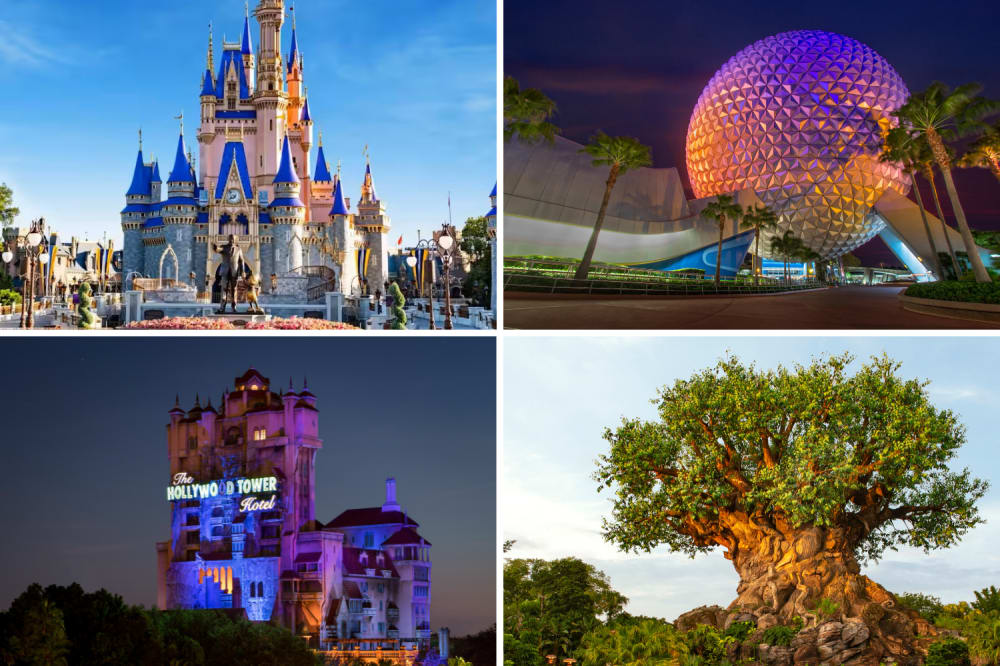
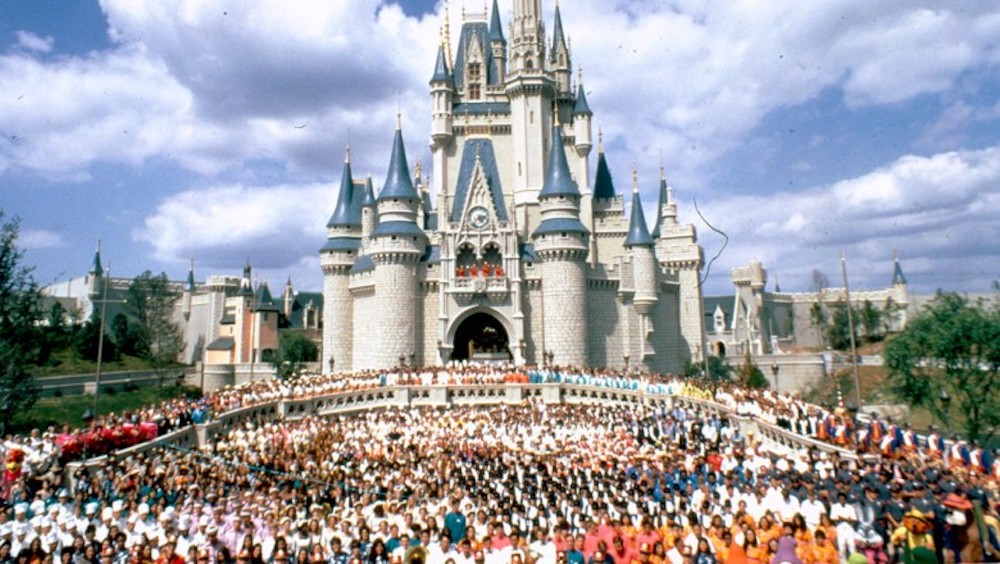
Under Roy O. Disney’s steadfast leadership, the initial phase of Walt Disney World Resort focused on building a theme park similar to Disneyland, but grander in scale and more technologically advanced. On October 1, 1971, Magic Kingdom Park officially opened its doors, captivating guests with iconic attractions like Cinderella Castle, It’s a Small World, and The Haunted Mansion. Alongside the park, two flagship resorts debuted: Disney’s Contemporary Resort and Disney’s Polynesian Village Resort, offering immersive accommodation options right on the Seven Seas Lagoon. Disney’s Fort Wilderness Resort & Campground also opened, catering to a different style of guest.
The opening of Walt Disney World was an immediate success, quickly establishing Central Florida as a premier travel destination. The resort’s initial footprint, though smaller than its current size, laid the groundwork for the expansive growth that would define its future. This early period cemented Walt Disney World’s reputation not just as an entertainment complex, but as a meticulously managed environment, boasting its own infrastructure, transportation systems, and even its own governmental entity, the Reedy Creek Improvement District.
Evolution of an Empire: Growth Through the Decades
The half-century since its opening has seen Walt Disney World undergo continuous expansion and transformation. Each decade brought new parks, additional resorts, and innovative experiences, solidifying its status as a global leader in tourism and lifestyle destinations.
Expanding Beyond the Original Vision
The 1980s marked a significant period of growth. On October 1, 1982, EPCOT Center (now simply Epcot) opened, fulfilling a part of Walt Disney’s vision, albeit as a theme park rather than a functioning city. Divided into Future World, celebrating technological innovation, and World Showcase, highlighting global cultures, Epcot offered a distinctly different educational and cultural experience.
The late 1980s saw the addition of Disney-MGM Studios (now Disney’s Hollywood Studios), which opened in 1989. This park brought the magic of movies to life, with behind-the-scenes tours, stunt shows, and thrilling rides. Concurrently, the first water park, Disney’s Typhoon Lagoon Water Park, opened in 1989, followed by Disney’s Blizzard Beach Water Park in 1995, adding more diverse recreational options.
The turn of the millennium brought the grand opening of Disney’s Animal Kingdom Theme Park in 1998. This fourth theme park focused on natural environment and animal conservation, featuring expansive savannahs, thrilling rides, and live animal exhibits. This ongoing expansion cemented Walt Disney World’s position as an unparalleled multi-day destination, requiring guests to plan extensively to experience all it offers.
Luxury Resorts and Accommodation Evolution
As the parks grew, so did the breadth and depth of Walt Disney World’s accommodation offerings. Beyond the initial Contemporary and Polynesian resorts, new hotels were built to cater to diverse budgets and preferences, from value-oriented All-Star Resorts to moderate options like Disney’s Caribbean Beach Resort, and deluxe properties such as Disney’s Grand Floridian Resort & Spa.
The 1990s introduced the Disney Vacation Club, a timeshare program that allowed guests to own a piece of the magic, offering spacious villas and apartment-style suites with home-like amenities. This innovative approach broadened the appeal for longer stays and family trips. The early 2000s and beyond saw a continued emphasis on themed resorts, integrating seamlessly with the overall storytelling of the parks, and offering unique transportation options like monorails, boats, and the Disney Skyliner.
The expansion also extended beyond the core theme park experience to create vibrant entertainment and shopping districts. Downtown Disney, originally opened in the 1970s, underwent significant reimagining to become Disney Springs, a thriving hub of dining, shopping, and entertainment, enhancing the lifestyle offerings for both day visitors and resort guests. This continuous reinvestment in both attractions and accommodation underscores Walt Disney World’s commitment to remaining a world-class destination.
Impact on Florida Tourism and Local Culture
Walt Disney World’s impact on Florida tourism is immeasurable. Before 1971, Florida’s tourism was largely seasonal, focused on its beaches. Walt Disney World transformed the state into a year-round destination, shifting the economic gravity inland to Orlando. It became the primary driver for countless ancillary businesses, from smaller hotels and rental villas to restaurants, souvenir shops, and transportation services.
The sheer volume of visitors it attracts annually – tens of millions – has spurred massive infrastructure development, including improved highways, the expansion of Orlando International Airport, and the growth of an entire service industry. The cultural landscape of Central Florida has been profoundly shaped by Disney’s presence, creating a vibrant, multicultural workforce drawn to the opportunities generated by the resort. It has also become a template for other theme park developments in the region, establishing Orlando as the “Theme Park Capital of the World.” The resort’s influence even extends to community planning, exemplified by the creation of the town of Celebration, Florida, originally designed by Disney as an ideal American town.
Planning Your Magical Journey: Experiences and Tips
Even after 53 years, Walt Disney World continues to innovate, with new attractions and lands ensuring that each visit offers something fresh. Recent additions like Star Wars: Galaxy’s Edge at Hollywood Studios, Pandora – The World of Avatar at Animal Kingdom, and thrill rides such as Tron Lightcycle / Run in Magic Kingdom and Guardians of the Galaxy: Cosmic Rewind in Epcot, keep the resort at the cutting edge of immersive entertainment. For those planning a visit, understanding the vast options available, from accommodation to activities, is key to maximizing the experience.
Choosing Your Stay: Hotels, Villas, and Beyond
With over 30 resorts on property, selecting the right accommodation is a crucial part of planning a Walt Disney World trip. Guests can choose from a spectrum of options:
- Value Resorts: Economical choices like Disney’s All-Star Movies Resort offer fun themes and essential amenities, perfect for budget travel and large family trips.
- Moderate Resorts: Mid-range options such as Disney’s Coronado Springs Resort or Disney’s Port Orleans Resort provide richer theming, more dining choices, and often larger rooms, balancing cost and comfort.
- Deluxe Resorts: These high-end properties, including Disney’s Grand Floridian Resort & Spa or Disney’s Animal Kingdom Lodge, offer premium services, exquisite dining, proximity to parks, and luxurious suites and villas, ideal for luxury travel.
- Disney Vacation Club Villas: Offering more space, kitchenettes, and multiple bedrooms, these are perfect for extended stays or groups.
Beyond official Disney resorts, the Orlando area boasts a multitude of independent hotels, vacation rentals, and apartment-style accommodation, providing extensive choice and opportunities for comparison and booking flexibility. Many offer shuttle services to the parks, making them convenient alternatives.
Experiences for Every Lifestyle: Family Trips, Luxury Travel, Budget Travel, and Business Stays
Walt Disney World’s extensive offerings cater to nearly every type of traveler.
- Family Trips: From toddler-friendly rides to character dining and exhilarating roller coasters, the parks are designed with families in mind. Guides on navigating with young children or teenagers are readily available.
- Luxury Travel: Guests seeking a high-end experience can indulge in concierge services, exclusive dining experiences, private VIP tours, and stays at deluxe resorts with spa amenities and fine dining.
- Budget Travel: Smart planning, off-peak visits, value resorts, and packing snacks can significantly reduce costs, making the magic accessible to more.
- Business Stays & Conventions: With large convention centers at Disney’s Coronado Springs Resort and other properties, Walt Disney World is also a popular venue for business stays, blending work with unique entertainment opportunities.
Beyond the parks, guests can explore local culture, enjoy world-class golf courses, water sports, and culinary adventures across Disney Springs and other dining precincts. The diverse range of activities ensures that every visitor can curate their ideal Florida adventure.

Navigating the Parks: Tips and Tricks
To make the most of a visit to a resort spanning over 43 square miles, good planning is essential.
- Advanced Planning: Utilize the My Disney Experience app for mobile ordering, wait times, park maps, and booking dining reservations and Genie+ Lightning Lane access.
- Transportation: Understand the extensive internal transportation system, including buses, monorails, boats, and the Disney Skyliner, to efficiently move between parks and resorts.
- Seasonal Awareness: Be aware of peak seasons (holidays, summer) for crowd management tips and potential off-peak savings.
- Flexibility: While planning is crucial, being flexible allows for spontaneous discoveries and adapting to unforeseen circumstances.
In conclusion, at 53 years old, Walt Disney World Florida is more than just a chronological age; it represents a living, breathing legacy of imaginative travel, unparalleled accommodation, and groundbreaking tourism. It continues to embody the spirit of innovation that Walt Disney envisioned, constantly evolving to create new memories and inspire future generations.
LifeOutOfTheBox is a participant in the Amazon Services LLC Associates Program, an affiliate advertising program designed to provide a means for sites to earn advertising fees by advertising and linking to Amazon.com. Amazon, the Amazon logo, AmazonSupply, and the AmazonSupply logo are trademarks of Amazon.com, Inc. or its affiliates. As an Amazon Associate we earn affiliate commissions from qualifying purchases.