
The idea of becoming a Notary Public might initially seem like a straightforward administrative task, but in a dynamic and bustling state like Florida, it unlocks a surprising array of opportunities and adds significant value to various professional and personal landscapes. Known globally as the Sunshine State, Florida attracts millions of tourists annually, boasts a rapidly expanding population, and is a hub for international business and diverse lifestyles. In such an environment, the role of a Notary Public transcends mere document authentication; it becomes a vital service underpinning everything from crucial real estate transactions and legal proceedings to personal travel arrangements and business dealings.

For individuals deeply involved in the travel, tourism, hotel, and accommodation sectors, or simply those seeking to enhance their lifestyle with a flexible and respected role, becoming a Notary Public in Florida presents a unique advantage. Imagine being able to provide essential services to international guests needing affidavits, assist families with notarizing consent forms for minor travel, or support local businesses with contract agreements. This guide will walk you through the precise steps to achieve your commission, delve into the responsibilities involved, and highlight how this role can uniquely integrate with and benefit from Florida’s vibrant economy and lifestyle.
Why Consider Becoming a Notary Public in the Sunshine State?
The decision to pursue a Notary Public commission in Florida is more than just about adding another credential to your resume; it’s about embracing a role that offers flexibility, professional growth, and the chance to contribute meaningfully to your community. Given Florida’s unique position as a global destination and a rapidly growing state, the demand for reliable notarization services is consistently high.
Enhancing Your Lifestyle and Career in Florida
For many, the appeal of becoming a Notary Public lies in its potential to complement their existing lifestyle or career ambitions. The nature of notary work often allows for a high degree of flexibility, making it an ideal option for those seeking supplementary income, a part-time engagement, or a side hustle that fits around other commitments. Whether you’re a stay-at-home parent, a student, a retiree, or someone looking to diversify their professional skills, the ability to set your own hours and choose your engagements can significantly enhance your work-life balance.
From a career perspective, holding a Notary Public commission can be a significant asset across a multitude of professions. Individuals working in real estate will find it indispensable for closing documents, deeds, and mortgage agreements. Legal assistants, paralegals, and administrative professionals in law firms will streamline operations by having in-house notarization capabilities. The banking and financial services industries constantly require notarization for loan applications, trusts, and various account-related forms. Even in healthcare, advance directives and medical powers of attorney often need notarization. Beyond these traditional fields, the commission can also open doors in less obvious areas, such as working with local travel agencies or in the hospitality sector, offering specialized services that few others can provide. This versatility makes the Notary Public commission a valuable addition to any professional toolkit, potentially leading to new opportunities and increased earning potential within Florida’s diverse economy.
Serving the Vibrant Communities of Florida
Florida is a mosaic of vibrant communities, from the bustling metropolitan areas of Miami and Orlando to the tranquil shores of Key West and the historic charm of St. Augustine. Each of these areas, with their unique demographics and economic drivers, generates a constant need for reliable notarization services. Becoming a Notary Public allows you to play a direct role in supporting these communities, assisting both local residents and the countless visitors who pass through.
Local residents frequently require notary services for personal documents such as wills, trusts, and powers of attorney, as well as for business contracts and school enrollment forms. In a state with a significant elderly population, notarizing documents related to elder care and estate planning is particularly crucial. For tourists and travelers, the need might arise unexpectedly. Imagine a family traveling to Walt Disney World Resort or Busch Gardens Tampa Bay who suddenly realizes they need a notarized consent form for a minor to travel internationally, or a business traveler at the Hyatt Regency Orlando requiring immediate notarization of a critical contract. Being available to provide these services not only fills a practical need but also enhances the overall visitor experience in the Sunshine State. This community-centric aspect of notarization aligns perfectly with the spirit of hospitality and service that defines Florida’s tourism and accommodation industries.
The Essential Steps to Becoming a Florida Notary Public
Embarking on the journey to become a Notary Public in Florida involves a clear, step-by-step process designed to ensure that all commissioned individuals uphold the integrity and responsibilities of the office. While the path is well-defined, understanding each phase is key to a smooth and successful application.
Meeting the Eligibility Criteria
Before you even consider filling out an application, it’s crucial to confirm that you meet the fundamental eligibility requirements set forth by Florida Statutes. These criteria are in place to ensure that all Notaries Public are competent, trustworthy, and legally qualified to perform their duties.
Firstly, you must be at least 18 years of age. There are no upper age limits, allowing individuals at various stages of their life to serve. Secondly, you must be a legal resident of the State of Florida. This typically means having a domicile in Florida for at least one year with the intent to reside permanently. For those involved in the travel or tourism industry who might frequently move, establishing clear residency is vital. Thirdly, you must be a citizen of the United States or a legal permanent resident. This criterion ensures adherence to national legal standards. Lastly, and perhaps most critically, you must not have a felony conviction on your record, unless your civil rights have been restored. Even with restored rights, the Florida Department of State reviews applications on a case-by-case basis. Additionally, a basic level of literacy is required; you must be able to read, write, and understand the English language to effectively perform notarization duties. Successfully meeting these prerequisites lays the groundwork for your application.
Navigating the Application Process
Once you’ve confirmed your eligibility, the next phase is to officially apply for your commission. This process is managed by the Florida Department of State, which oversees all Notary Public appointments.
The application typically begins with obtaining the official Notary Public application form. This form can usually be downloaded from the Florida Department of State website or requested through an authorized bonding agency. The form will require personal information, including your full legal name, residential address, and a declaration that you meet all eligibility requirements. Alongside the completed application, you will need to pay a notary application fee. This fee covers the administrative costs associated with processing your application and varies slightly, so it’s essential to check the current amount. A cornerstone of the Florida Notary Public application is the notary bond. This is a surety bond, typically in the amount of $10,000, which protects the public from financial harm caused by a notary’s errors or misconduct. You will need to secure this bond from a licensed surety company, often through the same agency that processes your application. Finally, you will be required to take an Oath of Office, solemnly swearing or affirming that you will faithfully perform the duties of a Notary Public. Once all components – the application, fee, bond, and oath – are meticulously completed, they are submitted to the Florida Department of State for review and approval by the Governor of Florida. The entire process, from submission to receiving your commission certificate, typically takes several weeks.
Securing Your Notary Bond and Supplies
Beyond the application itself, an integral part of becoming a functional Notary Public in Florida involves securing your required surety bond and essential notary supplies. These elements are critical for both legal compliance and the efficient performance of your duties.
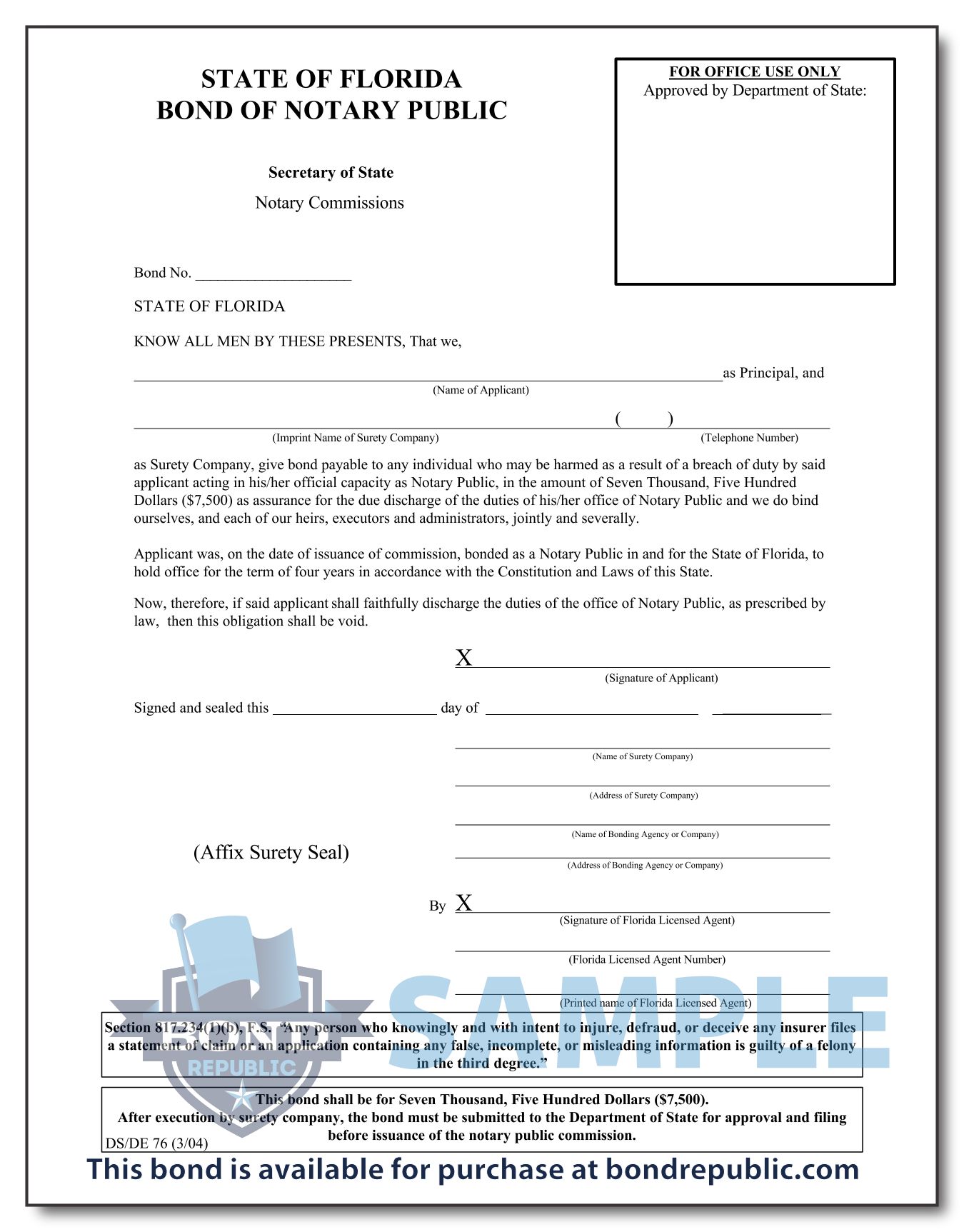
As previously mentioned, a surety bond is a mandatory requirement. This bond, typically provided by a licensed insurance or bonding company, serves as financial protection for the public. In the event that a notary’s negligent or fraudulent actions cause monetary damages to an individual, the surety company would pay out up to the bond amount, after which they might seek reimbursement from the notary. Obtaining this bond is usually straightforward; many notary application service providers bundle the bond with the application process, simplifying things for the applicant. Once commissioned, every Florida Notary Public is required to authenticate documents with an official notary seal or stamp. This device must legibly display specific information: the notary’s name, the words “Notary Public – State of Florida”, and the notary’s commission number and expiration date. The seal can be an ink stamp (most common) or an embosser, though the ink stamp is often preferred as it shows up clearly on photocopies. While Florida law does not strictly mandate a notary journal or record book for every act, it is highly recommended as a best practice. A well-maintained journal serves as a vital record of every notarization performed, documenting the date, type of act, signer’s identity, and any fees charged. This record provides crucial protection for the notary in case of disputes or legal challenges, offering an indispensable audit trail of their official acts. Investing in a quality journal and other optional supplies like ink refillers or carrying cases will set you up for success.
Understanding Your Responsibilities and Maintaining Your Commission
Being a Notary Public is a position of trust and responsibility. It involves upholding legal standards and ensuring the integrity of documents. Understanding your duties and the process for maintaining your commission is just as important as the initial application.
Key Duties and Legal Requirements
The core function of a Notary Public is to act as an impartial witness to the signing of important documents and to administer oaths and affirmations. This impartiality is paramount; a notary must never have a financial or beneficial interest in the transaction they are notarizing, nor should they notarize documents for close relatives.
A notary’s primary duties include verifying the identity of the signer. This is a critical step to prevent fraud. Acceptable forms of identification typically include a current state-issued driver’s license, a state-issued identification card, or a United States passport. The notary must physically see the signer and the identification document. Notaries also administer oaths and affirmations, which are solemn declarations that a statement is true. This is common for affidavits and depositions. They take acknowledgments, where a signer personally appears before the notary, is identified, and declares that they signed the document willingly for the purposes stated. Furthermore, in Florida, notaries can certify copies of certain non-recordable documents, such as diplomas or medical records, but specific rules apply, and they generally cannot certify copies of public records (like birth certificates or marriage licenses) that are available from official custodians. Crucially, Notaries Public must never perform actions that constitute the unauthorized practice of law, such as giving legal advice, drafting legal documents, or selecting the type of notarization required. Adherence to the Florida Statutes governing notaries is not merely advisable; it is a strict legal requirement, and violations can lead to severe penalties, including fines, suspension, or revocation of the commission.
The Importance of Notary Education
While Florida has relatively straightforward educational requirements compared to some other states, the importance of understanding and continually updating one’s knowledge cannot be overstated. For new applicants, Florida mandates a 3-hour notary education course. This course covers the basics of notary law, ethical considerations, proper procedures for various notarial acts, and common pitfalls to avoid. It’s designed to equip aspiring notaries with the foundational knowledge needed to perform their duties competently and legally.
Beyond this initial requirement, continuing education, though not strictly mandated for renewal in Florida, is highly recommended. Notary laws and best practices can evolve, and staying informed is crucial for effective and compliant service. Participating in webinars, workshops, or joining professional notary associations can provide access to updated information, networking opportunities, and advanced training on specialized notarial acts (like remote online notarization, which is also available in Florida). This proactive approach to learning ensures that a Notary Public remains proficient, minimizes risk, and can confidently handle a wide range of situations, bolstering their credibility and value within the community and various industries.
Renewing Your Florida Notary Commission
A Notary Public commission in Florida is not permanent; it typically lasts for four years. To maintain your ability to perform notarial acts, it is essential to understand and follow the renewal process. The Florida Department of State usually sends out renewal reminders to commissioned notaries several months before their commission expires. However, relying solely on these reminders is not advisable; it is the notary’s responsibility to track their expiration date.
The renewal process is similar to the initial application but is generally less extensive. You will need to submit a new application form, pay the renewal fee, and secure a new notary bond. This ensures that your bond coverage remains current for your next term. Prompt renewal is crucial to avoid any lapse in your commission. A lapse means you cannot legally perform notarizations, which can cause significant inconvenience for clients and potentially disrupt professional workflows, especially in fast-paced environments like real estate or hospitality. For professionals who regularly utilize their notary commission, ensuring continuous appointment is paramount. Planning ahead for renewal ensures uninterrupted service, reflecting professionalism and reliability.
Maximizing Your Notary Public Role in Florida’s Dynamic Landscape
The commission of a Notary Public in Florida offers more than just the ability to stamp documents; it’s a gateway to diverse opportunities within the state’s vibrant economic sectors. Leveraging this role strategically can open doors in industries intrinsically linked to travel, accommodation, and tourism, transforming a public service into a valuable professional asset.
Opportunities in Travel and Accommodation
Florida’s real estate market is consistently active, driven by both permanent residents and those seeking vacation or second homes. Notaries play an indispensable role in property sales, leases, and especially the rapidly expanding vacation rental market. From notarizing purchase agreements and deeds for beachfront condos in South Beach to rental agreements for villas near Orlando’s theme parks, real estate transactions frequently require official authentication. For those already working in property management or real estate, becoming a Notary Public offers an immediate advantage, streamlining closings and increasing client convenience.
The hospitality industry, the bedrock of Florida’s economy, also presents unique avenues. Major hotel chains, luxury resorts, and even boutique accommodations often encounter guests—especially international and business travelers—who require documents notarized. This could range from international business contracts to urgent legal declarations or simple travel consent forms for minors. A Notary Public working within or providing mobile services to hotels like the Hyatt Regency Orlando or resorts in Naples can offer an invaluable amenity, enhancing guest satisfaction and loyalty. Similarly, tour operators and travel agencies frequently deal with documents related to international travel, visa applications, and liability waivers, all of which might require notarization. By offering mobile notary services, you can cater to clients at their convenience, traveling to diverse locations from the bustling urban centers of Tampa and Jacksonville to the serene landscapes around Everglades National Park, providing flexibility that aligns perfectly with the needs of a mobile, global clientele.

Supporting Tourism and Local Businesses
Florida’s thriving tourism sector isn’t just about theme parks and beaches; it’s supported by a vast network of local businesses, from small artisan shops in St. Augustine to large event planning companies in Miami. These businesses, whether they cater directly to tourists or serve the local economy, consistently generate a need for notarized documents. This includes various business agreements, vendor contracts, loan applications, and legal forms required for compliance and operation.
A Notary Public can become an essential resource for these local enterprises, particularly small businesses that may not have in-house legal departments. Offering services to businesses situated near popular landmarks like Walt Disney World Resort, Busch Gardens Tampa Bay, or South Beach means being at the nexus of commercial activity. Moreover, the state hosts numerous community events, festivals, and conferences, all of which involve organizational agreements, sponsorship contracts, and participant waivers that often require notarization. By positioning yourself as an accessible and reliable Notary Public, you not only provide a critical service but also become an integral part of the support structure that keeps Florida’s vibrant economy flourishing, enriching both your professional life and the communities you serve.
In conclusion, becoming a Notary Public in Florida is far more than a bureaucratic designation. It is an opportunity to cultivate a respected role that offers flexibility, professional development, and the chance to contribute significantly to the diverse fabric of the Sunshine State. Whether you aim to enhance your career in the travel, accommodation, or tourism sectors, or simply seek a meaningful way to serve your community, the path to becoming a Notary Public is accessible and rewarding. By understanding the eligibility criteria, meticulously navigating the application process, embracing your responsibilities, and proactively maintaining your commission, you unlock a valuable asset that resonates deeply within Florida’s dynamic landscape. Embark on this journey and discover the myriad ways you can authenticate, serve, and thrive in the Sunshine State.
LifeOutOfTheBox is a participant in the Amazon Services LLC Associates Program, an affiliate advertising program designed to provide a means for sites to earn advertising fees by advertising and linking to Amazon.com. Amazon, the Amazon logo, AmazonSupply, and the AmazonSupply logo are trademarks of Amazon.com, Inc. or its affiliates. As an Amazon Associate we earn affiliate commissions from qualifying purchases.