
Navigating the complexities of securing disability benefits can be a daunting journey, yet it’s a crucial step for many individuals seeking to maintain a fulfilling lifestyle, especially in a vibrant and opportunity-rich state like Florida. For residents and those considering a move to the Sunshine State, understanding how to sign up for disability is not just about financial security; it’s about enabling a life rich with travel, accessible accommodations, and engaging experiences that Florida famously offers. Whether you envision exploring accessible beaches, visiting world-class theme parks, or simply enjoying the state’s unique culture and amenities, securing the right support can transform these aspirations into reality.
This comprehensive guide aims to demystify the process of applying for disability benefits in Florida, covering both federal and state-specific programs. We’ll delve into eligibility, the application journey, what to expect, and crucially, how these benefits can empower you to enjoy all that Florida has to offer, aligning perfectly with a lifestyle that values exploration, comfort, and independence.
Understanding Disability Benefits in Florida
When discussing disability benefits in Florida, it’s important to distinguish between federal programs, which are nationally administered, and state-specific support services. While there isn’t a standalone “Florida disability benefit” program in the same vein as federal cash benefits, the state offers complementary services that can significantly enhance the quality of life for individuals with disabilities.
Federal Programs: Social Security Disability Insurance (SSDI) and Supplemental Security Income (SSI)
The two primary federal programs that provide cash benefits for individuals with disabilities are Social Security Disability Insurance (SSDI) and Supplemental Security Income (SSI), both administered by the Social Security Administration (SSA). Understanding the distinctions between these two is the first step in determining which program might be right for you.
Social Security Disability Insurance (SSDI)
SSDI is a benefit program for individuals who have worked and paid Social Security taxes for a sufficient period. It operates much like an insurance policy; you “pay into” the system through your payroll taxes, and if you become disabled and unable to work, you can then draw from it.
- Eligibility: To qualify for SSDI, you must have a qualifying medical condition that meets the SSA’s definition of disability, and you must have accumulated a certain number of “work credits” based on your earnings. Generally, you need 20 work credits in the last 10 years, which typically means you’ve worked for about 5 of the last 10 years. The exact number of credits varies depending on your age at the time of disability.
- Benefits: SSDI benefits are based on your average lifetime earnings. There’s no income or resource limit for SSDI applicants (beyond the income earned after becoming disabled). After receiving SSDI for 24 months, beneficiaries typically become eligible for Medicare, providing crucial health coverage.
Supplemental Security Income (SSI)
SSI is a needs-based program designed to provide financial assistance to aged, blind, or disabled individuals who have very limited income and resources, regardless of their work history.
- Eligibility: To qualify for SSI, you must meet the SSA’s definition of disability, and your income and resources must fall below specific federal limits. These limits are quite strict, typically meaning very little in the way of assets (e.g., usually less than $2,000 for an individual, $3,000 for a couple, excluding your home and one car).
- Benefits: SSI provides a monthly cash benefit to help meet basic needs for food, clothing, and shelter. In most states, including Florida, SSI recipients automatically qualify for Medicaid, which offers comprehensive health coverage.
It’s possible for individuals to receive both SSDI and SSI if they meet the criteria for both programs, often referred to as “concurrent benefits.” This usually happens when an individual has sufficient work credits for SSDI but their SSDI benefit amount is very low, and they also meet the strict income and resource limits for SSI.
State-Specific Support and Services
While Florida does not have its own cash disability benefit program parallel to federal SSDI or SSI, the state offers a robust network of services and support designed to assist individuals with disabilities in living independently, pursuing employment, and accessing community resources.
The primary state agency dedicated to supporting individuals with developmental disabilities is the Agency for Persons with Disabilities (APD). The APD provides services such as supported living, residential habilitation, personal care, and therapy services for eligible Floridians with conditions like autism, cerebral palsy, Down syndrome, intellectual disability, Prader-Willi syndrome, and spina bifida. Eligibility for APD services is distinct from SSA disability criteria and typically involves a separate application process focusing on diagnosis and functional limitations.
Beyond the APD, Florida also supports:
- Vocational Rehabilitation Services: These programs help individuals with disabilities prepare for, obtain, or retain employment. They can offer job training, counseling, and placement services.
- Independent Living Centers: These community-based organizations are run by and for people with disabilities, offering peer support, advocacy, and information on community resources.
- Medicaid Waivers: Florida operates several Medicaid waiver programs that provide home and community-based services to individuals who would otherwise require institutional care. These waivers can cover a wide range of services, including personal care, respite care, and assistive technology, enabling individuals to live in their own homes and communities.
These state-level resources, when combined with federal financial benefits, create a more comprehensive support system, empowering individuals with disabilities to pursue their life goals, including the enjoyment of Florida’s many attractions and lifestyle opportunities.
Navigating the Application Process
Applying for disability benefits can be a lengthy and intricate process. Understanding each stage, from initial application to potential appeals, is crucial for a successful outcome.
Eligibility Criteria
The cornerstone of any disability application lies in meeting the SSA’s definition of disability. This definition is uniform across the United States, including Florida. The SSA considers you disabled if:
- You cannot do work that you did before.
- The SSA decides that you cannot adjust to other work because of your medical condition(s).
- Your disability has lasted or is expected to last for at least one year or result in death.

It’s not enough to simply have a medical condition; the condition must be severe enough to prevent you from engaging in “substantial gainful activity” (SGA). In 2024, SGA is defined as earning more than $1,550 per month (or $2,590 for blind individuals). The SSA follows a five-step sequential evaluation process to determine disability:
- Step 1: Are you engaging in SGA? If yes, you are not disabled.
- Step 2: Is your condition severe? Does it significantly limit your ability to do basic work activities? If no, you are not disabled.
- Step 3: Is your condition on the List of Impairments? The SSA maintains a “Blue Book” of medical conditions that are considered severe enough to prevent SGA. If your condition meets or equals one of these listings, you are considered disabled.
- Step 4: Can you do your past relevant work? If you can perform any work you’ve done in the past 15 years, you are not disabled.
- Step 5: Can you do any other type of work? Considering your age, education, work experience, and residual functional capacity (what you can still do despite your limitations), can you adjust to any other full-time work? If yes, you are not disabled. If no, you are considered disabled.
Beyond this medical definition, remember the financial criteria for SSI (limited income and resources) and the work credit requirements for SSDI.
The Application Journey: Steps and Documentation
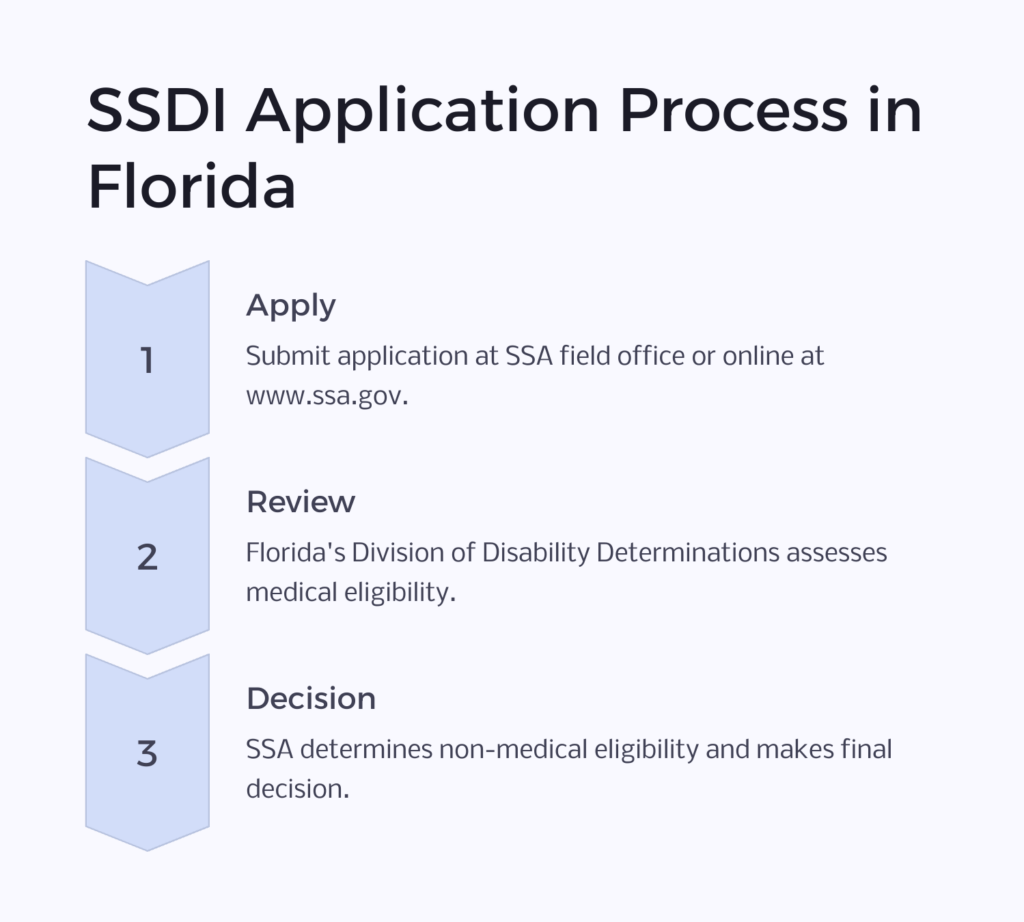
The application process typically begins with submitting an initial application to the SSA.
- Initial Application: You can apply for disability benefits online through the SSA’s website, by phone, or in person at any local SSA office. The application requires detailed information about your medical condition, treatment history, work history, and daily activities.
- Gathering Documentation: This is perhaps the most critical part. You will need to provide comprehensive medical records, including doctor’s reports, hospital records, lab results, imaging scans, and therapy notes. The more evidence you can provide, the stronger your claim. You’ll also need personal documents like your birth certificate, Social Security card, proof of U.S. citizenship or lawful alien status, marriage certificate (if applicable), and detailed work history.
- Disability Determination Services (DDS): Once your application is submitted, the SSA sends your file to a state agency, Disability Determination Services (DDS), located in Florida. A DDS examiner, working with a medical consultant, will review all your medical evidence, contact your doctors, and may even schedule you for a consultative examination (CE) with an independent doctor if they need more information. The DDS makes the initial medical decision on behalf of the SSA.
- Decision: After the DDS completes its review, the SSA will send you a letter notifying you of their decision.
What to Expect After Applying
The initial application process can take several months. Unfortunately, a significant number of initial applications are denied, sometimes due to insufficient medical evidence or misunderstandings of the SSA’s rules. If your claim is denied, it’s crucial not to give up, as there are several levels of appeal.
- Reconsideration: This is the first level of appeal. Your file is reviewed by a new DDS examiner and medical consultant. New medical evidence can be submitted. Most reconsideration requests are also denied.
- Administrative Law Judge (ALJ) Hearing: If reconsideration is denied, you can request a hearing before an Administrative Law Judge (ALJ). This is often the best chance for approval, as you can testify in person, present new evidence, and have a lawyer or representative argue your case.
- Appeals Council: If the ALJ denies your claim, you can appeal to the Appeals Council. The council will review the ALJ’s decision to ensure it followed SSA regulations. They can uphold the decision, reverse it, or send it back to an ALJ for another hearing.
- Federal Court: The final stage of appeal is to file a lawsuit in Federal Court.
The appeals process can be lengthy, often taking over a year, or even longer for multiple appeals. Seeking assistance from a disability advocate or an attorney specializing in Social Security disability can significantly improve your chances of success, especially at the ALJ hearing level. They understand the nuances of disability law, can help gather medical evidence, and represent you effectively.
Enhancing Your Florida Lifestyle: Travel, Accommodation, and Experiences with Disability Support
Securing disability benefits in Florida can be a stepping stone to a more independent and enriched life, particularly for those who love to explore. Florida is renowned for its tourism, diverse attractions, and welcoming atmosphere, and with the right support, these experiences become readily accessible.
Accessible Travel and Accommodation in Florida
Florida’s commitment to accessibility makes it an ideal destination for individuals with disabilities. From state-of-the-art transportation to a wide array of ADA-compliant lodging options, the state prioritizes inclusive travel.
- Transportation: Major airports like Orlando International Airport offer extensive accessibility services, including wheelchair assistance and accessible restrooms. Public transportation in many cities, such as buses and ride-share services, often have accessible options. The Brightline high-speed rail, connecting cities like Miami, Fort Lauderdale, West Palm Beach, and Orlando, provides accessible coaches and stations, making inter-city travel convenient and comfortable.
- Accommodation: Florida boasts a vast selection of hotels, resorts, and vacation rentals that adhere to ADA standards. Luxury establishments such as the Hyatt Regency Orlando and The Ritz-Carlton, Amelia Island offer roll-in showers, grab bars, visual alarms, and accessible routes throughout their properties. Family-friendly resorts like Disney’s Art of Animation Resort also provide excellent accessible rooms and facilities. When booking, always specify your exact needs (e.g., roll-in shower, lower bed, specific mobility equipment) to ensure the room meets your requirements. Many booking platforms now allow filtering for accessible amenities, but a direct call to the hotel is always recommended for confirmation.
Exploring Florida’s Accessible Attractions and Landmarks
Florida is a playground for all ages and abilities, with countless attractions making efforts to ensure everyone can partake in the fun.
- Theme Parks: Orlando is home to world-renowned theme parks like Walt Disney World Resort and Universal Orlando Resort. Both offer comprehensive accessibility guides, companion restrooms, scooter and wheelchair rentals, and specific ride access policies for guests with disabilities. Cast members and team members are trained to assist, ensuring a magical and seamless experience.
- Natural Wonders: Florida’s natural beauty is also highly accessible. Everglades National Park features accessible boardwalks and boat tours, allowing visitors to experience its unique ecosystem. Many state parks offer accessible trails and facilities. Famous beaches like St. Pete Beach and Siesta Key provide beach wheelchairs, accessible mats, and designated parking to help visitors enjoy the sand and surf.
- Cultural and Historical Sites: Museums across the state, such as The Dalí Museum in St. Petersburg, offer accessible entrances, elevators, and tours for guests with various disabilities. Historical sites and zoos often provide similar accommodations.
- Cruises: For those seeking a maritime adventure, cruise lines departing from Florida ports like Port Canaveral, Miami, and Fort Lauderdale offer accessible cabins, assistance with boarding and disembarking, and accessible excursions, opening up the Caribbean and beyond.

Building a Supported Lifestyle: Community and Resources
Beyond travel and attractions, securing disability benefits contributes to a stable foundation for everyday life in Florida. These benefits can help cover housing, utilities, food, and medical expenses, freeing up resources to engage more fully with the community and pursue personal interests.
Florida’s independent living centers and various non-profit organizations offer a wealth of local resources, including:
- Support Groups: Connecting with others who share similar experiences can provide emotional support and practical advice.
- Advocacy Services: Organizations can help advocate for your rights and access to services.
- Employment Programs: Many agencies offer job coaching, training, and placement services specifically for individuals with disabilities, fostering financial independence and a sense of purpose.
- Recreational Programs: Adaptive sports leagues, arts and crafts classes, and social events cater to individuals with various abilities, promoting physical activity and social inclusion.
By leveraging these resources, individuals with disabilities in Florida can build a lifestyle that is not just supported, but truly thriving, allowing them to explore new destinations, engage with local culture, and make the most of their time in this beautiful state. The process of signing up for disability is more than just a bureaucratic step; it’s an investment in a richer, more accessible life.
In conclusion, while the path to securing disability benefits in Florida involves navigating federal and state guidelines, the outcome is profoundly empowering. With financial stability and access to critical services, individuals with disabilities can confidently embrace Florida’s endless possibilities for travel, leisure, and community engagement. It’s a journey worth undertaking, opening doors to a world of accessible adventures and a truly supported lifestyle.
LifeOutOfTheBox is a participant in the Amazon Services LLC Associates Program, an affiliate advertising program designed to provide a means for sites to earn advertising fees by advertising and linking to Amazon.com. Amazon, the Amazon logo, AmazonSupply, and the AmazonSupply logo are trademarks of Amazon.com, Inc. or its affiliates. As an Amazon Associate we earn affiliate commissions from qualifying purchases.