
The allure of Hawaii is undeniable. A tropical paradise renowned for its pristine beaches, vibrant culture, and breathtaking natural beauty, it consistently ranks as a dream destination for travelers worldwide. Yet, beneath the shimmering turquoise waters and the lush green landscapes lies a geological tale of epic proportions – a story of fire and shifting plates that explains not only how these incredible islands came to be, but also why they offer such a unique and diverse array of experiences for every visitor. Understanding the formation of Hawaii is to understand its very essence, from the active volcanoes on the Big Island to the deeply eroded valleys of Kauai. It’s a journey through millions of years of Earth’s dynamic processes, culminating in an archipelago that continues to evolve, promising new discoveries for those who venture to its shores.

The Enigma of the Hawaiian Islands: A Geological Masterpiece
The Hawaiian Islands are unlike most island chains in the world. They are not formed at plate boundaries where two tectonic plates collide or pull apart, nor are they remnants of submerged continental landmasses. Instead, they stand as a testament to a powerful and enduring force deep within the Earth – a stationary “hotspot” that has continuously punched through the Earth’s crust for an astonishing 70 million years or more. This unique geological phenomenon has sculpted an archipelago of unparalleled beauty and scientific interest, making it a living laboratory for geologists and an awe-inspiring natural wonder for everyone else.
Unveiling the Hotspot Theory
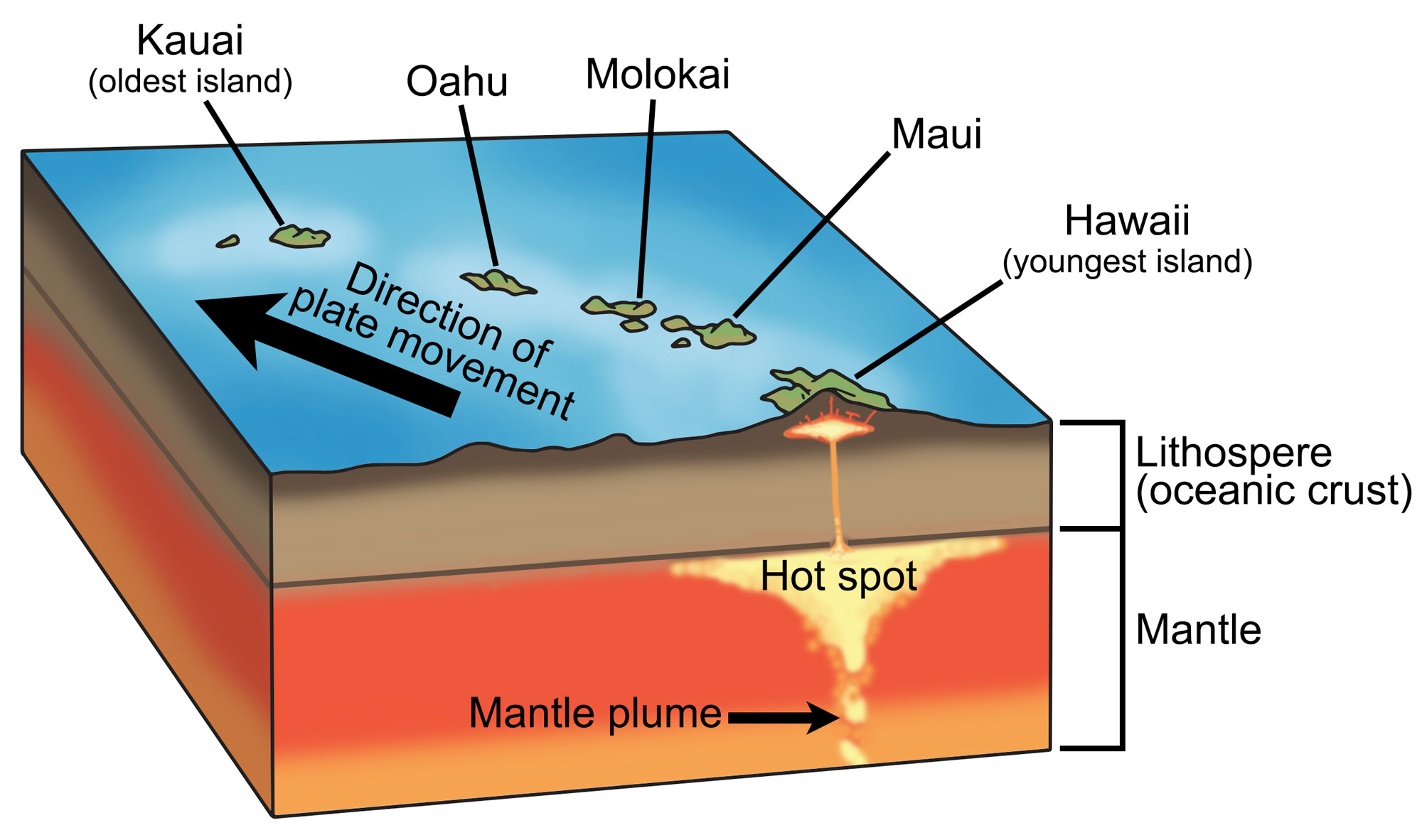
At the heart of Hawaii’s formation is the “hotspot theory,” a fundamental concept in plate tectonics. The Earth’s outer shell, the lithosphere, is broken into several large pieces called tectonic plates, which are constantly, albeit slowly, moving across the planet’s surface. Beneath these plates, in the Earth’s mantle, are plumes of superheated material that rise from deep within the Earth. One such plume, known as the Hawaii Hotspot, is believed to be a relatively fixed source of magma.
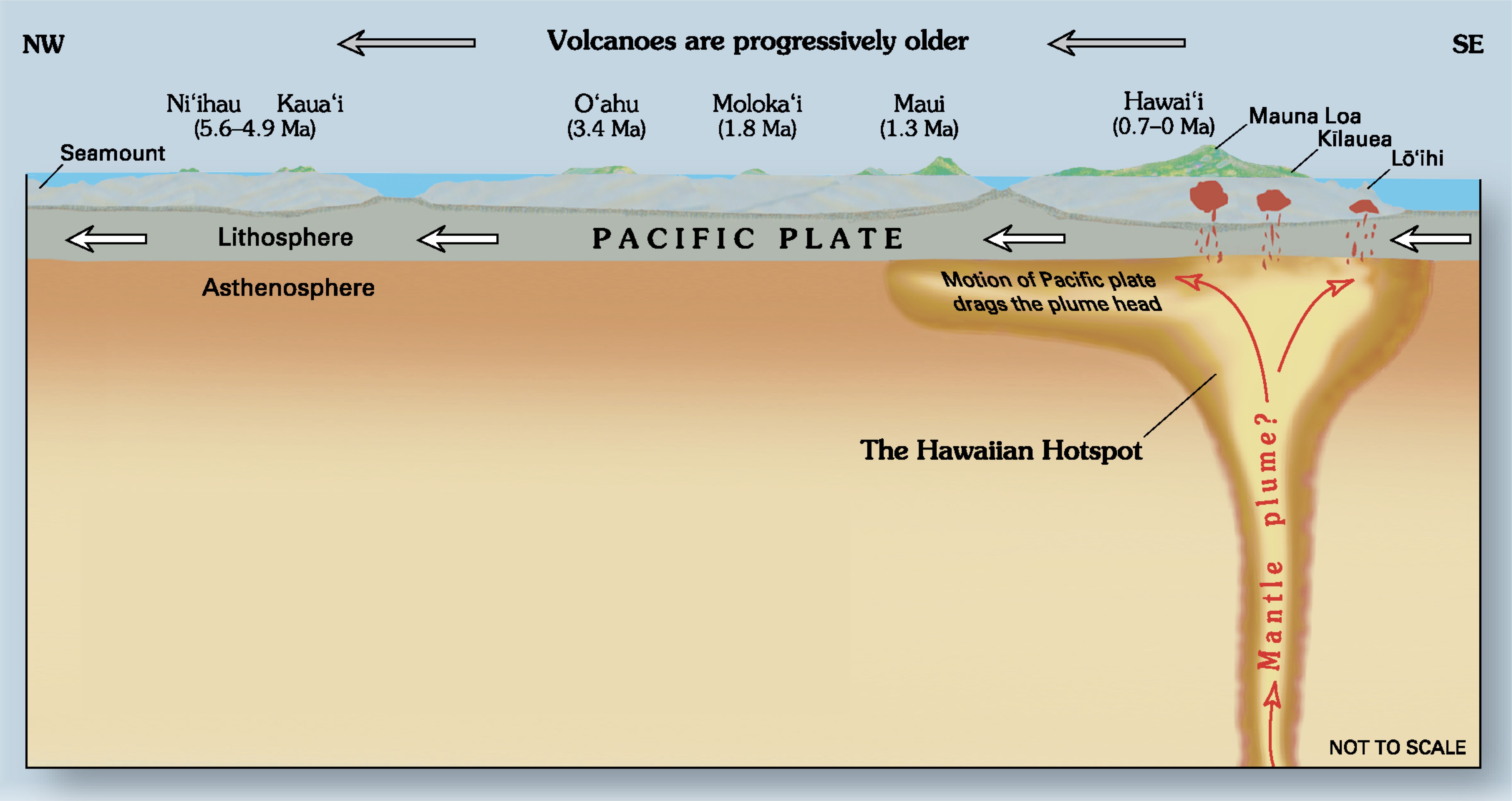
The crucial element of the Hawaii Hotspot theory is that while the hotspot remains largely stationary, the Pacific Plate – the vast tectonic plate upon which the Hawaiian Islands sit – is relentlessly grinding its way northwestward, typically at a speed of about 3-4 inches (8-10 centimeters) per year. As the Pacific Plate moves over the hotspot, the upwelling magma punches through the crust, creating a volcano. This process repeats itself: as the plate continues to drift, the newly formed volcano is carried away from the hotspot, eventually losing its source of magma and becoming extinct. Meanwhile, a new area of the plate moves over the hotspot, and a new volcano begins to form. This continuous cycle of creation and migration is precisely what gives the Hawaiian Islands their distinctive linear chain.
The Birth of an Archipelago: From Kauai to the Big Island
This conveyor belt-like process explains the age progression visible across the Hawaiian Islands and the submerged seamounts that extend far to the northwest. The oldest main island, Kauai, often referred to as the “Garden Isle” due to its lush, verdant landscapes, began forming approximately 5 million years ago. Its majestic cliffs and deep canyons, such as those found along the Na Pali Coast, are the result of millions of years of erosion by wind and rain, shaping what were once towering volcanic peaks.
Moving southeast along the chain, one encounters progressively younger islands. Oahu, home to the bustling city of Honolulu and the iconic Diamond Head crater, is roughly 3.5 million years old. Maui, famous for its stunning beaches and the massive Haleakala volcano, is approximately 1.3 million years old. Finally, at the southeastern end of the chain, directly over the hotspot, lies Hawaii Island, often called the Big Island. This is the youngest and largest of the islands, estimated to be less than 500,000 years old, and it is still actively growing.
The Big Island is home to five volcanoes, including Mauna Loa, the largest active volcano on Earth by volume, and Kilauea, one of the world’s most active volcanoes. Kilauea has been erupting almost continuously since 1983, constantly adding new land to the island and demonstrating the ongoing dynamic process of Hawaii’s formation. Even further southeast, submerged beneath the ocean’s surface, is Lōʻihi Seamount, a nascent submarine volcano that is currently about 3,200 feet below sea level. In tens of thousands of years, Lōʻihi is projected to eventually break the surface and become the newest addition to the Hawaiian Islands, continuing this extraordinary geological legacy.
Geological Wonders Shaping Hawaii’s Landscape and Lure
The fiery genesis of the Hawaiian Islands is not merely a scientific curiosity; it is the fundamental reason for the islands’ distinctive appeal to travelers. Every unique landscape feature, every vibrant ecosystem, and every thrilling adventure activity can be traced back to the volcanic forces that shaped these lands. From the highest peaks to the deepest ocean trenches, Hawaii’s geological origins are etched into its very soul, creating a destination unlike any other.
Volcanic Creation: Diverse Terrains and Unique Landmarks
The diverse nature of volcanic activity is responsible for the incredible variety of terrains found across the Hawaiian Islands. Shield volcanoes, characterized by their broad, gentle slopes, like Mauna Loa and Mauna Kea on the Big Island, create vast, undulating landscapes. Over time, as these volcanoes become dormant and move away from the hotspot, the relentless forces of erosion take over. Rain and rivers carve deep valleys and sharp ridges, transforming the gentle slopes into dramatic, rugged cliffs and fertile plains. This erosional process is spectacularly evident on islands like Kauai, where the Na Pali Coast boasts towering emerald sea cliffs plunging into the ocean, and Waimea Canyon, often called the “Grand Canyon of the Pacific,” showcases millions of years of water-sculpted rock formations.
The very composition of the islands also leads to unique natural landmarks. The basaltic lava, rich in iron, gives rise to distinctive black sand beaches, such as Punalu’u Black Sand Beach on the Big Island, a stunning contrast to the more common golden sands. On Maui, the dormant Haleakala volcano presents a surreal, lunar-like crater landscape at its summit, a stark and beautiful testament to its fiery past. On Oahu, the iconic Diamond Head is a tuff cone formed by a single explosive eruption, now a world-famous landmark offering panoramic views of Waikiki and the Honolulu coastline. These geological wonders not only provide stunning backdrops for photographs but also serve as playgrounds for adventurers, inviting hikers, surfers, and explorers to delve into the islands’ powerful history. Furthermore, the volcanic activity is responsible for the rich, fertile soil that supports Hawaii’s diverse plant life, from dense rainforests to thriving agricultural lands, fostering unique ecosystems and endemic species found nowhere else on Earth.
A Dynamic Environment: Ongoing Formation and Its Appeal
What truly sets Hawaii apart is its status as a living, breathing geological entity. The Big Island remains perched directly over the hotspot, making it one of the few places on Earth where visitors can witness the raw power of land creation in real-time. Hawaii Volcanoes National Park, a UNESCO World Heritage Site, offers unparalleled access to active volcanic landscapes. Here, travelers can stand in awe as molten lava flows into the ocean, creating steamy plumes and adding fresh acreage to the island. They can explore vast lava fields, traverse ancient lava tubes, and feel the primal energy of a constantly transforming world. This dynamic environment offers a unique educational and experiential opportunity for those interested in Earth sciences, or simply those seeking an extraordinary adventure.
The contrast between the actively forming Big Island and the ancient, deeply eroded islands to the northwest is striking. On Kauai, visitors experience the serenity of mature landscapes, where nature has had millions of years to soften the sharp edges of volcanic creation. On Maui, the massive caldera of Haleakala evokes a sense of timelessness and grandeur, while on Oahu, the blend of urban development and natural beauty showcases how humanity has adapted to and embraced this volcanic foundation. This spectrum of geological development, from nascent land to ancient valleys, means that Hawaii offers an incredibly diverse range of experiences within a relatively small geographical area, each island presenting a different stage in the life cycle of a volcanic island.
Experiencing the Legacy of Volcanic Formation: Travel and Tourism in Hawaii
The geological narrative of Hawaii is not confined to textbooks or scientific journals; it is woven into the very fabric of the islands’ tourism industry, offering a rich tapestry of attractions and experiences that are directly shaped by its volcanic origins. For travelers, this means a chance to not just witness, but actively engage with, the forces that built this paradise.
Attractions and Activities Born from Fire and Sea
Hawaii’s volcanic formation has given rise to a spectacular array of attractions and activities that capitalize on its unique geology. On the Big Island, the aforementioned Hawaii Volcanoes National Park is a prime example. Here, visitors can embark on thrilling hikes across solidified lava flows, explore steam vents and sulfur banks, and, when conditions permit, safely observe active lava flows. Helicopter tours over the volcanoes provide a breathtaking bird’s-eye view of the raw power shaping the land. These experiences are truly once-in-a-lifetime, offering an unparalleled connection to the Earth’s dynamic processes.
Beyond active volcanism, the legacy of ancient eruptions provides countless opportunities for adventure. The eroded slopes of dormant volcanoes like Haleakala on Maui offer incredible hiking and biking trails, especially popular for sunrise viewing from its summit, gazing down into its vast caldera. The rugged, volcanic coastlines across all islands, particularly the dramatic cliffs of the Na Pali Coast on Kauai, are perfect for scenic boat tours, kayaking, and hiking. Even the world-class surfing breaks that Hawaii is famous for are indirectly a result of its volcanic formation; the underwater topography created by ancient lava flows and the deep ocean surrounding the islands contribute to the powerful waves that draw surfers from around the globe. Snorkeling and diving enthusiasts can explore vibrant coral reefs that have established themselves on ancient volcanic rock foundations, teeming with marine life unique to the Pacific Ocean.
Where to Stay: Accommodations Amidst Geological Grandeur
The diverse geological formations have also influenced the development of accommodations, offering travelers a wide range of options that often leverage the stunning natural surroundings. From luxurious resorts perched on black sand beaches to secluded eco-lodges nestled in volcanic valleys, there’s a unique lodging experience for every type of traveler.
On Oahu, the iconic Waikiki beachfront boasts a plethora of world-class hotels and resorts, such as the Royal Hawaiian Hotel or the Moana Surfrider, many offering stunning views of Diamond Head and the volcanic mountains that form the island’s spine. These provide easy access to volcanic landmarks and surf spots, combining urban luxury with natural beauty. On Maui, areas like Wailea and Ka’anapali offer upscale resorts built along pristine beaches, providing a tranquil escape with Haleakala’s majestic presence often visible in the distance. Many of these properties offer guided excursions to the volcano’s summit or along its lower slopes, seamlessly integrating the geological marvel into guest experiences.
For those drawn to the raw power of the Big Island, accommodations range from charming bed and breakfasts near Hawaii Volcanoes National Park to more remote villas that offer unparalleled access to lava viewing opportunities and hiking trails. Even in the lush, older islands like Kauai, resorts and apartments are often designed to complement the dramatic volcanic landscapes, with properties offering access to secluded coves, ancient river valleys, and panoramic views of the verdant cliffs sculpted by millions of years of erosion. Whether seeking a lavish resort experience, a cozy boutique hotel, or a rustic adventure lodge, Hawaii’s accommodations are thoughtfully situated to allow visitors to fully immerse themselves in the geological grandeur and natural splendor that defines these extraordinary islands.
In conclusion, the story of “How Hawaii Is Formed?” is far more than a geological lesson; it is the foundational narrative that explains every facet of this captivating destination. From the ancient, eroded cliffs of Kauai to the actively growing landscapes of the Big Island, the persistent power of the Hawaii Hotspot and the movement of the Pacific Plate have crafted an archipelago of unparalleled beauty and diversity. This ongoing creation provides not just stunning natural landmarks but also a dynamic playground for adventurers, cultural enthusiasts, and those simply seeking solace amidst breathtaking scenery. Visiting Hawaii is to step into a living laboratory, a testament to the Earth’s awesome power, and an invitation to witness a world perpetually being born from fire and sea. It’s an experience that deepens one’s appreciation for our planet and creates unforgettable memories of a truly unique corner of the world.
LifeOutOfTheBox is a participant in the Amazon Services LLC Associates Program, an affiliate advertising program designed to provide a means for sites to earn advertising fees by advertising and linking to Amazon.com. Amazon, the Amazon logo, AmazonSupply, and the AmazonSupply logo are trademarks of Amazon.com, Inc. or its affiliates. As an Amazon Associate we earn affiliate commissions from qualifying purchases.