
When planning a journey to the enchanting islands of Hawaii, a common and essential question for many travelers revolves around communication: what language is spoken here? The answer, like the islands themselves, is a rich tapestry woven from history, culture, and the influences of diverse populations. While English is undoubtedly the dominant language and the primary mode of communication for visitors, the linguistic landscape of Hawaii is far more complex and fascinating, offering a deeper insight into the local culture and lifestyle. This guide delves into the official languages, the vibrant local dialect, and how understanding these nuances can profoundly enrich your travel experience, from booking accommodation to exploring iconic landmarks.
The Official Languages of Hawaii: English and Hawaiian
Hawaii holds a unique distinction among the United States for having two official languages: English and ‘Ōlelo Hawaiʻi, the Hawaiian language. This duality reflects the islands’ complex history, from an independent kingdom to a U.S. state.
English: The Dominant Tongue for Visitors
For the vast majority of tourists, communication in Hawaii will be effortless, as English is universally spoken and understood. As a state of the United States, all official documents, public signs, school instruction, and business transactions are conducted in English. This makes navigating your travel experience incredibly straightforward. From checking into your hotel in Waikiki to ordering a plate lunch at a local eatery in Honolulu, or booking a surfing lesson on Maui, you’ll find that English is the operational language.
The prevalence of English is a direct result of historical events, particularly the annexation of Hawaii by the United States in 1898. Over the decades that followed, English became the primary language of education and commerce, leading to its widespread adoption. Today, the tourism industry, which is vital to the Hawaiian economy, primarily caters to English-speaking visitors, ensuring that guides, resort staff, and attraction operators are fluent. Whether you’re inquiring about the history of Pearl Harbor, seeking directions to Diamond Head, or comparing different luxury travel packages, you can expect clear communication in English.
Hawaiian: A Language Reborn
‘Ōlelo Hawaiʻi holds deep cultural significance as the indigenous language of the Hawaiian people. It is a Polynesian language, a descendant of the Proto-Polynesian language spoken by the early settlers who navigated vast ocean stretches to reach these islands. For centuries, it was the sole language of the Hawaiian Kingdom under rulers like Kamehameha I. However, following the overthrow of the monarchy and subsequent annexation, the use of Hawaiian was suppressed, even banned in schools, leading to a drastic decline in its speakers. By the mid-20th century, it was critically endangered, spoken primarily by elders, mostly on the island of Niʻihau.
Fortunately, a powerful cultural resurgence movement began in the 1970s. This renaissance led to the establishment of Hawaiian language immersion schools, university programs (such as those at the University of Hawaiʻi), and a renewed pride in the language. In 1978, ‘Ōlelo Hawaiʻi was reinstated as an official language of the state.
Today, while not as widely spoken in daily conversation as English, Hawaiian is very much alive and visible. Visitors will encounter it everywhere, from street names and place names (e.g., Honolulu means “sheltered bay,” Mauna Kea means “white mountain”) to official signs, cultural performances, and everyday greetings. Learning a few basic Hawaiian phrases, such as “Aloha” (hello, goodbye, love) and “Mahalo” (thank you), is highly encouraged and greatly appreciated by locals, signaling a respect for the local culture. Many resorts and tour guides incorporate Hawaiian words and phrases into their programs, offering visitors a taste of authentic Hawaiian heritage and enhancing their understanding of local culture.
Beyond the Official: Pidgin (Hawaiʻi Creole English)
Beyond the two official languages, Hawaii boasts another unique linguistic phenomenon: Hawaiʻi Creole English, commonly known as “Pidgin.” This vibrant creole language is an integral part of the local lifestyle and a fascinating aspect of Hawaiian identity.
Understanding Pidgin: A Cultural Lexicon
Pidgin is not simply “broken English” but a fully developed language with its own grammar, vocabulary, and pronunciation rules. Its origins trace back to the mid-19th century plantation era, when immigrant laborers arrived from diverse linguistic backgrounds, including China, Japan, Portugal, Puerto Rico, and the Philippines, to work on sugar and pineapple plantations. To communicate with each other and with their English-speaking overseers, they developed a simplified common language, or pidgin. Over generations, this pidgin evolved into a creole, becoming the native language for many born in Hawaii.
Pidgin incorporates elements from English, Hawaiian, Japanese, Portuguese, Ilocano, and Cantonese, among others. It is characterized by its distinctive rhythm, specific sentence structures, and a rich vocabulary of unique terms. For example, “Brah” or “Braddah” (brother) is a common friendly address, “Grindz” refers to food, and “Da kine” is a versatile placeholder for almost anything.
Pidgin is predominantly spoken by locals in informal settings and is a powerful marker of local identity. It reflects the multicultural heritage of Hawaii and serves as a means of expressing a shared cultural experience. While visitors might initially find it challenging to understand, especially when spoken quickly, tuning into Pidgin can offer a deeper connection to the local community and a more authentic understanding of daily life beyond the typical tourist experience. Many locals appreciate when visitors show an interest in this unique aspect of their culture.
Navigating Communication: What Travelers Need to Know
For most visitors, navigating Hawaii purely with English will be perfectly sufficient. All businesses, hotels, attractions, and services cater to English speakers. However, understanding the presence of Pidgin, and perhaps recognizing a few common phrases, can greatly enrich your experience. It’s not about learning to speak Pidgin, but rather appreciating its role in the local social fabric.
You might overhear Pidgin spoken among friends at a beach park, in local eateries, or on public transport. While it’s not typically used in formal tourism settings, acknowledging its existence demonstrates a respect for the local culture. Engaging with shopkeepers, restaurant staff, or activity guides will almost always be in standard English, but a friendly “Aloha” or “Mahalo” in Hawaiian can often elicit a warmer response and make interactions more memorable. This cultural sensitivity is a hallmark of truly immersive travel experiences.
Language and the Hawaiian Travel Experience
The linguistic landscape of Hawaii isn’t just a matter of communication; it’s a gateway to understanding the islands’ history, environment, and people. Incorporating an awareness of the languages into your journey can transform a simple vacation into a profound cultural adventure.
Place Names and Their Significance
One of the most immediate ways visitors encounter the Hawaiian language is through place names. Almost every island, city, street, landmark, and natural feature bears a Hawaiian name, each imbued with meaning and history. Understanding these names can add layers of appreciation to your explorations.
For example, Honolulu (Oahu) means “sheltered bay” or “place of refuge.” Waikiki (Oahu) translates to “spouting waters,” a nod to the streams that once flowed into the area. Maui is named after the demigod Māui. Kauaʻi means “place of the season of plenty.” Even natural wonders like Kilauea (Big Island), an active volcano, means “spewing” or “much spreading.”
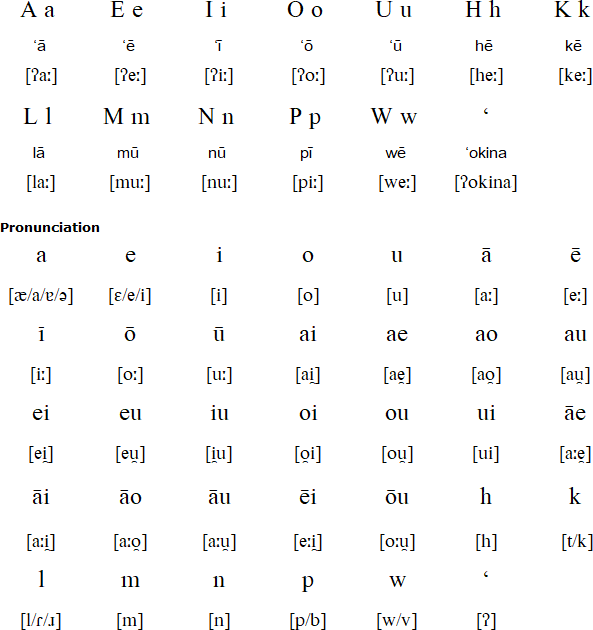
Learning correct pronunciation, or at least attempting it, is a respectful gesture. Many maps and guides include phonetic spellings. You’ll also encounter terms like mauka (towards the mountain) and makai (towards the sea) frequently used for directions, especially on islands like Oahu. Understanding these simple terms can make navigating a breeze and connect you more intimately with the local environment and its people. This intertwining of language and geography is a distinctive feature of Hawaiian destinations.
Cultural Immersion Through Language
For those seeking truly authentic travel experiences and a deeper dive into local culture, embracing a few basic Hawaiian phrases can be incredibly rewarding. Beyond “Aloha” and “Mahalo,” consider learning:
- ‘A hui hou: Until we meet again
- E komo mai: Welcome
- Kōkua: Help, assistance
- Pūpū: Appetizers
- Lūʻau: Traditional Hawaiian feast
- Hula: Traditional Hawaiian dance
When participating in a traditional lūʻau, attending a hula performance, or visiting a cultural center like the Polynesian Cultural Center on Oahu, these words will not only enhance your understanding but also demonstrate your respect for the host culture. Many resorts, such as the Grand Hyatt Kauai Resort & Spa or the Four Seasons Resort Maui at Wailea, offer cultural classes, including basic Hawaiian language lessons, lei making, or ʻukulele instruction, allowing guests to actively engage with the language and traditions. This type of engagement transforms a typical stay into a rich lifestyle experience, moving beyond mere sightseeing.
Practicalities for Visitors: Hotels, Tours, and Everyday Interactions
Rest assured, from a practical standpoint, your journey through Hawaii will be smooth with English. All major hotels, including prominent chains like the Hilton Hawaiian Village Waikiki Beach Resort or independent boutique accommodations, operate seamlessly in English. Booking rooms, inquiring about amenities, or seeking assistance is straightforward. Similarly, tourism operators, from those offering excursions to Hanauma Bay to guided hikes on Kauai, conduct their services in English. Menus in restaurants, signs in shops, and informational placards at landmarks are all presented in English.
For those interested in budget travel, communication will also not be an issue. Even at local markets or smaller, family-run eateries, English is the common ground. The hospitality industry in Hawaii is geared towards international visitors, and staff are well-versed in bridging any communication gaps. However, a polite “Aloha” or “Mahalo” to your server, cashier, or bus driver will always be met with a warm smile, reinforcing the spirit of aloha that defines Hawaiian hospitality.
Preserving ‘Ōlelo Hawai’i for Future Generations
The journey of the Hawaiian language is a testament to resilience and cultural pride. Its revitalization is an ongoing effort, supported by various initiatives that ensure its presence continues to grow.
Educational Initiatives and Community Efforts
The resurgence of ‘Ōlelo Hawaiʻi is largely due to dedicated educational programs. Hawaiian immersion schools (Kula Kaiapuni) educate children from preschool through high school entirely in the Hawaiian language, producing fluent speakers for the first time in generations. Institutions like the University of Hawaiʻi offer extensive programs in Hawaiian language and studies, fostering scholarship and producing educators. Community organizations, cultural practitioners, and passionate individuals also play a vital role, holding classes, workshops, and events that celebrate and teach the language. This collective commitment ensures that ‘Ōlelo Hawaiʻi is not just preserved but thriving, contributing to the unique lifestyle and identity of the islands.

The Future of Hawaiian Language in Tourism
The increasing visibility of ‘Ōlelo Hawaiʻi also influences the tourism sector. There’s a growing appreciation among visitors for authentic cultural experiences, which naturally includes an interest in the indigenous language. Many tour operators and resorts are now actively incorporating more Hawaiian language elements into their offerings, from greetings and place name explanations to guided tours led entirely in Hawaiian (with English interpretation).
By valuing and engaging with the Hawaiian language, visitors indirectly support its preservation. Choosing tours that highlight cultural authenticity, purchasing products with Hawaiian names and stories, and simply showing interest in learning a few words contribute positively to the language’s future. This integration of language into the travel experience enriches the destination for both residents and visitors, making Hawaii not just a beautiful place to visit, but a profound cultural journey.
In conclusion, while English serves as the universal language for travelers in Hawaii, the islands offer a much richer linguistic tapestry. The proud resurgence of ‘Ōlelo Hawaiʻi and the vibrant local dialect of Pidgin are integral to the unique charm and deep cultural heritage of the islands. By acknowledging and respectfully engaging with these languages, visitors can move beyond being mere tourists to become appreciative participants in the living culture of Hawaii, ensuring their trip is not only relaxing but also profoundly enriching. From selecting your perfect accommodation to exploring breathtaking landmarks, a little linguistic awareness will unlock a deeper, more meaningful connection to this extraordinary destination.
LifeOutOfTheBox is a participant in the Amazon Services LLC Associates Program, an affiliate advertising program designed to provide a means for sites to earn advertising fees by advertising and linking to Amazon.com. Amazon, the Amazon logo, AmazonSupply, and the AmazonSupply logo are trademarks of Amazon.com, Inc. or its affiliates. As an Amazon Associate we earn affiliate commissions from qualifying purchases.