
The story of how the United States acquired the Hawaiian Islands is a complex tapestry woven with threads of exploration, economic ambition, political maneuvering, and cultural shifts. It’s a narrative that stretches over a century, transforming an independent Polynesian kingdom into a strategic American territory, and eventually, the 50th state. For those planning a luxurious escape or an adventurous journey to this iconic Pacific Ocean paradise, understanding its rich history adds a profound layer to the experience, revealing the deep cultural roots and the enduring spirit of the islands.
The definitive moment the United States “got” Hawaii can be marked by August 12, 1898, the date when the formal transfer of sovereignty took place under the Newlands Resolution. However, this event was merely the culmination of decades of increasing American influence, culminating in the overthrow of the Hawaiian Kingdom and the establishment of a short-lived republic. To truly grasp this pivotal moment, one must journey back to the earliest encounters and the gradual erosion of Hawaiian independence.
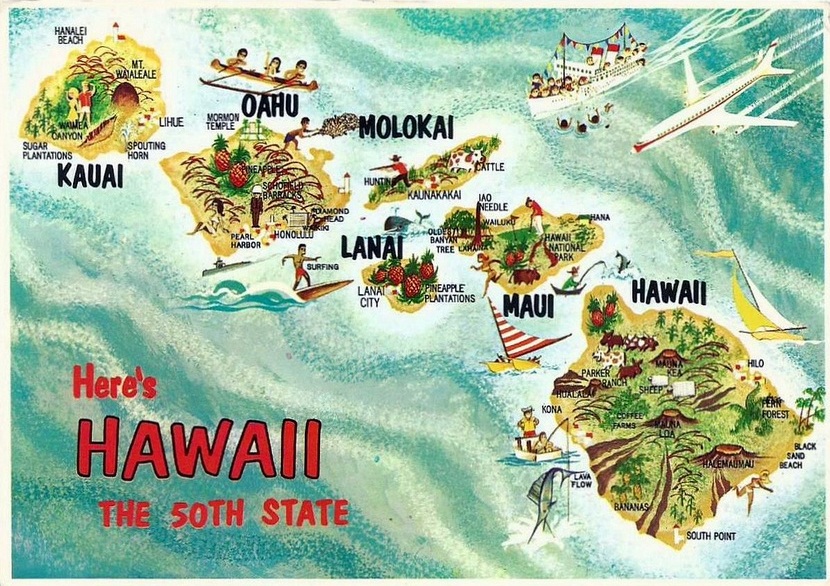
A Brief History of the Hawaiian Kingdom
Before European contact, the Hawaiian Islands flourished under a sophisticated system of governance, rich cultural traditions, and a deep spiritual connection to the land and sea. Life revolved around subsistence farming, fishing, and elaborate social hierarchies. The islanders were master navigators, their ancestors having voyaged across vast stretches of the Pacific to settle these volcanic lands. This vibrant society, with its unique art forms, oral histories, and intricate kapu (taboo) system, laid the foundation for the enduring Aloha Spirit that still captivates visitors today.
Early European Contact and Royal Succession
The modern historical timeline for Hawaii often begins with the arrival of Captain James Cook in 1778. Cook’s expedition, initially greeted with reverence, marked the beginning of significant foreign interaction. His arrival opened the islands to the outside world, bringing European goods, technologies, and unfortunately, diseases that would decimate the native Hawaiian population.
In the wake of this contact, a powerful leader emerged: Kamehameha I. Through strategic alliances, warfare, and astute diplomacy, Kamehameha I unified the warring chiefdoms of the Hawaiian Islands by 1810, establishing the Kingdom of Hawaii. This monumental achievement created a sovereign nation recognized by international powers, a testament to the strength and resilience of the Hawaiian people. The early monarchs, understanding the shifting global landscape, actively sought to modernize their kingdom while striving to preserve their unique cultural identity. This period saw the development of a written Hawaiian language, the adoption of constitutional monarchy, and the establishment of diplomatic relations with nations worldwide.
The Rise of Foreign Influence
The 19th century brought increasing foreign interest in Hawaii. Its strategic location in the Pacific made it a vital stop for whaling ships, traders, and missionaries. The first major wave of American influence came with the arrival of New England American Protestant missionaries in 1820. These missionaries, while introducing Christianity and Western education, also brought significant cultural changes that sometimes clashed with traditional Hawaiian practices. Many of their descendants would later become prominent landowners and businessmen, forming a powerful, politically active bloc within the kingdom.
Economically, the islands became crucial hubs. The Sandalwood Trade in the early 1800s, followed by the booming Whaling Industry, brought wealth but also exerted pressure on the natural environment and traditional ways of life. By the mid-19th century, the Whaling Industry began to decline, paving the way for a new, even more dominant economic force: Sugar Plantations.
The Seeds of Annexation: From Sugar to Sovereignty
The shift to large-scale Sugar Plantations dramatically reshaped Hawaii’s economy and social structure. American businessmen, many of whom were descendants of early missionaries, invested heavily in this industry. The need for labor led to mass immigration from China, Japan, Portugal, and the Philippines, creating the diverse ethnic mosaic that defines modern Hawaii today.
Economic Drivers and American Interests
The success of the Sugar Plantations was deeply intertwined with the United States. American markets offered the most lucrative outlet for Hawaiian sugar. To secure favorable trade terms, the Hawaiian Kingdom entered into reciprocity treaties with the United States, most notably the Reciprocity Treaty of 1875. This agreement granted duty-free entry for Hawaiian sugar into the U.S. market in exchange for special economic privileges for the United States in Hawaii, including the right to establish a naval coaling station at Pearl Harbor.
This treaty was a double-edged sword. While it brought immense prosperity to the planters and modernized the kingdom’s infrastructure, it also cemented American economic dominance and political leverage. The prosperity, however, was not evenly distributed. Native Hawaiians often found themselves marginalized in their own land, with political power increasingly concentrated in the hands of the haole (foreign) planter elite. This created a growing tension between the indigenous monarchy, seeking to preserve national sovereignty, and the powerful foreign business interests, who increasingly saw their economic future tied to annexation by the United States.
The Bayonet Constitution and Political Turmoil
By the late 1880s, the political climate in Hawaii was highly volatile. A group of American and European businessmen and residents, concerned about what they perceived as the monarchy’s anti-Western tendencies and its efforts to reclaim power for native Hawaiians, formed a secret organization known as the Hawaiian League. Their goal was to force the monarchy to relinquish power and, ultimately, to achieve annexation by the United States.
In 1887, these powerful individuals, backed by an armed militia, forced King Kalākaua to sign a new constitution. This document, infamously known as the Bayonet Constitution, severely limited the monarch’s power, transferred most authority to the cabinet (which was dominated by American appointees), and disfranchised many native Hawaiians and Asian immigrants by imposing strict property and income requirements for voting. It also granted foreigners who were not citizens the right to vote. The Bayonet Constitution effectively stripped the Hawaiian monarchy of its authority and placed political control firmly in the hands of the pro-annexationist, non-native elite. This event was a major turning point, fueling resentment among native Hawaiians and setting the stage for future conflict.
The Overthrow of the Monarchy and the Republic of Hawaii
The signing of the Bayonet Constitution profoundly weakened the Hawaiian Kingdom. When King Kalākaua died in 1891, his sister, Queen Liliʻuokalani, ascended to the throne. A strong advocate for her people, the Queen recognized the injustices of the Bayonet Constitution and vowed to restore the monarchy’s power and the rights of native Hawaiians. Her efforts to enact a new constitution, designed to reverse the provisions of the Bayonet Constitution, were met with fierce opposition from the annexationists.
The Coup Against Queen Liliʻuokalani
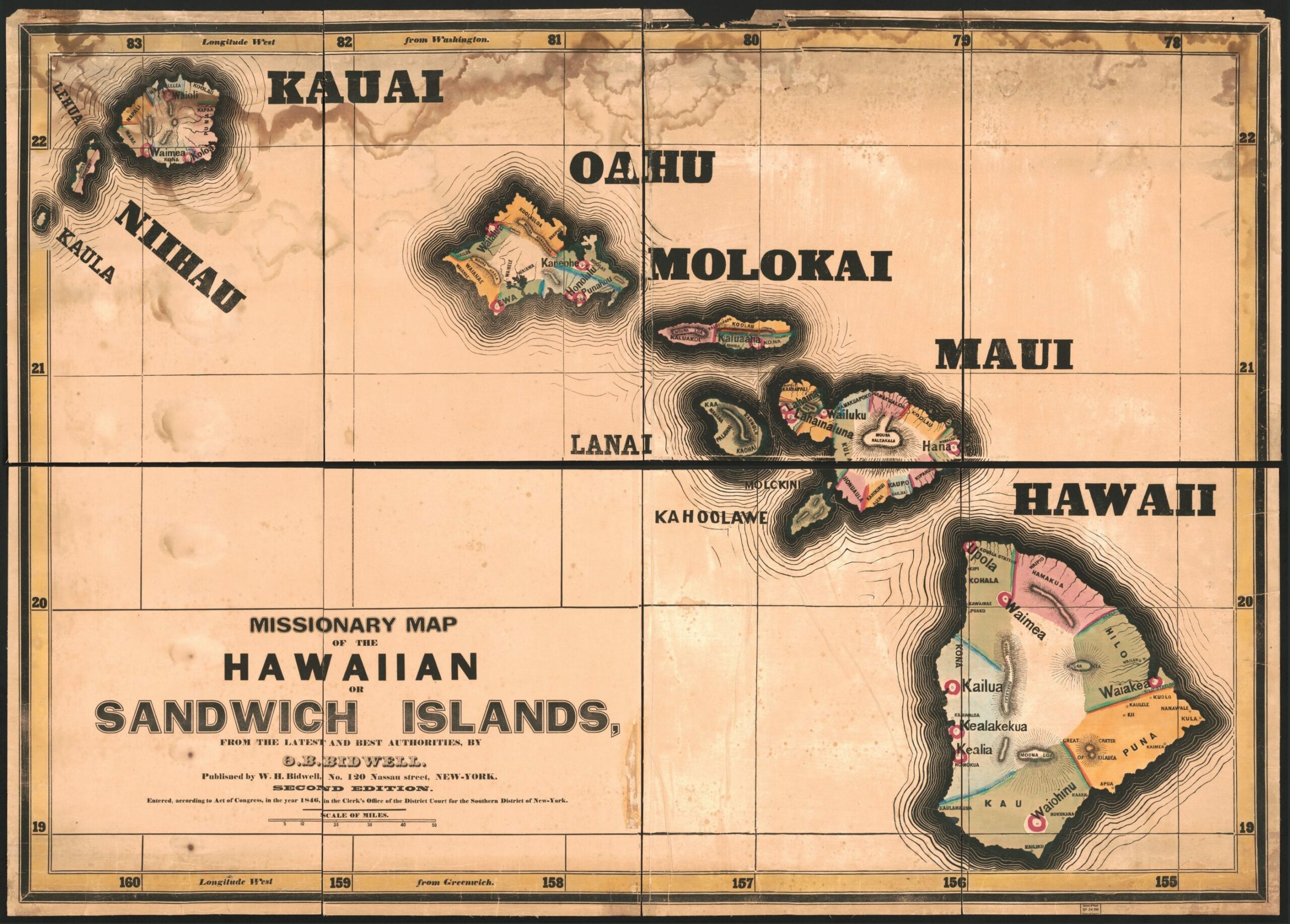
On January 17, 1893, a group of thirteen powerful businessmen and politicians, mostly American residents of Hawaii, calling themselves the Committee of Safety, orchestrated a coup d’état. Fearing the Queen’s constitutional reforms would undermine their economic and political dominance, they moved swiftly. Crucially, they were supported by John L. Stevens, the U.S. Minister to Hawaii, who ordered the landing of U.S. Marines from the warship USS Boston in Honolulu.
Although the U.S. troops did not directly participate in the overthrow, their presence intimidated royalist forces and signaled U.S. support for the coup. Facing overwhelming force and wishing to avoid bloodshed, [Queen Liliʻuokalani](https://lifeoutofthebox.com/queen-liliuokalani] reluctantly yielded her authority under protest, appealing to the United States government for justice. Her poignant statement of surrender, “I yield my authority until such time as the Government of the United States shall, upon the facts being presented to it, undo the action of its representative and reinstate me in the authority which I claim as the constitutional sovereign of the Hawaiian Islands,” underscored the controversial and coercive nature of the overthrow.
The Establishment of the Republic
Following the overthrow, the Committee of Safety initially sought immediate annexation by the United States. However, President Grover Cleveland, a strong opponent of imperialism, launched an investigation into the coup. His findings, detailed in the Blount Report, concluded that the overthrow was an illegal act perpetrated by American citizens with the unauthorized assistance of U.S. military forces. President Cleveland condemned the actions and sought to restore Queen Liliʻuokalani to her throne, but the provisional government refused.
Blocked from immediate annexation, the provisional government, led by Sanford B. Dole, declared the Republic of Hawaii on July 4, 1894. Sanford B. Dole became its first and only president. The Republic of Hawaii was, in essence, an interim government established by American and European business interests, with its primary objective being eventual annexation by the United States. This period saw continued resistance from native Hawaiians, including an unsuccessful counter-revolution in 1895, which led to the imprisonment of the Queen at ʻIolani Palace.
The Final Act: Annexation by the United States
Despite President Cleveland’s opposition, the tides of American expansionism were strong. The geopolitical landscape of the late 19th century provided the perfect storm for the annexation of Hawaii.
Geopolitical Context and Manifest Destiny
The concept of Manifest Destiny, the belief in America’s divinely ordained right to expand its dominion across the continent and beyond, still held sway. Strategically, Hawaii’s location was invaluable. Naval strategists and proponents of a strong American presence in the Pacific viewed the islands, particularly Pearl Harbor, as an essential coaling station and naval base for projected trade routes and military projection. The rising imperial powers of Europe and Japan also sparked American concerns that if the U.S. didn’t claim Hawaii, another power might.
The catalyst that ultimately pushed the annexation through was the Spanish-American War in 1898. The war highlighted the strategic importance of Hawaii as a mid-Pacific refueling and staging post for U.S. naval operations against Spain in the Philippines. With a strong Republican majority in Congress and a pro-annexationist president, William McKinley, the political obstacles that President Cleveland had maintained dissolved.
The Newlands Resolution and Official Transfer
Unable to secure the two-thirds Senate majority required for a treaty of annexation, proponents pursued a different legislative path: a joint resolution. On July 6, 1898, Congress passed the Newlands Resolution, which formally annexed Hawaii to the United States. President McKinley signed it into law the following day.
The official transfer of sovereignty took place on August 12, 1898, in a ceremony at ʻIolani Palace in Honolulu. The Hawaiian flag was lowered, and the American flag was raised. This act effectively ended the independent Hawaiian Kingdom and made Hawaii a U.S. territory. Many native Hawaiians deeply mourned this day, considering it an illegal seizure of their nation. While the formal acquisition date is clear, the moral and ethical implications of how the United States “got” Hawaii remain a subject of debate and regret, particularly among the indigenous population.
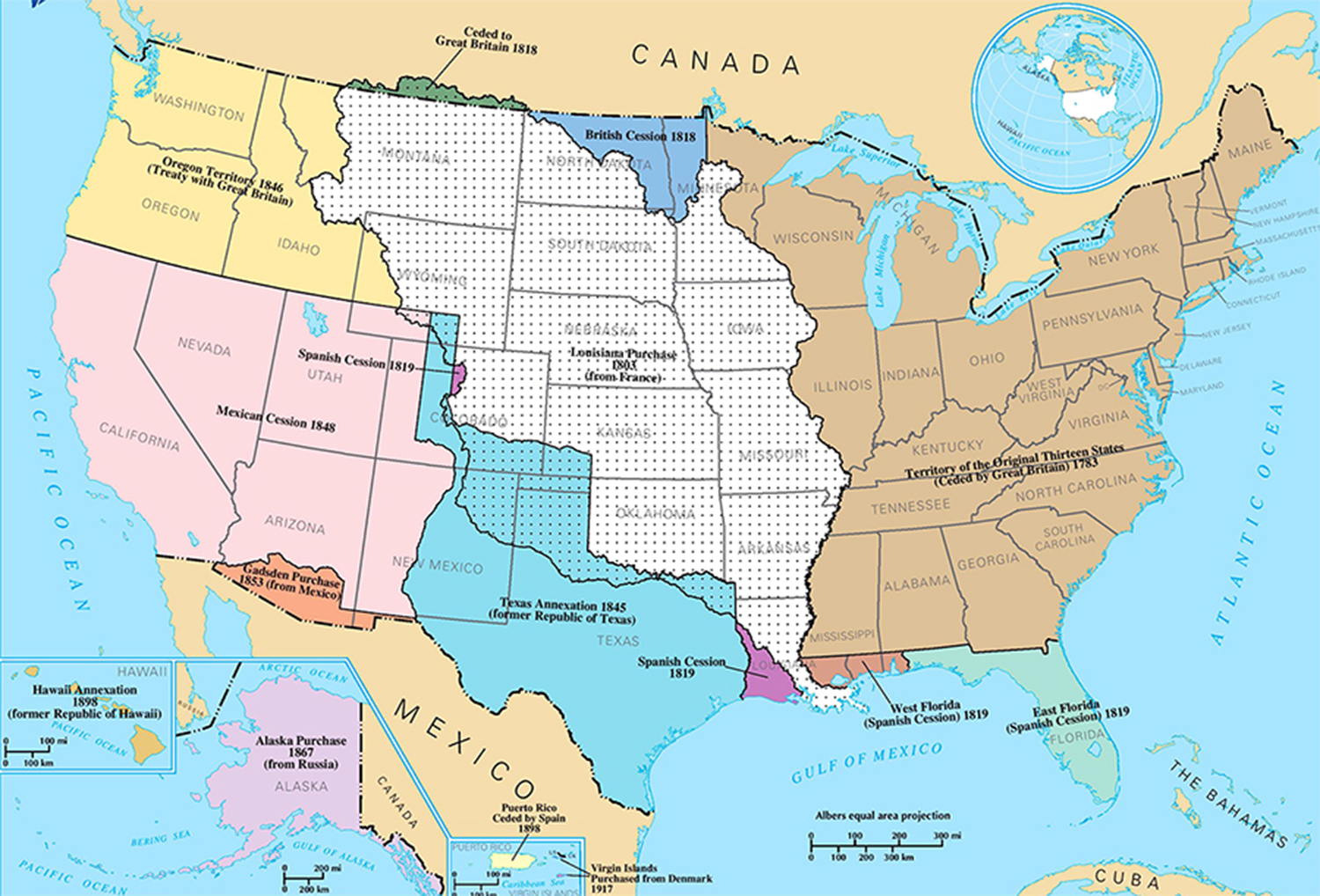
Hawaii remained a U.S. territory for over six decades, playing a crucial role in World War II as the site of the attack on Pearl Harbor on Oahu. Finally, after a long process of political lobbying and national referendums, Hawaii achieved statehood on August 21, 1959, officially becoming the 50th state of the United States.
Hawaii Today: A Legacy of Culture and Tourism
The complex history of Hawaii’s journey to becoming part of the United States is integral to understanding its unique identity today. It is a place where indigenous culture, American influence, and diverse immigrant traditions have fused to create a vibrant, unparalleled lifestyle. For travelers, this rich historical backdrop enhances every aspect of a visit, from exploring ancient Hawaiian heiau (temples) to relaxing on world-famous beaches.
Today, Hawaii stands as a premier global destination, attracting millions with its breathtaking natural beauty, from the volcanic landscapes of the Big Island and Maui to the lush cliffs of Kauai and the iconic shores of Oahu. The tourism industry is the lifeblood of the islands, offering a spectrum of experiences for every type of traveler.
Embracing the Past, Shaping the Future
Visitors seeking to delve into the islands’ history can explore landmarks like the solemn grounds of Pearl Harbor, a poignant reminder of modern conflict, or the majestic ʻIolani Palace, the only official residence of a reigning monarch in the United States, which offers a tangible connection to the Hawaiian Kingdom. Cultural sites like the Polynesian Cultural Center on Oahu allow for immersive experiences into the traditions of the Polynesian peoples, celebrating the heritage that predates European contact.
For luxury travelers, Hawaii offers world-class resorts like the Moana Surfrider, A Westin Resort & Spa in Waikiki or the Four Seasons Resort Maui at Wailea, providing opulent accommodations, exquisite dining, and unparalleled service. Budget-conscious adventurers can find charming apartments or boutique hotels that offer authentic local experiences, from exploring hidden waterfalls to hiking up the iconic Diamond Head crater.
Families can enjoy myriad activities, from surfing lessons on gentle waves to exploring the fascinating geological wonders of Volcanoes National Park. Food tours offer a taste of Hawaiian fusion cuisine, a delicious blend of indigenous flavors, Asian influences, and Western ingredients, reflecting the islands’ diverse population. Whether planning a long-term stay to soak in the local culture or a quick getaway to famous attractions, Hawaii provides a unique blend of relaxation, adventure, and cultural immersion.
The story of how the United States came to possess Hawaii is a testament to the enduring power of geopolitical forces and economic ambitions, but it is also a story of resilience. The native Hawaiian people continue to celebrate and revitalize their culture, language, and traditions, ensuring that the true spirit of aloha thrives, welcoming all who seek to understand and appreciate the profound beauty and complex history of these extraordinary islands. As you plan your next trip, remember the journey that shaped this paradise, enriching your experience with a deeper appreciation for its past and its vibrant present.
LifeOutOfTheBox is a participant in the Amazon Services LLC Associates Program, an affiliate advertising program designed to provide a means for sites to earn advertising fees by advertising and linking to Amazon.com. Amazon, the Amazon logo, AmazonSupply, and the AmazonSupply logo are trademarks of Amazon.com, Inc. or its affiliates. As an Amazon Associate we earn affiliate commissions from qualifying purchases.