
The question of whether hotels have a 13th floor is one that often sparks curiosity, a subtle nod to the deep-seated superstitions that continue to influence various aspects of our modern lives, even in the sophisticated world of travel and hospitality. For many, the number 13 evokes a sense of unease, a vestige of ancient fears and cultural narratives. In the realm of global accommodation, this apprehension translates into a tangible reality: a significant number of hotels around the world intentionally omit the 13th floor from their numbering schemes. This practice isn’t merely a quirky tradition; it’s a strategic decision rooted in guest psychology, cultural sensitivity, and sometimes, a nod to architectural design.
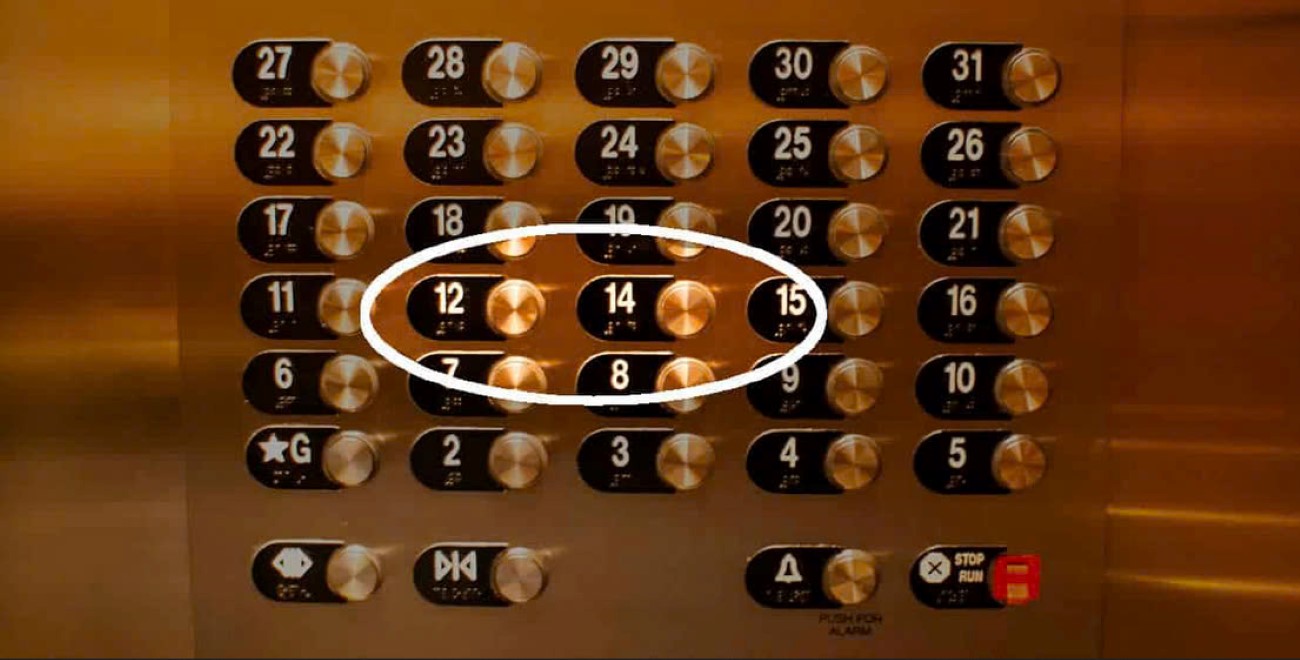
From the grandest luxury resorts to the most budget-friendly hotels, the absence of a 13th floor is a widespread phenomenon. Instead of directly labeling the floor after 12 as 13, establishments often jump straight to 14, or in some cases, use alternative designations like “M” for mezzanine, “R” for rooftop, or “P” for penthouse, depending on the building’s layout and the specific hotel amenities offered on that level. This widespread omission highlights a fascinating intersection of belief, business acumen, and the intricate art of catering to diverse international travelers.
The Curious Case of Triskaidekaphobia in Hospitality
The driving force behind the disappearing 13th floor is a phenomenon known as triskaidekaphobia – the fear of the number 13. While it might seem irrational in an age dominated by data and logic, this phobia has deep historical and cultural roots that continue to resonate, particularly in industries where customer comfort and perception are paramount. The hospitality sector, inherently focused on providing a welcoming and stress-free environment, has long recognized the potential negative impact of ignoring such widespread beliefs.
Origins of a Deep-Seated Superstition
The fear of 13 is not a modern invention; its origins can be traced back thousands of years. In Norse mythology, the trickster god Loki famously crashed a dinner party of 12 gods, bringing the total to 13 and leading to the death of Balder, the god of light and purity. Christian tradition also contributes significantly to the superstition, with the Last Supper having 13 attendees, one of whom was Judas Iscariot, the betrayer of Jesus. Furthermore, Friday the 13th combines two ominous elements: the day of Jesus’ crucifixion (Friday) and the unlucky number.
These ancient narratives, passed down through generations, have ingrained a subconscious apprehension toward the number 13 in many Western cultures and beyond. While not universally feared across all civilizations – indeed, some cultures like Italy consider 13 a lucky number, and in parts of Asia, the number 4 is viewed with similar trepidation (tetraphobia) – its prevalence in key travel markets like the United States, Canada, and many European countries makes it a significant consideration for global hotel chains.
The Business Rationale: Prioritizing Guest Comfort
For hotels, the decision to skip the 13th floor is primarily a business one, directly tied to enhancing the guest experience and maximizing occupancy rates. Imagine a traveler checking into a hotel in New York City who harbors a mild, or even intense, fear of the number 13. Being assigned a room on this floor could instantly create anxiety, dampen their enthusiasm, and potentially lead to complaints or even a request to change rooms. Such an experience goes against the fundamental goal of hospitality: to provide comfort, relaxation, and positive memories.
Hotels are in the business of selling experiences, and ensuring every aspect of a guest’s stay contributes positively to that experience is crucial. A guest who feels uncomfortable or superstitious about their assigned floor is less likely to enjoy their stay, less likely to leave a positive hotel review, and less likely to return. In a competitive market where online accommodation reviews significantly influence booking decisions, avoiding any potential source of dissatisfaction is a smart strategy.
Moreover, the perception of a hotel can be subtly affected by its adherence to or disregard for such cultural sensitivities. A hotel that acknowledges and accommodates these common fears is often perceived as thoughtful and guest-centric. This subtle consideration contributes to a positive brand image, which is invaluable for attracting both leisure and business travelers. For a major chain like Hilton, Marriott, or Hyatt, maintaining a consistent, positive image across all its properties is paramount.
How Hotels Navigate the “Unlucky” Number
The actual implementation of skipping the 13th floor varies, but the underlying principle remains the same: to make the number disappear from public view and elevator panels. This isn’t just a simple renumbering; it’s often a strategic part of the hotel architecture and design process, considered long before the first guest checks in.
Renumbering and Rebranding Strategies
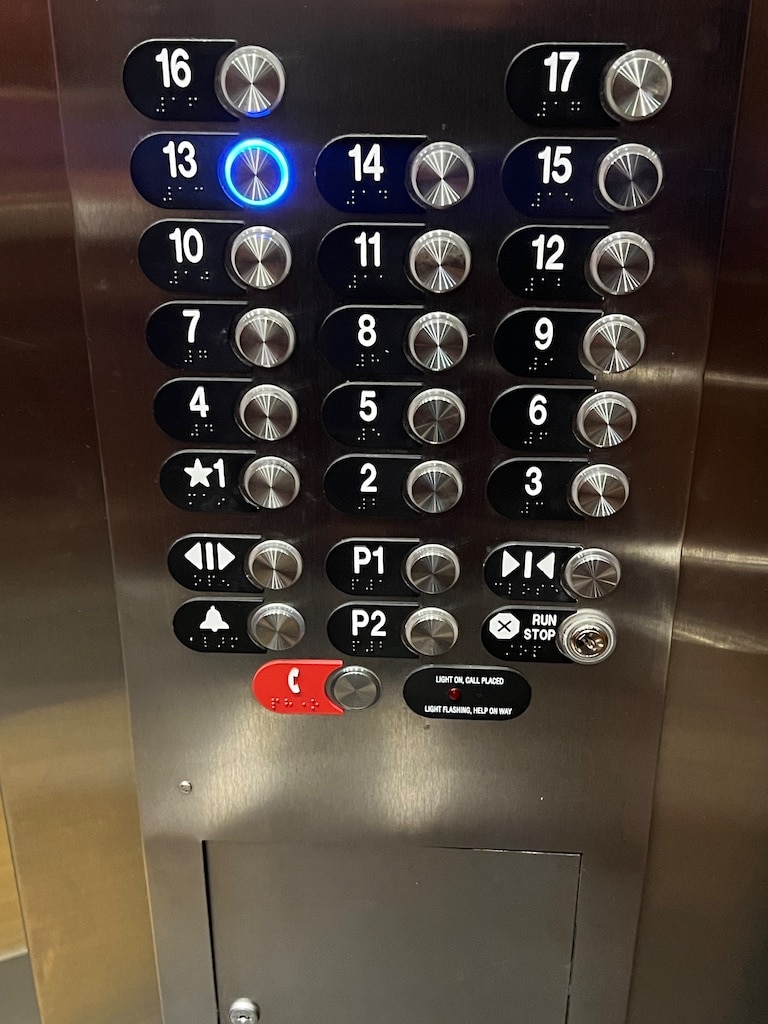
The most common method is simply to skip the number. After the 12th floor, the next floor is designated as 14. This is a straightforward solution that largely goes unnoticed by guests unless they specifically look for the number 13. Elevator buttons will show 12, then directly 14, effectively erasing the unlucky number from the physical representation of the building’s levels.
In some high-rise buildings, particularly those with a diverse range of functions, hotels might employ more creative designations. A floor that might otherwise have been the 13th could be rebranded as a technical floor, housing mechanical equipment or administrative offices, thus never needing a guest-facing number. Alternatively, it might be designated as a “P” for penthouse suites, an “M” for a grand mezzanine level, or a “G” for a garden or gallery floor, depending on the building’s specific features and how it caters to various types of hotel guests. The Grand Hyatt Hotel might use “R” for a rooftop bar or restaurant, which serves as a landmark attraction in itself.
In many iconic structures like the Empire State Building in New York City, which houses offices and observations decks, the 13th floor is typically skipped in numbering for the same reasons. While not exclusively a hotel, its approach showcases how prominent buildings consider public perception. Similarly, the Burj Al Arab in Dubai, known for its opulent suites and architectural marvel, likely pays meticulous attention to such details to ensure its reputation as a seven-star experience is unblemished.
Regional Variations and Cultural Nuances
It’s important to remember that the fear of 13 is not universal. In some countries, like France or Germany, while the superstition exists, it might not be as pronounced as in the United States. Consequently, a hotel in Paris might be more likely to have a 13th floor than one in Las Vegas, where superstition is often intertwined with the gambling culture.
Conversely, in many Asian cultures, the number 4 is considered unlucky because its pronunciation in languages like Mandarin and Japanese is similar to the word for “death.” Therefore, hotels in countries like China, South Korea, or Vietnam are more likely to omit the 4th floor, and often any floor ending in 4 (e.g., 14, 24, etc.), while having a perfectly visible 13th floor. This highlights the crucial role of local culture and demographics in shaping accommodation practices and tourism tips. International hotel chains operating globally must adapt their numbering conventions to the prevailing cultural norms of each destination to ensure guest comfort and market acceptance.
The Modern Traveler and the Missing Floor
For the contemporary traveler, the absence of a 13th floor has become an almost expected quirk of travel, a subtle reminder of the blend of tradition and modernity that characterizes global tourism. While some might scoff at the superstition, its widespread nature means it’s often a detail considered during the hotel booking process, even if only subconsciously.
Impact on Booking and Accommodation Choices
Does the absence or presence of a 13th floor directly impact booking decisions? For the vast majority of travelers, probably not in a conscious, direct way. Most people aren’t meticulously checking floor numbers before they book a hotel. However, the collective avoidance of the number 13 by the industry contributes to an overall sense of reassurance. Guests are implicitly told that the hotel prioritizes their comfort, even if it means accommodating a seemingly irrational fear.
For those who are genuinely triskaidekaphobic, knowing that hotels generally skip the 13th floor can alleviate anxiety, making their travel experience smoother. This becomes particularly relevant for longer long-term stays or for guests planning important events like weddings or business conferences, where peace of mind is essential. Hotels that consider these details are often perceived as more attentive and customer-focused, which can be a differentiating factor in a crowded market.
From a travel guide perspective, this is often a fun fact to share, a piece of local culture embedded within the hospitality industry. It’s a testament to how even seemingly minor details can contribute to the overall travel experience and shape perceptions of a destination.
Luxury vs. Budget: Different Approaches
While the practice of omitting the 13th floor is common across various hotel categories, there can be subtle differences in how luxury hotels versus budget accommodations approach it.
-
Luxury and High-End Resorts: These establishments, which often emphasize bespoke service and an unparalleled guest experience, are highly attuned to any factor that could detract from guest satisfaction. For a Four Seasons property or a Ritz-Carlton, ensuring every aspect of the guest’s stay is perfect is paramount. Omitting the 13th floor aligns with their philosophy of anticipating and addressing every guest need, even unspoken ones. They might also use more elaborate renumbering schemes or re-designate the floor for exclusive services or resort amenities, blending practicality with an air of exclusivity. For example, a landmark hotel like The Plaza Hotel in New York would meticulously plan its floor designations.
-
Budget and Mid-Range Hotels: While less focused on extravagant personalized services, these hotels still operate within the same competitive market and understand the importance of guest satisfaction. The cost of skipping a floor number is negligible, while the potential benefit of avoiding guest complaints or negative sentiment is significant. For chains like Holiday Inn or Best Western, consistency in guest experience across multiple locations is key, and adopting a universal standard that avoids the 13th floor is a simple way to achieve this.
In essence, whether it’s a boutique hotel in London or a sprawling resort in Hawaii, the decision to skip the 13th floor is a low-cost, high-return strategy that universally enhances guest perception and minimizes potential issues.

Beyond Superstition: Architectural and Design Considerations
While superstition is the primary driver, the decision to omit the 13th floor can sometimes have secondary architectural and design implications, or at least coincide with them. Modern high-rise buildings, including hotels, often incorporate technical floors for mechanical systems, air conditioning units, or utility services. These floors do not typically house guest rooms or public spaces and are therefore not publicly numbered. It’s not uncommon for a “missing” floor number to correspond to one of these service levels.
This integration allows architects and developers to seamlessly incorporate the superstition into the building’s practical design. For example, what would naturally be the 13th structural floor might be designed from the outset to house HVAC systems, thereby giving it a non-numerical designation and allowing the guest-facing numbering to jump from 12 to 14 without any structural discontinuity. This clever blending of superstition and practicality highlights the ingenuity in modern architecture and building design within the hospitality industry.
In summary, the phenomenon of the missing 13th floor in hotels is a compelling testament to the enduring power of cultural beliefs and the pragmatic approach of the hospitality industry. It underscores how hotels, from grand establishments like the Bellagio in Las Vegas to smaller apartment hotels, go to great lengths to ensure their guests feel safe, comfortable, and welcomed. So, the next time you step into a hotel elevator, take a moment to observe the floor numbers. You’ll likely find that the number 13, for all its storied history, has quietly vanished, replaced by a jump to 14, a silent acknowledgment of a widespread cultural quirk that continues to shape our travel experiences. It’s a fascinating element of tourism that blends history, psychology, and astute business strategy, making your stay just a little bit more comfortable, one floor at a time.
LifeOutOfTheBox is a participant in the Amazon Services LLC Associates Program, an affiliate advertising program designed to provide a means for sites to earn advertising fees by advertising and linking to Amazon.com. Amazon, the Amazon logo, AmazonSupply, and the AmazonSupply logo are trademarks of Amazon.com, Inc. or its affiliates. As an Amazon Associate we earn affiliate commissions from qualifying purchases.