
The iconic green sign of Holiday Inn is a familiar sight to millions of travelers across the globe, synonymous with comfortable and reliable accommodation for decades. From bustling city centers to serene resort towns, Holiday Inn Hotels have played a pivotal role in shaping the modern travel landscape. Yet, despite their ubiquitous presence, many wonder about the corporate entity behind this expansive network. The simple answer is that Holiday Inn Hotels are owned by InterContinental Hotels Group (IHG), one of the world’s leading hospitality companies. However, delving deeper into this ownership reveals a complex and fascinating story of innovation, strategic growth, and a business model that has allowed the brand to flourish across diverse destinations and lifestyle preferences.
The narrative of Holiday Inn is not just about a hotel chain; it’s a testament to the evolution of tourism itself, particularly in the mid-20th century, and its continued adaptation to contemporary travel trends. Understanding who truly “owns” Holiday Inn requires exploring its foundational history, the global conglomerate it’s part of today, the diverse range of sub-brands it encompasses, and the unique franchise model that powers much of its operations. This exploration offers valuable insights for anyone interested in the hospitality industry, from discerning travelers looking for their next stay to industry professionals analyzing market dynamics.
The Global Hospitality Giant Behind Holiday Inn
To understand the ownership of Holiday Inn, one must first appreciate its origins and then trace its journey to becoming a flagship brand within a multinational hospitality powerhouse. The story begins with a visionary entrepreneur and culminates in a global entity headquartered in the United Kingdom.
A Legacy of Innovation: The Birth of a Brand
The concept of Holiday Inn was born out of a personal frustration experienced by its founder, Kemmons Wilson. In 1951, after a disappointing family road trip during which he encountered inconsistent quality and inconvenient accommodation options, Wilson, a successful home builder from Memphis, Tennessee, envisioned a better solution. His goal was to create a chain of hotels that offered dependable quality, standardized amenities, and family-friendly services at a reasonable price. This vision directly responded to the burgeoning post-World War II era of road travel in the United States, fueled by the expansion of the Interstate Highway System.
The very first Holiday Inn opened in Memphis in August 1952. Wilson’s innovative approach included features that are now commonplace but were revolutionary at the time: air-conditioned rooms, free parking, swimming pools, on-site restaurants, and free ice. He famously promised “no surprises” – a level of consistency that quickly resonated with travelers tired of the unpredictable nature of independent motels. The name itself, “Holiday Inn,” was reputedly coined by his architect, Eddie Bluestein, inspired by the Bing Crosby movie “Holiday Inn.” Within a few years, the concept exploded, rapidly expanding across the United States through a shrewd franchising model. By the early 1960s, Holiday Inn was the largest hotel chain in the United States, fundamentally altering the landscape of travel and tourism for the middle class.
InterContinental Hotels Group (IHG): The Current Steward
While Holiday Inn was once an independent American company, its ownership structure evolved significantly over the decades. In 1988, Holiday Corporation, the parent company of Holiday Inn, was acquired by Bass PLC, a United Kingdom-based brewing and hospitality company. Bass PLC then strategically divested its brewing interests to focus entirely on hotels, eventually rebranding as InterContinental Hotels Group (IHG) in 2003.
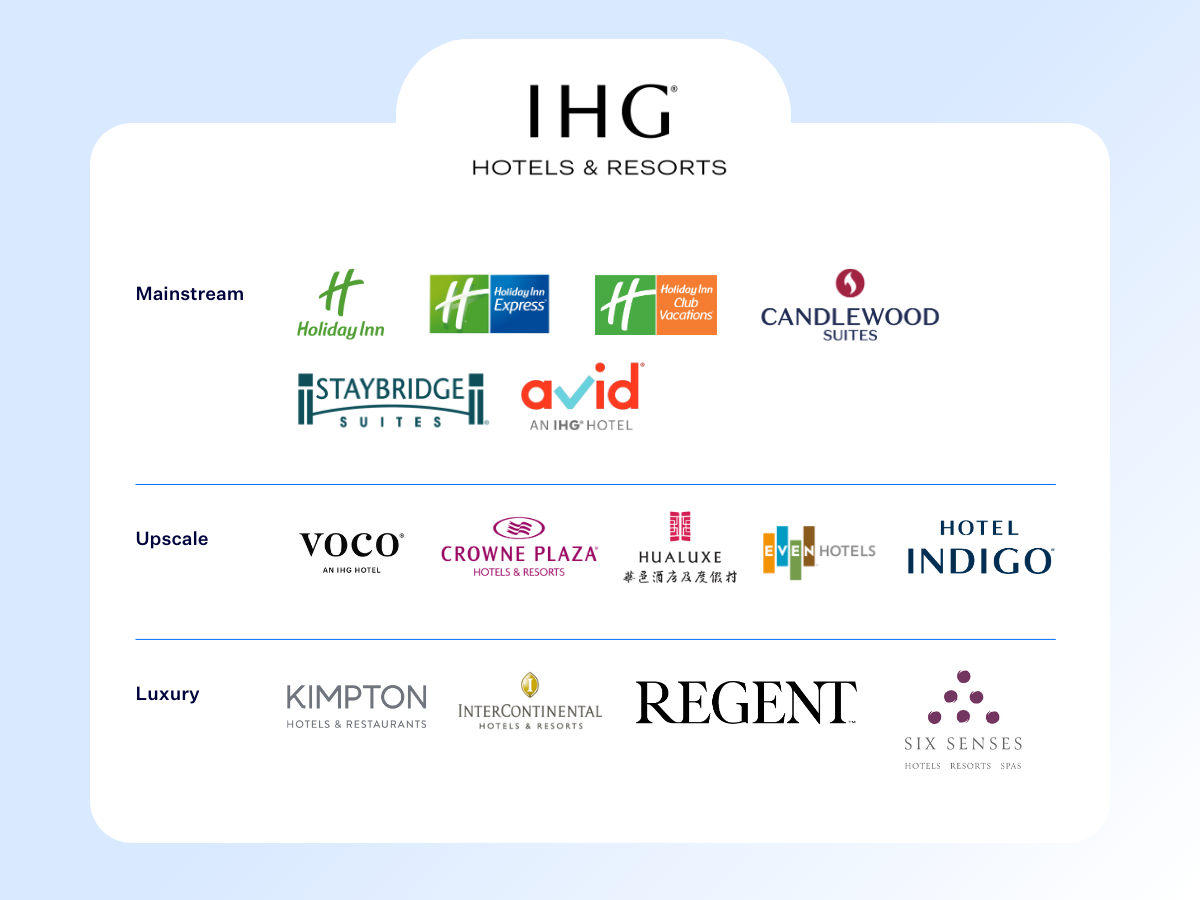
Today, IHG is the global entity that owns, manages, and franchises a diverse portfolio of well-known hotel brands, with Holiday Inn being one of its foundational pillars. Headquartered in Denham, Buckinghamshire, England, IHG operates across nearly 100 countries worldwide, with a presence in Europe, Asia, Africa, the Americas, the Middle East, and Oceania. Its portfolio extends far beyond Holiday Inn to include luxury brands like InterContinental Hotels & Resorts and Regent Hotels & Resorts, upscale options such as Crowne Plaza Hotels & Resorts and Hotel Indigo, and extended-stay properties like Staybridge Suites and Candlewood Suites. This extensive brand family underscores IHG’s strategy to cater to virtually every segment of the travel market, from budget travel to luxury travel, ensuring a robust global footprint in the ever-competitive hotels sector.
The Diverse Portfolio Under the Holiday Inn Umbrella
Within the IHG family, Holiday Inn itself is not a monolithic brand but rather a collection of distinct sub-brands, each tailored to specific traveler needs and lifestyle preferences. This segmentation allows IHG to maximize its market penetration and offer suitable accommodation options across a wide range of destinations.
Core Brands: Holiday Inn and Holiday Inn Express
The original Holiday Inn brand continues to thrive as a full-service, mid-range hotel offering. These properties typically feature restaurants, bars, meeting facilities, swimming pools, and fitness centers. They are designed for both family trips and business stays, providing a comfortable and consistent experience that echoes Kemmons Wilson’s initial vision. Often located near major highways, airports, and popular attractions, Holiday Inn hotels remain a popular choice for those seeking reliability and a comprehensive set of amenities without the premium price tag of luxury travel.
Holiday Inn Express, launched in 1990, represents a significant evolution of the core brand, focusing on smart, simple, and value-oriented accommodation. These hotels are designed for travelers who need a clean, comfortable, and efficient stay, often prioritizing convenience and a good night’s sleep over extensive full-service amenities. Holiday Inn Express properties are characterized by their complimentary breakfast (the “Express Start” breakfast), free Wi-Fi, and streamlined services. They cater predominantly to business stays, short travel layovers, and budget travel segments, proving immensely popular due to their consistent quality and focus on essential needs.
Specialized Experiences: Holiday Inn Resort and Holiday Inn Club Vacations
Beyond the standard hotel formats, IHG has expanded the Holiday Inn brand to cater to specific leisure and long-term stay segments.
Holiday Inn Resort properties are purpose-built for leisure travel and family trips, typically located in desirable vacation destinations such as beachfront locales, mountain regions, or theme park proximity. These resorts offer a much broader array of amenities compared to a standard Holiday Inn, often including multiple dining options, extensive recreational facilities (large pools, kids’ clubs, watersports), entertainment programs, and direct access to attractions or nature. They provide a comprehensive vacation experience, encouraging guests to enjoy all that the resort and its surroundings have to offer.

Holiday Inn Club Vacations represents IHG’s venture into the timeshare and vacation ownership market. These properties offer spacious villas or suites with home-like amenities such as fully equipped kitchens, living areas, and multiple bedrooms, ideal for long-term stay or larger family trips. Members of Holiday Inn Club Vacations purchase ownership interests, gaining access to a network of resorts and vacation homes. This model caters to a specific lifestyle choice, offering consistency and quality in prime vacation locations, often emphasizing a sense of community and exclusive member experiences. It’s a testament to how the brand has diversified from simple overnight accommodation to immersive vacation planning.
Understanding IHG’s Business Model: Franchising and Management
While IHG “owns” the Holiday Inn brand, it’s crucial to understand that this often means owning the intellectual property, brand standards, and global reservation systems, rather than every physical hotel building. The vast majority of Holiday Inn properties operate under a franchise model or management contract.
The Power of the Franchise Model
The franchise model is the cornerstone of IHG’s expansion and profitability, particularly for brands like Holiday Inn and Holiday Inn Express. Under this model, independent hotel owners or investment groups pay IHG a fee to use the Holiday Inn brand name, its extensive marketing and reservation systems, and its operational guides and training. These franchisees are responsible for building, operating, and maintaining the hotel according to IHG’s strict brand standards.
This arrangement provides several benefits:
- For IHG: It allows for rapid expansion without the need for significant capital investment in real estate. IHG generates revenue through franchise fees, royalties on room revenue, and fees for marketing and reservation services. This asset-light strategy makes the company more agile and resilient to market fluctuations.
- For Franchisees: They gain immediate brand recognition, access to a global customer base through IHG’s loyalty program (IHG Rewards Club) and central booking channels, and proven operational blueprints. This significantly reduces the risk associated with opening an independent hotel, providing a competitive edge in the crowded hotels market.
This symbiotic relationship is a key reason why Holiday Inn has such a pervasive global presence. While the green sign signifies the brand, the actual day-to-day operation and local ownership often rest with individual entrepreneurs or regional hospitality groups, all operating under the watchful eye and stringent guidelines of IHG.
Corporate Management and Strategic Growth
While franchising is dominant, IHG also directly manages a number of its properties, particularly larger or more strategically important hotels and resorts. In these cases, IHG takes on the full operational responsibility, managing staff, marketing, and finances on behalf of the property owner (who may still be an independent investor or a real estate investment trust). This direct management allows IHG to have closer control over brand consistency, experiment with new concepts, and showcase best practices.
IHG’s strategic growth involves constantly evaluating market trends, identifying emerging destinations, and developing new brands or extending existing ones to meet evolving traveler demands. The company invests heavily in technology, from online booking platforms to in-room innovations, to enhance the guest experience and operational efficiency. The global scope of IHG means that its brands, including Holiday Inn, contribute significantly to local economies through tourism, job creation, and supporting local businesses, making them important players in global travel infrastructure.
The Holiday Inn Impact on Travel and Lifestyle
The legacy of Holiday Inn extends far beyond its corporate ownership. It has profoundly influenced how people travel and the expectations they have for accommodation.
Shaping the Modern Travel Experience
From its inception, Holiday Inn democratized travel, making comfortable and predictable stays accessible to a broader demographic. Before Holiday Inn, long-distance road trips often involved a gamble on unknown motels. Wilson’s promise of “no surprises” created a new standard for consistency and reliability that travelers came to expect. This consistency is particularly valued by family trips and business stays, where predictability regarding amenities, cleanliness, and service is paramount.
The brand’s strategic locations, often near major thoroughfares or popular landmarks and attractions, have made it a convenient hub for exploring new destinations. Whether it’s a stop on a cross-country journey, a base for a theme park adventure, or a central point for urban exploration, Holiday Inn has facilitated countless travel experiences. Its commitment to value, combined with a steady evolution of its offerings (such as the introduction of Holiday Inn Express for efficiency-focused travelers), has allowed it to remain relevant in a constantly changing tourism landscape. The brand has been instrumental in normalizing features like pools and air conditioning in mid-range hotels, elevating the overall standard of accommodation for millions.

A Legacy of Innovation and Adaptation
Under IHG’s stewardship, Holiday Inn continues to adapt to contemporary travel lifestyle trends. This includes a focus on sustainable practices, integrating smart technology for seamless booking and in-room experiences, and refining designs to meet modern aesthetic and functional demands. From early innovations like guaranteeing reservations to recent efforts in contactless check-ins, Holiday Inn has consistently evolved to meet the needs of the modern traveler.
The brand also plays a significant role in local culture and community engagement. While globally standardized, many properties reflect elements of their location, often featuring local food options in their restaurants or providing tips for exploring nearby attractions and activities. This balance between global consistency and local relevance is a hallmark of successful international hotel brands.
In conclusion, while the famous green sign of Holiday Inn might evoke memories of classic American road trips, the ownership lies with the global hospitality giant, InterContinental Hotels Group (IHG). Through a clever combination of franchising, strategic management, and continuous brand development across its sub-segments like Holiday Inn Express, Holiday Inn Resort, and Holiday Inn Club Vacations, IHG ensures that Holiday Inn remains a relevant, accessible, and consistently reliable choice for millions of travelers worldwide, continuing its long-standing legacy in the global tourism industry.
LifeOutOfTheBox is a participant in the Amazon Services LLC Associates Program, an affiliate advertising program designed to provide a means for sites to earn advertising fees by advertising and linking to Amazon.com. Amazon, the Amazon logo, AmazonSupply, and the AmazonSupply logo are trademarks of Amazon.com, Inc. or its affiliates. As an Amazon Associate we earn affiliate commissions from qualifying purchases.