
New York City, a global icon of ambition and architectural prowess, immediately brings to mind an image of a towering, dense urban jungle. Its skyline, a symphony of steel and glass piercing the clouds, is instantly recognizable and endlessly captivating. From the moment you arrive, whether by air, land, or sea, the sheer scale of the city’s vertical landscape is breathtaking. But beyond the immediate awe, a practical question often emerges for curious travelers and urban enthusiasts alike: How many skyscrapers truly define this magnificent metropolis?
Answering this question isn’t as straightforward as a simple number. The definition of a “skyscraper” itself can be fluid, and the pace of development in New York means the skyline is constantly evolving. What is undeniably true, however, is that these colossal structures are more than just buildings; they are a testament to human ingenuity, symbols of economic power, and often, the very heart of the city’s cultural and commercial life. For anyone planning a visit, understanding the sheer volume and historical significance of New York’s skyscrapers offers a richer perspective on this unparalleled travel destination, informing everything from choosing the best accommodations with a view to mapping out an itinerary that captures the city’s most iconic landmarks.
This article delves into the fascinating world of New York’s vertical landscape, exploring not just the numbers but also the history, the architectural marvels, and the unparalleled experiences they offer to tourists and residents alike.
Defining the Skyscraper: A Vertical Standard in the Concrete Jungle
Before we attempt to count them, it’s essential to understand what qualifies a building as a skyscraper, especially in a city as vertically ambitious as New York. While there isn’t one universally agreed-upon definition, the most widely accepted standard comes from the Council on Tall Buildings and Urban Habitat (CTBUH). The CTBUH defines a “supertall” skyscraper as a building 300 meters (984 feet) or taller, and a “megatall” as 600 meters (1,968 feet) or taller. However, for a general understanding, a more common threshold for a “skyscraper” is often considered to be around 150 meters (492 feet) or 40 stories. In a city like New York, even buildings below this height can feel immense, but for the purpose of architectural distinction and global comparison, these metrics are key.
The sheer volume of buildings exceeding these heights in New York is staggering. Depending on the exact definition used, the number of skyscrapers (above 150 meters) in New York City consistently ranks among the top cities globally, typically placing it well over 300 structures, with dozens more either under construction or proposed. This makes it a city where the sky is not just a limit, but a canvas for continuous architectural innovation. This constant evolution means any definitive count is a snapshot in time, with new towers emerging and the skyline relentlessly marching upwards.
The Iconic New York Skyline: A Journey Through Time and Architecture
The story of New York’s skyscrapers is a vibrant narrative of innovation, ambition, and economic shifts, reflecting the city’s journey from a burgeoning port to a global powerhouse. Each era has left its indelible mark, creating a diverse architectural tapestry that makes the city’s skyline so uniquely captivating.
From Early Giants to Art Deco Masterpieces
The genesis of the skyscraper in New York can be traced back to the late 19th and early 20th centuries, driven by the scarcity of land on Manhattan Island and advancements in steel-frame construction and elevator technology. Early pioneers like the Flatiron Building (completed in 1902) and the Woolworth Building (1913) captured the public’s imagination. The Woolworth Building, dubbed the “Cathedral of Commerce,” was the world’s tallest building for 17 years and remains a stunning example of Gothic Revival architecture adapted for a commercial high-rise.
The Roaring Twenties and the Great Depression era saw an unprecedented skyscraper boom, giving birth to some of the city’s most beloved Art Deco masterpieces. This period was characterized by a fierce competition for the title of the world’s tallest building.
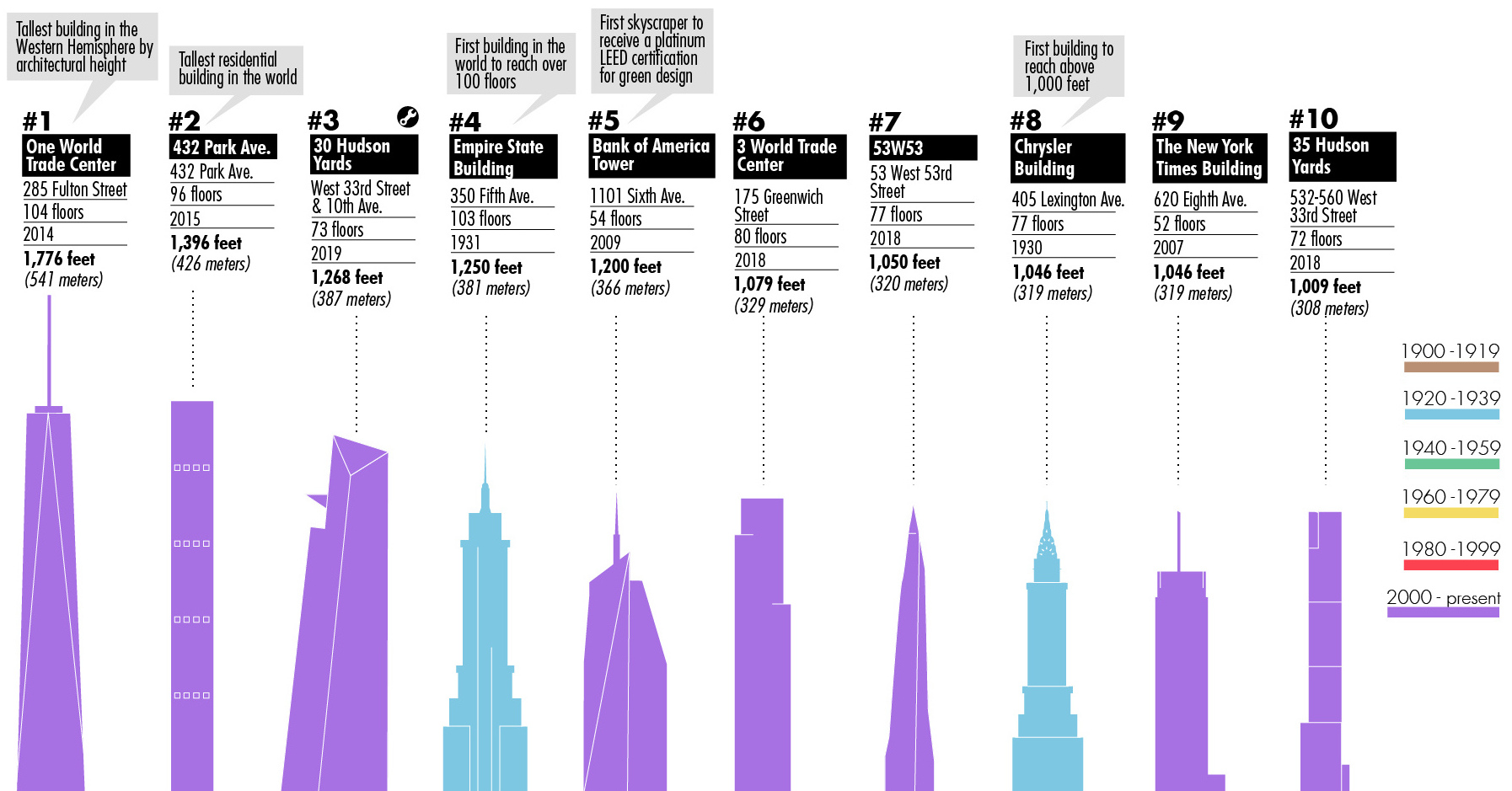
- The Chrysler Building: Completed in 1930, this gleaming stainless-steel crown jewel briefly held the title. Its distinctive terraced crown, adorned with eagle gargoyles, is an enduring symbol of Art Deco elegance.
- The Empire State Building: A true icon, the Empire State Building surpassed the Chrysler Building just a year later in 1931, claiming the tallest title for nearly 40 years. Its timeless design and legendary observation decks continue to draw millions, offering unparalleled panoramic views.
These buildings are not just architectural achievements; they are integral to New York’s identity, serving as enduring landmarks.
Modern Marvels and the Evolving Skyline
The mid-20th century brought the era of modernist skyscrapers, characterized by sleeker lines and glass facades, with landmark structures like the Seagram Building (1958) and the Lever House (1952) setting new corporate architecture standards.
The late 20th and early 21st centuries have witnessed another explosion of skyscraper construction, driven by technological advancements and global investment. This period has seen the rise of supertalls that not only push the boundaries of height but also integrate mixed-use functions and cutting-edge environmental features.
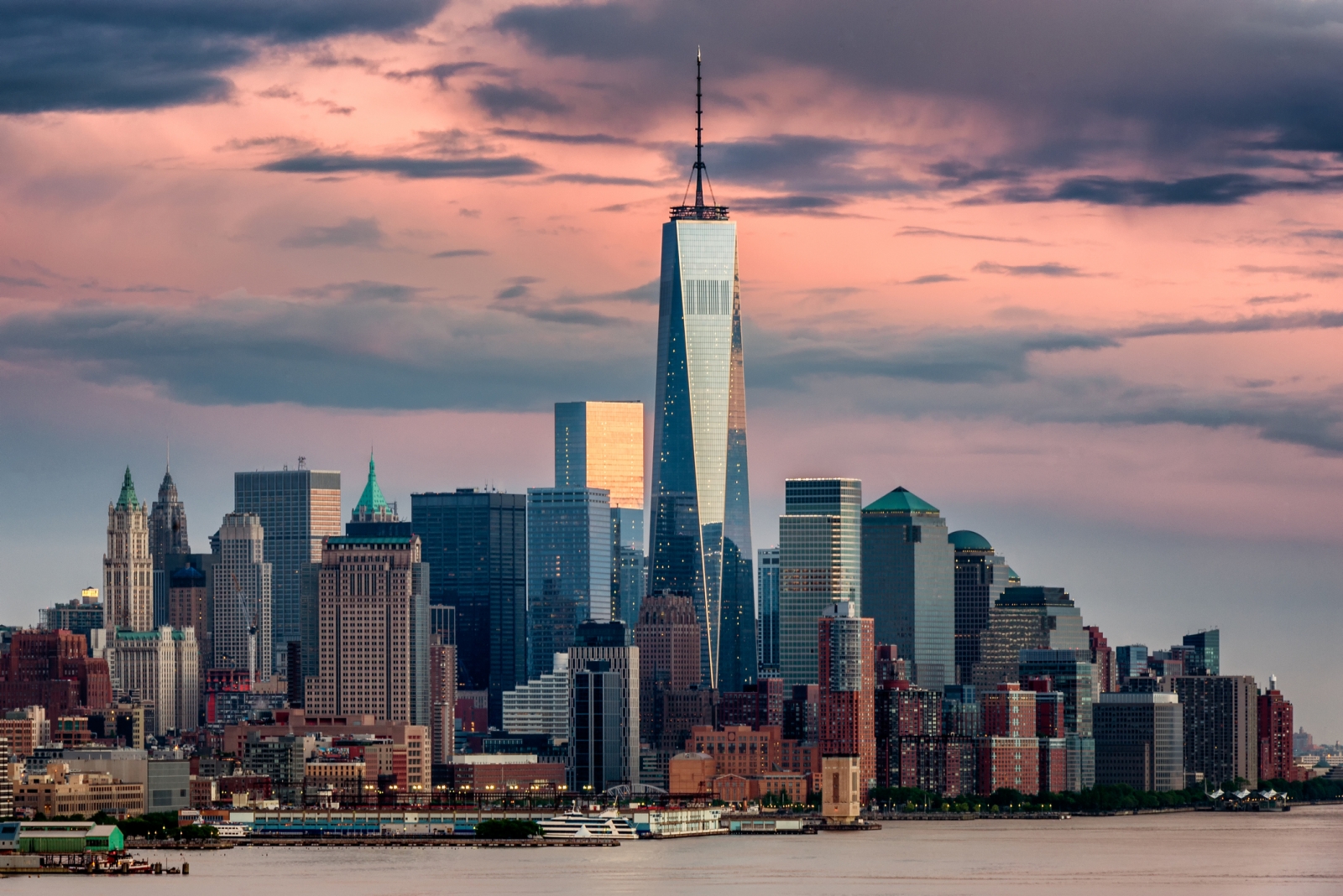
- One World Trade Center: Standing at a symbolic 1,776 feet (541 meters), One World Trade Center is the tallest building in the Western Hemisphere and a powerful symbol of resilience. Its sleek design makes it a prominent feature of the Lower Manhattan skyline, offering visitors the breathtaking One World Observatory experience.
- The Towers of Hudson Yards: This ambitious development on Manhattan’s West Side has introduced several new skyscrapers. Its crowning glory, the Edge Observation Deck, provides a thrilling outdoor experience, epitomizing New York’s drive for innovative urban experiences.
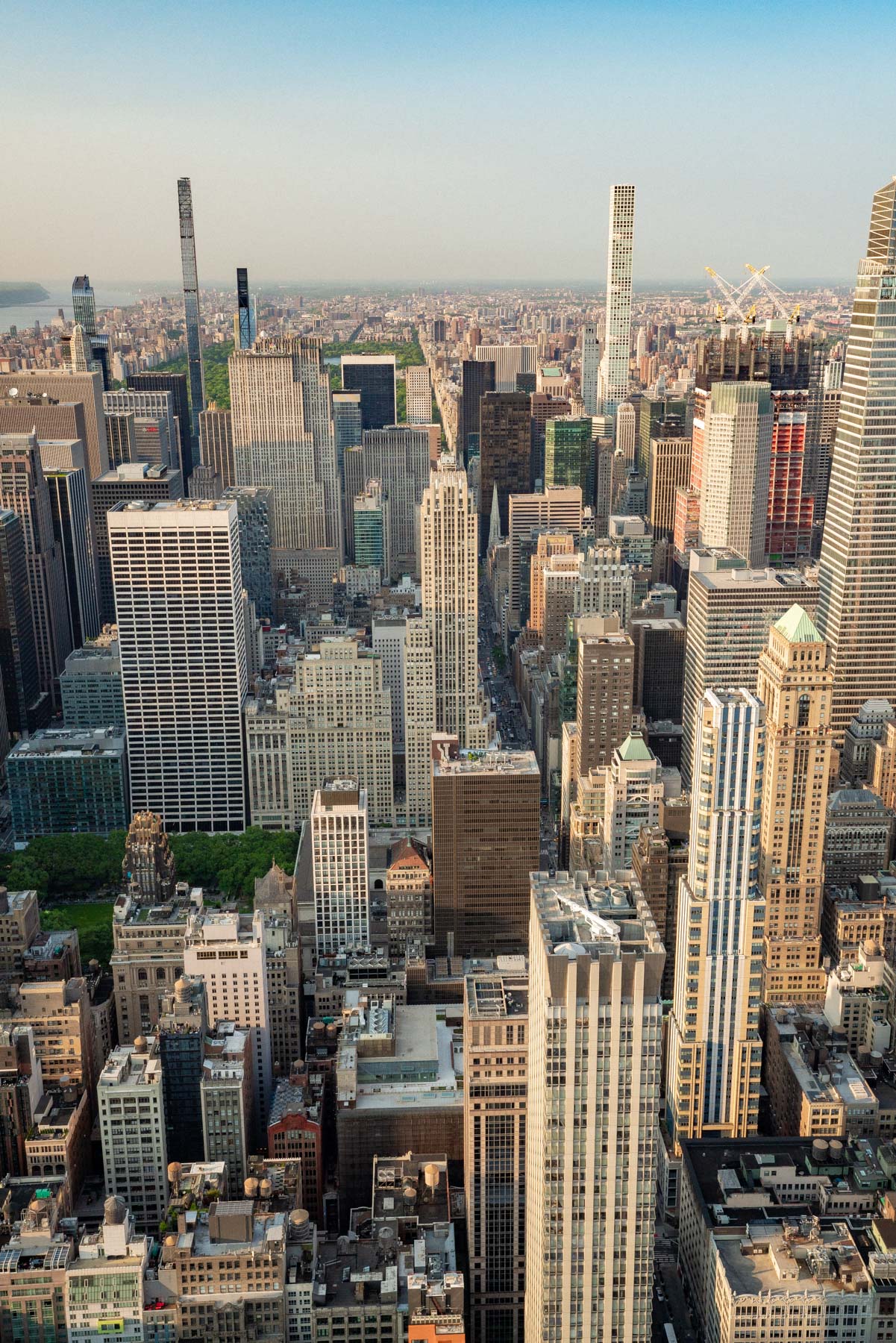
- “Billionaires’ Row”: Stretching along 57th Street in Midtown Manhattan, this cluster of ultra-luxury residential skyscrapers, such as Central Park Tower and Steinway Tower (111 West 57th Street), has reshaped the upper reaches of the skyline with dizzying heights and extravagant residences.
Experiencing the Heights: Must-Visit Skyscrapers for Travelers
For travelers, New York’s skyscrapers are more than just impressive structures; they are destinations in themselves, offering unique perspectives on the city’s vibrant life. Incorporating visits to these vertical landmarks is a fundamental part of any New York City itinerary.
Iconic Observation Decks and Panoramic Views
No trip to New York is complete without ascending one of its famous skyscrapers for a bird’s-eye view. Each observation deck offers a distinct vantage point and experience.
- The Empire State Building Observatory: A classic for a reason, its 86th and 102nd-floor observatories provide iconic 360-degree views, perfectly framing landmarks like Central Park, the Statue of Liberty, and the Brooklyn Bridge.
- Top of the Rock Observation Deck: Located atop 30 Rockefeller Plaza, Top of the Rock is revered for its unobstructed views of the Empire State Building and Central Park.
- One World Observatory: Situated at the apex of One World Trade Center, this observatory offers a modern, immersive experience from the 100th to 102nd floors, sweeping across the harbor and showcasing the Statue of Liberty.
- Edge at Hudson Yards: For an adrenaline rush, the Edge offers the highest outdoor sky deck in the Western Hemisphere. Extending 80 feet out from the 100th floor of 30 Hudson Yards, it features a thrilling glass floor section and angled glass walls.
Architectural Tours and Hidden Gems
Beyond the major observation decks, many skyscrapers offer architectural tours or are magnificent to admire from street level. The Chrysler Building’s lobby, for example, is a dazzling display of Art Deco design, often accessible. Exploring the grand halls of the Woolworth Building or appreciating the intricate details of the Flatiron Building provides a different kind of architectural immersion.
Skyline Stays: Accommodation and Lifestyle with a View
For many travelers, the ultimate New York experience involves waking up to a panoramic vista of the city. The abundance of skyscrapers means a wealth of hotels offer stunning skyline views, catering to various budgets and travel styles.
Hotels with Unforgettable Views
Choosing the right accommodation can elevate a trip from memorable to extraordinary. New York boasts a diverse array of hotels strategically positioned to offer breathtaking views, especially in areas like Midtown and Lower Manhattan.
- Luxury Stays: For indulgence, consider hotels like The St. Regis New York or Mandarin Oriental, New York, which often feature rooms and suites with sweeping views of Central Park or the Hudson River framed by gleaming skyscrapers. Properties along “Billionaires’ Row” also offer unparalleled luxury.
- Boutique and Mid-Range Options: Many boutique hotels still offer charming rooms with excellent city views. Look for properties in Times Square or Hell’s Kitchen for vibrant Midtown perspectives, or those in the Financial District for views of One World Trade Center and the harbor.
- Apartment and Long-Term Stays: Serviced apartments and villas offer unique vantage points, appealing for families or business travelers, often with private balconies overlooking the urban sprawl.
When booking, specifying a “city view” or “skyline view” room is advisable, as these often come with a premium but are well worth the investment. Websites like lifeoutofthebox.com offer comprehensive reviews to help you find the perfect room.
Lifestyle and Dining Above the Clouds
The skyscraper experience extends beyond observation decks and hotel rooms. Many of New York’s tallest buildings house world-class restaurants, bars, and lounges that offer dining with unparalleled views. This luxurious lifestyle experience allows guests to savor gourmet cuisine or handcrafted cocktails while watching the city lights twinkle below, creating a truly magical ambiance. Rooftop bars are particularly popular during warmer months, providing chic settings with a backdrop of the illuminated skyline.
Planning Your Skyscraper Adventure: Tips for Travelers
Navigating New York’s vertical landscape requires a bit of planning to maximize your enjoyment.
Best Times to Visit and Booking Strategies
- Timing is Key: For observation decks, visit early to beat crowds or during sunset for breathtaking golden hour views. Nighttime visits offer a magical panorama. Weekdays are generally less crowded.
- Book in Advance: Popular observation decks can sell out. Purchasing tickets online ahead of time guarantees entry and often allows you to skip long queues. Check official websites for combo tickets or city passes.
- Weather Watch: Clear skies are essential for the best views. Check the forecast and reschedule if heavy fog or rain is expected for outdoor decks.
Combining Skyscraper Visits with Other Attractions
Strategically planning your visits can save time. Group attractions that are geographically close:
- Midtown Marvels: Combine Top of the Rock with exploring Rockefeller Center, St. Patrick’s Cathedral, and shopping on Fifth Avenue. The Empire State Building is also nearby.
- Downtown Delights: After One World Observatory, explore the 9/11 Memorial & Museum, Wall Street, and take a ferry to the Statue of Liberty and Ellis Island.
- Hudson Yards Experience: The Edge is part of a complex offering shopping, dining, and art installations like The Vessel.
Photography Tips for Capturing the Skyline
- Golden Hour: Sunrise and sunset provide the most dramatic lighting.
- Tripod: Essential for sharp night photos.
- Wide-Angle Lens: Helps capture expansive panoramas.
- Look for Reflections: Glass facades create stunning reflections.
- Street Level: Don’t forget to capture the grandeur from below, like from Brooklyn Bridge Park or across the Hudson River in Jersey City.
Conclusion: New York’s Enduring Vertical Ambition
So, how many skyscrapers are there in New York? While an exact, static number remains elusive due to ongoing construction and varying definitions, it’s safe to say that New York City is home to hundreds of skyscrapers over 150 meters, and thousands of high-rises that contribute to its distinctive vertical character. More importantly than the precise count, these buildings collectively tell the story of a city that consistently aims for the sky, a place where architectural ambition knows no bounds.
From the historic Art Deco spires that pierce the clouds to the sleek, modern towers that define its evolving silhouette, New York’s skyscrapers are much more than concrete, steel, and glass. They are vibrant landmarks, thrilling attractions, and luxurious accommodations that offer travelers an unparalleled journey into the heart of urban innovation. Whether you’re marveling at the Empire State Building, ascending to the Edge for a dizzying thrill, or simply enjoying a cocktail with a view from a rooftop bar, the skyscrapers of New York promise an experience that is nothing short of legendary. Prepare to be inspired by the sheer audacity and beauty of a city built to touch the heavens.
LifeOutOfTheBox is a participant in the Amazon Services LLC Associates Program, an affiliate advertising program designed to provide a means for sites to earn advertising fees by advertising and linking to Amazon.com. Amazon, the Amazon logo, AmazonSupply, and the AmazonSupply logo are trademarks of Amazon.com, Inc. or its affiliates. As an Amazon Associate we earn affiliate commissions from qualifying purchases.