

The Legal Landscape: Recreational Cannabis in Washington State
[Washington] state has a progressive stance on cannabis, having been one of the first states to legalize recreational marijuana. This forward-thinking approach has shaped a unique environment for both residents and visitors, making [Seattle] a distinctive destination within the [United States].A Brief History of Legalization
The journey to legal recreational cannabis in [Washington] began in November 2012, when voters approved [Initiative 502 (I-502)]. This landmark initiative made [Washington] and [Colorado] the first states in the nation to legalize cannabis for adult recreational use. Prior to [I-502], medical marijuana had been legal in the state since 1998, but the new law opened the door for a regulated commercial market. The implementation of [I-502] involved establishing a system for licensing producers, processors, and retailers, ensuring quality control and regulated sales. This move was celebrated by proponents as a step towards greater personal freedom and a new source of tax revenue, while critics raised concerns about public health and safety.
Over the years, the market has matured, and the state has continued to refine its regulations, striving for a balance between accessibility and responsible use. This history is important for travelers to understand, as it underscores the state’s commitment to a regulated cannabis industry, which informs many of the rules that visitors will encounter. It’s a testament to [Washington]’s independent spirit and its role as a pioneer in modern drug policy reform.
Understanding State vs. Federal Law
One of the most critical aspects for any traveler to grasp when considering cannabis in [Seattle] is the ongoing conflict between state and federal law. While [Washington] state law permits the sale and consumption of recreational cannabis for adults 21 and older, cannabis remains illegal under federal law. The [Federal Controlled Substances Act] classifies marijuana as a Schedule I drug, placing it in the same category as heroin and LSD. This means that despite state legality, federal agencies like the [DEA] still consider it illicit.
For practical purposes, this federal illegality primarily impacts things like interstate commerce and banking for cannabis businesses. For individuals, the most significant implication is that it is illegal to transport cannabis across state lines, even if both the origin and destination states have legalized it. Similarly, bringing cannabis onto federal property, such as national parks (e.g., [Olympic National Park] or [Mount Rainier National Park]) or airports ([Seattle-Tacoma International Airport (Sea-Tac)]), is strictly prohibited. This dual legal status creates a unique environment where state-licensed businesses operate openly, yet the shadow of federal prohibition always looms, especially concerning transportation and federal jurisdictions. Tourists must be mindful that while they can legally purchase and consume cannabis within [Washington] state, they cannot take it with them when leaving.
Navigating Cannabis Purchase and Consumption in Seattle
Understanding where and how to legally purchase and consume cannabis is essential for any visitor to [Seattle] looking to explore this aspect of the local lifestyle. The system is designed to be straightforward, but adherence to specific rules ensures a hassle-free experience.
Where to Buy: Licensed Retailers
In [Seattle], and throughout [Washington] state, recreational cannabis can only be purchased from state-licensed retail stores. These dispensaries are easily identifiable, often marked with prominent signage and operating storefronts that resemble modern retail outlets. Unlike the informal “coffee shop” model found in some other regions, [Washington]’s system is strictly regulated. To make a purchase, customers must be 21 years of age or older and present a valid government-issued photo ID (such as a driver’s license or passport).
These stores offer a wide array of cannabis products, including dried flower, edibles (gummies, chocolates, baked goods), concentrates, vape cartridges, and topicals. The staff at licensed dispensaries are knowledgeable and can guide customers through the selection process, explaining different strains, consumption methods, and potency levels. This personalized approach is part of the tourism experience, providing insights into the products and their effects. Prices are competitive, and sales are subject to state and local taxes, which contribute to state revenue. Visitors will find dispensaries scattered throughout [Seattle]’s various neighborhoods, from the bustling streets of [Capitol Hill] to the more eclectic vibes of [Fremont] or [Ballard]. A quick online search for “cannabis dispensaries [Seattle]” will provide numerous options, complete with reviews and product menus, allowing travelers to plan their purchases strategically.
Where to Consume: Public vs. Private
One of the most common misconceptions among tourists is the freedom to consume cannabis anywhere once purchased. In [Washington], while buying cannabis is legal, public consumption remains illegal. This means you cannot smoke, vape, or consume edibles in public spaces such as streets, sidewalks, parks ([Discovery Park], [Kerry Park]), beaches, bars, restaurants, or within view of the general public. This rule is strictly enforced, and violations can result in fines. The intention is to ensure that cannabis consumption remains a private activity, similar to alcohol consumption.
The legal place to consume cannabis is on private property, out of public view, and with the explicit permission of the property owner. For visitors staying in [Seattle], this typically means a private residence or a cannabis-friendly rental accommodation. It’s crucial to clarify the cannabis policy with any hotel, resort, apartment, or villa before consuming on the premises. Many hotels, even those that allow smoking in designated areas, often have strict no-cannabis policies due to federal regulations and potential fire hazards. Therefore, finding an “accommodation” that explicitly allows cannabis use is vital. This distinction between public and private consumption is a key aspect of responsible tourism and ensures visitors respect local laws and community standards.
Age Restrictions and Possession Limits
Adherence to age restrictions and possession limits is non-negotiable for anyone looking to legally purchase and consume cannabis in [Seattle]. As mentioned, individuals must be 21 years of age or older to buy or possess recreational cannabis. This is enforced with strict ID checks at all licensed retail outlets. There are also specific limits on the amount of cannabis an individual can possess at any given time:
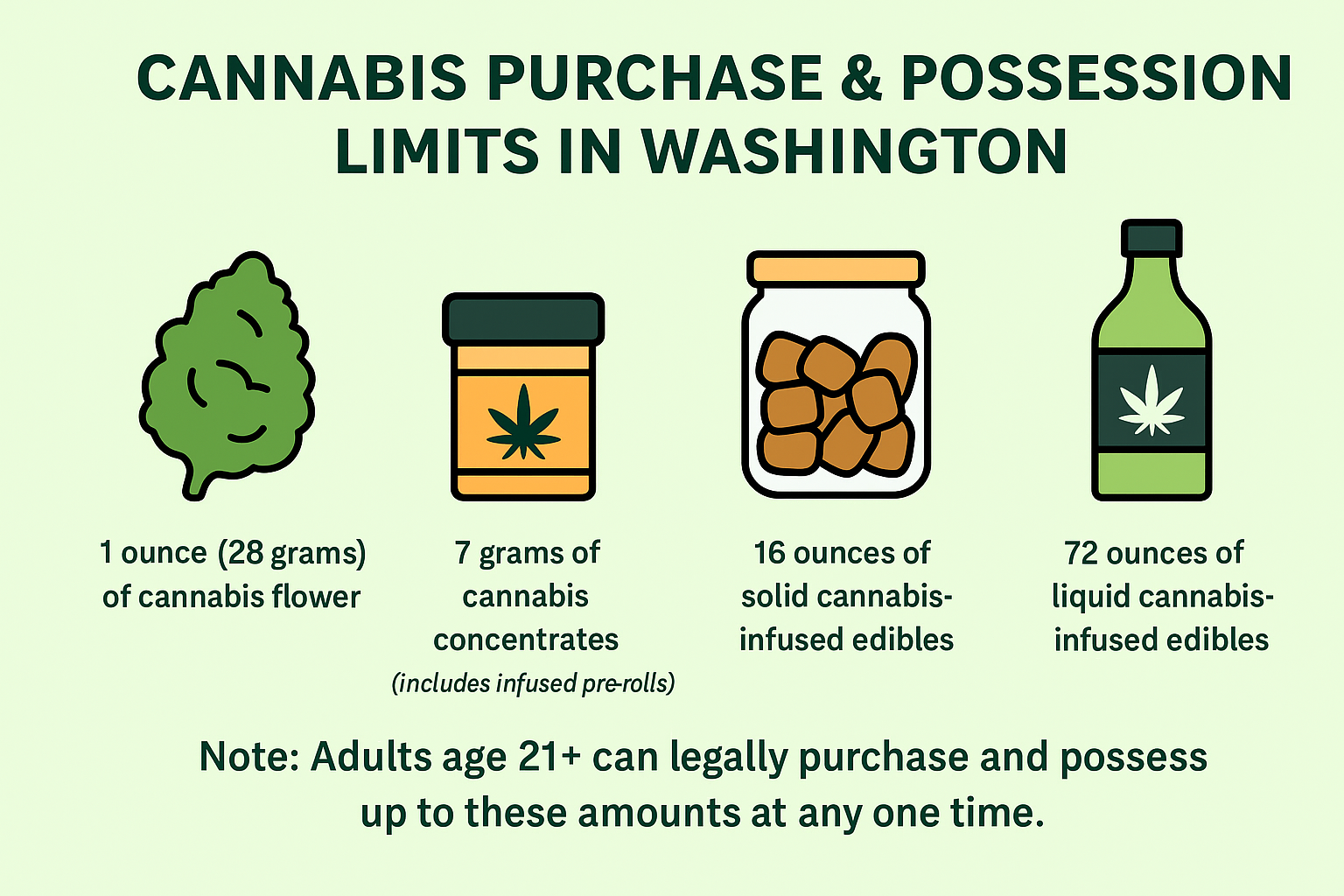
- Usable Cannabis (Flower): Up to one ounce
- Cannabis Concentrates: Up to seven grams
- Cannabis-Infused Products (Edibles): Up to 16 ounces in solid form
- Cannabis-Infused Products (Liquid): Up to 72 ounces in liquid form
These limits are designed to prevent large-scale distribution by individuals and apply to tourists and residents alike. Exceeding these limits can lead to legal penalties. It’s important for visitors to purchase only what they intend to consume responsibly during their stay and within these legal thresholds. These regulations are part of [Washington]’s comprehensive approach to managing the legal cannabis market, balancing individual freedoms with public safety and control.
Responsible Travel and Cannabis Use in Seattle
Integrating cannabis into a travel itinerary requires a commitment to responsible use and an understanding of its implications for safety and legal boundaries. [Seattle] prides itself on a safe and welcoming environment for all visitors, and responsible cannabis consumption is part of that ethos.
Driving Under the Influence and Public Safety
Just like alcohol, driving under the influence of cannabis is illegal and extremely dangerous in [Washington] state. [Washington] has a “per se” DUI law for cannabis, meaning that if a driver’s blood contains 5 nanograms or more of active THC per milliliter, they are legally considered impaired, regardless of how they feel. Law enforcement is trained to recognize signs of impairment, and penalties for cannabis DUI are severe, mirroring those for alcohol DUI, including hefty fines, license suspension, and potential jail time.
For tourists, this means that if you plan to consume cannabis, you should not drive a vehicle. Utilize [Seattle]’s excellent public transportation system, including buses and the Link light rail, or rely on ride-sharing services and taxis. This is not only a legal imperative but a matter of public safety. Exploring [Seattle]’s neighborhoods like [Pioneer Square], [Belltown], or [Queen Anne] by foot or public transport after consuming cannabis is a much safer and more enjoyable way to experience the city. Prioritizing safety ensures that your travel experiences remain positive and free from legal complications.
Interstate Travel and Airport Policies
The disparity between state and federal law becomes most apparent when considering interstate or international travel with cannabis. It is strictly illegal to transport cannabis across state lines, even if both the origin and destination states have legalized it. This applies to all forms of cannabis, regardless of the quantity. Taking cannabis on planes, trains ([Amtrak]), or any other form of interstate transportation is a federal offense.
At [Seattle-Tacoma International Airport (Sea-Tac)], the [Transportation Security Administration (TSA)] operates under federal law. While the [TSA]’s primary focus is on security threats, if they discover cannabis during screening, they are obligated to refer the matter to local law enforcement. Even if local law enforcement in [Washington] might not charge you for possession if it’s within state limits, they cannot allow you to proceed with it onto a federal flight. The safest policy for any traveler is to consume all purchased cannabis legally within [Washington] state and to not attempt to take any cannabis product out of the state, whether by air, land, or sea. For those traveling internationally, say to [Vancouver], [Canada], the rules are even stricter, with severe penalties for attempting to cross international borders with controlled substances.
Finding Cannabis-Friendly Accommodation
Finding suitable accommodation that permits cannabis consumption can be a significant consideration for travelers interested in the lifestyle aspect of legal cannabis. Many hotels, due to federal regulations and general property policies, maintain a strict no-smoking and no-cannabis policy, even in states where it’s legal. This is particularly true for major hotel chains, resorts, and corporate-managed apartments.
However, as the cannabis tourism market grows, some smaller, independent boutique hotels, specific apartments, or villa rentals are becoming more cannabis-friendly. These “accommodation” options might explicitly state their policies, offer designated smoking areas (often outdoors), or permit vaping or edibles indoors. When booking through platforms like [Airbnb] or [VRBO], it is crucial to filter for “cannabis-friendly” or “420-friendly” properties or, failing that, to directly contact the host or property management to inquire about their specific rules. Transparent communication upfront will prevent any misunderstandings or potential penalties during your stay. This aspect of travel planning aligns with the “lifestyle” theme of choosing accommodations that fit your personal preferences and ensuring a comfortable and compliant experience.
Seattle Beyond Cannabis: Exploring the Emerald City
While understanding cannabis laws is an important part of planning a trip to [Seattle] for many, the city offers an incredible array of experiences that go far beyond its progressive cannabis policies. [Seattle] is a world-class travel destination, rich in culture, natural beauty, and iconic landmarks.
Iconic Attractions and Cultural Experiences
[Seattle] is home to some of the most recognizable landmarks in the [United States]. No visit is complete without a trip to the [Space Needle], offering breathtaking panoramic views of the city skyline, [Puget Sound], and the surrounding mountains. Adjacent to the [Space Needle] is the [Seattle Center], a hub of cultural activity, including [Chihuly Garden and Glass] with its mesmerizing art installations, and the [Museum of Pop Culture (MoPOP)], celebrating music, science fiction, and popular culture.The historic [Pike Place Market] is another must-visit, famous for its lively fish throwing, artisan crafts, fresh produce, and the original [Starbucks] location. Exploring the market is an immersive experience, blending local culture with diverse food options. For those interested in quirky landmarks, the [Fremont Troll] under the [Aurora Bridge] offers a unique photo opportunity. Nature lovers can find solace in [Discovery Park], [Seattle]’s largest urban park, or take a scenic drive to the nearby [Mount Rainier National Park] or [Olympic National Park] for unparalleled outdoor adventures. From the bustling [Waterfront] with the [Seattle Great Wheel] to the historic architecture of [Pioneer Square], [Seattle] provides a wealth of attractions catering to all interests.

Culinary Delights and Local Culture
[Seattle]’s culinary scene is as diverse and dynamic as its landscape. From fresh seafood straight from the [Puget Sound] to innovative farm-to-table restaurants, the city offers a gastronomic journey for every palate. Iconic dishes like salmon, geoduck, and oysters are staples, reflecting the city’s strong connection to the ocean. The coffee culture, spearheaded by [Starbucks] and countless independent roasters, is a fundamental part of [Seattle]’s daily rhythm and a highlight for many visitors. Exploring local markets and neighborhoods allows travelers to immerse themselves in authentic [Seattle] flavors and traditions.Beyond food, [Seattle]’s local culture thrives on innovation, progressive values, and a deep appreciation for the arts and outdoors. The city is a hub for technology, music (grunge music originated here), and literature. Visitors can enjoy live music venues, independent bookstores, and a vibrant street art scene, particularly in areas like [Capitol Hill] and [Fremont]. Engage with local artists at galleries, catch a performance, or simply enjoy people-watching at one of [Lake Union]’s lakeside cafes. This rich tapestry of experiences ensures that whether you’re interested in world-class attractions, outdoor adventures, gourmet dining, or simply soaking in the unique atmosphere, [Seattle] delivers an unforgettable travel experience. Understanding the nuances of cannabis laws simply adds another layer to exploring the multifaceted lifestyle offerings of this incredible destination.
LifeOutOfTheBox is a participant in the Amazon Services LLC Associates Program, an affiliate advertising program designed to provide a means for sites to earn advertising fees by advertising and linking to Amazon.com. Amazon, the Amazon logo, AmazonSupply, and the AmazonSupply logo are trademarks of Amazon.com, Inc. or its affiliates. As an Amazon Associate we earn affiliate commissions from qualifying purchases.