
Seattle, the Emerald City of the Pacific Northwest, holds a mystical allure, often shrouded in a reputation for perpetual rain and overcast skies. While the image of a perpetually damp Seattle isn’t entirely unfounded, it’s also a significant oversimplification. Understanding the nuanced climate of this vibrant USA city is crucial for anyone planning a visit, whether you’re seeking to explore its iconic landmarks, indulge in its unique tourism offerings, or simply find the perfect accommodation for your stay. From sunny summers that stretch lazily into September to cozy, misty winters perfect for indoor exploration, Seattle’s weather profoundly shapes the visitor experience. This guide will delve into the meteorological realities of Seattle, helping you prepare for an unforgettable adventure, no matter the forecast.
Unpacking Seattle’s Climate: More Than Just Rain
To truly appreciate Seattle’s weather, one must look beyond the common stereotypes. While rain is a defining characteristic, it’s far from the only story. The city experiences a unique maritime climate, heavily influenced by its proximity to the Puget Sound and the Pacific Ocean, as well as the protective barrier of the Olympic Mountains to the west and the Cascade Mountains to the east. This geographical configuration results in distinct seasonal patterns that dictate everything from outdoor activities to the local lifestyle.
The Mild, Maritime Influence
Seattle’s climate is classified as warm-summer Mediterranean, though many would argue it leans more towards an oceanic climate. This means relatively mild temperatures year-round, with neither extreme heat nor extreme cold. The prevailing westerly winds bring moist air from the Pacific Ocean, which then collides with the land, leading to significant cloud cover and precipitation.
However, the “rainy city” moniker often misleads. Seattle actually receives less annual rainfall than many major USA cities like New York City or Miami. The key difference lies in the frequency and type of precipitation. Instead of heavy downpours, Seattle often experiences long periods of light drizzle, mist, or persistent overcast skies. This creates a lush, green landscape, but also contributes to the perception of constant gloom, especially during the darker winter months. The Olympic Mountains create a rain shadow effect, which ironically gives Seattle slightly less rain than areas further west on the Olympic Peninsula.
A Seasonal Snapshot
Understanding Seattle’s distinct seasons is essential for planning your trip and packing appropriately. Each season offers a unique charm and set of experiences.
-
Summer (June – September): Seattle at Its Best
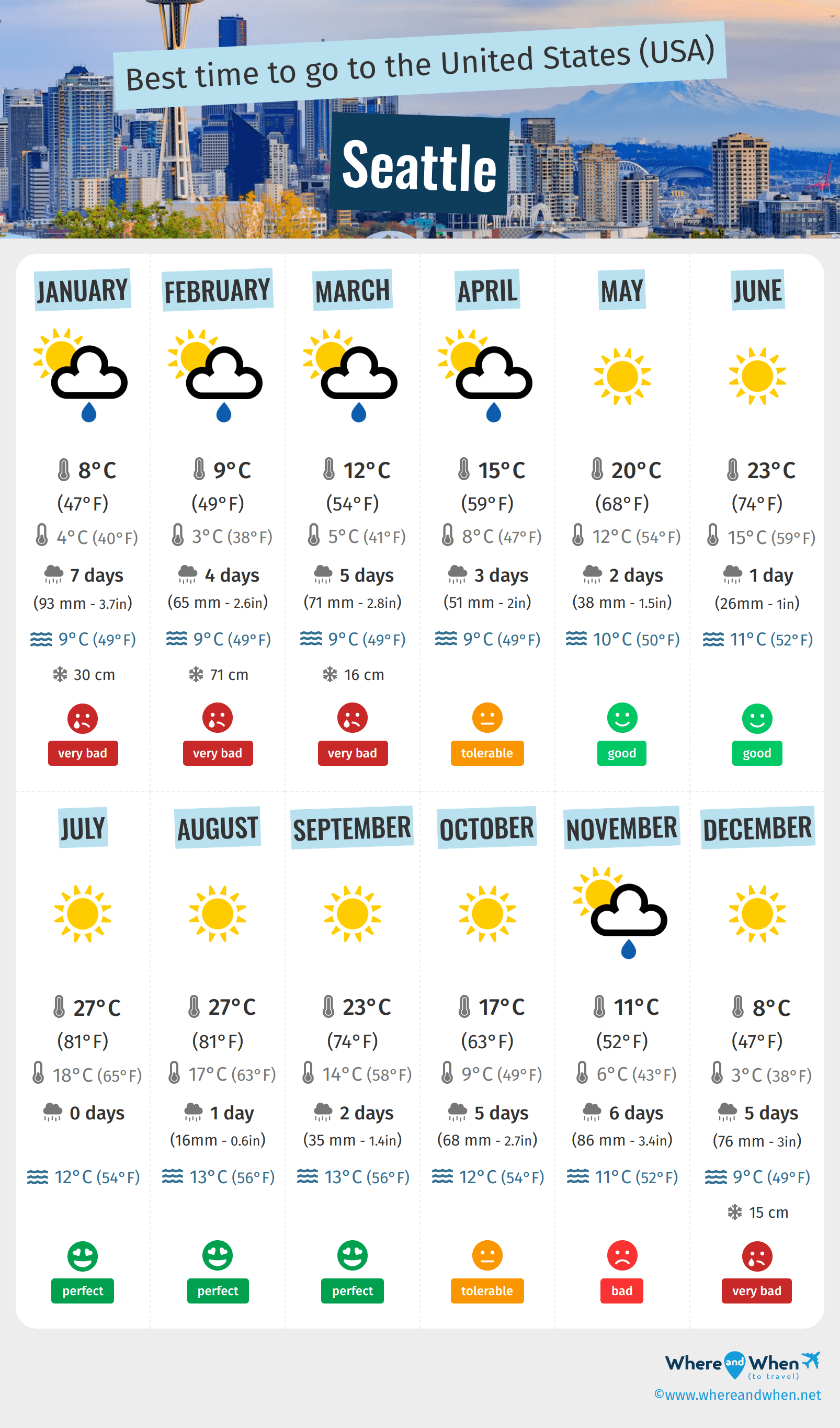
Often heralded as the “secret” of Seattle, summer is surprisingly dry, sunny, and glorious. July and August are the driest months, with long daylight hours stretching until 9 or 10 PM. Temperatures typically range from the mid-60s to low 80s Fahrenheit (18-27°C), rarely reaching uncomfortable highs. This is prime time for outdoor exploration, festivals, and enjoying the city’s natural beauty. The skies are often clear, offering stunning views of Mount Rainier and the surrounding water. This is when Seattle truly shines, making it the most popular time for travel and tourism. -
Autumn (October – November): Golden Hues and Gentle Rains
As summer fades, Seattle transitions into a beautiful, yet increasingly wet, autumn. October can still offer pleasant, crisp days, but the likelihood of rain increases significantly. Temperatures range from the mid-40s to low 60s Fahrenheit (7-17°C). The foliage in the city’s parks and surrounding areas bursts into vibrant reds, oranges, and yellows, making it a picturesque time to visit for those who don’t mind a little drizzle. This season sees fewer crowds and can offer better deals on accommodation. -
Winter (December – February): Cozy and Green
Seattle winters are mild by most standards, with average daytime temperatures in the 40s Fahrenheit (4-9°C). Snowfall within the city is relatively rare and typically light, melting quickly. However, the dominant feature is consistent cloud cover and frequent, light rain. Days are short, and the sky can remain gray for extended periods. This is the ideal time for embracing Seattle’s famous coffee culture, exploring indoor attractions, and enjoying cozy hotels with warm amenities. The surrounding Cascade Mountains and Olympic Mountains receive heavy snowfall, making them popular for winter sports. -
Spring (March – May): Showers and Blossoms
Spring in Seattle is a period of transition, characterized by a mix of rain, sunbreaks, and steadily warming temperatures, ranging from the mid-40s to high 60s Fahrenheit (7-20°C). March and April are typically wet, but May often brings longer stretches of sunshine. The city comes alive with blooming flowers, cherry blossoms, and a palpable sense of anticipation for summer. This shoulder season offers a great balance of fewer crowds and improving weather, making it an excellent time for budget-conscious travelers or those seeking a vibrant natural landscape.
Weather-Wise Travel Planning: Maximizing Your Seattle Experience
Planning a trip to Seattle requires thoughtful consideration of its unique climate. The best time to visit and what you pack can dramatically alter your experience, allowing you to fully immerse yourself in all the city has to offer, regardless of the forecast.
When to Visit: Choosing Your Perfect Season
Your ideal visiting season largely depends on your priorities and tolerance for different weather conditions.
-
Peak Season (June – September): The Sunny Sweet Spot
If sunshine, outdoor activities, and vibrant street life are your top priorities, summer is unequivocally the best time to visit. This is when Seattle’s natural beauty is most accessible, with endless opportunities for hiking, kayaking on Lake Union, exploring parks like Discovery Park or Gas Works Park, and enjoying waterfront dining. However, be prepared for larger crowds, higher prices for flights and hotels, and the necessity of booking popular attractions and restaurants in advance. -
Shoulder Seasons (April – May & October – November): For the Savvy Traveler
These seasons offer a compromise: generally milder weather than winter, fewer crowds than summer, and often better deals on accommodation and flights. Spring showcases beautiful blossoms and warming temperatures, perfect for strolling through gardens or visiting Pike Place Market without the summer rush. Autumn brings stunning fall foliage and a cozy atmosphere as the rain returns. While you might encounter more rain, these seasons reward visitors with a more authentic, local feel and a chance to experience Seattle’s charm in a quieter setting. -
Off-Peak (December – March): The Cozy Retreat
For budget-conscious travelers or those who appreciate a more introspective, cozy vibe, winter can be an excellent choice. While gray skies and rain are prevalent, temperatures rarely drop below freezing, making it comfortable for exploring indoor attractions. Holiday lights and festive events add cheer, and the lower demand means significantly reduced prices for hotels and easier access to popular spots. Just be sure to pack for wet weather!
What to Pack: Dressing for Seattle’s Mood Swings
Regardless of the season, layering is the golden rule for dressing in Seattle. The weather can change quickly, with sunny mornings giving way to cloudy afternoons, or vice versa.
- The Essential Rain Gear: A good quality waterproof and windproof jacket is non-negotiable for most of the year outside of peak summer. Locals often prefer jackets over umbrellas, which can be cumbersome in windy conditions and crowded streets.
- Layers, Layers, Layers: Pack versatile items like long-sleeved shirts, sweaters, and light jackets that can be easily added or removed. Fleece or wool are excellent choices for cooler months.
- Comfortable, Waterproof Footwear: You’ll likely do a lot of walking, and wet feet can quickly dampen spirits. Waterproof boots or shoes are highly recommended, especially from fall through spring.
- Accessories: A hat (for warmth and rain protection), sunglasses (even on cloudy days, the sun can peek through brightly), and perhaps a small, collapsible umbrella if you prefer.
- Summer Specifics: Lighter clothing, shorts, and t-shirts for the warmer days, but always have a light jacket or sweater for cool evenings.
Seattle Activities & Accommodation for Every Forecast
Seattle’s diverse range of attractions and accommodation options are well-suited to handle any weather condition. The city truly shines in its ability to offer memorable experiences, whether under a brilliant summer sky or a misty winter cloud.
Embracing the Outdoors, Rain or Shine
-
Sunny Day Adventures: When the sun makes its grand appearance, Seattle transforms into an outdoor playground. Head to the bustling Pike Place Market to enjoy fresh produce and street performers. Ascend the Space Needle or visit Chihuly Garden and Glass for breathtaking views. Take an Argosy Cruises tour of the Puget Sound or a ferry to Bainbridge Island for stunning cityscapes. Explore urban oases like Discovery Park for hiking trails or Kerry Park for iconic skyline photos. Day trips to Mount Rainier National Park or Olympic National Park are also popular for those seeking majestic natural landmarks.
-
Rainy Day Retreats: Don’t let a little rain deter you; Seattle excels at indoor entertainment. Dive into pop culture history at the Museum of Pop Culture (MoPOP) or immerse yourself in art at the Seattle Art Museum (SAM). The Seattle Aquarium offers an underwater escape, while the historic Underground Tour provides a fascinating glimpse into the city’s past. Spend hours browsing bookstores, sipping coffee in cozy cafes, or exploring the many breweries and wineries the city has to offer. Pike Place Market, with its covered areas, also makes for a great rainy-day destination.
Choosing Your Home Away From Home
Accommodation in Seattle caters to every preference, and considerations shift slightly depending on the season and expected weather.
- Location, Location, Location: For any season, consider hotels that are centrally located or near public transport hubs, allowing easy access to both indoor and outdoor attractions. Downtown, Pike Place Market, and Belltown offer walkability to many key sites.
- Amenities for All Forecasts: In cooler, wetter months, look for hotels that offer inviting common areas, maybe a cozy fireplace, or excellent on-site dining options like the Fairmont Olympic Hotel or Hotel Theodore. A hotel with a good view can make even a cloudy day feel special. For summer, hotels with rooftop access or proximity to parks and waterfronts are desirable.
- Luxury to Budget: From opulent resorts such as The Edgewater Hotel with its stunning Puget Sound views, to boutique gems like the Kimpton Palladian Hotel, and numerous budget-friendly options, Seattle offers a diverse range of choices. Always check reviews to ensure the accommodation aligns with your weather-related comfort needs, like reliable heating or air conditioning.
The Seattle Lifestyle: A Culture Shaped by Climate
The weather in Seattle isn’t just a topic of conversation; it’s a foundational element of the city’s identity and the lifestyle of its residents. Locals don’t just endure the weather; they embrace it, creating a unique culture that has become one of Seattle’s most charming aspects for tourism.
Adapting to the Pacific Northwest
The frequent rain and temperate climate have fostered a deep appreciation for the indoors, giving rise to Seattle’s world-renowned coffee culture. Cozy cafes are not just places to grab a drink; they are social hubs, workspaces, and havens from the drizzle. Similarly, the local fashion leans towards practical, durable, and stylish outdoor gear. High-quality waterproof jackets, comfortable boots, and layering pieces are not just functional; they’re a part of the everyday aesthetic.
Furthermore, Seattleites cherish their outdoor spaces with an intensity that only comes from knowing their precious sunny days are finite. When the sun is out, parks are packed, trails are busy, and outdoor patios buzz with activity. This love for nature is also evident in the city’s lush green spaces, maintained by the abundant rainfall, making Seattle truly “Emerald.”
Experiencing Local Tourism Like a Local
To truly experience Seattle like a local, you must adopt their weather philosophy: don’t let it dictate your plans entirely. A little rain often means fewer crowds at popular attractions and a more intimate experience. Embrace the waterproof layers, grab a local craft beer or a gourmet coffee, and explore with an open mind.
The city’s vibrant arts scene, numerous independent bookstores, diverse culinary landscape, and thriving music venues offer endless entertainment options that are perfect for any forecast. Engaging with Seattle’s local culture means understanding that its weather, far from being a drawback, is integral to its unique charm, resilience, and the character of its people.
In conclusion, while Seattle’s reputation for rain is well-earned, its climate is far more varied and nuanced than often portrayed. With a little planning and the right gear, you can discover that Seattle is a captivating destination year-round, offering distinct experiences in every season. Whether you dream of sun-drenched summer days exploring the Puget Sound or cozy winter evenings tucked away in a charming cafe, Seattle’s weather sets the stage for an unforgettable journey.
LifeOutOfTheBox is a participant in the Amazon Services LLC Associates Program, an affiliate advertising program designed to provide a means for sites to earn advertising fees by advertising and linking to Amazon.com. Amazon, the Amazon logo, AmazonSupply, and the AmazonSupply logo are trademarks of Amazon.com, Inc. or its affiliates. As an Amazon Associate we earn affiliate commissions from qualifying purchases.