
The open road in Texas beckons motorcyclists with its diverse landscapes, from the rolling hills of the Texas Hill Country to the vast expanses of the desert in West Texas and the vibrant coastal routes near the Gulf of Mexico. For many, a motorcycle journey through the Lone Star State is a quintessential American experience, offering a unique blend of adventure, cultural immersion, and breathtaking scenery. However, before setting out on an epic ride or even commuting through bustling cities like Houston, Dallas, or Austin, it’s crucial for every rider to understand the specific traffic laws that govern motorcycle operation. Among the most frequently debated and often misunderstood regulations is lane splitting, a practice that can significantly impact both safety and the overall riding experience.
Understanding the legality of lane splitting is not merely a technicality; it’s a fundamental aspect of responsible riding that affects personal safety, potential legal consequences, and even the perception of motorcyclists by other road users. As enthusiasts embrace the freedom of two wheels, whether they’re embarking on a cross-country tour, enjoying a weekend getaway, or simply navigating daily commutes, adherence to local laws becomes paramount. This comprehensive guide will delve into the nuances of lane splitting in Texas, providing clarity on its legality, exploring the arguments surrounding it, and offering essential insights for motorcyclists who wish to explore the state safely and within the bounds of the law. We’ll also touch upon how this specific regulation fits into the broader context of motorcycle travel and lifestyle, influencing everything from route planning to overnight accommodations across the vast and welcoming landscapes of Texas.
Understanding Lane Splitting: A Global Perspective
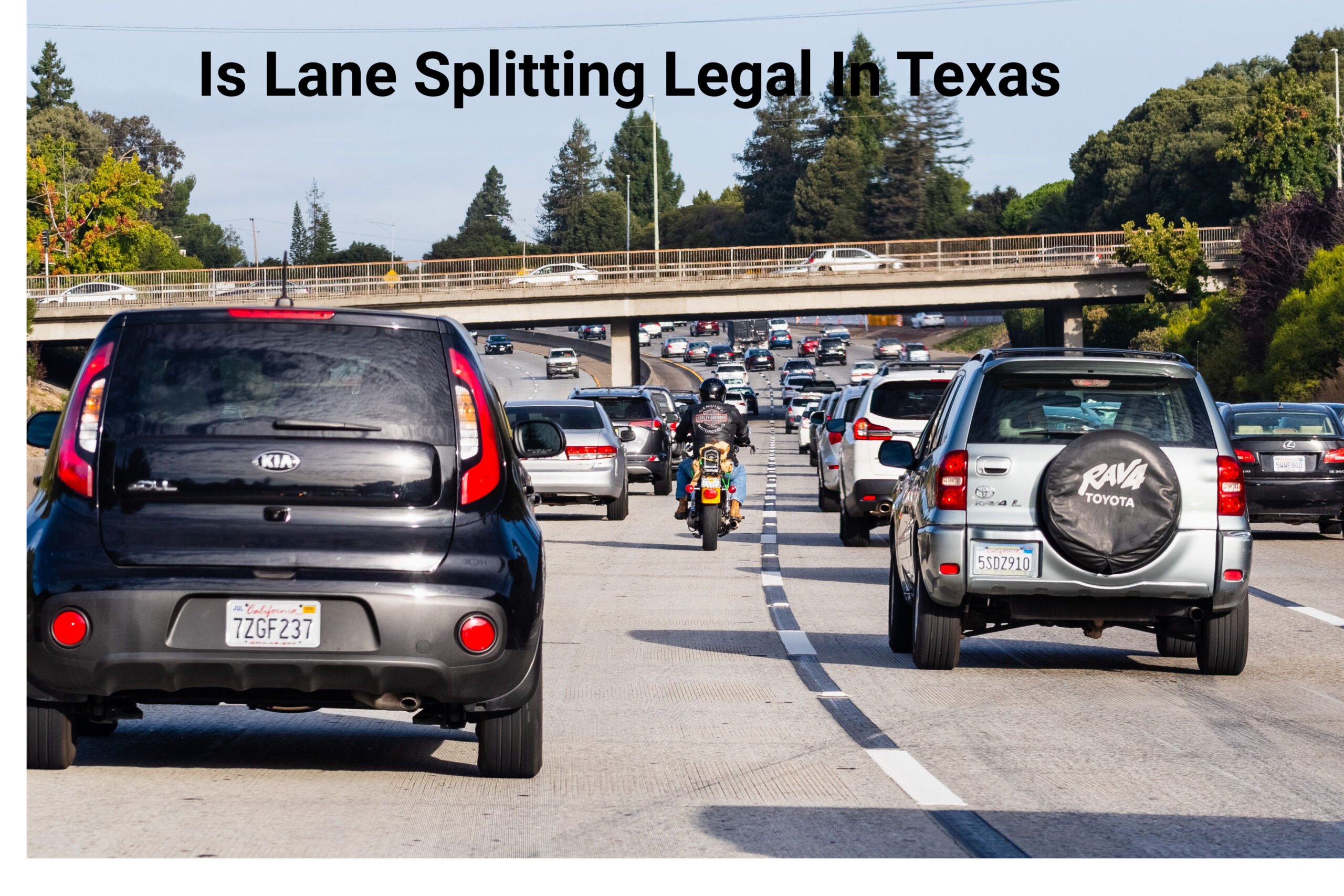
To properly address the question of lane splitting’s legality in Texas, it’s first essential to understand what the practice entails and why it has become such a contentious topic globally. Lane splitting, often confused with similar practices, is a maneuver that involves a motorcyclist riding between lanes of stopped or slowly moving traffic, typically on multi-lane roads or highways. The rationale and legality of this practice vary significantly from one region to another, reflecting diverse cultural attitudes toward motorcycles, traffic management philosophies, and differing perceptions of safety.
Defining Lane Splitting, Lane Filtering, and White-Lining
While often used interchangeably, “lane splitting,” “lane filtering,” and “white-lining” refer to distinct (though related) actions:
- Lane Splitting: This is the act of riding a motorcycle between two lanes of traffic moving in the same direction. It is most commonly performed in congested conditions, where traffic is either stopped or moving at a significantly slower speed than the motorcyclist. The primary aim is to bypass congestion and reduce travel time.
- Lane Filtering: This is a more specific and generally safer form of lane splitting, typically performed at very low speeds, such as approaching a traffic light or moving through heavy, slow-moving queues. The motorcyclist filters to the front of the line of vehicles, positioning themselves to be among the first to proceed when traffic starts moving. This practice is often advocated for safety reasons, as it removes the motorcyclist from the “crush zone” between two vehicles, where they are vulnerable to rear-end collisions.
- White-Lining: This term is sometimes used to describe riding a motorcycle on the painted lines separating lanes of traffic, or even on the shoulder, often at higher speeds. This practice is generally considered more dangerous and is almost universally illegal due to the reduced visibility and increased risk of accidents.
The distinction between these terms is critical because debates over legality often hinge on the specific definition used. What might be deemed “legal filtering” in one jurisdiction could be considered “illegal splitting” in another.
The Rationale Behind Lane Splitting
The arguments for and against lane splitting are numerous and deeply debated within the motorcycle community and among traffic safety experts.
Arguments in favor of lane splitting often cite:
- Safety: Proponents argue that lane splitting can enhance motorcyclist safety by allowing riders to escape the danger of rear-end collisions in congested traffic. A stopped or slow-moving motorcycle is particularly vulnerable to being struck from behind by distracted drivers in cars, SUVs, or commercial trucks. By moving between lanes, the motorcyclist removes themselves from this high-risk situation.
- Traffic Congestion Reduction: Motorcyclists take up less road space than cars. Allowing them to filter through traffic theoretically reduces overall congestion, as these vehicles are not contributing to the queue in the same way. It also reduces the amount of time a motorcycle spends idling, which can contribute to fuel efficiency and reduced emissions.
- Temperature Regulation: For air-cooled engines, prolonged idling in heavy traffic can lead to overheating. Lane splitting allows the motorcycle to maintain airflow, preventing mechanical issues and discomfort for the rider, particularly in hot climates like Texas.
- Freedom and Efficiency: Many riders view lane splitting as a natural and efficient way to navigate traffic, aligning with the agile nature of motorcycles. It offers a sense of freedom and practicality, especially in urban environments notorious for gridlock.
Conversely, arguments against lane splitting often focus on:
- Perceived Safety Risk: Opponents, including many motorists and some safety advocates, argue that lane splitting is inherently dangerous. They point to the reduced reaction time for both the motorcyclist and other drivers, the risk of drivers changing lanes unexpectedly, and the potential for serious injury in the event of a collision.
- Driver Anticipation: Drivers of larger vehicles may not anticipate a motorcycle appearing between lanes, leading to sudden maneuvers or a failure to yield. This can result in collisions, especially when drivers are distracted or not paying full attention to their surroundings.
- Aggression and Misunderstanding: Some drivers perceive lane splitting as aggressive or reckless, leading to frustration and potential road rage incidents. This can further strain relationships between motorcyclists and other road users.
- Lack of Uniformity: The varying laws across different states and countries create confusion, making it difficult for riders to know what is legal or safe, especially when traveling across borders or between jurisdictions.
The debate underscores the complex interplay between traffic flow, vehicle dynamics, human behavior, and legal frameworks, ultimately shaping the riding experience and legal landscape in places like Texas.
The Legal Landscape in Texas
For motorcyclists traveling through the vast and diverse state of Texas, understanding the specific traffic laws is not just a matter of convenience, but one of critical importance for safety and legal compliance. When it comes to the practice of lane splitting, the law in Texas is unambiguous.
Current Laws and Statutes
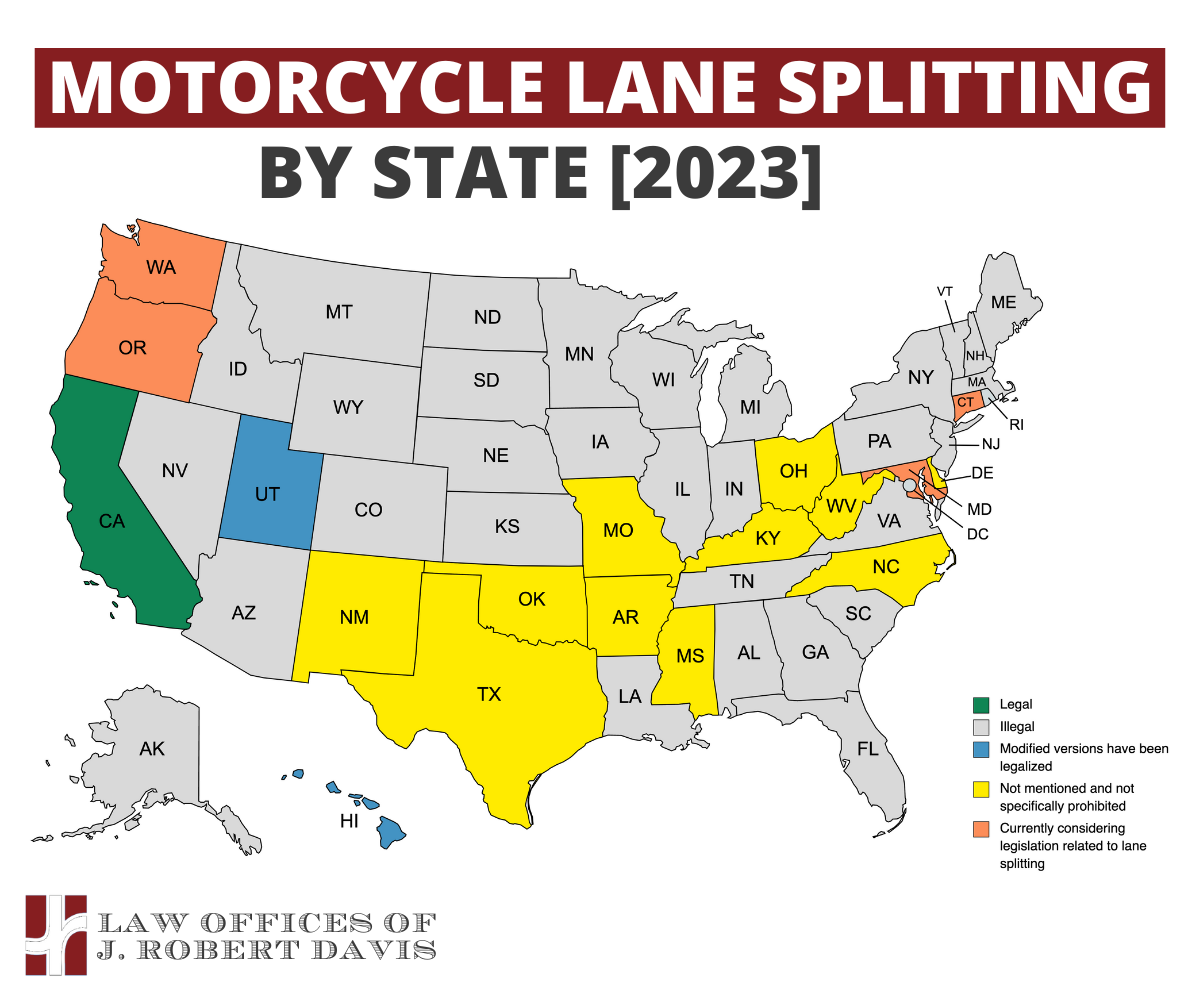
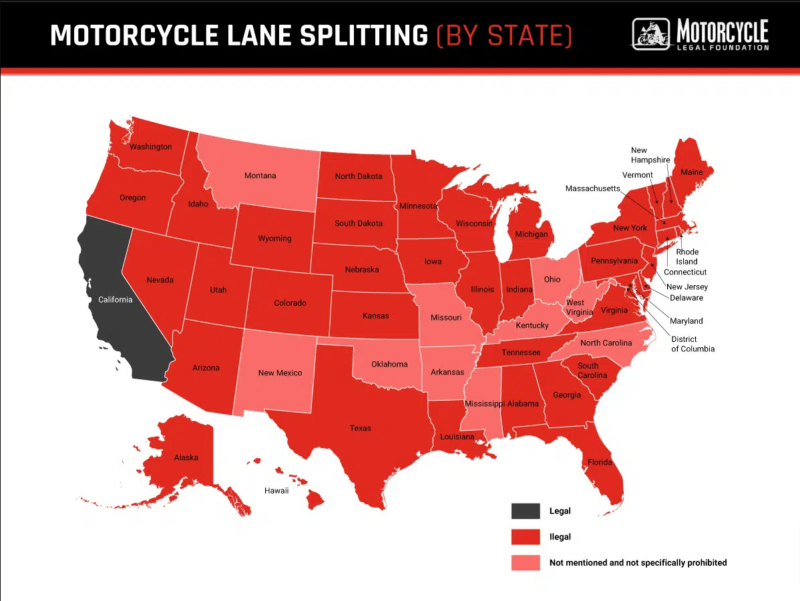
In the state of Texas, lane splitting is illegal. This prohibition is outlined in the Texas Transportation Code, specifically Section 545.058, titled “Driving on Roadway Laned for Traffic.” While this section primarily addresses general vehicle operation within lanes, the interpretation and enforcement by law enforcement agencies consistently classify lane splitting as an unlawful maneuver.
More directly, Texas law states that “an operator may not drive a vehicle between two adjacent lines of traffic or between adjacent lines of vehicles.” This phrasing unequivocally prohibits the act of riding a motorcycle between two lanes of moving or stopped vehicular traffic. There are no exceptions for specific speed limits, traffic conditions, or types of motorcycles. Unlike states such as California, which explicitly legalized lane splitting under certain conditions, Texas has not adopted similar legislation. Efforts to introduce bills that would legalize or decriminalize lane filtering (a low-speed version of lane splitting) have been made in the Texas legislature in recent years, but none have successfully passed into law. As of now, the legal status remains unchanged: motorcyclists must remain within a single lane of traffic, just like any other vehicle.
Penalties and Enforcement
Violating the prohibition against lane splitting in Texas can lead to various penalties. Typically, it is considered a traffic infraction, which can result in:
- Fines: The most common consequence is a monetary fine, the amount of which can vary depending on the specific jurisdiction (city, county) and the discretion of the issuing officer. These fines can range from dozens to hundreds of dollars.
- Court Costs: In addition to the fine, offenders may also be responsible for court costs associated with the citation.
- Points on Driving Record: A traffic citation for lane splitting could result in points being added to a rider’s driving record. Accumulation of too many points can lead to increased insurance premiums, and in severe cases, the suspension of driving privileges.
- Increased Insurance Rates: Even without points, a traffic violation on one’s record can signal to insurance companies an increased risk, potentially leading to higher premiums for motorcycle insurance.
- Accident Liability: If a motorcyclist is involved in an accident while lane splitting, even if another party is partially at fault, the motorcyclist could be found primarily liable for the accident due to their illegal maneuver. This can significantly complicate insurance claims and legal proceedings, potentially leading to the motorcyclist bearing a greater financial burden for damages and injuries.
Law enforcement agencies across Texas, including the Texas Department of Public Safety and local police departments in cities like San Antonio and El Paso, are aware of this prohibition and enforce it. While enforcement might vary by officer or traffic conditions, riders should assume that engaging in lane splitting will expose them to legal repercussions. It’s always advisable for motorcyclists to ride defensively, follow all traffic laws, and avoid any maneuvers that could be interpreted as illegal, thereby ensuring a safer and more enjoyable journey across the state.
Safety, Lifestyle, and Tourism Implications
The legality of lane splitting in Texas has profound implications that extend beyond mere legal compliance. It touches upon crucial aspects of rider safety, influences the lifestyle choices of motorcyclists, and impacts the broader motorcycle tourism industry within the state. Understanding these interconnected elements is vital for anyone considering a two-wheeled adventure in Texas.
Rider Safety and Awareness in Texas
The core argument against lane splitting often centers on safety, both for the motorcyclist and other road users. While proponents in areas where it is legal cite safety benefits (like avoiding rear-end collisions), the illegal status in Texas means riders must adopt different strategies to ensure their well-being.
- Defensive Riding: Without the option to lane split, motorcyclists in Texas must practice heightened defensive riding techniques, especially in congested areas. This includes maintaining ample following distance, constantly scanning for potential hazards, being aware of blind spots, and assuming other drivers may not see them.
- Visibility: Maximizing visibility becomes even more critical. Riders should wear bright, reflective gear, ensure their headlights are always on, and consider additional lighting accessories. In slow-moving or stopped traffic, making eye contact with drivers in surrounding vehicles can help ensure they are aware of the motorcycle’s presence.
- Lane Positioning: Strategic lane positioning is key. Rather than being stuck directly behind a vehicle, riders might choose a position within the lane that offers better visibility of the road ahead and the ability to react to sudden braking or lane changes from other drivers.
- Heat Management: For those riding in the intense Texas heat, prolonged idling in traffic can be physically demanding and potentially lead to engine overheating for some models. Riders need to plan routes to avoid peak congestion if possible, stay hydrated, and wear appropriate riding gear that offers ventilation.
The absence of lane splitting means motorcyclists are often stuck in the same traffic queues as cars, facing the same frustrations and risks. This necessitates a proactive approach to safety and a deep understanding of the unique vulnerabilities of motorcyclists.
The Impact on Motorcycle Tourism in Texas
Texas is a premier destination for motorcycle tourism, boasting an incredible variety of landscapes and attractions. From the scenic twists and turns of the Three Sisters (Ranch Roads 335, 336, and 337) in the Texas Hill Country to the rugged beauty of Big Bend National Park near the Mexico border, and the historic charm of cities like Galveston and Fredericksburg, the state offers countless memorable rides.
The illegal status of lane splitting, however, can influence how motorcyclists perceive and plan their trips to Texas:
- Route Planning: Riders often plan routes to avoid major urban centers during peak traffic hours, as navigating slow-moving traffic without the option of lane splitting can be more time-consuming and less enjoyable. This might mean bypassing destinations like Austin’s bustling downtown or the freeways of Houston, unless specifically visiting landmarks such as the Alamo in San Antonio or the Sixth Floor Museum in Dallas.
- Visitor Experience: For riders accustomed to lane splitting in their home states or countries (such as California in the United States or many parts of Europe and Australia), the restriction in Texas can be an adjustment. It might contribute to longer travel times in congested areas, potentially impacting their itinerary or overall satisfaction with the ride.
- Accommodation and Lifestyle: The broader lifestyle of a motorcycle tourist involves planning overnight stays. While Texas has numerous biker-friendly establishments, from budget hotels to luxury resorts, the inability to easily navigate traffic can influence choices. For instance, a rider might opt for accommodation slightly outside city centers to avoid congestion entirely, or choose to explore urban attractions on foot after parking their bike. The “luxury travel” aspect, often associated with seamless experiences, might be challenged by unexpected traffic delays.
Ultimately, while Texas remains an incredible state for motorcycle travel, the lane splitting restriction is a factor that riders, especially those from areas where it’s permitted, need to be aware of and adapt to.
Comparative Analysis: Texas vs. Other States/Countries
The legal status of lane splitting in Texas stands in contrast to several other jurisdictions, both within the United States and internationally.
- Within the United States: California was the first state to officially legalize lane splitting, codifying it into law in 2017 after a long-standing practice. Other states, such as Arizona, Utah, and Montana, have legalized specific forms of “lane filtering” – typically limited to very low speeds and specific conditions (e.g., stopping at a red light). These states often frame their laws around improving safety by allowing motorcyclists to move out of high-risk rear-end collision zones. The debate continues in many other states, with bills periodically introduced and debated.
- International Perspective: Lane splitting or filtering is legal and common practice in many parts of the world, including most of Europe, much of Asia, and Australia. In these regions, motorcycles are often seen as an integral part of the transportation solution, especially in densely populated urban areas, and filtering is accepted as a way to manage traffic flow and enhance mobility. Different countries may have varying speed limits or conditions for the practice, but the underlying principle is widely accepted.
This comparative overview highlights that Texas takes a more conservative stance on the issue, aligning with the majority of U.S. states that prohibit the practice. This legal difference means that riders planning extensive tours, perhaps crossing from California through Arizona and into Texas, must be acutely aware of the changing legal landscape to avoid potential legal issues and ensure a safe and uninterrupted journey.
Navigating Texas Roads: A Guide for Motorcyclists
Riding a motorcycle through Texas offers an unparalleled sense of freedom and adventure. With its vast highways, scenic backroads, and vibrant cities, the state is a magnet for motorcyclists seeking diverse travel experiences. However, to truly enjoy all that Texas has to offer, it’s essential to embrace responsible riding practices and understand how to best navigate its unique road environment, especially in light of its lane splitting laws.
Responsible Riding Practices
Given that lane splitting is illegal in Texas, motorcyclists must prioritize a set of responsible riding practices that ensure safety and legal compliance:
- Stay in Your Lane: The most fundamental rule is to always remain within a single lane of traffic. Treat your motorcycle as any other vehicle in this regard. Do not attempt to ride between cars, even if traffic is stopped or moving slowly.
- Maintain Safe Following Distances: This is crucial for avoiding rear-end collisions, a common type of accident. Ensure you have enough space to react to sudden stops by the vehicle ahead.
- Enhance Visibility: In Texas’s bright sun or dense urban traffic, visibility is paramount. Wear high-visibility gear, use your headlight at all times, and consider reflective elements, particularly for night riding. Make eye contact with drivers whenever possible to confirm they’ve seen you.
- Anticipate and Plan Ahead: Look several vehicles ahead for potential hazards. Anticipate sudden lane changes, braking, or turns from other drivers. In congested areas like Dallas’s North Central Expressway or Houston’s Loop 610, be extra vigilant.
- Lane Positioning for Safety: Position your motorcycle strategically within your lane to provide an escape route and maximize your visibility to other drivers. This often means riding in a position that allows you to see the mirrors of the vehicle in front of you.
- Stay Hydrated and Rested: Texas can be extremely hot, especially during summer months. Dehydration and fatigue can impair judgment and reaction times. Plan regular stops for rest and hydration, particularly on long journeys through the desert landscapes or across the expansive plains.
- Regular Maintenance: Before any ride, especially long-distance trips, ensure your motorcycle is in top mechanical condition. Check tires, brakes, lights, and fluid levels. A breakdown can be more than an inconvenience; it can be a safety hazard, especially in remote Texas areas.
By adhering to these practices, motorcyclists can minimize risks and enjoy the full beauty of Texas roads without infringing on local laws.
Exploring Texas by Motorcycle
Texas is a motorcyclist’s paradise, offering an array of experiences that cater to every type of rider, from those seeking rugged adventure to those preferring a leisurely scenic tour. The website’s focus on Travel, Tourism, Accommodation, and Lifestyle perfectly aligns with the rich possibilities for motorcycle enthusiasts in the state.
-
Scenic Routes and Destinations:
- Texas Hill Country: This region is arguably the most popular for motorcyclists, featuring winding roads like the Three Sisters (Ranch Roads 335, 336, 337), scenic vistas, charming small towns like Fredericksburg and Luckenbach, and crystal-clear rivers. It’s an ideal destination for weekend trips and offers a classic “lifestyle” riding experience.
- Big Bend National Park: For the more adventurous, the remote and stunning landscapes of Big Bend offer dramatic mountain passes, desert roads, and unparalleled solitude. This requires careful planning due to its remoteness, including checking fuel and water availability.
- Coastal Rides: The routes along the Gulf Coast offer a different flavor, with ocean breezes and destinations like Galveston providing a unique blend of history, beaches, and seaside charm.
- Historic Texas: Explore cities rich in history such as San Antonio with its famous Riverwalk and the Alamo, or Dallas for its vibrant arts scene and landmarks like the Sixth Floor Museum.
-
Accommodation for Motorcyclists: When planning a multi-day trip, finding biker-friendly accommodation is crucial. Many hotels, motels, and even luxury resorts across Texas cater to motorcyclists, offering amenities like secure parking, wash stations, and sometimes even tools for minor repairs. From quaint bed and breakfasts in Fredericksburg to modern suites in Austin, options abound. Websites specializing in motorcycle travel often list highly-rated, biker-friendly accommodations.
-
Integrating Lifestyle and Culture: Motorcycle travel in Texas is more than just riding; it’s about experiencing the local culture. This includes savoring authentic Texas barbecue, exploring small-town festivals, visiting historic landmarks, and enjoying the vibrant live music scene, particularly in Austin. The “lifestyle” aspect of motorcycle touring is deeply intertwined with these cultural experiences, making every trip a memorable adventure.
In conclusion, while the prohibition of lane splitting in Texas requires motorcyclists to adjust their riding habits, it does not diminish the state’s immense appeal as a top-tier destination for motorcycle travel. By understanding and respecting local laws, practicing responsible riding, and embracing the adventurous spirit, riders can fully immerse themselves in the rich tapestry of landscapes, history, and culture that the Lone Star State proudly offers. Always prioritize safety, stay informed, and enjoy the ride.
LifeOutOfTheBox is a participant in the Amazon Services LLC Associates Program, an affiliate advertising program designed to provide a means for sites to earn advertising fees by advertising and linking to Amazon.com. Amazon, the Amazon logo, AmazonSupply, and the AmazonSupply logo are trademarks of Amazon.com, Inc. or its affiliates. As an Amazon Associate we earn affiliate commissions from qualifying purchases.